That’s the subject of my latest over at RealClearHistory. Peep game:
The refusal of the colonies to pay for the war they initiated also led to the flare up of a simmering tension between elites on both sides of the British Atlantic: representation. The colonists wanted to send representatives to London and have them participate as full members of the body politic. The elite on the islands, however, were openly disdainful of American elites and probably did not want to disperse their power even more thinly by admitting new seats. Adam Smith was especially prescient on this matter, actually arguing that London could avoid most of its trouble by simply admitting American representatives to parliament.
Hans-Hermann Hoppe – completely esoteric ideas about international relations, especially his erroneous and ill-thought idea about private defence through private insurance companies.
Deepak Lal – no complaints about his general work, but his praise for empires was deeply disturbing, even though he meant well. Liberalism and globalization do not need empires, no matter how civilized – in the Oakeshottian meaning – they are meant to be.
Ron Paul – I admire Ron Paul in many ways, but his ideas for ‘a foreign Policy of freedom’ are not much better than Hoppe’s. ‘peace, commerce, and honest friendship’: nice Jeffersonian goals, bad underlying analysis, not least about human nature.
Underrated:
Friedrich Hayek – a far more sophisticated thinker on international relations than he is ever given credit for.
Adam Smith – nowadays erroneously equated with ‘trade leads to peace’ fairly tales. Yet any reader of the complete two volumes of the Wealth of Nations recognizes that the book is also a lot about war and foreign policy, as are his Lectures on Jurisprudence and even a bit in The Theory of Moral Sentiments. Together these make for a full and sophisticated position on international affairs.
David Hume – basically the same as Smith.
Robert Jackson – ok, I am taking liberties here. I do not think Jackson would consider himself a classical liberal or libertarian. But his writings on international relations are important and often have a classical liberal leaning, especially The Global Covenant.
They are very weak who flatter themselves that, in the state to which things have come, our colonies will be easily conquered by force alone. The persons who now govern the resolutions of what they call their continental congress, feel in themselves at this moment a degree of importance which, perhaps, the greatest subjects in Europe scarce feel. From shopkeepers, tradesmen, and attornies, they are become statesmen and legislators, and are employed in contriving a new form of government for an extensive empire, which, they flatter themselves, will become, and which, indeed, seems very likely to become, one of the greatest and most formidable that ever was in the world. Five hundred different people, perhaps, who in different ways act immediately under the continental congress; and five hundred thousand, perhaps, who act under those five hundred, all feel in the same manner a proportionable rise in their own importance. Almost every individual of the governing party in America fills, at present in his own fancy, a station superior, not only to what he had ever filled before, but to what he had ever expected to fill; and unless some new object of ambition is presented either to him or to his leaders, if he has the ordinary spirit of a man, he will die in defence of that station.
Found here. Today, many people, especially libertarians in the US, celebrate an act of secession from an overbearing empire, but this isn’t really the case of what happened. The colonies wanted more representation in parliament, not independence. London wouldn’t listen. Adam Smith wrote on this, too, in the same book.
Smith and, frankly, the Americans rebels were all federalists as opposed to nationalists. The American rebels wanted to remain part of the United Kingdom because they were British subjects and they were culturally British. Even the non-British subjects of the American colonies felt a loyalty towards London that they did not have for their former homelands in Europe. Smith, for his part, argued that losing the colonies would be expensive but also, I am guessing, because his Scottish background showed him that being an equal part of a larger whole was beneficial for everyone involved. But London wouldn’t listen. As a result, war happened, and London lost a huge, valuable chunk of its realm to hardheadedness.
I am currently reading a book on post-war France. It’s by an American historian at New York University. It’s very good. Paris had a large overseas empire in Africa, Asia, Oceania, and the Caribbean. France’s imperial subjects wanted to remain part of the empire, but they wanted equal representation in parliament. They wanted to send senators, representatives, and judges to Europe, and they wanted senators, representatives, and judges from Europe to govern in their territories. They wanted political equality – isonomia – to be the ideological underpinning of a new French republic. Alas, what the world got instead was “decolonization”: a nightmare of nationalism, ethnic cleansing, coups, autocracy, and poverty through protectionism. I’m still in the process of reading the book. It’s goal is to explain why this happened. I’ll keep you updated.
Small states, secession, and decentralization – three qualifications that layman libertarians (who are still much smarter than conservatives and “liberals”) argue are essential for peace and prosperity – are worthless without some major qualifications. Interconnectedness matters. Political representation matters. What’s more, interconnectedness and political representation in a larger body politic are often better for individual liberty than smallness, secession, and so-called decentralization. Equality matters, but not in the ways that we typically assume.
Here’s more on Adam Smith at NOL. Happy Fourth of July, from Texas.
Adrian Blau at King’s College London has an on-going project of making methods in political theory more useful, transparent and instructive, especially for students interested in historical scholarship.
I found his methods lecture, that he gave to Master’s students and went onto publish as ‘History of political thought as detective work’, particularly helpful for formulating my approach to political theory. The advantage of Blau’s advice is that it avoids pairing technique with theory. You can be a Marxist, a Straussian, a contextualist, anything or nothing, and still apply Blau’s technique.
Blau suggests that we adopt the persona of a detective when trying to understand the meaning of historical texts. That is, we should acknowledge
uncertainty associated with our claims
that facts of the matter will almost certainly be under-determined by the available evidence
that conflicting evidence probably exists for any interesting question
that interpreting any piece of evidence through any exclusive theoretical lens is likely to lead us to error
To make more compelling inferences in the face of these challenges, we can use techniques of triangulation (using independent sources of evidence together). This could include arguing for an interpretation of a thinker’s argument based on a close reading of their text, while showing that other people in the thinker’s social milieu deployed language in a similar way (contextual), and also showing how helpful that argument was for achieving a political end that was salient in that time and place (motivation).
Alguns posts atrás fiz uma exposição sobre o que é capitalismo, e também procurei expor e desmistificar alguns equívocos a respeito dele. Nos próximos posts pretendo fazer algo semelhante com o socialismo: explicar o que é e desfazer alguns mitos e equívocos. Falando a respeito de capitalismo, expliquei que esta palavra é utilizada de forma bastante livre, e assim há muitas variedades de capitalismo. Optei por expor um tipo de capitalismo associado ao pensamento de Adam Smith e à tradição liberal, algo que pode ser chamado de liberdade econômica, liberdade de mercado ou liberdade de escolha. O socialismo também aparece em variadas formas. O que exponho aqui é a variedade associada a Karl Marx. Marx foi um historiador, filósofo e sociólogo, mas o que me interessa aqui é principalmente sua teoria econômica.
A teoria econômica de Marx começa com a teoria do valor trabalho. De acordo com esta pressuposição, o que dá valor a um produto é a quantidade de trabalho envolvida na produção. Em outras palavras, o trabalho (trabalho braçal, entenda-se) é a fonte de todo valor. Esta percepção de valor trabalho pressupõe uma ligação entre mais valia e acumulação de capital. Marx argumentou que toda a riqueza é fruto do esforço dos trabalhadores. No entanto, os trabalhadores não recebem um salário correspondente ao valor pelo qual sua produção é vendida. Na percepção liberal, a diferença entre custo de produção e valor de venda é chamada de lucro. Na percepção de Marx, isto é mais valia: os donos das fábricas (ou donos dos meios de produção) enriquecem a custa do esforço dos trabalhadores. Mas esta é uma relação insustentável: para lucrar os empresários precisam pagar aos trabalhadores o mínimo possível, somente o suficiente para garantir a sobrevivência e reprodução dos trabalhadores. Com o tempo, os lucros iriam cair, o capital (ou os recursos de produção) iriam se concentrar em poucas e imensas fábricas (fabricas menores seriam levadas à falência pela competição), haveria dificuldade de transferência de capital (os investimentos seriam cada vez menos rentáveis), o número de desempregados se elevaria, a capacidade de venda cairia, crises cada vez mais profundas e frequentas ocorreriam, todo o sistema iria inevitavelmente chegar ao fim. Uma sociedade socialista, onde os trabalhadores seriam donos dos meios de produção, surgiria.
No coração da teoria econômica de Marx está o conceito de mais valia: os trabalhadores não recebem o que merecem pelo seu trabalho. Ao invés disso, eles são explorados pelos patrões. Acredito que esta noção de exploração comove muitas pessoas, mas ela não faz o menor sentido. Marx não está dizendo que alguns patrões exploram os trabalhadores. Ele está dizendo que, por definição, todos os patrões exploram os trabalhadores, pois retém na mais valia uma riqueza que não lhes pertence.
A pedra fundamental da teoria econômica de Marx é a teoria do valor trabalho: o que confere valor a um produto é o trabalho que se tem para produzi-lo. Daí que necessariamente haja exploração. Mas a teoria do valor trabalho está certa? Ela corresponde à realidade? Acredito que está bem claro que não: posso ter muito trabalho para produzir uma escultura de palitos de fósforo no meu quintal, e nunca conseguir vende-la, pois ela não tem valor para mais ninguém. Todo o meu trabalho, todo o meu esforço, é inútil e sem valor se eu não estiver produzindo algo que seja do interesse de outra pessoa. Além disso, a revolução marginalista do final do século 19, e particularmente a Escola Austríaca, veio demonstrar que valor é algo subjetivo e sujeito a condições de tempo e espaço.
A questão clássica a respeito de valor é: “porque diamantes, que não alimentam, são tão caros, enquanto que água, que é essencial à vida é tão barata?”. A resposta do valor trabalho é que dá muito trabalho conseguir diamantes, enquanto que água literalmente cai do céu. Mas esta resposta é incompleta: em alguns lugares água não cai do céu. No deserto do Saara, morrendo de sede, uma pessoa pode trocar muitos diamantes por copo de água. Em outras palavras, se a teoria do valor trabalho está correta, então há um valor objetivo: é possível calcular com precisão o valor de alguma coisa considerando o trabalho empregado em sua produção. Mas é manifesto que isto não é verdade: produtos tem seu valor afetado por muitas circunstâncias, e o esforço empregado na produção pode não ter qualquer relevância no valor final.
A conclusão é simples: se a teoria do valor trabalho está errada, toda a teoria econômica de Marx está errada. Isto quer dizer que patrões nunca exploram seus empregados? Claro que não! Isto quer dizer apenas que esta exploração não ocorre segundo a explicação de Marx.
As previsões de Marx (salários menores, maior desemprego, crises econômicas recorrentes e profundas) foram desmentidas uma a uma: a Europa do final do século 19, progressivamente marcada pelo liberalismo econômico, experimentou uma prosperidade impar em sua história. Num quadro mais amplo, nações que optam pelo liberalismo econômico prosperam, e principalmente prosperam os trabalhadores. Basta comparar Coreia do Norte e Coreia do Sul, China e Hong Kong, Alemanha Ocidental e Alemanha Oriental, EUA e URSS e assim por diante. Entendo que muitas pessoas se encantam com o marxismo (e como o socialismo) por se apiedarem das condições muitas vezes precárias dos trabalhadores. Porém, não basta ter o coração no lugar certo. É fundamental ter uma compreensão correta da realidade. Caso a exploração dos trabalhadores seja uma preocupação para você, sugiro considerar o capitalismo e esquecer qualquer forma de socialismo.
Check out Adam Smith complaining about the rent-seeking that the UK’s North American colonies were practicing back in 1776:
The expence of the ordinary peace establishment of the colonies amounted, before the commencement of the present disturbances, to the pay of twenty regiments of foot; to the expence of the artillery, stores, and extraordinary provisions with which it was necessary to supply them; and to the expence of a very considerable naval force which was constantly kept up, in order to guard, from the smuggling vessels of other nations, the immense coast of North America, and that of our West Indian islands. The whole expence of this peace establishment was a charge upon the revenue of Great Britain, and was, at the same time, the smallest part of what the dominion of the colonies has cost the mother country. If we would know the amount of the whole, we must add to the annual expence of this peace establishment the interest of the sums which, in consequence of her considering her colonies as provinces subject to her dominion, Great Britain has upon different occasions laid out upon their defence. We must add to it, in particular, the whole expence of the late war, and a great part of that of the war which preceded it. The late war was altogether a colony quarrel, and the whole expence of it, in whatever part of the world it may have been laid out, whether in Germany or the East Indies, ought justly to be stated to the account of the colonies. It amounted to more than ninety millions sterling, including not only the new debt which was contracted, but the two shillings in the pound additional land tax, and the sums which were every year borrowed from the sinking fund.
This comes from Book 4, the third (and last) part (“Part Third”) of Chapter 7 in Smith’s famous book The Wealth of Nations (TWON). (Here is a great link to the whole chapter, courtesy of the Library of Economics and Liberty. I read the Bantam Classics version for my Honors seminar on Liberty in Western Political Thought, led by Andrew Sabl, who is currently a Visiting Professor at Yale, though I don’t have it with me so I can’t cite, let alone remember, the page numbers.)
Let me throw a little bit of historical context for this excerpt at you. Smith wrote TWON before the onset of the first Anglo-American war (TWON was published in 1776, which means it did not influence the American colonists in any way, shape, or form; think about the way information spread back in those days), and the war was largely the result of a quarrel between the UK and its North American colonies over taxation. The taxation, though, was needed in order to pay for a war (the Seven Years’ War) that the colonies had initially lobbied the British government to fight for them. The British colonies in North America had much more leeway than their French, Spanish, Portuguese, and Dutch counterparts, and a number of these colonies wanted to expand westward, into the Ohio Valley, where the French state had made claims that were recognized under international treaties.
To make a long story short: Several colonial factions picked a fight with the French and their Native American allies, and this little schoolyard brawl turned into a global war (with fighting in North America, India, Africa, South America, and East Asia) that saw the United Kingdom become the world’s preeminent imperial power and France lose almost all of its North American colonial possessions.* When the war was over, the British parliament wanted to tax the colonies to pay for their fair share of the war, and the colonists said “No taxation without representation!” Smith summed up the situation as thus:
In order to put Great Britain upon a footing of equality with her own colonies […] it seems necessary, upon the scheme of taxing them by parliamentary requisition, that parliament should have some means of rendering its requisitions immediately effectual, in case the colony assemblies should attempt to evade or reject them […] The parliament of Great Britain insists upon taxing the colonies; and they refuse to be taxed by a Parliament in which they are not represented.
This is quite the conundrum, and Smith put forth a proposal that I found quite novel when I first read it as an undergraduate. But before I get to his proposal, I want to make sure that everyone understands the situation here. The UK fought an expensive war at the behest of its colonies, and the colonies, once the war was over, refused to pay for it. Sound familiar? It should. Today the United States finds itself in this situation often (just replace the word “colonies” with “allies”).
Smith proposed the following deal instead of war or civil oppression (such as economic sanctions):
If to each colony […] Great Britain should allow such a number of representatives as suited the proportion of what is contributed to the public revenue of the empire, in consequence of its being subjected to the same taxes, and in compensation admitted to the same freedom of trade with its fellow-subjects at home. [Were British America] to send fifty or sixty new representatives to parliament, […] there is not the least probability that the British constitution would be hurt by the union of Great Britain with her colonies. That constitution, on the contrary, would be completed by it, and seems to be imperfect without it. The assembly which deliberates and decides concerning the affairs of every part of the empire, in order to be properly informed, ought certainly to have representatives from every part of it. That this union, however, could be easily effectuated, or that difficulties and great difficulties might not occur in the execution, I do not pretend. I have yet heard of none, however, which appear insurmountable. The principal perhaps arise, not from the nature of things, but from the prejudices and opinions of the people both on this and on the other side of the Atlantic. […]
Why didn’t the UK just federate with its North American colonies? Smith cited British fears of an unbalanced political constitution that the North American colonies might bring to such a union, and North American fears of being completely dominated by a faraway parliament were they to join such a federation. He countered both fears well, but check out what he predicted would happen if such a federation were to actually take place:
The distance of America from the seat of government […] would not be of very long continuance. Such has hitherto been the rapid progress of that country in wealth, population, and improvement, that in the course of little more than a century, perhaps, the produce of American [taxation] might exceed that of British taxation. The seat of the empire would then naturally remove itself to that part of the empire which contributed most to the general defence and support of the whole.
Interesting, right? Smith argued that the American colonies would become so rich and so populous that the capital of his proposed British federation would “naturally” move from London to somewhere in North America.
Smith was wrong in a general way, but correct in an even more general way. Let me explain.
Smith was wrong because the United States – once separated from the United Kingdom – evolved into the wealthiest, most innovative society the world has ever known. The reason for this is the aristocratic upper house of a legislative institution (“Senate”) that the 13 states had to create in order for all of them to join a federation. If Smith had had his way, the world would have never known the American Senate, and I doubt very much that the 13 colonies would have grown to become as innovative and wealthy as they are today without this vital institution of governance.
Smith was also wrong to make his argument for such a federation to be based on tax revenue rather than principled representation (though see Warren’s infamous post arguing for just such a proposal). The tax revenue argument might be more economically efficient, but it would not give polities seeking federal bonds the guarantee of some sort of equality (two representatives in the aristocratic chamber of the legislative assembly) that they would need to join such a federation. On these two points Smith’s argument was wrong, but what did he and other republicans and federalists get right?
To answer that I think it’s best to ask another question: What would happen if the UK and the US were to federate today?
The stark difference in living standards doesn’t stop there, though. Suppose the SNP finally gets its way and Scotland leaves the UK. Even if England (intl$ 32,669), Wales (intl$ 25,947), and Northern Ireland (intl$ 27,573) were admitted into the US as three separate states, they would all be at the bottom of the living standards barrel. Were Scotland to go along with the other polities in the UK and federate with the US as a separate state, she would rank second-to-last (intl$ 33,791), just in front of Mississippi but behind Idaho. The rankings would look like this:
49. Idaho
50. Scotland
51. Mississippi
52. England
53. Northern Ireland
54. Wales
Smith’s argument suddenly looks a whole lot better, right? At least if you think living standards as they are measured by economists are a good way to gauge the overall health and wealth of a given society.
A federation is basically a huge, actual free trade zone (both capital and labor can move freely) coupled with a binding military pact and some institutions that allow factions to openly argue and contest for spoils that end up in a state’s treasury, but that’s not what the US has with any of its military allies or trading partners. What I find interesting is that the objections to federation between the UK and its North American colonies that Smith listed are essentially the same ones that crop up when such a federation is proposed between the US and its various allies and partners. The difference between now and then, though, is the Senate. Sending representatives based purely on population or tax revenue would most likely contribute to an unbalanced political constitution, but having two guaranteed representatives in a political body that’s heavily aristocratic and lightly democratic would surely guarantee an equality that all sides could eventually agree upon.
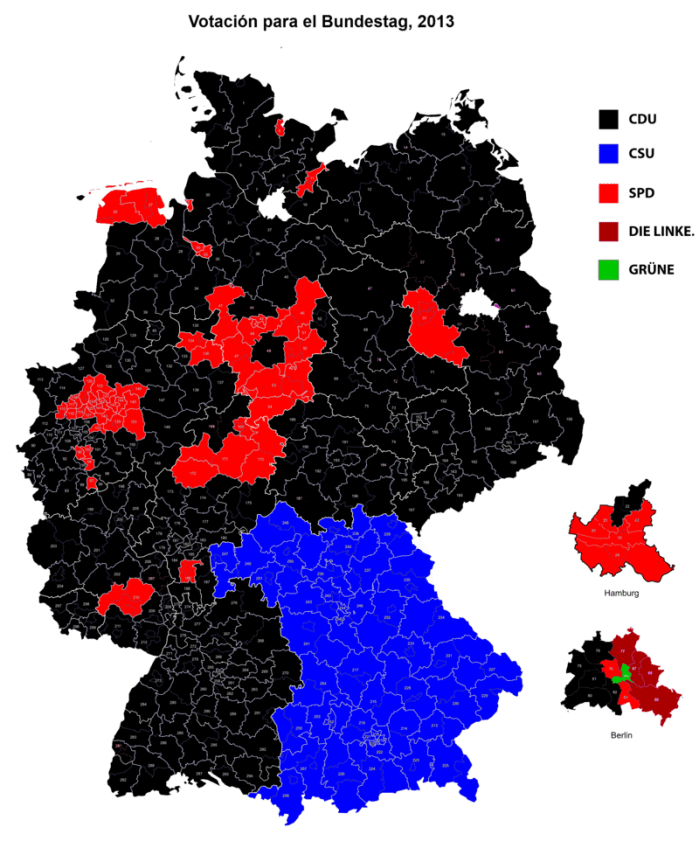
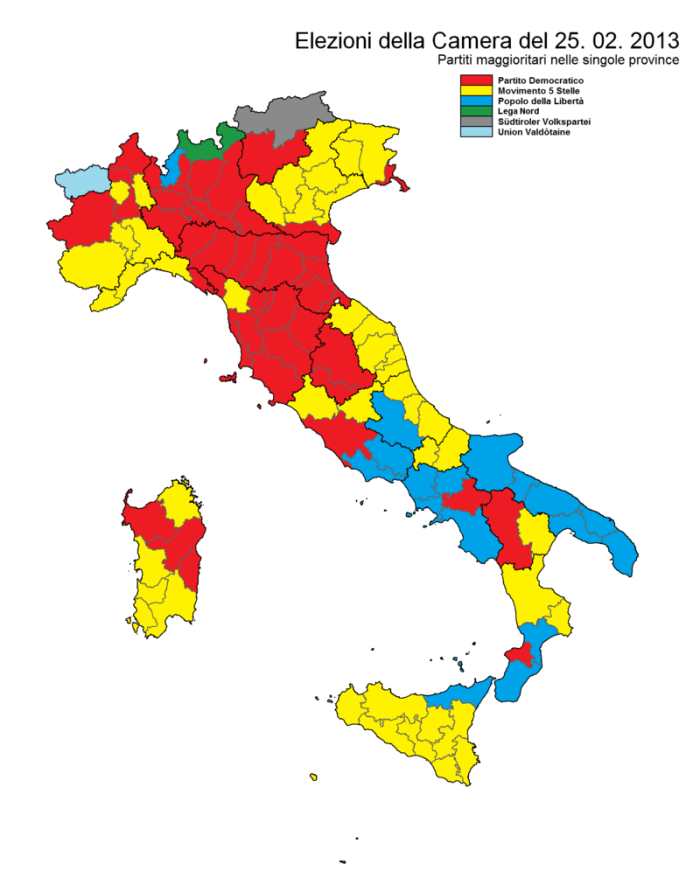
There is also an interesting cultural development to think about as well. The states in Western Europe and East Asia sans China have helped to develop a political culture that is more closely aligned with the one found in the US, Canada, and Australia/New Zealand, one where citizenship trumps ethnic identity. Identity based on citizenship is not as strong as the one found in the Anglo-Saxon world, and ethnic differences do pop up from time to time (largely due to linguistic differences), but the states of Western Europe and East Asia have taken many steps in the right direction to help eradicate the parochial tribalism that has long plagued European and Asian societies and replace it with citizenship. Take a look at the political constituencies of the following three countries:
They are largely based on a Left-Right divide rather than the ethnic ones we find in less economically-developed, less politically-integrated, post-colonial states. This Left-Right divide would fit in perfectly with the Madisonian constitution, as administrative units (i.e. Northern Ireland, Gangwon, Bavaria, or Trentino instead of the UK, South Korea, Germany, or Italy) could be added in a manner so as not to upset the balance between Left and Right currently found in the US. Political coalitions would wax and wane with time, of course, but if we want a world where the East Asians and Western Europeans pay their fair share, and where they are protected from Moscow and Beijing, then federation is as moderately radical as you can get.
Paralympics are over, and with them the cycle of Olympic Games in Rio de Janeiro. Once again the city was able to put up a good show, and thankfully all went well in the Cidade Maravilhosa. But not everything is alright in Rio: even more than the Olympics, the Paralympics were able to show the contradictions between the city where we live everyday and the city of the event: Rio is not welcoming for people with disabilities.
At least in Brazilian Portuguese, political correctness has done a mess with vocabulary concerning the kind of people who compete in Paralympics. We are not supposed to say they are disabled (don’t even think about saying they are crippled!). I think the correct vocabulary today is, as I used, “people with disabilities.” But even that is under political correct scrutiny, so it seems. All this discussion about words springs from cultural Marxism, postmodernism, relativism and the belief that there’s nothing objective beyond our vocabulary. But words can’t hide the reality: Rio is unequal. The way it treats the blind, the lame, and even the elderly or the young, is completely different from the way it treats people in middle-age and more able to walk. And all that despite strong legislation in this area.
One of the greatest debates in political philosophy in the 20th century happened between American philosophers John Rawls and Robert Nozick. Trying to build on classical liberal foundations (but moving to egalitarian liberalism), Rawls pointed out that “equality was supposed to be the moral benchmark for social and political institutions, and that any deviation from equality had to be specially justified.” Nozick answer was that liberty upsets patterns. Even if we have a starting point in society where we have a perfectly equal distribution of goods or assets, the moment that we allow people to be free to make their own choices (as liberalism prescribes) they are going to make choices we cannot possibly predict, and these choices are going to upset any kind of pattern we established in the first place. That happens because each one of us is unique in its own right: each one of us have a specific set of values, preferences and circumstances that upsets any would-be planner. So, if you want to respect human liberty to make choices, you have to give up on any plan for material equality.
Nozick’s answer to Rawls has a lot of Adam Smith in it. In The Theory of Moral Sentiments (1759) (preceding the more famous Wealth of Nations both in time and argument) Smith presented a character called “man of system.” This person sees society as an architect sees a blueprint for a construction. Smith says such person is “apt to be very wise in his own conceit; and is often so enamored with the supposed beauty of his ideal plan of government that he cannot suffer the smallest deviation from any part of it.” The problem is that humans have free will, the ability to make choices. And as such, they will upset any blueprint prepared for them. In other words, “individual people are not chess pieces you can move on a board with their dreams and desires ignored.” To the eyes of the would-be planner, “society must be at all times in the highest degree of disorder.”
So, material equality of outcomes (or at least of opportunities) is totally out of reach? Should we disregard it completely? Should the “invisible hand” prevail in spite of the weakest in our society? I don’t think so. Just the opposite! One of the very reasons I find classical liberalism morally appealing is the fact that no economic or political system ever conceived helps the weakest as it does. In other words, contrary to (what seems to me is) the popular belief, classical liberalism defends social justice more than any of its intellectuals alternatives. Answering John Rawls’s famous claim that “a just society will be one whose rules tend to work to the maximum advantage of the least well-off classes,” Friedrich Hayek pointed out exactly this. In The Constitution of Liberty, Hayek agreed with Rawls about the end at which social institutions should aim: the welfare of the least advantaged. He simply disagreed about the means Rawls thought would get us there.
Instead of thinking of us as chess pieces on a board, when can use the analogy of a soccer game (or football, or basketball – suit yourself). The outcome of the game is the result of the player’s individual abilities, but it is also the outcome of the rules. In other words, in a free society, where people are free to choose, the outcomes are not just the result of the innumerable decisions of countless individuals. They are also the result of the rules enforcing property rights, contracts, taxation, and so on. So, it’s important to think about the justice of these rules, as well as the outcomes they might have. The point is that we can embrace a theory of social justice, but that just tells us the end we are heading to, not the means to get there.
Contrary to egalitarians, progressivists and socialists claims, no theory “tends to work to the maximum advantage of the least well-off classes” as classical liberalism does. And that’s a great reason I support it. As I said in the beginning, Rio is very unequal, despite decades of egalitarian policies in the city and in Brazil as a whole. On the other hand, there’s plenty of evidence that classical liberal policies tend to help the very people others accuse it of ignoring. When it comes to doing social justice, it’s important to have not just the heart, but also the mind in the right place. And I believe classical liberal policies are this place.
No meu último post ofereci uma definição de capitalismo baseada nos conceitos de escolha pessoal, trocas voluntárias, liberdade de competição e direitos de propriedade privada. Em resumo, um capitalismo liberal ou uma sociedade de livre mercado. Neste post eu gostaria de começar a desfazer alguns mitos, equívocos e objeções comuns ao capitalismo (se entendido nos termos que defini anteriormente). A lista não é exaustiva, mas acredito que cobre bastante terreno da discussão. Aí vai:
Ser pró-capitalismo é ser pró-grandes corporações.
Adam Smith observou que empresários dificilmente se encontram para eventos sociais, mas que quando se encontram não conseguem evitar combinar meios de evitar a mútua concorrência. Empresários (especialmente donos de grandes corporações) tendem a não gostar de concorrência. É compreensível. A maioria de nós também preferira não ter colegas de trabalho com quem competir, assim como vários corredores hoje gostariam que Usain Bolt não existisse. O capitalismo liberal, no entanto, é um sistema de perdas e ganhos. Numa economia verdadeiramente livre de intervenção do estado é improvável que corporações se tornem desproporcionalmente grandes. A tendência é ao nivelamento.
O capitalismo gera uma distribuição de renda injusta
Uma das grandes objeções ao livre mercado é a desigualdade de renda. No entanto, nenhum sistema econômico na história foi tão eficiente em retirar pessoas da pobreza quanto o capitalismo. Numa economia verdadeiramente livre a desigualdade existe e é basicamente inevitável, mas não é nada quando comparada a sociedades que optam pelo controle estatal da economia. China, URSS e Cuba são os países mais desiguais da Terra.
O capitalismo é responsável por crises econômicas, incluindo a mais recente
A crise de 2008 foi causada por intervenção do governo norte-americano nos setores bancário e imobiliário. Sem intervenção do governo, instituições financeiras teriam um comportamento mais cuidadoso e a crise seria evitada. A mesma observação vale para basicamente qualquer crise econômica dos últimos 200 anos.
Capitalismo explora os pobres
A livre concorrência, por definição, não é um sistema de exploração. Quando eu pago cem reais por um par de sapatos, isso significa que eu valorizo mais o par de sapatos do que os cem reais. O sapateiro, por sua vez, valoriza mais os cem reais do que o par de sapatos. Isso não quer dizer que não existam vendedores inescrupulosos, ou que não existam compradores injustos. Mas numa sistema de livre concorrência as possibilidades de fraude são mitigadas justamente pela concorrência: se o produto ou serviço não agrada ao consumidor, há sempre a possibilidade de procurar a concorrência. Em resumo, no capitalismo o consumidor é rei. Para concluir este ponto, apenas uma observação: o salário é nada mais do que o preço que se paga pelo trabalho de uma pessoa. E as mesmas observações se aplicam.
Capitalismo é injusto
Algumas pessoas nascem com deficiências. Algumas pessoas nascem em famílias pobres ou desestruturadas. Isso é injusto? Por quê? Uma definição clássica de justiça é “dar a cada um o que lhe é devido”. O que nós é devido? O que nós merecemos? Eu merecia ter nascido com boa saúde? O que eu fiz para merecer isso? Estas perguntas facilmente nos levam a grandes indagações filosóficas e teológicas, e logo demonstram o quanto a acusação de injustiça numa economia livre é superficial. Ainda assim, nenhum sistema político ou econômico permite a ajuda aos desfavorecidos como o capitalismo. Se você considera injusto que existam pessoas sem dinheiro, sem saúde ou sem famílias estruturadas, sugiro que seja coerente e use mais do seu tempo e dinheiro para ajudar estas pessoas.
Capitalismo não traz felicidade
Pensando num sentido aristotélico, felicidade possui significados diferentes para cada um. Para um cristão significa ter um relacionamento pessoal com Deus através de Jesus Cristo. Provavelmente um não cristão não irá concordar com este conceito de felicidade. Dito isto, a liberdade econômica não tem como objetivo trazer felicidade para qualquer pessoa, e assim é injusto culpá-la por algo que não propõe fazer. Porém, dentro de um sistema de liberdade econômica a tendência é que a liberdade para a busca da felicidade também esteja presente. Além disso, com liberdade econômica é mais provável que consigamos buscar nossa felicidade através da criação de uma família, do envolvimento com instituições religiosas, ou mesmo ficando ricos simplesmente.
Capitalismo não é estético e é poluidor
Os países mais poluidores do século 20 foram URSS e China. Proporcionalmente ao tamanho da sua população, EUA está longe do topo desta lista. Quanto ao fator estético, sugiro pesquisar por imagens da Alemanha Ocidental e da Alemanha Oriental, ou da Coreia do Sul e da Coreia do Norte. Dizem que a beleza está nos olhos de quem vê, mas me parece bastante óbvio que esta acusação estética é simplesmente falsa.
Corporações são cheias de escândalos e extorsão
Com certeza elas são. Mas possuem o mesmo nível de corrupção de governos? A matemática é bastante simples: quanto mais governo, mais corrupção. Além disso, com uma corporação é possível simplesmente levar o dinheiro embora dali. Governos não são tão permissivos com evasão de impostos. A proposta de criação de mais sistemas de vigilância governamental apenas aumenta o tamanho do governo e as possibilidades de corrupção. A ideia de transparência e de consulta popular também é simplesmente falsa: a não ser que possamos passar 24 horas de nossos dias vigiando os governantes, estes sistemas simplesmente não terão possibilidade de funcionar. A solução mais simples continua sendo menos governo.
Há mais alguns tópicos que podem ser acrescentados e que deixarei para um futuro post. Por enquanto basta dizer que capitalismo (definido como livre mercado) pode ser bastante diferente daquilo que popularmente se entende.
The Greek crisis, the refugees crisis and the recently announced German suspension of the Schengen agreement on free movement are all very testing for the European Union. I certainly agree with Edwin that ideas of a highly integrated European Union superstate are in a bad state, but that has been the case for some time now, it is just that some European Commission people and ‘federalist’ enthusiasts have been very slow to realise this. I put ‘federalist’ in the scare quotes because ‘federalist’ can mean so many things as a form of relation between existing states and should not be only identified with highly integrated forms of federation in which the central state is dominant. Any such idea was effectively killed off years ago by a mixture of British opt outs from the Maastricht Treaty and the Danish referendum rejection of that treaty.
Of course these were thought by some to be secondary events which could be given temporary ad hoc solutions while the integrated superstate juggernaut rolled on. It is worth remembering that the phrase ‘ever closer union’ was in the Maastricht Treaty as a substitute for ‘federalism’ at the insistence of John Major (the then British Prime Minister) as a way of signalling the end of federalist ambitions. Since ‘ever closer union’ is open to not just integrated federalist meanings, but even unitary state interpretation, this is perhaps a bit strange, but the fact is the phrase signalled an end to integrationist federalist dreams in which John Major was probably quietly supported by some other states (including the Netherlands I believe) which did not want to stand out as anti-superstate. All this created the illusion of a process that only the UK and Denmark were standing aside from and they could be expected to join in later.
However, the integrated superstate model of federalism was already a paper tiger, a rhetoric only used as a way of legitimising a Franco-German dominated Europe, in which EU unity was heavily dominated by the wish to keep the French-German partnership going and offer everyone else the hope of a voice in an essentially Franco-German dominated process in which the two key states sought trade offs between individual national goals. Events since then have unravelled the superstate ideology as the French-German partnership has been reduced in importance by German unification, with some help from French failures at internal reform. The emergence of a reality concealed by the older sort of ‘federalist’ language can be seen in the referendum ‘no’ to the Lisbon Constitution in a few countries and the move to a Treaty. The Lisbon process was one of shifting power to the Council, to the place where intergovernmental decisions are made. The Eurozone upheavals have made it clear that Germany has a role in the EU unmatched by France.
On the current refugee crisis, the suspension of Schengen free movement is very disappointing, but an unavoidable response to such a massive tide of refugees. To my mind it may well be possible to integrate them, but clearly it is a challenge and clearly it is a challenge that public opinion does not seek, or not beyond some defined number of the most ‘real’ refugees. Anyway, this is not a completely new problem for the EU, France for example, has previously imposed border controls to deal with migrant influxes and deported unemployed migrants from eastern EU member states. This is a crisis situation which would exist with or without the EU and would lead to exceptional measures with regard to external border controls and internal security measures, including checks on identity papers. So I suggest it is not in itself an end to free movement within the EU, but more an indication that free movement will be subject to qualification in any foreseeable future. That still leaves the very real achievement of the EU in making movement between states easier, with all the attendant benefits for individual liberty and prosperity.
The Greek crisis has emphasised a form of economic integration in the Eurozone dominated by Germany, which is not what anyone would have put on paper as a federalist dream, but the reality is that the Eurozone was always about turning the Deutschmark into a European currency in which all members would benefit from the German reputation for sound finances and a strong currency, and therefore a de facto agreement to be subject to German economic discipline. No one used those words in public and everyone hoped that the crisis situation in which someone would have to impose order would never arise, but it has and we can see what was really been agreed to in the first place. That arrangement has worked at least moderately well so far. Ireland has actually done very well out of going along with German economic discipline. Italy, Spain and Portugal at the very least seem to have got past the worst. Greece is the most dubious case, but wild left populism has now receded in that country and that must be a success for the German led Eurozone. We are waiting to see whether the deal works in the long term in Greece. This does not have to be a complete German hegemony. In defence and foreign affairs, for example France and the UK are still strong compared with Germany.
The current regional tensions make it unlikely to my mind, as Edwin suggests, that the EU will not develop in the foreign and defence spheres. It would be more accurate, I believe, to say that the EU will develop an opt in personality in these areas in which not all states participate, but the core makes the EU more important in that field. Putin’s direct and indirect provocations, the nightmare in Syria and Iraq, and the threat of Islamist fundamentalism in west Africa, have all pushed EU states and previously neutral European states to become more engaged with security and defence issues. Now of course NATO is important here, but US willingness to look after Europe’s security for it is in decline and rightly so.
A response to the dangers I’ve just mentioned requires increased defence spending and and co-operation for European states and we can see this happening. Some of it cuts across the EU, as in co-operation between Nordic countries including Norway, which is outside the EU, but does not separate defence from the EU sphere. The membership of previously neutralist Sweden and Finland in the EU is clearly helping them co-operate with NATO countries. EU states are increasingly working with regard to a total European defence presence in which smaller states will limit the military spheres which the operate so that there is a co-ordinated division of labour. The UK is engaged in co-operation with the EU states on the border and hinterland problems in eastern Europe and the Middle East and this is likely to be a way over time in which the UK becomes more European oriented. This is a gradual process in which we will not see a Euro-army and a treaty in which the EU becomes sovereign in security matters, but we will see the EU mattering more in the defence and security sphere. One of the factors contributing to this is the refugee crisis.
Edwin raises some issue of (classical) liberal thinking in these areas and that is the final topic I will address, hopefully providing a framework for addressing the public policy and institutional issues above. Edwin is correct to say that voters want to see some important issues addressed on the national level and feel remote from the EU level, but let us be clear about what this means in reality. No individual voter has more influence over national policy that EU policy. Even in Luxembourg any one voter has no real voice, does not make a difference, in a community of three hundred thousand. There is no real difference between Luxembourg and the 500 million of the EU on this issue.
What people like when they think of the national level is that decisions are made by people like them, people with whom they can identify. Immigration and other forms of social change which undermine notions of self-contained homogeneity, such as the Internet, increased travel, decreasing identity with national religion, and regionalist movements, do not put am end to national identity, but they do qualify it. The recent EU crises have increased the visibility of European leaders across the continent, Angela Merkel must be more familiar to most Europeans than all but a handful of their own national politicians. The national level will not disappear and we will probably seem more shifts towards national and inter-governmental decision making, but let us not ignore the qualifications and opposite tendencies.
The point of the above paragraph is that we are not returning to the time of absolutely sovereign national governments in Europe (and of course the sovereignty was always limited in practice, particularly for the smaller and poorer countries) and I dispute what I take to be Edwin’s assumption that this is what is happening and should be welcomed. Apologies for any misunderstanding, but it looks very much to me as if he is saying that classical liberalism has preferred and should continue to prefer interaction between sovereign states over federalisation of any kind. He mentions David Hume, Adam Smith and Friedrich Hayek in this context.
However consider this quotation from Adam Smith: ‘Were all nations to follow the liberal system if free exportation and free importation, the different states into which a great continent was divided would so far resemble the different provinces of a great empire.’ (An Inquiry into the Nature and Causes of the Wealth of Nations. IV.v.b). Surely this contradicts Edwin’s claim. Hayek was the author of ‘The Economic Conditions of Inter-State Federalism’, which advocates federation between democracies to entrench free trade and basic rights. Similar comments can be found in The Road to Serfdom. Now maybe Hayek did not mean to advocate something like the EU as it is now, and even less what the most pure advocates for integrationist federalism wish for, but he did offer support to federation and constraints on national sovereignty.
Going back to the Enlightenment, Immanuel Kant, a liberal advocate of market economies, limited government and freedom under law, wrote essays favouring ‘federation’ or ‘confederation’ to enforce world peace. We can take it that Kant meant a kind of European federation as like most of the time he did not really regard non-Europeans as equals, even if he should have according to his own philosophical principles. Anyway, he had liberal arguments for constraints on national sovereignty, even if very limited in scope.
Edwin may perhaps feel that what Smith, Kant and Hayek said fits with what appears to be his desire for a European Union limited to free trade issue. However, it is important to establish that classical liberalism is open to federation or ’empire’ (which for Smith can be a confederation) and furthermore that a federation for very limited purposes is likely to spill over into other spheres. How do you guarantee peace, security and free trade without a lot of other connected government functions. It could be argued that classical liberal federation is limited to pure minarchist functions of national defence, and enforcement of laws, but why should we expect transnational federal states to stay limited within such a sphere when national states never do.
Liberal economics leads us to regard upheaval, change and destruction as healthy, within the limits of law and contract, as this is how there can be innovation and prosperity. We can think of politics in the same way. Current crisis conditions will change the EU but are at least as likely to do so in ways which reconstruct its various activities, and the ways in which they are conducted, to the benefit of its health, as to lead to an EU restricted to free trade or in a state of complete collapse.
Lately, the European Union (EU) stumbles from crisis to crisis. After a long hot spring dominated by the financial crisis in Greece, we now see the collapse of the system based on the Schengen Treaty, which secures the free movement of people within most countries of the EU. The upheaval is the result of the huge numbers of refugees entering the EU, mostly from Syria, Eritrea and Sudan. It is expected that Germany alone will offer asylum to approximately 1 million people this year. With no end of the refugee wave in sight more and more countries are either closing their borders, building fences, or reintroducing border patrols. The situation in Hungary seems worst, especially in the temporary refugee camps. This weekend we saw footage of guards throwing food into the hungry crowds, just like zoo keepers do when feeding the wild beasts. An absurd lack of civilization.
Both crises have at least two factors in common, namely issues of sovereignty and property rights. Sovereignty is claimed back by European politicians, who previously made arrangements at the European level, yet are now confronted by their electorates who want to end the infringements of their property rights. In the case of Greece it was about (mostly) Northern European leaders who were pressed by public opinion to stop paying for the support of what was seen as an almost bankrupt country. Certainly in Germany and The Netherlands it was seen that Greece made a mess of things which itself needed to sort out (this was the dominant perception, I underline that I do not say this is also the right presentation of all relevant facts). In the current refugee crisis public opinion also welcomes large numbers of people who –again as it is widely perceived- are seen a poor sods fleeing from a terrible war. Yet at the same time the people understand that the refugees, no matter how well educated some of them are, also need to receive all kinds of welfare arrangements and will go through an often hard process of integration into society. This against the background of more than a decade of heated debate about immigration and integration in most (Western) EU countries.
In both questions the politicians eventually tend to back out, by reclaiming national sovereignty. Not directly, as this would be embarrassing. So Greece got its third support package, and in the refugees crisis it is underlined that ‘temporary border patrols’ and even ‘border closings’ are still within the letter of the Schengen Treaty. There is also talk of centralizing the intake of refugees at the European level, instead of the current principle of ‘first country of entry is the country where asylum should be requested. This may well be a good idea given the fact that refugees will arrive (as the US experience also makes clear). Yet it is hard to predict how the negotiations will end, because there are large objections against the European Commission spreading refugees among the EU member states at its own peril.
The bigger picture however could well reveal that both events mark the end of the movement towards ‘ever closing union’, the old purpose mentioned in the Treaty Of Rome (1957), the most important founding treaty of European integration. That is significant, because if I am right in my assessment it means we are experiencing a real turning point. There are a number of contributing factors, most of which have been identified before, but that does not make them less significant, such as a lack of European identity among the European people, and the desire to accept only a minimum amount of European policy, due to the much stronger desire to make national decisions, which are easier to correct by the electorates. This, by the way, is fully in line with classical liberal thinkers such as Hayek, Hume or Smith.
Does this mean the EU is about to collapse? Hardly likely. The economic basis is still strong and while large the current problems can be paid for and sorted out eventually. Yet if integration stops here it will also mean that the EU will never get a serious common foreign policy or a common defense policy either, both of which have been tried –and failed- over the past decades. So the EU will then only be a ‘super free trade zone’, with a common trade policy, and strong legal apparatus also spreading out over many non-economic issues. This raises many more issues, but that goes beyond the purpose of this contribution. For one thing: these are once again exciting times in Europe!
In 2010 I wrote that economic issues are just another factor in decisions on war or peace. There is nothing to suggest that free trade leads to peace per se (The Liberal Divide over Trade, Peace, and War, International Relations, vol 24, number 2, June 2010).
This is not a particular popular viewpoint, certainly not among classical liberals and libertarians, for reasons written about before at this blog.
So it is nice to read in Dale C. Copeland’s new book Economic Interdependence and War (Princeton University Press 2015), that indeed it all depends upon the situation. Economic factors can just as easily be cause for war, as a cause for refraining from violence. Copeland does not write from the liberal tradition, but if he had, he could have used Adam Smith, David Hume or Friedrich Hayek in support for his argument.
Anyway, the good thing is that the free-trade -leads-to-peace thesis is slowly but surely being debunked. It makes for a better and more mature discussion about international relations, inside and outside liberalism.
You might be one of those libertarians, or you belong to some other creed, who think war can be eliminated. For example through international trade, the better use of our ratio, or more influence for regular people on foreign policy decisions. In my own work I have tried to make clear all of these claims are false, and many related ones as well. This is all in the writings of Hume, Smith, Hayek or Rand. The base line is that in human nature reason cannot overcome the emotions, at least, not with all people, at all times. This means that conflict is one of the perpetual characteristics of human action, both in domestic and international settings.
In the unlikely case you do not want to take my word for it, read this book. Coker is a professor of International Relations at the London School of Economics and Political Science, specializing in the study of war. In this short but powerful book, he clearly sets out the different reasons why war will not be eliminated, providing evolutionary, cultural, technological, geopolitical and a number of other reasons. Buy it, and your world view and view of human nature will be even more aligned to the great classical liberals.
After a few busy days at the office I finally have the time to take up Brandon’s challenge and write a few lines about interventions in Syria and Iraq. Indeed, as Brandon writes in some of the comments the basic classical liberal and liberal position is that interventions are a bad idea. They are a breach of the sovereignty of other states, and rarely achieve their goals. Military interventions upset the international order and the international and regional balances of power, and open the door to all kinds of counter-interventions. They are especially prone to failure when their goals are extensive, such as a desire to construct democracy in countries without democratic traditions. This is an act of rationalist constructivism, long associated with communism and socialism rather than liberalism.
Whether all interventions also weaken and possibly destabilize the intervening power, as some libertarians (and Brandon) claim is another matter. This surely depends on so many other variables that it is hard to take as a general rule. Indeed, to welcome a Chinese intervention to fight ISIS/ISIL in the expectation this would seriously weaken authoritarian China (again see Brandon’s thought provoking blog a few days ago) seems a few bridges too far.
Still, it is too simple to rule out all interventions, in all circumstances. While a duty to intervene cannot easily be defended, the right to intervention is a different matter altogether. For example, while generally opposed to military interventions for humanitarian purposes, David Hume and Adam Smith did allow prudent political leaders to intervene. Hardly ever for humanitarian reasons, but for reasons of state. Important principles they embraced, for example found in the work of Hugo Grotius, were the rights to punishment, retaliation, preventive action, the protection of property rights and the protection of subjects against other countries.
Applying the wisdom of the Scots to our current world does open the door for some military action by the West against ISIL in Syria and Iraq. For the US and Britain, the beheadings of their subjects are clear reasons for action. Also, ISIL clearly upsets the fragile regional balance of power, where the West has a clear stake given the recent intervention in Iraq (regardless what one thinks of that intervention, but that is all water under the bridge). Also, ISIL’s state formation is not a case of regular secession which libertarians may sympathize with. While it has its supporters, this is mainly a case of state formation at gun point, against the will of most people inhabiting the land controlled by ISIL.
Of course, this does not mean President Obama’s plan is going to succeed. While military action may kill many of the ISIL leaders and perhaps ultimately minimize its military capacity, it seems highly unlikely that foreign intervention is able to eradicate ISIL. After all, interventions do not change the mindsets of people. Surely, this ideology will remain with us, in one form or the other. That is no reason to abstain from intervention, yet it is a reason to set clear and limited goals, and to be honest and modest about its inevitably limited long term effects.
The list of ongoing armed conflicts in the worlds is long (see, for example, here) and has been long for centuries. There are many websites and research institutes that keep track of their number, the parties involved, the main issues, et cetera. There are many different definitions of war and armed conflict. Here, wars are simply defined as armed conflicts with participation of one or more states whose sovereignty is internationally recognized, whereas armed conflicts do not require state involvement. Armed conflicts have always been around in great numbers, often state-sponsored, for example the numerous and seemingly never ending conflicts in the Middle East, or recently in Northern Africa following the so-called Arab Spring. The recent collapse of Libya into civil war may serve as evidence.
The number of interstate wars dramatically decreased after the end of the Cold war, giving stimulus to loads of academic papers about democratic or liberal peace. Yet this era might well be over, given the situation in the Ukraine, but also many explosive situations in North-East Asia and South-East Asia.
Academic research resulted in a long and varied list of possible causes for wars and armed conflicts. Think for example of geopolitical factors (land, borders), natural resources (oil, gas, mines), population related issues (minorities of other countries living in a particular area, people demanding their own country), religious conflicts, the protection of one’s own people abroad, global political reasons (participation is war as a consequence of an alliance, or to preserve the balance of power), humanitarian reasons (genocide), et cetera. In contrast to popular belief, wars and conflicts are often multicausal, so there is not just a single but a number of reasons for their initiation and continuation.
War and conflict are the result of human action. Despite all the peace talks and agreements, treaties, other forms of international law, arbitration, the work of international organizations, and the pre-emptive actions by great powers in world politics, war and armed conflicts have never been eradicated. So it seems fair to assume this has something to do with human nature as well. Here the literature is much smaller, perhaps as a consequence of the dominant belief (at least in the Western world) in rational human beings capable to overcome war and armed conflict. As a matter of fact international relations as an academic discipline owes much of its origin to this idea. After the First World War many academic positions and departments were established, with the explicit aim to search for ways to prevent such disasters from happening again. Unsurprisingly, without much result.
The ‘human are guided by rationality thesis’ has been defended by many liberals in the American tradition (also known as social liberals or high liberals) and some libertarians as well. In fact most liberal IR theories are based on this idea. However, the idea that that human beings and conflict cannot be separated has been prominent in the writings of classical liberals such as Hume, Smith, Hayek and Mises, but also by Ayn Rand. Interestingly, for this latter position there is now increasing evidence from other academic disciplines, such as psychology and neurosciences. For example the famous book Thinking Fast and Slow by Daniel Kahneman, or more specifically War and Human Nature by Stephen Peter Rosen, Thayer’s Darwin and International Relations, or Donelan’s Honor in Foreign Policy.
While much more work needs to be done in this field, it is safe to conclude that liberals should not think about how to abolish war. Instead, the relevant question is how to deal and limit the inevitable occurrence and continuance of war and armed conflicts.
It is not common for liberals to praise neoconservative thinkers. Regardless if this concerns domestic politics or international affairs. While this normally makes a lot of sense, sometimes the liberals are clearly at fault. I recently re-read two of Robert Kagan’s most famous books: Paradise and Power: America and Europe in the New World Order (2003) and The Return of History and the End of Dreams (2008). The power of Kagan’s analysis struck me again in these two concise books, predominantly his balanced treatment of the enduring and dominant role of power in world politics. This is something not many liberals are keen to accept, the classical liberals excepted, most notably Hume, Smith and the certainly the hawkish Hayek.
In the light of the topical situation in Eastern Europe, let me quote a few lines from The Return of History.
‘One of the geopolitical fault lines runs along the western frontier of Russia, [Ukraine included] with Russia on one side, and the European Union and the United States on the other. Instead of an anticipated zone of peace, western Eurasia has once again become a zone of competition.’
‘If Russia was where history most dramatically ended two decades ago, today it is where history has most dramatically returned. Russia’s turn toward liberalism at home stalled and then reversed, and so has its foreign policy […….] Great power nationalism has returned to Russia and with it traditional great power calculations and ambitions.’
‘Contrary to the dismissive views of many in the West, Russia is a great power, and it takes pride in being a force to be reckoned with on the world stage.’
‘its oil and gas wealth has allowed Moscow to increase defense spending by more than 20 percent annually over the past three years’.
‘This new sense of power today fuels Russian nationalism. It also stirs up deep resentment and feelings of humiliation […] such as acceptance of NATO enlargement, the withdrawal of troops from former Soviet republics and the ceding of independence to Ukraine, Georgia and the Baltic states.’
Recall this was in 2008 and it just a very brief selection. There was not much the liberals (of all persuasions) could have added to this. Liberals generally lack realistic let alone original views on world politics. That is simply not good enough, if they have intentions to widens the appeal of liberal thought. An embrace of neoconservative insights such as Kagan’s would be a good start.



 Notes On Liberty