When the so-called progressive forces opened America wide to everything black after the police murder of George Floyd, I feared the worst. I thought I would be daily embarrassed by an endless parade of black affirmative action wonders. I was thinking of mediocre or frankly bad African American actors, would-be pundits, pseudo-intellectuals, and demagogues promoted solely because of their race in an act of mendacious collective contrition. (And it’s true that the Democratic Party, the current home of “progressives,” has a lot to be contrite about, going back to its foundation.) I had learned that fear from thirty years in academia, of course, as well as from the continuing demonstration of lack of acumen of the media in staging again and again Al (“Honest”) Sharpton and the seemingly immortal Reverend Jackson.
Here, a detour is in order. What I saw in academia was not the admission, or hiring or promotion of wholly incompetent individuals because of their race (except one time). What I witnessed instead was the fact that people who were qualified overall, were given a solid bump up because of their race. In the last academic hiring in which I was involved, for example, the favored job candidate was more than qualified, rather overqualified for my department, in fact. At 28, she was hired at the same salary I had achieved after twenty years. She was black, of course. Not good for race relations! End of detour.
To my great and pleasant surprise, this obvious orgy of promotion of the embarrassingly incompetent but racially endowed is not most of what happened in the past year. Instead, I began seeing more black faces and hearing more black voices in the English language media I normally follow. This happened without any loss of average quality. In the inside “culture and lifestyle” pages of my daily Wall Street Journal, for example, plays and movies by black authors and directors were reviewed instead of the usual whites’. I found nothing shameful there; in fact, it was a little bit refreshing. Whether this speaks to the quality of black culture producers or to the ordinary mediocrity of the WSJ inside pages, I am not sure. My point is that the descent into the intolerable I had feared and expected did not happen.
On the other hand, and as might be expected, National Public Radio crawled forward and backward to be ahead of the game and to do more for black authors, and black everything, and black everywhere, than anyone else. But in doing so, NPR fulfills all my usual expectation rather than my specific post-Floyd killing expectations. NPR is often unbearable because of its piousness, both sincere and contrived. And, I am well informed about this because I listen to NPR every weekend, have for years. First, it’s good for my moral character, like a cold shower upon getting up in the morning. Second, I want to be well informed about my enemies’ thinking and NPR gives me this in the most concentrated, efficient form possible. In addition, I frankly like a few of its weekly narrative offerings, such as “How I Built It” and the “Moth Radio Hour.”
To my mind, the Great American Racial Awakening is all pretty superficial. I think (I intuit) that few deep transformations will afflict it. My mind says, “Don’t panic!”
My optimism is rooted in the belief that the more grotesques forms of the new consciousness are going to be sloughed off naturally. For example, I am betting what within a short time, a combination of state actions, school board reactions, and quiet teachers’ rejections is going to push into oblivion the delirious statement that mathematics is “racist.” “Critical Race Theory,” that the schools are supposedly forced to teach, does not worry me much because no one knows what it is, not even those who are cramming it down our throats. (Perhaps two dozens academics really know what it is. They don’t matter.) I think it’s only a fancy word standing for a certain brand of historical revisionism. It seems to me it’s an attempt to make Americans re-focus and look at their history from a different angle. I will address this re-focusing in my next installment. I will do it explicitly as a conservative.
Or, some Monday links on central banks, manners over matters and hard-boiled decisions
That bond salesman from the Jazz Age was right. Reserving judgement, at least sometimes, allows for a fairer outcome. Take for example the Brick film (2005), a neo-noir detective story set in a modern Southern California high school. Here in Greece it made some ripples, then it was forsaken for good. Not sure about its status in the US or elsewhere, but “overlooked”/ “underrated” seem to go with it in web searches. I agree now, but when I first watched it, its brilliance was lost to me ( and no, it was not allegedly “ahead of its time”, as some lame progressive metal bands of late 90s hilariously asserted when they zeroed in sales…).
The film’s peculiarity was obvious from the titles. A couple of gals left the theater like 10’ in. My company and I were baffled for most part, by the gritty atmosphere. And I have not even begun with the dialogue. The language was something from off the map. As late Roger Ebert noted:
These are contemporary characters who say things like, “I got all five senses and I slept last night. That puts me six up on the lot of you.” Or, “Act smarter than you look, and drop it.”
You see, the whole thing was intended to serve tropes, archetypes and mannerisms from the hard-boiled fiction of 1920s-30s. A manly man vs crime and (corrupted) government, and so on and so forth. We went there, un-f-believably how, clueless about all these. We did, however, make a recurring joke from the following lines:
Brendan: You and Em were tight for a bit. Who’s she eating with now? Kara: Eating with? Brendan: Eating with. Lunch. Who.
Seen in this light, everything made sense to my gusto. Anyway, seems that reserving judgements not only does better assessments, but also protects the lazy unaware.
Now, I have previously indicated that I have a soft spot for the “technology of collective decisions” that are central banks. I usually reserve my judgements on them, too. This comment summarises recent developments, including a few interesting links:
The author argues that central banks, supposedly the bastions of technocratic approach, tend to “respond” (i.e. be nudged by and directly appeal) to a perceived “will of the people”, as it is expressed on-line or via events like the “FED Listens” series. This bend acts as a claim to legitimacy and accountability, in exchange of trust and extended discretion, leading to a self-reinforcing circle almost beyond the democratic election process. In other words, not quite the “Bastilles” contra “modern Jacobinism” (to remember how Wilhelm Röpke deemed independent central banks in 1960). A way out could be made, concludes the author, by introducing of a rule-based monetary policy.
Central banks, as institutional arrangements developed mostly during the 20th century, share a common mojo and tempo with the FED. They gradually assumed more independence, and since the emergence of modern financial markets, (even more) power. This rise has been accompanied by increasing obligations in transparency and accountability, fulfilled through an ever-expanding volume of communication in terms of hearings, testimonies, minutes, speeches etc. This communication also plays a role in shaping economic actors’ expectations, a major insight that transformed our understanding of macroeconomic outcomes. Andy Haldane talks all these, along with other delicious bits, in an excellent speech from 2017 (his speeches have generally been quite something):
Plot twist: The endeavor of more communication has a so-so record in clarity, as documented by the rising number of “education years” needed to follow and understand central banks’ messages. The same trend goes for the pylons of rule of law, the supreme courts, at least in Europe. We certainly have come a long way since that time at the 70s, when a former Greek central bank Governor likened monetary decisions to a Talmudic text, ok, but we are not there yet.
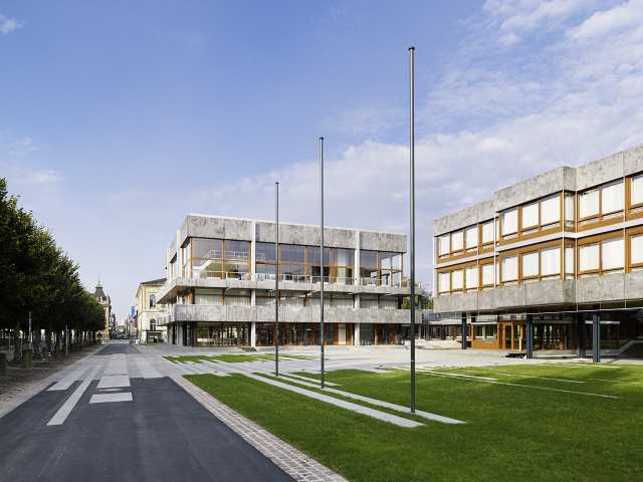
As a parting shot, let us return just over a year back, when the German Federal Constitutional Court delivered a not exactly reserved decision (5 May 2020) about the European Central Bank’s main QE program. The FCC managed to:
scold the top EU Court for flawed reasoning and overreach in confirming the legality of the program in Dec 2018 (the FCC had stayed proceedings and referred the case to the Court of Justice of the EU, for a preliminary ruling in Jul 2017. Europe’s top courts are not members of the Swift Justice League, apparently).
indirectly demand justifications from ECB, which is beyond its jurisdiction as an independent organ of EU law, by
warning the German public bodies that implement ECB acts to observe their constitutional duties, while
effectively not disrupting the central bank’s policy.
The judicial b-slapping provoked much outcry and theorising, but little more, at least saliently. The matter was settled by some good-willed, face-saving gestures from all institutions involved, while it probably gave a push to the Franco-German axis, to finally proceed in complementing monetary policy measures with the EU equivalent of a generous fiscal package. The rift between the EU and the German (in this case, but others could follow) respective legal orders may never be undone, though. If anyone feels like delving deeper into the EU constellation, here is a fresh long slog:
I did not meet many of the postwar great thinkers of classical liberalism. There are two exceptions. In 2005 I had a chat with James Buchanan to ask him if I could translate the talk he gave to an audience of graduate students at the IHS summer seminar at the University of Virginia at Charlottesville. He agreed and I translated and published his ideas on ‘the soul of classical liberalism’ in a Dutch liberal periodical.
The other exception is Julian Simon. Perhaps not in the same league as Buchanan, he was certainly a maverick thinker and a classical liberal great. A navy officer, business man, and advertising expert who turned to academia, he is known, to name just a few, for his arguments in the field of population growth, immigration studies and of course the book The Ultimate Resource. In it he argues that all raw materials become cheaper, while humans are the ultimate resource, among many other issues. He also won a famous wager with his critic Paul Ehrlich, stating that the prices of the raw materials Ehrlich could choose (in fact copper, chromium, nickel, tin, tungsten) would decrease (inflation adjusted) over the period of a decade they agreed upon. But that is just the tip of iceberg of this most interesting man. You should really read his autobiography A Life Against the Grain, whenever you have the chance.
In 1995 a friend of mine and I founded the Dutch Benedictus de Spinoza Foundation, meant to group young people educated in (classical) liberalism. In our first public Spinoza-lecture in 1996 Simon agreed to be the speaker. If memory serves right he was on his way to or from a Mont Pelerin Society meeting in Vienna, and was willing to make a small detour. We spent two full days with him, touring The Hague, arranging an interview in a national paper, have a formal dinner with Simon as gues of honor and speaker, and so forth. He was the most congenial guest one can wish. He clearly did not want to be among the hot shots only. In fact he insisted that we should visit ‘the worst neighborhood of the city’. So we went to one of the poorest parts in town, which he found delightful, not because of the (relative) poverty, but because of the multicultural experience and multicultural food at the market. An other remarkable feature was that in the half hour before we opened the lecture hall, he wished to take a nap on the floor right there!
In his autobiography he is open about his many rejected papers throughout his career, and the way he described how difficult it is to convince academic colleagues of a point that goes against conventional wisdom. No matter how strong the counter-evidence, people will choose to ignore the new facts or insights and keep the author out of the inner circle for as long as possible. I must say it sounds familiar to me, as an author who has attempted to change the views of (classical) liberals and IR theorists on international relations and (classical) liberalism. Even the obvious fact that trade cannot possibly foster peace seems impossible to establish. Alas, reading Simon one also learns to never give up, the truth shall be told, although there is no guarantee of success!
Baker’s innovation was to mold boneless bite-size morsels from ground, skinless chicken (often from the little-used parts of the bird), and encase them in a breading perfectly engineered to solve two key problems: It stayed put through both frying and freezing, critical for mass production and transportation.
Like all things “American,” chicken nuggets started with World War II:
During World War II, chicken became many Americans’ primary source of protein after the U.S. military commandeered red meat for soldiers, creating a beef shortage at home. The massive chicken demand incentivized businesses to produce the birds more cheaply, says anthropologist Steve Striffler
Read the rest, and I’d be in big trouble without Chicken McNuggets on road trips…
Comme c’est souvent le cas le soir, je lézarde devant TV5, la chaîne francophone internationale. C’est l’heure du journal télévisé. L’annonceur, francais selon sa diction, annonce gravement que ce jour est l’anniversaire de la mort des époux Rosenberg, exécutés en 1953 “parce qu’ils étaient Communistes”. Comme, à cette époque, il y avait au moins 100 000 Communistes aux Eats-Unis, ces deux-là n’auraient vraiment pas eu de chance!
Un autre jour, je regarde un documentaire français: “Gharjuwa, épouse de la vallée.” C’est sur une ethnie népalaise qui pratique la polyandrie: une femme, plusieurs maris. Le sujet est intrinsèquement intéressant, Et puis, le fait que la femme polygame ait le gros sourire aux lèvres tout le long de l’interview confirme pas mal de mes à-priori sur ce qui rend les femmes heureuses, en fin de compte! (Ce n’est pas sorcier.) Et puis, le tout se passe dans un environnement montagneux magnifique. Comme c’est le cas pour la plupart des documentaires français que je connais, la photo est excellente.
L’une des tâches de la femme polygame est de préparer la bière. Une voix masculine dit le commentaire en Français. Soyons francs: je ne sais pas si c’est le commentateur qui a rédigé le texte. En tous cas, il nous avise de ce qu’au Népal, la bière ménagère se prépare en faisant “cuire ensemble” une céréale (ou plusieurs; maïs ou blé noir, ou les deux, je ne suis pas sûr) et de la levure. Je fais un retour en arrière mental. C’est bien ce qu’il a dit. Mais, la levure, c’est ce qui transforme les sucres des céréales en alcool et en CO2. Mais la levure se compose d’organisme vivants qui trépassent vite à la chaleur. Pas question de la faire cuire avant qu’elle ait fait son travail. Ou alors, on a de la bouillie plutôt que de la bière. La description qu’on nous donne est donc aussi fausse qu’absurde.
A priori, selon son accent et sa diction, le commentateur est français ou belge. Il vient donc d’un pays célébré dans le monde entier pour ses vins et aussi pour ses bières, ou alors, massivement, seulement pour ses bières. Des pays respectés aussi pour la supériorite de leur boulangerie et de leurs pâtisseries levées. Vins, bières, pains, pâtisseries exigent la maîtrise des levures. Comment peut-on être aussi ignorant d’une partie aussi importante de sa culture materiélle pourtant séculaire? Et puis, je sais bien qu’en principe, l’ignorance et la connerie sont des choses différentes. Pourtant, il y a des cas où on a du mal a distinguer l’une de l’autre. Je me demande comment on peut avoir été élevé dans la culture française ou la culture belge et être si profondément mal informé, à moins d’être également stupide.
Mais j’éprouve aussi de l’indignation comme ainsi dire au second degré: Comment les public francais et autres francophones peuvent-ils laisser passer de telles manifestations d’ignardise grossière sans se plaindre, sans réagir? Le fait est courant, répandu selon mon usage de l’éventail, il est vrai limité, de media francophones à ma disposition. J’ai d’ailleurs inventé la formule suivante, (en Anglais) : “Si vous voulez apprendre rapidement quelquechose de faux, suivez simplement les cinq premières minutes d’un documentaire en Français!”
J’ai du mal à souscrire à l’idee que la langue francaiss, la langue de Diderot, serait intrinsèquement porteuse d’insouciance vis-à-vis de la vérité toute simple bien que cela ne soit pas complètement impossible.
Je m’interroge donc sur les possible causes sociologique de ce qui me paraît plus qu’un accident. Je veux parler de l’apparente indifférence aux faits associée à l’usage de la langue française contemporaine. Je ne sais pas s’il s’agit vraiment d’ un phénomène culturel en profondeur: Les faussetés ne dérangent simplement pas beaucoup les Francais. (Il me semble, subjectivement, que les autres francophones, Canadiens, et Belges, par exemple, sont moins coupables.) Je me demande si les causes des ces frequentes débâcles factuelles sont plus tortueuses et donc, moins directement culturelles:
“France 2 fait un documentaires sur les Népalaise à plusieurs maris. C’est chouette. Je vais téléphoner à Robert pour lui demander s’il peut prendre mon neveu Charlot pour le narrer. Justement, en ce moment, il ne fait pas grandchose.”
De vraies questions. Toutes les réponse m’intéressent, celles provenant de France autant que celle émanant d’autres pays francophones. Ecrire à jdelacroixliberte@gmail.com.
Le beau et ignare documentaire en question sort de chez Atmosphère Production avec le concours du Centre national du cinéma. (“Evidemment”, j’ai envie de d’ajouter.)
Don’t worry, this is not another tawdry tale of life among the hillbillies. I was raised in France in the fifties. We had a respectably long list of usual turpitudes including sexual practices that still don’t have a name in English but incest was low on that list. Instead, I am referring to my mother’s life-long but indirect influence on my sex life.
My mother – who had six children total – was always extremely optimistic about human sexual potential. When the first blue-jeans appeared in France, she swore none of her sons would ever be allowed to wear this new garment. She stated with finality that blue-jeans were expressly designed to mold a man’s intimate tool-kit in order to inflame otherwise chaste, sedate, and retiring young women. Raised in an all-female household herself, she took a keen interest in the magical transformation from sweet, lovable little boy to big, loud, brash, uncouth, sex-crazed semi-adult male. She wanted to be sure she would not screw up insofar as she had a part to play. She took the pragmatic path, almost the scientific path, you might say. From age 12 until we left home, the three boys were served red meat every evening at dinner. We ate lunch at school, or maybe skipped lunch altogether, so my mother worried we might be short of the raw material for testosterone, pure protein. There were five living children. The family lived on a single small public servant’s salary. Meat was expensive, except one kind of meat. That’s how the boys ended up with a mess of bloody, barely singed horse meat on their plate every night.
Perhaps, my mother’s physiological theory was approximately correct. Or, possibly, it was the power of suggestion: If you eat a lot of horses knowingly, you end up acquiring in your mind some of the attributes of horses. In any event, there was never any motor failure in her sons nor any lack of fuel in their motors.
As far back as I remember, there were whispers and even loud comments bordering on exclamations about the questionable behavior of some married women in our village-like area of Paris. There were even more in the small resort town where we went on vacation. That was a place where youngish married women were dropped by their husbands for months on end in close proximity to randy students in their early twenties. (Idleness is the mother of all vices, including that one!)
My mother spoke about those women from both sides of her mouth. On the one side, she condemned conjugal betrayal in the strongest terms. On the other side, she would declare,“The poor woman is a prisoner of her senses. What can she do?” In this, she differed markedly from her lower middle-class married girlfriends among whom the consensus was that you could forgive infidelity only if it was the result of “legrand amour,” the one great love that happens only once in a lifetime. My mother was not merely Lifetime Channel-like soft on gooey love; she was openly open-minded about erotics, specifically.
Her attitude was a big asset for her sons, I realized later. It gave us a goal in lieu of the vague unfocused, rutting search of adolescent males in general. From an early age, we had a clear goal: Among desirable girls (that would be 95% of them), identify those with a potential for becoming prisoners of their senses, cut them from the herd, and perform the needed to enslave them. The search was long but not really painful or boring. When I finally found one, I felt I had arrived at one of life’s major destinations.
At nine, two flows of humanity cross each other in front of Lulu Carpenter’s, the upscale coffee shop at the top of Pacific Avenue. Pacific Avenue is the main walking commercial thoroughfare, surprisingly well re-designed after the destruction 1989 earthquake. It’s nothing like the collection of cheap motels leading to the Boardwalk that greets the casual tourist entering Santa Cruz from high-traffic Ocean street.
Down Pacific comes the cortege of the houseless, walking from the shelter toward breakfast at the Salvation Army, a mile away. I don’t call them “homeless” because ownership of a house does not guarantee a home, and because it’s possible to make a home without a house. Also, I am sick of the sanctimoniousness of the word. Most of the houseless carry a large backpack. The smart ones also carry a guitar, or a guitar case, one of the best weapons against the city’s repressive ordinances. (See below.)
It would not take much to convince me that some of the houseless have a hangover. They are mostly silent. Those who are not harangue loudly society at large, or God, or no one in particular. One talks into a cell-phone she does not have. I know for a fact that one houseless woman in her thirties can speak perfect French with the (to me) quaint diction of what is probably a Swiss finishing school. (Trust me, I don’t have the talent to make up a detail like this.)
Up Pacific Avenue from the bus depot march Mexicans on their way to work. They converse loudly in Spanish. Many laugh or guffaw. The Mexicans all wear thick sensible jackets in dark colors, black, navy blue or gray. The houseless tend to be elaborately dressed, layer upon layer. It’s not all about the morning cold: Many women, and quite a few men, wear colorful Indian, or otherwise “ethnic” dress on top of jeans and sweaters. Every single one of the houseless is an Anglo. Perhaps, race matters, after all.
Much of residential Santa Cruz is littered. (I believe my own street is never swept by the city.) Pacific Avenue, however, the showcase artery, is cleaned every day or nearly so. There are two distinct street crews. You can tell which is coming from afar. The first crew is large, youngish, noisy and enthusiastic. It’s composed entirely of mentally handicapped people and of their minders. They make noise because they are invariably in good spirits, kidding one another endlessly and throwing good-humored insults around. When they are through, hardly a single cigarette butt has managed to conceal itself in a crack.
The other crew comprises mostly people in their forties and fifties in green uniforms who work slowly, with the dignity befitting their status as tenured city employees. They are said to be the best paid municipal employees anywhere in America. I think this is probably fair because, I suspect, most of them hold a Master’s in Comparative Literature, or of Fine Arts, from the University of California. They contribute to the gravitas of the community.
Lulu’s, the coffee shop, manages to maintain a steady truce between environmentally militant, abstemious, vegetarian types who hate tobacco, and smokers. I think this is because almost all the smokers are alternative lifestyle youths with pierced body parts, and existentialist graduate students from UCSC. No one really wants to find out how tough the pierced ones really are, and the graduate students earn respect by appearing to be in possession of profound truths that don’t even have a name in English.
By and large, the smokers are pigs: They throw cigarette filters with a half-life of twenty years on the ground although they are only ten feet from a litter box. Nobody ever complains about the littering because neatness is a bourgeois virtue incompatible with the community’s revolutionary spirit. (I think most city elections are disputed between Maoists and Trotskists, who have been in the closet elsewhere since 1971, and a few left-leaning liberals, all prosperous shopkeepers.) Besides, Lulu’s owner, who runs a tight ship, makes sure most of the butts are swept from his vicinity every night.
Shortly after nine, people come in for take-out coffee. The young ones are mostly workers from neighborhood shops who got up too late to fix their own coffee. (The result of a recurring epidemic: The young believe something tremendous will happen if only they stay up late enough.) A few customers sit down to read the paper in solitude, or they chat in groups of two or three to kick off the day with conviviality. No one knows what they do for a living. The young are probably students; the middle-aged may be teachers (like me), or independently wealthy. (Santa Cruz’ own dangerous secrets: Who is a trust fund baby? Who made a real estate fortune in the seventies?) One can easily tell the well-off from the poor because, for the former shabby clothing is de rigueur.
There are some old codgers who have probably been awake for hours. I avoid them like the plague because I suspect them of wanting to induct me into their mutual misery society: You let me tell you about my colon; I will listen about your arthritis. Among those who sit alone, reading a newspaper is common. They read the local give-away sheet (surprisingly good though uneven), or the Santa Cruz Sentinel (bad spelling, good local coverage, bad international coverage), the San Jose Mercury News (there are a few techies left after the dot.com debacle), the San Francisco Chronicle (for bottom feeders like me), or the New York Times, of course. No one has the cojones to read the Wall Street Journal in public. (There is no free lunch; there would be a Hell’s worth of shunning to pay.)
The serving staff is young, friendly, and sunny. Most of them nurture a creative sideline: painting, writing, music, the pursuit of esoteric beliefs. They are all avid readers, making Lulu’s a much better literary café than Saint Germain-des-Prés ever knew. By the way, one young guy reads big post- Modernist books of French origin. I am dying to warn him. (Bad French never translates into good English.) I resist the temptation because youth must be allowed to make its own mistakes. I think the young people on the staff worry sometimes about what being the butt of customers’ jovial moods and gracious thankfulness is going to do to their long-term creativity which requires a dose of misery, as everyone knows.
There is a punk rocker who works in the kitchen. His temples are shaved and a silver stud pierces his upper chin. He is a real conservative who works two jobs so his wife can stay home and take care of their child. He is against drugs, except tobacco. I swap him stories for cigarettes. What a deal!
For months, I have been trying to devise a sociologically valid taxonomy of beverage choices. It’s tough going. The green tea drinkers are probably followers of Buddhist mysticism, and hypochondriacs to boot. The chai drinkers would like to travel; they are sure they love India because they have never been there. Once, I forced my brother-in-law, a tea-trader visiting from Calcutta, to taste Lulu’s chai. He told me that what we call “chai” in America, “tea” in most Indian languages, is a good beverage for those allergic to tea.
You can tell the hard-line leftists by the fact that they load every beverage with prodigious amounts of sugar, or often, of honey. (Self- indulgence has a way to assert itself in roundabout paths.) I can’t figure out those men who order espresso or complicated Italianate coffee drinks. (Raspberry latte? Menthe mocha?) The women who do so require no explanation: All heterosexual women are naturally chi-chi (and many who are not). Hot honey and milk is probably for those who coddle their inner child. I can’t begin to tell you how many are hairy, 200 pound, rugged-looking guys. The presence of soy milk on the menu is not surprising though: It’s the politically correct accompaniment to organically grown coffee. The drinkers of regular coffee are probably solid citizens who ended up in Santa Cruz by happenstance. I suspect they have regular jobs and pay taxes regularly; the brew helps them stay regular. A few might be closet conservatives. You never know.
I have been marveling at a classificatory mystery: Lulu’s offers simultaneously, caffè latte, café con leche, and café au lait. I believe the three sets of words mean exactly the same thing. I could try each concoction in turn, of course, in a spirit of scientific experimentation. I refrain because I am charmed by the reliable mystery of three perfectly parallel universes neatly delineated by three mutually intelligible languages.
Yesterday, I came across this scoop on Twitter; New York Post and several other blogs have since reported it.
Regardless of this scoop’s veracity, the chart of Eight White identities has been around for some time now, and it has influenced young minds. So, here is my brief reflection on such identity-based pedagogy:
As a non-white resident-alien, I understand the history behind the United States’ racial sensitivity in all domains today. I also realize how zealous exponents of diversity have consecrated schools and university campuses in the US to rid the society of prevalent racial power-structures. Further, I appreciate the importance of people being self-critical; self-criticism leads to counter-cultures that balance mainstream views and enable reform and creativity in society. But I also find it essential that critics of mainstream culture don’t feel morally superior to enforce just about any theoretical concept on impressionable minds. Without getting too much into the right vs. left debate, there is something terribly sad about being indoctrinated at a young age —regardless of the goal of social engineering— to accept an automatic moral one-‘downmanship’ for the sake of the density gradient of cutaneous melanin pigment. Even though I’m a brown man from a colonized society, this kind of extreme ‘white guilt’ pedagogy leaves me with a bitter taste. And in this bitter taste, I have come to describe such indoctrination as “Affirmative Guilt-Gradient.”
You should know there is something called the Overton Window, according to which concepts grow larger when their actual instances and contexts grow smaller. In other words, well-meaning social interventionistas easily view each new instance in the decreasingly problematic context of the problem they focus on with the same lens as they consider the more significant problem. This leads to unrealistic enlargement of academic concepts that are then shoved down the throats of innocent, impressionable school kids who will take them as objective realities instead of subjective conceptual definitions overlaid on one legitimate objective problem.
I find the scheme of Eight White identities a symptom of the shifting Overton Window.
According to Thomas Sowell, there is a whole class of academics and intellectuals of social engineering who believe that when the world doesn’t reconcile to their pet theories, that shows something is wrong with the world, not their theories. If we are to project Thomas Sowell’s observation on this episode of “Guilt-Gradient,” it is perfectly reasonable to expect many white kids and their parents to refuse to adopt these theoretically manufactured guilt-gradient identities. We can then —applying Sowell’s observation—predict academics to declare that opposition to the “Guilt Gradient” is evidence for many covert white supremacists in the society who will not change. Such stories may then get blown up in influential Op-Eds, leading to the magnification of a simple problem, soon to be misplaced in the clutter of naïve supporters of such theories, the progressive vote-bank, and hard-right polemics.
We should all acknowledge that attachment to any identity—be it majority or minority—is by definition NOT a hatred for an outgroup. Assistant Professor of Political Science at Duke University, Ashley Jardina, in her noted research on the demise of white dominance and threats to white identity, concludes, “White identity is not, a proxy for outgroup animus. Most white identifiers do not condone white supremacism or see a connection between their racial identity and these hate-groups. Furthermore, whites who identify with their racial group become much more liberal in their policy positions than when white identity is associated with white supremacism.” Everybody has a right to associate with their identity, and equating one’s association with an ethnic majority identity is not automatically toxic. I feel it is destructive to view such identity associations as inherently toxic because it is precisely this sort of warped social engineering that results in unnecessary political polarization; the vicious cycle of identity-based tinkering is a self-fulfilling prophecy. Hence, recognizing the Overton Window at play in such identity-based pedagogy is a must if we have to make progress. We shouldn’t be tricked into assuming that the non acceptance of the Affirmative Guilt Gradient is a sign of our society’s lack of progress.
Finally, I find it odd that ideologues who profess “universalism” and international identities choose schools and universities to keep structurally confined, relative identities going by adding excessive nomenclature so they can apply interventions that are inherently reactionary. However, isn’t ‘reactionary’ a pejorative these ideologues use on others?
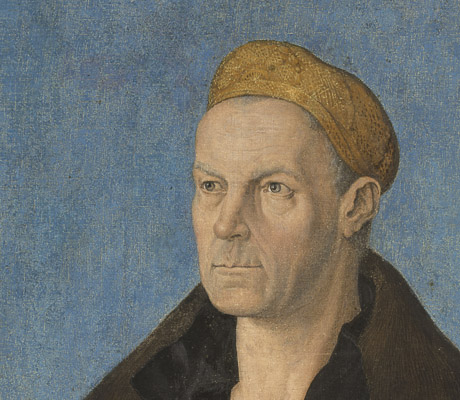
The most important historical question to help understand our rise from the muck to modern civilization is: how did we go from linear to exponential productivity growth? Let’s call that question “who started modernity?” People often look to the industrial revolution, which is certainly an acceleration of growth…but it is hard to say it caused the growth because it came centuries after the initial uptick. Historians also bring up the Renaissance, but this is also a mislead due to the ‘written bias’ of focusing on books, not actions; the Renaissance was more like the window dressing of the Venetian commercial revolution of the 11th and 12th centuries, which is in my opinion the answer to “who started modernity.” However, despite being the progenitors of modern capitalism (which is worth a blog in and of itself), Venice’s growth was localized and did not spread immediately across Europe; instead, Venice was the regional powerhouse who served as the example to copy. The Venetian model was also still proto-banking and proto-capitalism, with no centralized balance sheets, no widespread retail deposits, and a focus on Silk Road trade. Perhaps the next question is, “who spread modernity across Europe?” The answer to this question is far easier, and in fact can be centered to a huge degree around a single man, who was possibly the richest man of all time: Jakob Fugger.
Jakob Fugger was born to a family of textile traders in Augsburg in the 15th century, and after training in Venice, revolutionized banking and trading–the foundations on which investment, comparative advantage, and growth were built–as well as relationships between commoners and aristocrats, the church’s view of usury, and even funded the exploration of the New World. He was the only banker alive who could call in a debt on the powerful Holy Roman Emperor, Charles V, mostly because Charles owed his power entirely to Fugger. Strangely, he is perhaps best known for his philanthropic innovations (founding the Fuggerei, which were some of the earliest recorded philanthropic housing projects and which are still in operation today); this should be easily outcompeted by:
His introduction of double entry bookkeeping to the continent
His invention of the consolidated balance sheet (bringing together the accounts of all branches of a family business)
His invention of the newspaper as an investment-information tool
His key role in the pope allowing usury (mostly because he was the pope’s banker)
His transformation of Maximilian from a paper emperor with no funding, little land, and no power to a competitor for European domination
His funding of early expeditions to bring spices back from Indonesia around the Cape of Good Hope
His trusted position as the only banker who the Electors of the Holy Roman Empire would trust to fund the election of Charles V
His complicated, mostly adversarial relationship with Martin Luther that shaped the Reformation and culminated in the German Peasant’s War, when Luther dropped his anti-capitalist rhetoric and Fugger-hating to join Fugger’s side in crushing a modern-era messianic figure
His involvement in one of the earliest recorded anti-trust lawsuits (where the central argument was around the etymology of the word “monopoly”)
His dissemination, for the first time, of trustworthy bank deposit services to the upper middle class
His funding of the military revolution that rendered knights unnecessary and bankers and engineers essential
His invention of the international joint venture in his Hungarian copper-mining dual-family investment, where marriages served in the place of stockholder agreements
His 12% annualized return on investment over his entire life (beating index funds for almost 5 decades without the benefit of a public stock market), dying the richest man in history.
The story of Fugger’s family–the story, perhaps, of the rise of modernity–begins with a tax record of his family moving to Augsburg, with an interesting spelling of his name: “Fucker advenit” (Fugger has arrived). His family established a local textile-trading family business, and even managed to get a coat of arms (despite their peasant origins) by making clothes for a nobleman and forgiving his debt.
As the 7th of 7 sons, Jakob Fugger was given the least important trading post in the area by his older brothers; Salzburg, a tiny mountain town that was about to have a change in fortune when miners hit the most productive vein of silver ever found by Europeans until the Spanish found Potosi (the Silver Mountain) in Peru. He then began his commercial empire by taking a risk that no one else would.
Sigismund, the lord of Salzburg, was sitting on top of a silver mine, but still could not run a profit because he was trying to compete with the decadence of his neighbors. He took out loans to fund huge parties, and then to expand his power, made the strategic error of attacking Venice–the most powerful trading power of the era. This was in the era when sovereigns could void debts, or any contracts, within their realm without major consequences, so lending to nobles was a risky endeavor, especially without backing of a powerful noble to force repayment or address contract breach.
Because of this concern, no other merchant or banker would lend to Sigismund for this venture because sovereigns could so easily default on debts, but where others saw only risk, Fugger saw opportunity. He saw that Sigismund was short-sighted and would constantly need funds; he also saw that Sigismund would sign any contract to get the funds to attack Venice. Fugger fronted the money, collateralized by near-total control of Sigismund’s mines–if only he could enforce the contract.
Thus, the Fugger empire’s first major investment was in securing (1) a long-term, iterated credit arrangement with a sovereign who (2) had access to a rapidly-growing industry and was willing to trade its profits for access to credit (to fund cannons and parties, in his case).
What is notable about Fugger’s supposedly crazy risk is that, while it depended on enforcing a contract against a sovereign who could nullify it with a word, he still set himself up for a consistent, long-term benefit that could be squeezed from Sigismund so long as he continued to offer credit. This way, Sigismund could not nullify earlier contracts but instead recognized them in return for ongoing loan services; thus, Fugger solved this urge toward betrayal by iterating the prisoner’s dilemma of defaulting. He did not demand immediate repayment, but rather set up a consistent revenue stream and establishing Fugger as Sigismund’s crucial creditor. Sigismund kept wanting finer things–and kept borrowing from Fugger to get them, meaning he could not default on the original loan that gave Fugger control of the mines’ income. Fugger countered asymmetrical social relationships with asymmetric terms of the contract, and countered the desire for default with becoming essential.
Eventually, Fugger met Maximilian, a disheveled, religion-and-crown-obsessed nobleman who had been elected Holy Roman Emperor specifically because of his lack of power. The Electors wanted a paper emperor to keep freedom for their principalities; Maximilian was so weak that a small town once arrested and beat him for trying to impose a modest tax. Fugger, unlike others, saw opportunity because he recognized when aligning paper trails (contracts or election outcomes) with power relationships could align interests and set him up as the banker to emperors. When Maximilian came into conflict with Sigismund, Fugger refused any further loans to Sigismund, and Maximilian forced Sigismund to step down. Part of Sigismund’s surrender and Maximilian’s new treaty included recognizing Fugger’s ongoing rights over the Salzburg mines, a sure sign that Fugger had found a better patron and solidified his rights over the mine through his political maneuvering–by denying a loan to Sigismund and offering money instead to Maximilian. Once he had secured this cash cow, Fugger was certainly put in risky scenarios, but didn’t seek out risk, and saw consistent yearly returns of 8% for several decades followed by 16% in the last 15 years of his life.
From this point forward, Fugger was effectively the creditor to the Emperor throughout Maximilian’s life, and built a similar relationship: Maximilian paid for parties, military campaigns, and bought off Electors with Fugger funds. As more of Maximilian’s assets were collateralized, Fugger’s commercial empire grew; he gained not only access to silver but also property ownership. He was granted a range of fiefs, including Arnoldstein, a critical trade juncture where Austria, Italy, and Slovenia border each other; his manufacturing and trade led the town to be renamed, for generations, Fuggerau, or Place of Fugger.
These activities that depended on lending to sovereigns brings up a major question: How did Fugger get the money he lent to the Emperor? Early in his career, he noted that bank deposit services where branches were present in different cities was a huge boon to the rising middle-upper class; property owners and merchants did not have access to reliable deposit services, so Fugger created a network of small branches all offering deposits with low interest rates, but where he could grow his services based on the dependability of moving money and holding money for those near, but not among, society’s elites. This gave him a deep well of dispersed depositors, providing him stable and dependable capital for his lending to sovereigns and funding his expanding mining empire.
Unlike modern financial engineers, who seem to focus on creative ways to go deeper in debt, Fugger’s creativity was mostly in ways that he could offer credit; he was most powerful when he was the only reliable source of credit to a political actor. So long as the relationship was ongoing, default risk was mitigated, and through this Fugger could control the purse strings on a wide range of endeavors. For instance, early in their relationship (after Maximilian deposed Sigismund and as part of the arrangement made Fugger’s interest in the Salzburg mines more permanent), Maximilian wanted to march on Rome as Charlemagne reborn and demand that the pope personally crown him; he was rebuffed dozens of times not by his advisors, but by Fugger’s denial of credit to hire the requisite soldiers.
Fugger also innovated in information exchange. Because he had a broad trading and banking business, he stood to lose a great deal if a region had a sudden shock (like a run on his banks) or gain if new opportunities arose (like a shift in silver prices). He took advantage of the printing press–less than 40 years after Gutenberg, and in a period when most writing was religious–to create the first proto-newspaper, which he used to gather and disseminate investment-relevant news. Thus, while he operated a network of small branches, he vastly improved information flow among these nodes and also standardized and centralized their accounting (including making the first centralized/combined balance sheet).
With this broad base of depositors and a network of informants, Fugger proceeded to change how war was fought and redraw the maps of Europe. Military historians have discussed when the “military revolution” that shifted the weapons, organization, and scale of war for decades, often centering in on Swedish armies in the 1550s as the beginning of the revolution. I would counter-argue that the Swedes simply continued a trend that the continent had begun in the late 1400’s, where:
Knights’ training became irrelevant, gunpowder took over
Logistics and resource planning were professionalized
Early mechanization of ship building and arms manufacturing, as well as mining, shifted war from labor-centric to a mix of labor and capital
Multi-year campaigns were possible due to better information flow, funding, professional organization
Armies, especially mercenary groups, ballooned in size
Continental diplomacy became more centralized and legalistic
Wars were fought by access to creditors more than access to trained men, because credit could multiply the recruitment/production for war far beyond tax receipts
Money mattered in war long before Fugger: Roman usurpers always took over the mints first and army Alexander showed how logistics and supply were more important than pure numbers. However, the 15th century saw a change where armies were about guns, mercenaries, technological development, and investment, and above all credit, and Fugger was the single most influential creditor of European wars. After a trade dispute with the aging Hanseatic League over their monopoly of key trading ports, Fugger manipulated the cities into betraying each other–culminating in a war where those funded by Fugger broke the monopolistic power of the League. Later, because he had a joint venture with a Hungarian copper miner, he pushed Charles V into an invasion of Hungary that resulted in the creation of the Austro-Hungarian Empire. These are but two of the examples of Fugger destroying political entities; every Habsburg war fought from the rise of Maximilian through Fugger’s death in 1527 was funded in part by Fugger, giving him the power of the purse over such seminal conflicts as the Italian Wars, where Charles V fought on the side of the Pope and Henry VIII against Francis I of France and Venice, culminating in a Habsburg victory.
Like the Rothschilds after him, Fugger gained hugely through a reputation for being ‘good for the money’; while other bankers did their best to take advantage of clients, he provided consistency and dependability. Like the Iron Bank of Braavos in Game of Thrones, Fugger was the dependable source for ambitious rulers–but with the constant threat of denying credit or even war against any defaulter. His central role in manipulating political affairs via his banking is well testified during the election of Charles V in 1519. The powerful kings of Europe– Francis I of France, Henry VIII of England, and Frederick III of Saxony all offered huge bribes to the Electors. Because these sums crossed half a million florins, the competition rapidly became one not for the interest of the Electors–but for the access to capital. The Electors actually stipulated that they would not take payment based on a loan from anyone except Fugger; since Fugger chose Charles, so did they.
Fugger also inspired great hatred by populists and religious activists; Martin Luther was a contemporary who called Fugger out by name as part of the problem with the papacy. The reason? Fugger was the personal banker to the Pope, who was pressured into rescinding the church’s previously negative view of usury. He also helped arrange the scheme to fund the construction of the new St. Peter’s basilica; in fact, half of the indulgence money that was putatively for the basilica was in fact to pay off the Pope’s huge existing debts to Fugger. Thus, to Luther, Fugger was greed incarnate, and Fugger’s name became best known to the common man not for his innovations but his connection to papal extravagance and greed. This culminated in the 1525 German Peasant’s War, which saw an even more radical Reformer and modern-day messianic figure lead hordes of hundreds of thousands to Fuggerau and many other fortified towns. Luther himself inveighed against these mobs for their radical demands, and Fugger’s funding brought swift military action that put an end to the war–but not the Reformation or the hatred of bankers, which would explode violently throughout the next 100 years in Germany.
This brings me to my comparison: Fugger against all of the great wealth creators in history. What makes him stand head and shoulders above the rest, to me, is that his contributions cross so many major facets of society: Like Rockefeller, he used accounting and technological innovations to expand the distribution of a commodity (silver or oil), and he was also one of the OG philanthropists. Like the Rothschilds’ development of the government bond market and reputation-driven trust, Fugger’s balance-sheet inventions and trusted name provided infrastructural improvement to the flow of capital, trust in banks, and the literal tracking of transactions. However, no other capitalist had as central of a role in religious change–both as the driving force behind allowing usury and as an anti-Reformation leader. Similarly, few other people had as great a role in the Age of Discovery: Fugger funded Portuguese spice traders in Indonesia, possibly bankrolled Magellan, and funded the expedition that founded Venezuela (named in honor of Venice, where he trained). Lastly, no other banker had as influential of a role in political affairs; from dismantling the Hanseatic League to deciding the election of 1519 to building the Habsburgs from paper emperors to the most powerful monarchs in Europe in two generations, Fugger was the puppeteer of Europe–and such an effective one that you have barely heard of him. Hence, Fugger was not only the greatest wealth creator in history but among the most influential people in the rise of modernity.
Fugger’s legacy can be seen in his balance sheet of 1527; he basically developed the method of using it for central management, its only liabilities were widespread deposits from the upper-middle class (and his asset-to-debt ratio was in the range of 7-to-1, leaving an astonishingly large amount of equity for his family), and every important leader on the continent was literally in his debt. It also showed him to have over 1 million florins in personal wealth, making him one of the world’s first recorded millionaires. The title of this post was adapted from a self-description written by Jakob himself as his epitaph. As my title shows, I think it is fairer to credit his wealth creation than his wealth accumulation, since he revolutionized multiple industries and changed the history of capitalism, trade, European politics, and Christianity, mostly in his contribution to the credit revolution. However, the man himself worked until the day he died and took great pride in being the richest man in history.
If two politicians are equal in every other respect but one was better at basketball… I guess go with that one? I mean, all else equal they’re maybe a better team player or something. But that line of thinking doesn’t mean we should only ever vote for ex-NBA stars.
There are plenty of similar potentially attractive signals: veteran status, success in business and/or being a fake billionaire, academic success, acting, etc. Some signals are stronger, and some imply a smaller pool of candidates. If there are more successful business people in the world we should expect to observe more of them transitioning to politics than, say, world-class bowlers. Likewise, if the signal is more relevant (e.g. law degree vs. paleontology degree), it makes sense to see more of them in the wild.
That 18% of German politicians have PhD’s seems wild to me. Maybe I’m biased because I work in an organization full to the brim with PhD’s. But that many politicians with degrees seems about as reasonable and as likely as having half of Congress be elite athletes.
The central coast of California where I live has been cursed and blessed by sunny weather this winter; it has also been blessed and cursed by unusually high waves. The curse of good weather when it should be raining, known as “drought,” is that it may feed into more horrendous forest fires next summer, same as we had last summer. The blessings of sunny weather are obvious. The curse of very high waves is that they cause some damage to infrastructure and that they sometimes claim lives. The blessing of high waves is that surfing is thriving like never before in “Surf City,” Santa Cruz, my town.
On a Wednesday or Thursday afternoon of January, the beach two miles from my house is crowded like in June (not quite as much as in August). It’s largely covered with family clusters. Look at it in context. Children are not allowed to go to school (although they are almost completely immune); many moms who would otherwise work have been laid off from their more or less precarious jobs. Many dads have been laid off too; others “work from home.”
The kids are restless, the sun is shining, the temperature is better than OK; the beach is within the reach of many. (More on this later.) What are we going to do? Let’s spend the middle of the day at the beach, of course.
I should have have been able to predict it because I am a serious beach social scientist. I missed the boat. Santa Cruz was one of the best small towns I knew only seven or eight years ago. Then, the homeless started drifting in and they never left. Some are in the last stages of a life dedication to drugs; others are rationality challenged; a few are both. For the past five years or so, there have been enough of them to affect the quality of life for everyone else. Their presence determines to an extent where one can take one’s children in town. (Sorry, I call them as I see them; no judgment involved.)
Then, the COVID fell upon us from China. In short order, the authorities, including the local powers, found their authoritarian footing, or they got in touch with their own panic. And panic is often a handmaiden to petty authoritarianism. They began prohibiting this, and that, and that public behavior, this and that kind of work, etc.
Santa Cruz is becoming a ghost town, one restaurant closing at a time, one store closing at a time. The movie theaters are shut down, the biggest one forever. The one large bookstore does remain open though. You can still pick up and return books at the public library but either you can’t browse or it’s fiendishly complicated to do so on-line. Besides, one can only read so many hours a day if one is under fifty, so many minutes if under fifteen.
Just from looking around, I assume that many school-age children have taken the opportunities on-line learning offers to become even more adept at using the internet. Such skills come handy in times of extreme idleness. I believe a good many kids are on TikTok and similar on-line alternate worlds six or seven hours a day, some amassing “followers.” (Don’t ask me why I believe this, it’s very personal; I just know.) But although such games are addictive, they too become tiresome and children crave direct social contact anyway. So, eventually, many kids end up at the beach with their parents and with their siblings and their parents or, with adult neighbors and their children.
In point of fact, many of the family clusters on the sand are further grouped into larger ensembles including some ten or fifteen adults and thirty or forty children. I haven’t yet figured out whether they are grouped on the basis of school, church, or just neighborhood. Whatever the case, it’s pretty impressive. No one is wearing a mask.
On weekends, visitors from far afield join those mostly local people on the beach, increasing again the crowding. There are several ways to spot the visitors. Some play loud music- a sure activator of xenophobia; others send their kids to the water with a life jacket on top of their wetsuits. (Not cool.) Some wear masks.
Speaking of wetsuits, a new thing, something I have never seen before, is that dozens of little kids are in wetsuits. This is a rare sight because in normal times, parents tell themselves: Not worth buying the kid a wetsuit; he is going to outgrow it in months.
The calculation has changed because of a virus. The parents are largely unable to spend money on dining out, other shopping opportunities are limited and inconvenient; for the well-heeled, this year, there has been no winter vacation to spend on; for the least well endowed, there are not even school supplies expenditures. I am saying that under current circumstances, unlike in previous years, almost any parents feel that they can afford to buy one or two children’s wetsuits (at about $125 or less each). This changes everything.
More importantly, perhaps, but I won’t dwell on this because I can’t afford to lose half of humanity as potential friends, for the first time in my experience, you see dozens of mature women in wetsuits. I have to be cautious here because, let’s say that the wetsuit as a garment is not all that flattering to the mature female shape.
The beach I have in mind is a few hundred yards around a point from globally famous Steamer Lane where world surf championships are held most winters. The waning rollers of Steamer Lane land on that beach and they are suitable, the farthest ones for intermediate surfers, and the closest, for beginners. So, almost every family cluster on the beach includes one, two, or three surfers.
Learning a new sport is often wonderful; learning it as a family is terrific. Coming out of the water cold but exhilarated and sharing a sandwich with your kids and with your spouse is like a return to a lovely, simpler past most people today have only heard of, if that.
Downbeach some way, three tiny girls in tiny bikinis chase one another in the small waves. Their squeals gladden the heart. A couple of boys nearby are on the wet sand absorbed by a hydrokinetic project. They ignore the girls as is proper. A smart white egret has figured out that humans are not predators. It picks sand crabs right between the feet of children. At least some creatures are enjoying a new freedom and that’s all good (except for the sand crabs).
Surfing, loosely defined, plus the new pleasant, voluntary family closeness around it, has become the first recourse but also the last recourse of many of the locked-down. It must be pretty much irreplaceable for them under the current circumstances of health-based restrictions, and health pretext-based restrictions on ordinary activities, circumstances of forced idleness and, of unnatural family interaction in a closed space. Surfing is the thin pillar around which some people are building a small, fragile edifice of freedom and joy.
If the local health authorities try – as they did last spring – to restrict parking near the beach, I believe all hell will break loose. (And, I am being polite, I was thinking of fans, not fanatics, air circulation devices.) That’s true, although Santa Cruz is largely a “progressive” town. Every material obstacle to parking is one less family group able to have recourse to the last recourse. The real surfers among them, advanced or not, are tough people. They immerse themselves voluntarily for hours in cold water. (Wetsuits don’t protect faces and hands, and the rest of the body, only imperfectly). They deliberately submit themselves, and often their children, to the dangers of breaking surf. And, I don’t even mention sharks, known to frequent the area because we have many sea lions. (The last fatal shark attack was about 18 months ago, a long time ago or yesterday, depending.)
At any rate, the surfers won’t go meekly. They are not likely to submit to orders to stay away from waves that are extremely unlikely transmitters of viruses. If the authorities even attempt to take away this last vestige of personal freedom, the surfers will proclaim and lead a sort of revolution. Also, if I were the authorities, I would think twice before turning draconian because many law enforcement people (and firefighters) are surfers themselves so, the expected instruments of repression would be somewhat unreliable. And no one, but no one hates surfers except other surfers. So, don’t go seeking allies in repression.
Local tyrants – however well meaning you are – don’t even think about it! You don’t want to face the full anger of barefoot families in wetsuits who have been enduring for a year a bunch of largely ineffectual, ill-explained, and often idiotic regulations.
We find ourselves in an overlap of classical free-speech abstractions, editorialized-media discourse, and algorithmic-social media diatribe. Each of these is a product that cannot reproduce the stability of the system that produced them. And yet, these platforms—print, electronic and social media—represent disruptions that fill in a vacuum felt in the other system.
Besides, we tend to think that the IT revolution’s transformations with our iPhones, Facebook, and Twitter, are without a parallel, but think of what urbanization brought to the rural life, what the railway brought in the nineteenth century or the telephone in the early twentieth. Disruptive innovations that increased transportation speed in the past couple of hundred years have not lowered commuting time but instead increased commuting distances. The size of an average individual’s ‘extended family’ cluster is an approximate invariant—it doesn’t change with city size. In a village, we are limited to a community by proximity, whereas in a city, we are free to choose our own “village” by our likes and dislikes.
Similarly, social media tools have not brought us closer the way we intended it would. Instead, they have allowed us to construct our “internet villages.” These internet villages are scaled-up, combustible derivatives that cannot reproduce the stability of offline, real-world social interactions that produced them. Instead of free-speech, they cater to our preconceived notions by exposing us to algorithmic-speech that makes each of us a volatile, motivated political actor outside the legal institutions born out of civil society. Their extreme negative externalities include conspiracies, real-world riots, and unrest. Nonetheless, in a primal way, internet populism coming out of these internet villages is gesturing at the real-world rifts created by liberal legalism’s parchment antidotes on the one end and lack of upward mobility on the other end.
As Tyler Cowen points out in his book, The Complacent Class, in our digital realm, the word “disruption” is no longer violent but the peaceful label for an ingenious upheaval of an established business order. Taking a cue from this digital paradox, it is not unreasonable to assume that a radical improvement in our physical realm may occur when we volunteer to act with moderation on social media platforms. If we don’t act with moderation, someone else will moderate it for us. Responsible self-regulation can preclude complicated centralized government regulation.
STEM topics are important (duh!). Finding the future scientists who will improve my health and quality of living is important to me. I want society to cast a wide net to find all those poor kids, minority kids, and girls we’re currently training to be cute who, in the right setting, could be the ones to save me from the cancer I’m statistically likely to get.
But how much value are we really getting from 12th grade? I’m pulling a bait and switch with the title to this post–I think we should keep the norm of teaching 9th graders basic science. But by 12th grade, are we really getting enough value to warrant the millions of hours per year of effort we demand of 16-18-year olds? I’m skeptical.
There are lots of things that should be taught in school. Ask any group of people and you’ll quickly come up with a long list of sensible sounding ideas (personal finance, computer programming, economics, philosophy, professional communication, home ec., and on and on and on). But adding more content only means we do a worse job at all of it. And that means an increased chance of students simply rejecting those topics wholesale.
Society is filled with science/econ deniers of all persuasions. Anti-intellectuals have been a major constituency for at least the last decade. It’s not like these folks didn’t go to school. Someone tried to teach them. What I want to know is how things have would been different if we’d tried something other than overwhelming these people with authoritatively delivered facts (which seem to have resulted in push-back rather than enlightenment)?
The last 6+ years of trying to teach economics to college kids against their will has convinced me that art (especially literature and drama) affects us much more than dissecting frogs or solving equations. And exposing kids to more literature and drama has the added benefit of (possibly) helping them develop their literacy (which we’ve forgotten is not a binary variable).
Although casting a wide net to find potential scientists is important, ultimately, we only need scientific knowledge in the heads of those who don’t flip through it. But literature can help us develop empathy, and that is a mental skill we need in far more heads. I suspect that replacing a 12th grade physics class 98% of students forget with a literature class where you read a good book would do more to promote an enlightened society.
This Atlantic article got me thinking. As an Indian national in the U.S., I would like to make a limited point about some (definitely not all) Indian Americans. In my interactions with some Indian Americans, the topic of India induces, if you will, a conflicting worldview. India —the developing political state—is often belittled in some very crude ways, using some out-of-context recent western parallels by mostly uninformed but emboldened Indian Americans.
Just mention Indian current affairs, and some of these well-assimilated Indian Americans quickly toss out their culturally informed, empathetic, anti-racist, historically contingent-privilege rhetoric to conveniently take on a sophisticated “self-made” persona, implying a person who ticked all the right boxes in life by making it in the U.S. This reflexive attitude reversal comes in handy to patronize Indians living in India. They often stereotype us as somehow lower in status or at least less competent owing to the lack of an advanced political state or an ”American” experience—therefore deficient in better ways of living and a higher form of ”humanistic” thinking.
This possibly unintentional but ultimately patronizing competence-downshift by a section of Indian Americans results in pejorative language to sketch generalizations about Indian society even as they recognize the same language as racist when attributed to American colored minorities.
In the last decade, I have learned that one must always take those who openly profess to be do-gooders, culturally conscious, anti-racist, and aware of their privileged Indian American status as a contingency of history with a bucket load of salt. Never take these self-congratulatory labels at face value. Discuss the topic of India with them to check if Indian contexts are easily overlooked. If they do, then obviously, these spectacular self-congratulatory labels are just that — skin-deep tags to fit into the dominant cultural narrative in the U.S.
Words of the economist Pranab Bardhan are worth highlighting: “Whenever you find yourself thinking that some behavior you observe in a developing country is stupid, think again. People behave the way they do because they are rational. And if you think they are stupid, it’s because you have failed to recognize a fundamental feature of their current economic environment.”
I remember when Obamacare was first being debated. The political right had so many strong arguments to make and they abjectly refused. Instead, Obama was declared a secret Muslim whose secret plan is to turn the frogs gay.
Here we are with that political tribe having ascended to the White House and now the political Left has so many strong arguments to make. And they’re refusing. Instead, the federal government needs to be made more powerful for the next time a Trump gets elected.
2020 has not been kind to my view of humanity. So I’m listening to The Rational Optimist (finally). And I’ve got to say, it’s just what the doctor ordered. Life is pretty good on balance, even with the bad stuff.




 Notes On Liberty