Does the EU promote liberalization?

This is in response to Brandon’s earlier post asking for literature on the EU’s effect on promoting liberalization. The short reply is the EU promotes liberalization – sometimes. Below are two pieces of the literature on the issue.

On a quick aside, I have mixed feelings towards the recent Dutch referendum on the Ukraine-EU Association Agreement. I don’t think that the EU should extend a hand to Ukraine. Namely because I think the Russians are much more willing to use force over the issue than West Europeans. Secondly, because I think it gives peripheral countries the idea that they don’t need to join/remain in the EU to receive its protection. Moral hazard if you will.

However I disagree with co-blogger Evgeniy Grigorjev that Ukraine, and other peripheral nations, should be denied EU affiliation until they reach certain benchmarks. I’m sure that Ukrainian politicians would consider EU association a victory and feel less compelled to act. However the long term effect of EU membership would be greater trade in goods, people, and ideas. With any luck liberal ideas. I would welcome the EU expanding into North Africa and parts of the Near East if it meant the expansion of liberal ideas to those regions.


The Effect of Labor Migration on the Diffusion of Democracy: Evidence from a Former Soviet Republic {LINK}

This empirical paper looks at the effect of return migration on political attitudes in Moldova. The basic idea is that return migrants bring with them new political ideas from abroad.

In the late 1990s Moldova experienced financial trouble that encouraged many of its laborers to migrate temporarily to Russia and the west (largely Italy) in search of work. Regions with more return migrants from Italy were found to have the least support for the Communist Party in future Parliamentary elections. Regions where migrants went to Russia had increased (albeit sometimes small and/or statistically insignificant) support for the Communist Party.

There are two take aways here:

(1) Trade in ideas matter.
(2) The type of ideas you trade matter.

The EU, and the Schengen area, can promote idea trading but what makes the EU important is that it is a liberal institution. An institution that needs reform, but one worth keeping.

Anchoring Democracy from Above? The European Union and Democratic Backsliding in Hungary and Romania after Accession {LINK}

This paper looks at the different responses the EU took towards Hungary and Romania when the national governments of both respectively introduced illiberal measures. Discusses some of the weak points in the EU and how it can be reformed to improve its ability to react to similar future events. As Evgeniy points out, the EU has a weakened ability to punish illiberal policies once EU membership has been granted. Intra-EU coordination is also difficult to achieve to use those tools it does have. The EU is not however impotent and reforms could be introduced to rectify this.

NOL Foreign Policy Quiz, Part One

The goal of this post is to discuss the purpose of a NOL Foreign Policy Quiz. It is the first in a series of posts discussing the details of how to actually devise and distribute this quiz. Reader input is encouraged.


The Nolan Chart is a short political quiz developed by David Nolan, the Libertarian Party founder. The Nolan quiz plots individuals along two axes, asking them their preferences towards issues of personal and economic freedom (both Rick and Warren have blogged about the Nolan Chart here at NOL, too). Libertarians are those individuals who favor both personal and economic freedom.
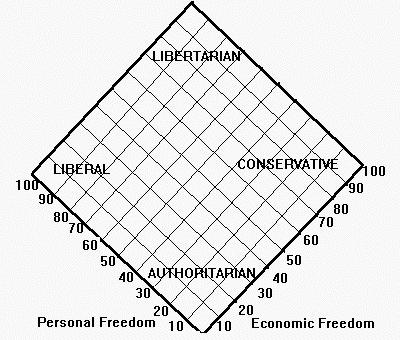
nolanchart

The benefit of the Nolan Chart is that it moves us away from the left–right spectrum and towards a two-dimensional understanding of politics. The limitation of the Nolan Chart is that it only views politics through these two limitations. The Nolan Chart at best tells us what end policies we favor, but it fails to address how to achieve these goals.

This is problematic, as even political groups that agree on end goals differ substantially on how to best achieve them. Among libertarians, the largest debate is probably between those who believe a minimal state is needed (minarchists), and those who believe no state can be tolerated (market anarchists) to achieve maximum liberty. There is also, to a lesser extent, a debate on the form of government* and foreign policy.

It is possible to be a libertarian and believe that monarchy is superior to republicanism or democracy in upholding the law and maximizing liberty. Likewise, it is possible to be a libertarian and desire an active foreign policy beyond promoting free trade agreements. I know that I stir controversy with my latter comment, but give me a moment to defend it.

The standard libertarian foreign policy is one of non-intervention. It is a policy of wishing to sever military ties with foreign nations and instead promoting free trade with all. It is a policy consistent with the non-aggression principle.

However, this standard policy is not the only policy consistent with libertarianism. It is possible to believe that, although the loss of any human life is horrible and that the state is illegitimate, the best option to minimize human life and protect liberty is to attack, embargo, or annex another state.

I do believe that there are several tests that must be met before one adopts a foreign policy beyond the standard libertarian creed. Specifically:

  1. Loss of human life and liberty must be weighed for both sides.
    1. Discounting should not occur on national basis.
  2. All reasonable peaceful solutions must be acted on beforehand.
  3. The long-term consequences of the action must be considered and weighed for both sides.

Additionally, if actions are taken, then all precautions must be taken to minimize loss of human life and liberty on both sides.

Minarchist libertarians may see the state as a tool to maximize freedom, but I do not believe this grants them the authority to kill others. There may be a scenario where the murder of one man is outweighed by it leading to the protection of ten men, but the one man has still been murdered and his death must be felt as a regrettable action. The value of a man is not dependent on whether he was born in New York City or Tehran. A libertarian cannot be a jingoist.

At no point may a foreign policy action be taken if a reasonable peaceful action is still available. If a man enters your home with a gun and clearly intends to harm you, by all means it is justified to attack him, even if he has not yet shot or aimed at you.

And finally, the long-term consequence of a foreign policy action must be considered. Even if the first two rules are met, if there is not a long-term plan that is likely to succeed, no action should be taken.

For a long time, I wrestled with my stance on the Iraq war. I believed in the past that the first two requirements had been met and that the US invasion of Iraq was justified despite the loss of life and liberty on both sides. The Iraq war did not, however, meet the third hurdle. There was no viable long-term plan, and the latest consequence of this is the rise of ISIS and other militant groups in the MENA region.

Meeting these three conditions is difficult, but possible.

For example, I believe that expanding the US to include South Korea and Japan would be a proactive foreign policy stance consistent with my the rules I outlined above. Such an expansion would harm Okinawan residents, whose land is currently used for US bases. Such an expansion would also lead to retaliation from the PRC and North Korea. It would, however, lead to a net win for liberty. South Koreans and Japanese residents would have a stronger defense against a rising PRC seeking to dominate the region militarily. US residents would benefit from having defense costs, both in monetary and human life terms, more equitably shared. Although I am hopeful the PRC will liberalize in the future, its actions towards Hong Kong makes me doubtful that that will occur in the foreseeable future.

It is possible that I am wrong of course, and that adding South Korea and Japan would lead to a great loss of life and/or liberty. I am still a libertarian, however. I am not discounting the lives or liberty of non-US residents. I am not ignoring another peaceful solution – the current foreign policy scenario in East Asia is not sustainable for much longer, the PRC has clear intent to assert itself in the region, and it’s extremely doubtful that it will liberalize in the foreseeable future. I am considering the future: the PRC and North Korea are sure to retaliate, but I do not see either of them going to war over it. I do see the PRC being more likely to go to war over annexing Taiwan, even if not immediately, or otherwise I would promote Taiwanese annexation as well.

Hopefully I have successfully shown that it is possible to be a libertarian and favor a policy beyond the standard libertarian foreign policy. In which case, there is merit in discussing foreign policy beyond this standard.

There have been proposals to incorporate a foreign policy dimension to the extant Nolan Chart, but these proposals take it for granted that a non-interventionist policy is the only libertarian prescription. Over at FEE, Richard Fulmer proposes the following five questions:

  1. The United States should cease serving as the world’s policeman.
  2. The United States should not engage in nation building.
  3. The United States should not pledge to defend other countries.
  4. The United States should withdraw its troops currently stationed around the world.
  5. U.S. foreign policy should not be tied to that of the United Nations.

Unless one believes only a non-interventionist foreign policy is compatible with libertarianism, it is clear that these questions are insufficient. They also highlight that a NOL foreign policy quiz should seek to complement, but be independent of, the Nolan Chart. Otherwise, any attempt to add a foreign policy dimension will end with in fighting over who is a libertarian and who is a statist.

Again, the standard non-interventionist libertarian foreign policy view is a consistent and legitimate view point. It is however possible to favor foreign policy interventions under certain conditions and still be a consistent libertarian.

In the next post I will be proposing the foundation for a NOL foreign policy quiz.


Foot Notes:

*Even market anarchists who reject the need for a state debate on what type of organizations would exist and how the law would operate. For example, Murray Rothbard’s early vision for market anarchism presumed that a unitary law would exist, and that private defense associations (PDAs) would compete to best to carry out this unitary law. This unitary law would be based on ‘natural law.’ David Friedman’s vision for market anarchism does not presume a unitary law, and instead imagines competition for the law, as opposed to competition for the application of the law itself. My understanding is that there are also Rothbardians who have moved away from PDAs and towards dispute resolution organizations (DROs). It has been quite some time since I actively followed this debate among market anarchists, so I will defer to anyone who has more up-to-date information.

Further Reading:

Ian Bremmer’s American Foreign Policy Quiz [NOL Post] – The post that initiated the idea of a NOL Foreign Policy

A Three Dimensional Nolan Chart Extension Focusing on Form of Government (e.g. Anarchy v. Monarchy)

What is the proper role of government? Galactic Edition

Mordanicus of Fascinating Future, a sci-fi blog, is musing over the purpose of galactic government. As Mordanicus points out, galactic empires are a staple of science fiction. They can be found in the Star Wars, Star Trek, Dune, Firefly and Foundation universes.

…the feasibility of a galactic empire is questionable.

In Asimov’s description of the galactic empire, it consists of 25 million inhabited planets and 500 quadrillion people, 20 billion per planet on average. It is hard to even imagine a planetary empire, and no such thing has ever existed in human history, let alone such enormous empire.

The fundamental issue with an empire of this size is effective control by the central government. Its sheer size makes it inevitable to delegate many administrative powers to “local” planetary official. But the more power is transferred to individual planets, the less power remains with the central government. The question is then what is the proper function of the imperial government?

What is the purpose of these empires though? In those sci-fi universes with aliens these empires serve some defensive role for our Milky Way galaxy, but in many sci-fi universes there is no clear visible external threat.  What is the purpose of the empire then? Or is it simply a way for wealth distribution by those living in the Saturn beltway?

I personally view merit in a galactic empire if it were able to maintain internal peace. I have no doubt that in a space faring civilization there will be pirates and I believe that there are economies of scale in galactic trade route policing.

There is also merit in an empire that can keep rogue planetary governments in check. A galactic empire would be restrained in its ability to govern on its own given the largess of space and would need to delegate many functions to different layers of government. An empire would however still serve as a last layer of resort for those petitioning against their planetary government.

What about NOL readers? Are you convinced that space piracy warrants an empire? Or would a space faring civilization be better government by planetary or sub-planetary governments?

Read the full post from Mordanicus here.

How to split up California?

The idea of splitting up California has been previously discussed on NOL (see here, here, and most recently). In this post I wish to consider how California could be split up.

California has a large population of 38.8 million. For comparison Canada has 35.1 million residents distributed among its 10 provinces and the New England states house 14.7 million yankees in six states. With such a large population it is not surprising that the state has several regions with distinct cultures. This in itself is not sufficient merit to split up the state. One of the wonders of a liberal republican form of government is that diverse populations can coexist so long as they are treated equally before the law and have the freedom to exercise their various cultures. The problem is when these cultural differences lead to different public policy demands.

Consider for example the issue of abortion. In most matters of religion it is sufficient to allow different faiths to practice their beliefs so long as they keep to themselves. Why should non-Jews care if Jews must follow kosher dietary restrictions? The same cannot be done with abortion though. Those who believe, often due to their religious inclinations, that abortion is murder cannot tolerate its practice among those of other faiths or atheists. What is to be done?

One option would be to break up California. Although those on both sides of the abortion debate exist across California, there is also quite a bit of spatial correlation. See here. The Central Valley and Inland Empire counties both have significant portions of their populations favoring abortion limitations. Both regions also have low support for same sex marriage, see here, so it is safe to assume that their cultural differences with the rest of California is not on just one issue but several important public policies.

I would caution those who propose splitting up California between its inland and coastal regions. Both the Central Valley and Inland Empire may be culturally conservative, but the inland northern counties do not seem to fall in line. Nor would I recommend the Coastal/Inland split for those concerned about partisanship, see here. The San Francisco Bay Area, Northern Coast and Los Angeles are liberal strongholds but the Central Coast and Orange-San Diego region aren’t.

Similarly a North/South split would do little to help address regional cultural differences. The North/South split would usually split the state apart at San Luis Obispo-Kern-San Bernardino county lines. This would lead to the conservative Central Valley being lumped into the same state as ultra-liberal San Francisco. Meanwhile the Inland Empire and Orange-San Diego counties would find themselves sharing a state with blue Los Angeles.

What would be a good split then?

I personally favor the creation of four new states. Jefferson (the northern coastal and inland counties), San Francisco (the bay area states), Los Angeles (LA County), Central Valley (everything between Fresno and Bakersfield roughly) and the rest of southern California.

Given that any division would have to be approved by Congress the new states of Jefferson, San Francisco, and Los Angeles would have to be gerrymandered in such a way as to ensure they are blue states and maintain as many electoral votes from old California as possible. The Central Coast would likely be gobbled up between LA and San Francisco.  This gerrymandering would be needed to get Democrat votes who would otherwise be against losing all those electoral votes. Although Democrats would get two more seats in the Senate the Republicans could favor the deal in order to sweep extra electoral votes from the Central Valley and Southern California.

Although the split would be less than perfect, it would still grant greater say over public policy to the conservation counties.

Thoughts? Further maps on Californian public policy opinions can be found here.

P.S. In regards to the water issue, I like to think that the split of California would lead to a revision of the Colorado River Compact and related laws in order to create a more market oriented process for water allocation. I can dream can’t I?

Which countries are of US interest?

I was reading my news stream when I noted a blog post from the Cato Institute discussing the silliness of adding Montenegro to NATO. I don’t disagree per se. I certainly don’t see the value of adding Montenegro to NATO, if the purpose of NATO is to protect the US. Nor do I disagree with the general US-libertarian belief that the US has over extended itself in terms of military alliances.

I do wonder though what countries US-libertarians should desire to maintain a military alliance with. A North American military alliance, ranging from Canada to Panama and including the Caribbean, makes sense to me. The Atlantic and Pacific Oceans are our greatest defenses, but I welcome military cooperation from our geographical neighbors.

Beyond there though it gets tricky. Western Europe is certainly rich enough to protect itself. The main reason I am hesitant to leave NATO altogether is the nuclear question. France and the UK are the only European powers with nuclear weapons, but several others are part of NATO’s nuclear sharing program. Should the US leave NATO would these countries seek nuclear weapons for themselves? Would the UK/France provide substitute weapons? Ending military ties with Europe would likely be the easiest option in terms of cutting down on allies.

Japan and South Korea are likewise rich countries, but here too the nuclear question arises. Japan has a cultural aversion to nuclear weapons that I do not see it overcoming in the foreseeable future. South Korea may be willing to use nuclear weapons, but its strained historical relationship with Japan leaves me concerned about the future possibility of a Korean-Japanese alliance to counterweight China PRC. I believe that Japan should be encouraged to modify its constitution to allow its military greater freedom in action and to consider acquiring nuclear weapons of its own. Other nations in the region, such as the Philippines, are outmatched in conventional weaponry or, in the case of Australia, too far away geographically to be of much use in restraining China PRC’s influence in east Asia.

I am hopeful that within my lifetime China PRC will transition to a liberal democracy, but till then I am skeptical about allowing it free reign in east Asia. For the foreseeable future it is hard for me to consider an east Asia without a significant role for the US. Nor would I be particularly against offering South Korea and/or Japan statehood in a United States of the Pacific.

Thoughts? I admit that international politics is not my area of expertise and I more than welcome other’s thoughts on the matter. I also admit that I am not viewing these issues from a pure libertarian perspective but with a splash of nationalism.

As readers may know our own Brandon is playing around with creating a NOL foreign policy quiz similar to the Nolan libertarian quiz.

Gifts for Professors

I welcome NoL writers to continue the discussion on the attacks in France, the refugee crises (note: plural form), and general mayhem in the middle east.

On an infinitely lighter note – what do NoL readers think is an appropriate gift for students to give to their Professors? Like Brandon I am applying to doctoral study this cycle. I ordinarily have given small gifts (e.g. thank you cards, sweets, etc.) to my teachers at the end of the year, but I’m stumped on what to do for those Professors who have agreed to be my letter of recommendation writers.

Is a nice bottle of wine fine? What’s an equivalent to wine if said professor is a Muslim and/or Mormon? Is it considered rude to give a ‘bigger’ gift to LOR writers than other professors?

All thoughts are welcome.

Should there be a Nobel in Sociology?

A friend of mine recently shared a piece making the case for creating a Nobel prize for the social sciences that I found interesting: see here. Or, for those who wish to be technical, this hypothetical new Nobel would be ‘A Prize in Social Science in Memorial to Alfred Nobel‘.

The general argument is that economics is not a real science, in the same manner that physics and other natural sciences are ‘real’ sciences capable of prediction and measurement. The other social sciences, such as anthropology, sociology, psychology, on the other hand are undervalued and should have greater say in the policy realm.

If economics were a social science like sociology or anthropology, practitioners would set about interviewing those committee members, scrutinising the meetings’ minutes and trying to observe as many meetings as possible. That is how the kind of fieldwork-based, “qualitative” social sciences, which economists like to discard as “soft” and unscientific, operate. It is true that this approach, too, comes with serious methodological caveats, such as verifiability, selection bias or observer bias. The difference is that other social sciences are open about these limitations, arguing that, while human knowledge about humans is fundamentally different from human knowledge about the natural world, those imperfect observations are extremely important to make.

To make his case the author points out that modern economics shies away from doing qualitative research by going out and doing case studies of the economic actors they study. Instead economists sit in their offices and theorize how economic actors behave.

The author is correct to point out that ‘blackboard economics’ is a problem in the field but he goes a bit too far. The economics field has several practitioners who go out and get their hands dirty, granted they are a minority. Ronald Coase’s infamous lighthouse paper* was written after Coase went and did research on how lighthouses actually functioned. Hernando de Soto (the economist, not the Spanish explorer!) similarly has made a name for himself by looking at how developing economies work first hand.

The article is strongest when, instead of attacking economics, it praises the other social sciences.

Karen Ho did years of fieldwork at a Wall Street bank. Her book Liquidated emphasises the pivotal role of zero job security at Wall Street (the same system governs the City of London). The financial sociologist Vincent Lépinay’s Codes of Finance, a book about the division in a French bank for complex financial products, describes in convincing detail how institutional memory suffers when people switch jobs frequently and at short notice.

Should there be nobel prizes for the other social sciences? I am certainly in favor of such a proposal if it aids promote public appreciation for the other social sciences. There is no need however to attack one another. There is room enough in the world for economists, sociologist, psychologists, and the other social sciences.

____________________

*For context, the lighthouse is an example widely used by economists as a public good that would not be produced in the market without state intervention. The benefit of a lighthouse is enjoyed by all, but is not excludable and therefore difficult to make revenue out of. The solution, as Coase points out, is that lighthouses are bundled with other goods such as port fees.

How does emigration impact institutions?

Hello everyone. As usual I’ve come to ask for feedback on my latest research. I can’t emphasize enough how much it helps to blog it out, if only because it forces me to sit down and try to summarize things in a few hundred words.

My current research is looking at the effect emigration has, if any, on institutions. Institutions come in various forms. The state is an institution, but family, religion, and even organized crime are too. Broadly speaking institutions are those rules that govern society, both formal and informal. Institutions have increasingly been acknowledged as being one of the key (if not the key) determinants of a nation’s wealth.

Despite the importance of institutions, we know relatively little about them. By no means is this due to a lack of trying, and in there have been some earnest attempts to tackle the issue. Acemoglu’s Why Nations Fail is one such attempt.* For the time being the goal in institutional studies is to properly explain how and why institutions form.

My goal is to neither explain the origin of institutions or to measure their impact on economic well being. I take it for granted that good (and bad) institutions populate the world. Instead I am interested in how different institutions interact with one another.

My former boss at Cato has looked at how immigration has influenced a destination country’s (the USA) institutions. He finds little effect. In my project I try to look at the problem from the opposite end – how does emigration influence an origin country’s institutions. To measure the impact of emigration I use remittance data.

Remittances come in two form. There are monetary remittances, which are cash transfers from emigrants to their family members and friends back home. There is a broad economic literature on the former and its affect on development outcomes. There is however little (if any- I haven’t found any at least) economic work on social remittances. Social remittances is the transfer of ideas from emigrants to their family members and friends. In general the economic remittance literature has not yet attempted to connect itself with the institution literature despite both being part of the larger development literature.

Most work on social remittances has been done by sociologists. Thus far though most of the work has been qualitative and/or focused on how social remittances tie migrant communities with their origin countries. There has been little work on how this communication translates to changes in institutions.

Political scientists are currently taking the lead on the question. Earlier this year Abel et al. published a paper looking at how remittances affect democratic transition. They find that increased monetary remittances decreases voter turn out and thus weakens the political base of populist-based autocracies. Another recent paper by Miller et al. find that emigration increase the possibility of civil war by giving opposition parties an external funding source.

I think Abel and Miller’s work the best thus far in seeing how emigration affects institutions. My biggest concern with Abel’s paper is that he looks at democratic transition events, but there is no reason why democracy must lead to better institutions. Hong Kong and Singapore alternate as the most economically free states in the world, but neither is a bastion of democracy. India is the world’s largest democracy and by most metrics has awful institutions.

Miller’s work on the other hand looks at how the probability of civil war increases, but civil war in itself is not always bad. On occasion war is necessary for the improvement of institutions**.

To remedy my concerns I look at how remittances marginally influence institutions. I use the Fraser Institute’s Economic Freedom in the World summary index as my measure of a country’s institutions. My regression tables are found below. All observations are for north American (including central America but excluding the Caribbean) countries from 1994-2012.

Column 1 is a simply regression between a country’s EFW score and remittances as a percent of GDP. Initially we find a negative correlation between the two – a 1 percentage point increase in remittances is associated with a 0.01 point decrease in its EFW score. Is this a sign that brain drain, the emigration of high skilled migrants, is reducing the institutional qualify of origin countries? Not quite – it’s simply caused by the lack of control variables. At this point remittances is a proxy for a country being undeveloped.

Columns 2-4 are me playing around with various control variables. The interaction of phone subscriptions with remittances is my attempt to proxy for social remittances. Presumably emigrants are more likely to call back home, and exchange ideas, if their family members and friends have a phone to be contacted at. The 1 year lagged EFW index symbolizes the ‘stickiness’ of institutions: in the short run institutions do not drastically change.

Column 5 is simply column 4 re-run using clustered errors and country fixed effects. Country fixed effects, for those of you who have been spared endless hours of statistical classes, is a technique that allows us to account for unobserved characteristics of a country that do not change across the observed time span. This is usually done to account for such things as culture or geography.

In this final iteration we find that a one percentage point increase in remittances increases a country’s EFW index score by 0.05 points. This is a marginal effect, but its not irrelevant. See the Cato Institute’s interactive map of economic freedom. The difference between the United States and Russia is about one point despite the former presumably being a bastion of freedom.

Thoughts?

*Why Nations Fail has been discussed on NOL several times before, see here and here.
** But let me emphasize that this is rarely the case and war should be the last option. We really do need to make our own NOL foreign policy quiz.

(1) (2) (3) (4) (5)
VARIABLES EFW Index EFW Index EFW Index EFW Index EFW Index
Remittances as a percent of GDP – Fraser EFW -0.01* 0.04*** 0.00 0.01** 0.05***
(0.01) (0.01) (0.00) (0.01) (0.01)
Fixed telephone subscriptions (per 100 people) 0.03*** 0.01* 0.01
(0.00) (0.00) (0.01)
Remittances * Phone -0.00 -0.00 -0.00**
(0.00) (0.00) (0.00)
EFW Index 1-year lag 0.81*** 0.78*** 0.54***
(0.04) (0.05) (0.05)
Income Per Capita in 000s, Constant 2005 dollars. 0.00* -0.00 -0.01
(0.00) (0.00) (0.05)
Constant 7.39*** 6.60*** 1.33*** 1.50*** 3.04***
(0.06) (0.06) (0.28) (0.32) (0.45)
Country Fixed Effects No No No No Yes
Observations 134 134 110 110 110
R-squared 0.03 0.66 0.91 0.91 0.93

Standard errors in parentheses in columns 1-4. Robust errors in column 5.

*** p<0.01, ** p<0.05, * p<0.1

Cultural Adaptation to Climate Change? Requesting Feedback

I am currently working on adaptation to climate change and would appreciate a bit of feedback. I find feedback can be useful, if only to get me out of the ivory tower.

A brief background: When addressing climate change the popular idea is to reduce carbon emissions through a carbon tax, cap-and-trade or regulations. However focusing on emission reductions alone:

  1. Ignores the political difficulties of trying to reduce emissions. Regions that rely heavily on coal use are not going to be in favor of reducing its use or paying extra to use it, see the chart. Notice that states like California or Washington, which are trying to reduce their emissions independently, don’t use much coal anyway to meet their energy needs and would be minimally harmed by a carbon tax.
  2. Reductions today would not address the climate change that will occur even if we stopped all emissions today. Even if

We therefore need to adapt to climate change. We can adapt:

  • Individually by adopting technologies (e.g. air conditioning) or migrating to locations we expect to have better climates.
  • At the urban level by investing in the necessary infrastructure (e.g. seawalls to counter sea level rises), or by allowing cities to ‘move’ by letting old buildings deteriorate and focusing new development inland or building up near the coasts depending on local conditions.
  • At the (inter)national level by sharing technical information.

Economics, my home field, has plenty to say about the above three forms of adaptation. It is however lacking in discussing cultural adaptation.

For example, in Spain and other Mediterranean countries, it is customary to take a long mid-afternoon break to take a long lunch at home or take a nap. To compensate for this break work may end later than is customary elsewhere, and family-friendly social life is active well into the late evening. This custom was transplanted, to varying degrees, in Latin America; I am most familiar with the Mexican version due to family stories and personal experience. This custom helps to avoid working during the hottest time of the day and shifts activity towards the cooler part of the day. My understanding is that a similar custom exists in the warmer southeast Asian countries, but my personal knowledge is limited.

Are there any other examples of cultural adaptation to climate change that my fellow note writers can think of? Examples don’t need to be in regard to contemporary climate change and can be adaptations that took place during the Medieval Warm Period, the Little Ice Age, etc etc.


US States by % of Electricity Produced from Coal.
Source: The U.S. Energy Information Administration, 2013.
Note: Rhode Island, Vermont, and D.C. excluded due to minimal coal use for electricity production.

WV 95.28% KS 61.41% NC 37.38% HI 13.67%
KY 92.83% IA 58.76% TX 34.47% MA 12.04%
WY 88.48% MT 53.74% GA 33.26% AK 9.61%
IN 83.94% MI 53.40% AL 31.25% NH 7.40%
MO 83.06% AR 52.86% SD 28.19% OR 6.28%
UT 80.64% MN 45.85% VA 27.52% WA 5.90%
ND 78.46% MD 43.34% SC 25.62% NY 3.45%
NE 72.14% IL 43.31% FL 20.84% NJ 3.12%
OH 68.88% TN 40.78% LA 20.43% CT 1.91%
NM 67.31% OK 40.72% DE 19.90% ID 0.60%
CO 63.67% PA 39.00% MS 16.48% ME 0.45%
WI 61.62% AZ 38.38% NV 14.42% CA 0.41%
US 38.89%

Public Service Announcement: Opting Out of Student Gov. Taxes

As libertarians we spend much of our time worrying about the misuse of power at the federal level. Local government however can be just as abusive though. Student body governments in particular come to mind. Student body governments have evolved substantially from their humble origins as a way for students to stuff their resumes. Today many student governments have become quasi-private corporations with annual multi-million budgets. One of the reasons that tuition prices are going up is that student governments are increasing their taxes with little opposition. In defense of students, who has time to pay attention to campus politics in between examinations, partying, and other collegiate hijinks? Nominally these student governments are meant to represent the student body at large but, as most governments, they represent the interests of a few interest groups. This creates a strong incentive for redistribution of funds towards these interest groups. Members of student government for their part have a strong incentive to support public work projects, such as new buildings, that they can affix their names to.

If none of this were enough student governments have also increased their role as lobbies for greater subsidies to universities from the state and federal government. This upcoming year the California State Student Association (CSSA) is tackling a new tax, the Student Involvement and Representation Fee, to every one of the estimated 460,000 students in the California State University system. This fee will be used to “advocate for student access to an affordable, high quality education”. The fee itself is small, $2, and one can opt-out* but in principle it is disturbing that students are not only forced to pay for these politicians-in-training, but also have to pay so that these same individuals can lobby for more tax money.

OptOut2

If you are part of the California State University system, or know someone who does, I urge you to opt out of the fee. Opting out will do little to defund the CSSA’s efforts to lobby, but at minimum it will serve as a symbolic gesture that these student governments do not represent the interests of students and are nothing more than a training ground for politician larvae.

*To opt out follow the instructions here.

Reply: Radical Democracy

I would have written this in reply to the blog post itself, but I must admit that I’m unsure if videos can be embedded in the comment section.

Despite the seeming radicalism of Fred’s proposal for a neighborhood-based democracy, it isn’t radical at all! It’s mainstream enough that it was the subject of an episode of Yes, Prime Minister and, as Fred himself reported, there was a serious ballot proposition in California a while back to implement something similar.

None of this should be taken to mean that Fred’s proposal is bad. To the contrary, it’s a fantastic idea that improves on democracy as is. By re-aligning districts to include only a few households, an individual’s vote matters sufficiently and there is an incentive to be knowledgeable about political affairs.

My concern is how legislation that was unpopular at the district level, but popular at the regional or national level, would get through. Take for example transportation issues, which oftentimes are unpopular at the local level despite popularity at the regional level.

In my native Los Angeles, attempts to build additional roads between the San Fernando Valley and the Los Angeles basin have been repeatedly thwarted by a few small ultra-rich enclaves that fear that people might be more easily able to visit their neighborhoods if the roads were built. Similarly, in the greater Washington DC area, the expansion of the light rail system was originally opposed in richer parts that feared the poor would gain access to their neighborhoods.

On a quick aside, if you haven’t watched Yes, Minister and its sequel Yes, Prime Minister, go watch it right now. It is several decades old now, but still holds up as a great political comedy.

Freeware

Similar to Brandon I’ve began playing around with new statistical packages. Like many libertarian scholars I have my skepticism about the limits of what we can learn from number crunching. I think there is a place for statistical analysis in the social sciences, but it is definitely meant to be a tool, not an ends to itself, and should be complemented with additional methods.

Recently I’ve begun trying to find a Geographical Information Systems (GIS). I had initially intended to buy a copy of ArcGIS, one of the dominant GIS packages, until I looked at their pricing plans. A single license for the basic version costs $1,500 USD. I’m sad to say this price tag is not abnormal. STATA, one of the larger statistical packages, sells an annual licence for its bare bones version at $125 USD. SAS has its pro version going for $9,000 USD.

What is abnormal is that several freeware packages exist that provide comparable services. Are you an undergraduate student taking a class on univariate regression analysis? Download Gretl. It has a menu based system that is relatively easy for even the newest of users to play around with. If you’re looking to challenge yourself opt instead for R.

Likewise, for those who like me are on a budget, there exists several freeware alternatives for GIS systems such as GRASS and QGIS. I’m still learning GIS so I can’t comment on either package, but I will be sure to provide reviews once I’m comfortable with them.

If several freeware alternatives exist, why do retail versions remain dominant in the industry?

Part of the answer is that corporations and universities value the customer help hotline if their software starts to malfunction. Poor graduate students don’t have much money, but tend to have a surplus of free time to use trying to figure out why their software isn’t working. Corporations have the opposite constraints, they have infinitely more money than graduate students but have much stricter time constraints.

Surely that can’t explain it all though, can it? If what you are purchasing with retail packages is the customer hotline, why haven’t a group of entrepreneurial (and hungry) grad students set up a business where they provide dedicated IT support for freeware? Several attempts have been made by Linux enthusiasts to provide such services for corporations looking to replace their Microsoft OS systems, so the idea has surely been thought of before.

Another possible answer is that what these retail packages are selling is their community. STATA may not be so technically superior to Gretl, but the former’s community is larger than the latter. If you have a problem with Gretl you can’t easily find another user to help out outside of a few niche forums. Meanwhile you are sure to find a STATA compatriot just by walking down a social science college’s halls. I am not really convinced by this idea though. There is a value to joining an existing community, but in the long run people do move across networks. Consider Myspace, which less than a decade ago was the social network, until it was defeated by another social network. How much longer will STATA and ArcGIS last before its user base migrate to R and GRASS?

What do you all think? What other reasons might explain why pricey retail statistical packages remain dominant over comparable freeware alternatives?

What is a nation?

This is a reply to Brandon’s latest post. I offer similar thoughts to the below post in my post about ethnicity.

I agree with Brandon that in discussing things we should not limit ourselves to thinking in terms of states. We must consider, as Brandon puts it, both supra and sub states. We must also recall that states are much more fluid than we usually consider them.

When discussing international relations I attempt to get my conversation partners to agree that:

(1) National borders are not stable and,

(2) National identity is more fiction than reality.

The first is easily confirmed by looking at historical maps. Here is a map of the Levant/Greater Middle East in 14th century BC, in 830 BC, in 634 AD, in 1135 AD, and in 1900 AD.

Egypt and Persia are the only two entities that are present in some form or another throughout this time span, and even then their respective borders have fluctuated with only a few core regions being stable. I have yet to find someone who disagrees with the first point.

The second point is harder to get people to concede. We often think of ourselves as a given national identity and find it difficult to imagine that our nation did not exist since the beginning, or at least as far back as imaginable. Most nations have a foundation epic that makes little sense when seriously scrutinized.

Take for example American national identity. Three hundred million plus souls imagine themselves as ‘American’, but what exactly does that mean?

American identity cannot be equated with a specific phenotype; i.e. Americans are not all blue eyed blond people of English descent. In colonial days blacks outnumbered whites in several regions. Today whites in the Mid-Atlantic states are bronze skinned due to the dominance of Mediterranean descent there. The southwest is filled with “Hispanics” who overwhelming self-identify as white but are not considered really white, hence the curious demographic term “non-Hispanic white.” Even in the cradle of the American revolution, Massachusetts, the largest ancestry group is the Irish not English. The only state that is predominantly of English descent is Utah.

Among whites there is constant tension over who was really white and who is a “white negro.” Germans, who are today the largest ancestry group in the US, were the first ‘white’ subgroup to have to fight to prove that they were really white. The Irish, Italians, and others of European descent all had to fight for inclusion into the ‘white’ group. Today Hispanics and Asians are both vying for inclusion.

The revolutionary war serves as the US’ de facto national epic and the leaders of the rebellion are treated (and on occasion sculpted) as demi-gods. Yet the popular image of the revolution is more fiction than reality. Americans paid very little in tax relative to residents of the British isles. George Washington was a horrible military strategist. The founding fathers were not fighting to ensure liberty for the common man – they were fighting to shift control of government from elites in London to elites in Philadelphia. To be sure there were a few true revolutionaries, such as Thomas Paine, who were involved in the hope of genuinely reforming government. For every Paine, though, there were a dozen Hamiltons who wanted to preserve the British Empire, just without the British.

‘American’, in so far as it is an ethnic label, is non-stationary and continually evolving. I would not be amazed if the American label went extinct and was replaced with other labels in the future. Perhaps the Pacific Northwest will become inhabited by Cascadians in the future?

None of this is unique to the American moniker. It is easy to pick on the United States since it is a young nation, but most nations are just as fluid and nonsensical.

What does it mean to be British? Turkish? Austrian? Spanish?

Were the inhabitants of the British isles prior to the Norman invasion British?

The Byzantine Empire was only recently destroyed and many of its inhabitants inter married with Turkic migrants. The Ottomans gave themselves the title of Roman Emperor, “Kayser-i Rum.” A friend of mine jokingly calls Turks “Anatolian Greeks.”

‘Austrian’ as a national identity is arguably younger than the American moniker. Prior to the disestablishment of the Hapsburg Empire in WW1 there was no independent Austrian geopolitical entity. Austria was a constituent member of the Holy Roman Empire, the Hapsburg crown lands, the Austrian Empire, and Austria-Hungary before finally becoming simply Austria following WW1. Austrians are as culturally distinct from other Germans as Bavarians or Swabians are. Why then are Austrians a national group, but the latter two aren’t?

The Iberian peninsula has been under Muslim control (700s~1600s) longer than it has been under a united Spain. Spaniards continue to have significant traces of Arab/Berber genetic material. Despite the actions of Franco, Spanish (or “Castilian”) is not the sole language used in the country. Several million in the country’s northeast wish to cease being Spanish altogether in order to form an independent Catalan.

What is a nation? I argue that it is a group label that is invented and sustained in so far as it serves to further the goals of elites. Within an individual’s lifetime they appear unchanging, but from a historical perspective they are fluid and are frequently created, killed, or reborn as needed. When conversing about geopolitics we cannot ignore national identity, but we must keep in mind that in the long run nationality can be, and is, molded to suit political goals.

A History of Regional Governments (Part 1)

Cities have historically been compact hyper-dense communities. This is because cities have been constrained in size by the average resident’s capacity to reasonably travel throughout the city within a day. Cities built before the dawn of the automobile are often noted for being walkable. It is doubtful that the walkability of these cities is due to any planned attempt to make them so as the urban planning profession is a relatively new discipline. Rather older cities are walkable because they had to be. For most of history the average man could only travel as far as his own legs could take him. Horses and other beasts of burden substantially increased one’s travel range, but even up to the 19th century ownership of such beasts was beyond the reach of the every man. Any real estate developer who attempted to build outside a city’s natural growth boundary would as such find it difficult to attract the necessary foot traffic to make his endeavor economically feasible.

This constraint in outward growth also led to older cities being easily dominated by a single local authority. This changed with the creation of the automobile. As noted above, a beast of burden was already capable of extending the effective range of their owner. The automobile similarly would have done little to influence the growth of cities if it were inaccessible to the average man. What made the automobile such a game changer to the future of cities was that it was within the reach of the average man’s finances.  In their early days, as in our own, automobiles presented a serious financial investment but were nonetheless cheap enough to afford.

With the advent of the economic automobile the general public was no longer constrained to the urban core. Attracted by cheap land prices in the periphery an increasing portion of the city settled in the periphery region – the so called suburbs. The development of suburbs had several immediate effects, but of interest to us is its effect on local government. At first cities attempted to annex the suburb regions but it was not before long that some suburbs rejected annexation. One of the first such cases was in when Brookline, a wealthy suburb of Boston, rejected annexation in the late 19th century. Even some suburbs which originally agreed to annexation changed their minds and fought to regain their independence.

Suburb residents had been driven to migrate from the cities in search for cheap housing, but they also valued their new found independence from urban politics.  Many suburbs elected to instead incorporate as cities by their own right. Despite their political independence the suburbs remained economically tied to the mother cities. It did not take long for the limits of this style of organization to be realized. In the greater New York metropolitan area New York and New Jersey local governments found themselves unable to settle basic questions regarding their common port. Meanwhile in Los Angeles the various local governments were unable to efficiently synchronize their electric current systems. Los Angeles proper synchronized its electrical system with the rest of the nation in 1936 but the rest of the metro didn’t make the switch for another twelve years. In greater Boston the suburbs found themselves unable to provide for quality running water and other basic utilities. These problems only increased as population growth increasingly favored suburbs and urban sprawl intensified.

Early reformers suggested the creation of a new layer of government, between state and local government, which would preserve the independence of the suburbs whilst creating a central authority capable of providing for regional needs.  Attempts to create regional governments were retarded by the actions of local governments who jealously guarded their own powers. It is unclear what would have happened if things would have been allowed to play out without federal intervention.

It was at the height of the New Deal era that the modern regional government was born. The Roosevelt administration began to encourage regions to form councils of government and other regional government associations if they wished preferential federal aid. The Truman and Eisenhower administrations codified this policy with the Housing Act of 1949 and 1954 respectively. Section 701 of the 1954 Housing Act in particular would serve as the benchmark for years to come in promoting the creation of regional governments. As a result of these actions almost one hundred regional governments were formed. The regional governments formed tended to be in name only. Local governments agreed to their formation in order to secure federal funding but granted their regional counterparts little actual control in day to day affairs. Regional governments were relegated to providing technical advice to local government and to aiding state government with paperwork, but were unable to pursue their own objectives. Meanwhile the growth of the suburbs continued strong, aided in part due to the return of WW2 veterans and the preferential mortgage packages offered to them.

The federal government attempted to bolster the strength of regional governments with the passage of the Highway Act of 1962. Thus far federal legislation had merely given preferential treatment in aid allocations towards regional governments. The Highway Act of 1962 made federal aid contingent on having areas with a population greater than 50,000 create a regional development plan. In practice the act gave regional governments little power as the language was broad enough to allow state and local governments to circumvent them. Once more regional governments found themselves with little teeth and better termed advisory bodies.

Which MPOs are most efficient?

I have been working on a project to measure the efficiency of Metropolitan Planning Organizations (MPOs). MPOs are one of the levels of government often forgotten. When we think of government we usually think of federal, state and local government. MPOs lay between local and state government. My local MPO for example, the Southern California Association of Governments (SCAG) for example covers all of the southern Californian counties except for San Diego. Other MPOs, such as the Delaware Valley Region Planning Commission, cross over several states. Nominally MPOs are concerned with setting transportation policy, but in effect they have broad powers over many areas of regional economic development.

Most MPOs have no elected leadership and instead either appoint their own heads or draw from their constituent members. By no means am I a little ‘d’ democrat; I do not see much value in democracy to decide public policy. It is however concerning that these form of government have little oversight over them of any sort. My hope is that my work will provide much needed information on how well (or badly) these MPOs are doing their jobs.

I am attempt to rank MPOs on two basis: transportation services and air quality. Below is a ranking of the top 77 largest metro regions by their adjusted cost efficiency for providing transit services. I used metropolitan level data from 1991 to 2011 to construct these figures. By adjusted I mean that I attempted to take into account for factors that affect their cost efficiency, namely level of federal funding which is negatively associated with cost efficiency. I hope to be able to better calculate these figures in the future taking into account spatial factors that affect efficiency, but I have to start somewhere right?

1. Raleigh
2. Virginia Beach
3. Honolulu
4. El Paso
5. Orlando
6. Wichita
7. Memphis
8. Baton Rogue
9. Cincinnati
10. Indianapolis

….

70. Bridgeport
71. Akron
72. Seattle
73. Albuquerque
74. Knoxville
75. Worcester
75. Dallas
76. San Jose
77. McAllen

The full ranking can be found here: Efficiency Residual.

Thoughts?