Japanese adoption

A recent article in the Economist describes the results from a study of an interesting Japanese custom. Traditionally (and according to the civil code until 1945), company ownership and leadership were passed on through primogeniture. This custom has continued to be practiced, and the study found solid evidence that family-managed companies outperform professionally managed companies. It could be argued that family unofficial training, continuity, and trust are at the root of this, but the authors find a different reason: adoption.

Japan and the US lead the world in adoption rate, but Japanese adoption is not necessarily what you would think. Over 90% of Japanese adoptions are of adults, who are usually men adopted into childless (or more specifically son-less) families for business purposes. This is also quite traditional, and since Japanese birth rates are extremely low, Japanese businessmen are likely to continue adopting talented, ambitious single men. This is often also accompanied by marriage to the daughter of the businessman (while women participate in business in Japan, they are more rarely the executives), which is referred to as mukoyoshi and combines familial with business ties.

This practice has the advantage of allowing for the trust, mutual investment, and long-term planning and teaching based on family relationship while avoiding the risk of having an unfit successor. In fact, in reading this, I am reminded of another culture’s custom of adoption: ancient Rome.

Ancient Rome also had a custom of adoption among its upper classes because of the prestige associated with old patrician family names and the incentives of inheritance laws (for a time it also served as a political means of a patrician gaining the tribuneship, as the Gracchi did). Similarly to the Japanese businessmen, adopted sons tended to excel (the earliest and best example is the Republican general Scipio Aemilianus), and it served as a method of political alliance and developing shared interest. It also became a typical method of succession for Roman emperors in the case that no son was available, a deal needed to be made between factions, or an emperor had a favored successor to whom he was not related. Adopted emperors included Trajan (adopted by Nerva as deal with the army, successful and beloved military leader), Hadrian (great builder and patron of the arts), and Marcus Aurelius (famed general and philosopher), and were generally well-reputed and effective leaders. In contrast, the sons of emperors (such as Domitian and Commodus, who were both infamously insane and harmful, or Maxentius, whose usurpation followed a blood-based claim) or blood-based successors (such as Caligula, who was blood-thirsty and childish, Nero, who was brutal and wasteful, and Elegabalus, who had was more interested in orgies than leadership).

It seems that the same potential reasons underlying Japanese business success through adoption were also at work in antiquity: emperors who were chosen and bred based on their abilities provided the continuity associated with heredity but with the advantage of meritocratic selection. This raises the question of whether this advantage has somehow been passed over by the Western world in those cases where we have avoided family-based succession in business (based on worries about nepotism and/or to gain the advantages of meritocratic selection). Even more interesting, does the adoption practice maintain the freedom of choice and opportunity found in Western careers while also conferring the ability to maintain trust and continuity that family-based succession offers?

Can we stop using Spanish for migrant services?

Before I go any further let me be clear that I am not arguing against the use of Spanish generally. Nor am I arguing against providing Spanish translations in public spaces. My concern is about the conflation of Hispanics and migrants.

I had the pleasure of being educated in bilingual classrooms during my early childhood. My entire life I have alternated between English and Spanish. When I have kids (I can dream!) I plan to educate them in both languages plus either Chinese or Japanese. I absolutely love Spanish. However I often worry that it has become too prevalent among migrant circles.

When I visit migrant groups I notice many of them have Spanish names or sprinkle Spanish slogans among their material. The worst instances of this is when ‘la raza’, the race, is used as reference to the pan Hispanic community. I can understand why they do so, Hispanic migrants probably find such gestures to be in good will and are more willing to seek help when they need it. What however of non-Hispanic migrants?

We, Hispanic migrants, often make fun of white Americans for thinking that all Hispanics (plus Brazilians!) must be Mexicans.”Guatemala? Where is that in Mexico?” Yet we fall into the same trap of thinking that all migrants are Hispanics. How must Asian or African migrants feel when they search for help but are surrounded by Spanish? It is hard enough to learn one new language, let alone two.

As I’ve mentioned before, I grew up in Los Angeles’ Koreatown. As the name suggests the area has a sizeable Korean population. I interacted with them all the time, except when it came to migrant related events. Their absence was particularly notable in services for undocumented/illegal aliens. Koreans, unknown to most, make up a significant share of undocumented migrants. You’ll rarely see them at events though. Part of it is a taboo about discussing the issue in the Asian migrant community. I can’t help but feel that it is also that we, Hispanic migrants, have made them feel unwelcome in our groups.

If migrant groups care about inclusion they should avoid the use of Spanish where possible. By the same account, can we please stop linking Cinco de Mayo and other Hispanic-linked things with all migrants. By all means have Spanish translations of your material, but also have translations in Korean, Chinese, etc etc.

Who is Jair Bolsonaro and why you should care

Since 1994, Brazilian presidential elections follow a pattern: PSDB and PT candidates are the main competitors, with a third candidate falling between the main leaders and countless dwarf candidates. Although this third candidate does not reach the presidency and does not even dispute the second round of the elections, its political influence tends to increase and its support happens to be disputed by the candidates of the PSDB and the PT. So it was mainly with Marina Silva in 2010 and 2014, and possibly will be so with Jair Bolsonaro in 2018.

After being defeated in 1989, 1994 and 1998, Luis Inacio Lula da Silva finally won the presidential election in 2002 and was re-elected in 2006. In 2002 Lula was benefited by the low popularity of President Fernando Henrique Cardoso (FHC), hurt by the circumstantial economic difficulties that the country was going through. FHC was practically absent from the campaign of his successor candidate, José Serra, apparently by common agreement of the incumbent and the possible successor. In addition, Lula and the PT had a radical change of stance that year, expressed mainly by the “Letter to the Brazilian People”. In this document Lula promised to abandon his historic struggle against free markets and to maintain the basic guidelines of FHC’s economic policy, which in the middle of the previous decade had taken the country from one of the worst economic crises in its history. The Brazilian economy left the circumstantial difficulty of 2002 and with this Lula secured his reelection in 2006. However, looking back, the arrival of Lula to the power was not accidental. Created in the late 1970s, the PT always faithfully (and not secretly) followed Antonio Gramsci’s guidelines of cultural Marxism: to come to power not by violence and also not by elections per se, but by cultural influence. This guideline guaranteed to Lula, even in the elections he lost, about 30% of the valid votes. The other 21% were electors dissatisfied (in the case of 2002) or excited (in the case of 2006) with the economic conditions of the moment. However, it is this same strategy of cultural Marxism that is now opening room for Jair Bolsonaro.

Bolsonaro is already an old congressman in Brazil, but has only really become famous in recent years. Elected for the first time in 1990, he fiercely criticized FHC’s free-market economic policy during the 1990s. In his view the then-president was a entreguista (something like a surrenderer) and the Brazilian economy needed to be protected against foreigners. Bolsonaro has also many times attenuated or even denied the fact that Brazil underwent a military dictatorship between 1964 and 1985. But what his followers (who call him Mito) really admire him for is the way he stands against political correctness, in a way reminiscent of Donald Trump. Bolsonaro became famous mainly for opposing the introduction of gender ideology as content in the country’s public schools. For this reason he is often accused of machismo and homophobia by his opponents. In recent statements Bolsonaro expresses greater support for the free market, but maintains his admiration for the military that governed Brazil in the past and a hard line against the politically correct.

Not only in Brazil, but in other parts of the world, the spell of cultural Marxism is turning against the sorcerer. When the facts refuted Marx’s economic theory (already brilliantly refuted by Mises) some Marxists, such as Oskar Lange, and more recently Thomas Piketty, sought a soft version of economic Marxism. Many others, however, took refuge in the cultural Marxism of Gramsci, Foucault, Herbert Marcuse, and others. The option was simple: instead of admitting that Marxism is not true, many Marxists decided that truth is relative. The main result of this is the identity politics that spread throughout the world. Everyone wants to identify themselves as members of minorities who are not represented by traditional politicians. It was only a matter of time before white middle-aged men began to complain that they were not represented. And so white middle-aged men have taken Britain out of the European Union, elected Trump US president and will shortly elect leaders in other countries or at least greatly annoy the globalist establishment.

Throughout the world there is a weakening of the semi-Marxist welfare state, and the same can be observed in Brazil. Important right-wing leaders have emerged in recent years, ranging from conservatism to libertarianism. In the case of Brazil, however, where the population is still largely socially conservative, there is a strong tendency towards a conservatism with which libertarians do not identify, and this trend is stopping the advance of communism in the country. Brazilians can accept Marxism in politics and economics, but they do not accept it in their bedrooms as easily. It is possible that Bolsonaro is accepting the basic premises of a free-market economy, but his main appeal is to be the most anti-Lula, anti-PT, anti-establishment and politically incorrect presidential candidate. Even if he is not elected president in 2018, or even reaches the second round of elections, Bolsonaro is already a political leader impossible to ignore.

Some ideas to guide your thoughts on health care

This post is meant to help my non-economist friends think more clearly about how we pay for health care. I’ll talk about markets, but the truth is that the American system is built of deeply bastardized markets. If our car markets worked like our health markets, most of us would walk to work. I’m trying to focus on the essential logic of the situation which is going to sound Utopian because Congress isn’t going to give us any sort of logical policy any time soon. But we aren’t going to get a logical solution until we as voters understand the logic of health care finance.

I’ve got a few big points to make:

  1. Trying to health insurance also work like charity is bound to end poorly for everyone.
  2. A single-payer system has a lot of nice features for individuals, but a lot of systemic problems.
  3. It’s fundamentally impossible to insure pre-existing conditions. Insurance is about sharing risk, not unavoidable expenses.

(This post is longer than I’d like, so thanks for your patience!)

Markets and Charity

I’ve said it before, and I’ll say it again: we don’t have to ruin markets to do charity.

The essence of markets is that they aggregate knowledge about the relative costs and benefits of different goods based on the preferences of the real people involved in producing and consuming those goods.

The demand side of markets provide information by giving you (as a consumer) a choice between more of something you like and more money to spend on other stuff. On the supply side they give you (as a supplier–probably of your own labor) the choice between providing more of what people are willing to pay for or having less money to buy the stuff you want. Markets crowdsource cost-benefit analysis.

Prices also give suppliers an incentive to produce things that consumers want while trying to save resources (i.e. cut costs). In other words, a price is a signal wrapped up in an incentive.

So what about fairness? The bad news is that markets are a system of “from each according to their ability, to each according to how much other people are willing to pay for the product of their ability.” (Not very catchy!) It’s mostly fair for most of us, but doesn’t do much good for people who are just unlucky (e.g. kids born with genetic defects). Here’s the good news: we can use charity alongside markets.

We can debate how much role government should play in charity some other time. For now, let’s whole-ass one thing instead of half-assing two things. We have to appreciate that interfering with markets interferes with the ability of those markets to function as sources of reliable information. It doesn’t matter how good our intentions are, we face a trade off here… unless we do something to establish a functioning charity system parallel to the health care finance system.

Single Payer

Anecdotes about the merits of a single-payer health care system are powerful because they shed light on the biggest benefit to such a system: individual convenience.

Part of the appeal has to do with the general screwiness of the American system. It’s a cathedral built of band-aids. But even in an idealized market system, a single-payer system has the advantage of not making me go through the work of evaluating which plan best suits my needs.

A single-payer system is, from an individual perspective, about as ideal as having your parents pay for it. But we don’t really  want our parents buying our stuff for us.

Single payer system sacrifice the informational value of markets (probably even more so than America’s current system of quasi-price controls). Innovation would be harder as long as new treatments had to be approved by risk-averse bureaucrats (and again, we already face a version of this with Medicare billing codes and insurance companies).

Essentially, a single payer system creates a common pool problem: each of us gets the individual benefit of being able to be lazy. But then we’re left trusting bureaucrats, special interest groups, and think tanks to keep an eye on things. It could be an improvement over the current American system, but that’s like saying amputation is better than gangrene.

Insurance

Premium = expected cost + overhead

Consider two alternatives. In scenario A you start with $150, flip a coin, and if it comes up tails you lose $100. In scenario B you get $90. The expected value of A is $100, but most of us would still prefer the sure thing.

Here’s how insurance works: You start with $150, give $60 to the insurance company, then flip the coin. If it comes up tails, you lose $100, but the insurance company gives you back $40. You’ve just gotten the sure thing. And by taking on thousands of these bets the insurance company is able to make enough money to pay their employees.

But here’s the thing: the premium they charge is fundamentally tied to that expected value. Change the odds, or the costs (i.e. the claims they have to pay for) and you’ll change the premium.

(BTW, Tim Harford did a nice ~8 minute podcast episode on insurance that’s worth checking out.)

Pre-existing conditions are the equivalent of changing our thought experiment to a 100% chance of flipping tails. No amount of risk sharing that will get you to the $90 outcome you want. You can’t insure your car after you’ve been in an accident and you can’t insure a person against a loss they’ve already realized. If you’re Bill Gates, that’s no big deal, but for many people, this might mean depending on charity. That’s a bummer, but wishful thinking can’t undo that.

If we insist that insurance companies cover pre-existing conditions* the result can only be higher premiums. This is nice for people with these pre-existing conditions, but not so great for (currently) healthy poor people. Again, charity matters needs to be part of the debate, but it needs to be parallel to insurance markets.

Covering more contingencies also affects premiums. The more things a policy covers, the higher the expected cost, and therefore the higher the premium. We each have to decide what things are worth insuring and what risks we’re willing to face ourselves. Politics might not be the best way to navigate those choices.

High deductibles and catastrophic care

Actuaries think about the cost of insuring as a marginal cost. In other words, they know that the odds that you spend $100 in a year are much higher than the odds that you spend $1000. So the cost of insuring the first dollar of coverage is much higher than the cost of insuring the 5000th dollar. This is why high deductible plans are so much cheaper… they only pay out in the unlikely situation where something catastrophically bad happens to you. This is exactly why most of us want insurance. We aren’t afraid of the cost of band-aids and aspirin, we’re afraid of the cost of cancer treatment.

For those of us firmly in the middle class, what we really need is a high-deductible plan plus some money in the bank to cover routine care and smaller emergencies. (Personally, my version of this is a credit card.) Such a plan has the added benefit of encouraging us to be more cost conscious.

A big problem with our current system is that it’s set up like an all-you-can-eat buffet. You pay to get in (your premiums) but once you’re in the hospital, any expenses are the insurance company’s problem (read: everyone else on your health plan). The logic here is the same as with pollution. When I drive my car I get the benefits of a quick and comfortable commute but I also suffer a little bit more pollution. But I don’t have incentive to think about how that pollution affects you so I pollute more than would be ideal. Multiply that by millions of people and we can end up with smog.

tl;dr

If I were trying to put together a politically palatable alternative to our current system, I’d have an individual mandate with insurance vouchers for the poor (it’s not very libertarian, and it’s far from my Utopian ideal, but I think it would be a huge improvement over what we’ve got now). I would also expand the role of market competition by encouraging high deductibles plus flexible health savings accounts.

Reality is complicated, but I’m trying to get at the fundamental logic here. We don’t have a properly functioning market system. To get there we need competition, transparency, and a populace with the mental tools and mathematical literacy necessary to understand what their insurance can and can’t do. That’s a tall order, but it doesn’t mean we shouldn’t keep trying to move in that direction.

To have a fruitful debate we need to understand what we want from our healthcare system: help for the poor (charity), convenience, and efficiency from an individual and social perspective. By trying to lump all these things together we muddy the waters and make it harder to understand one another.


*I don’t know what the deal is with the idea that the AHCA will treat rape as a pre-existing condition. Some webpages give a bunch of random tweets as evidence of this, and others call bullshit. Let’s just leave it at this: in a competitive market this would be considered terrible marketing and savvy companies wouldn’t do it. The lesson then is to keep calling companies on bad marketing, and avoid protecting politically powerful companies from market competition.

Some Comments on the Latin America Liberty Forum 2017

The Latin American edition of the Liberty Forum took place in Buenos Aires, Argentina, last week. From almost all of the addresses delivered by the speakers, the attendees could single out two main patterns. The first one: a shift from mere utilitarianism to the acknowledgement of the importance of emotions and moral values in the defense of individual liberties. In this sense, the legacy of David Hume was present and I celebrate it. Moreover, we could expect that in a few years’ time we would get rid of an argumentation exclusively articulated in terms of instrumental reason and recover a sense of a substantive raison d’être of the case for liberty.

The second pattern the audience could guess from the speeches concerns the role of education in the formation of public opinion on liberty. Almost everyone agreed on the strong influence of education over the political ideas held by the citizenship. If you look up the state of the opinion, both in academia and the general public, the rest of the conclusions will follow…

Nevertheless, I consider the importance of academia and education in the articulation of public discourse to be overestimated. After all, what educational institutions of every sorts and levels provide to their pupils are adaptive devices to get -or remain- inserted into society. All that the educational system could do to change public opinion is make marginal contributions to be achieved only in the long term.

Since the public opinion is in the short run almost autonomous, the main matter refers to where it dwells. The television? The blogosphere? The radio? The public parks? (In Ancient Rome, by the way, people were very fond of the graffitis). Perhaps it could be a combination of all of them.

They -including education- are stages of the process of production of public opinion –superior stages, to express it in Austrian Economics terms. And if one takes Austrian Economics seriously, one will have to admit that the value of the superior goods is determined by the value of the final good -and not otherwise.

Is persecution the purpose?

takentobestoned

Last week, Rebecca Tuvel, an Assistant Professor of Philosophy, had her recent article in Hypatia, ‘In Defence of Transracialism’, denounced in an open letter signed by several professional scholars (among others). They accused her of harming the transgender community by comparing them with the currently more marginalized identity of transracialism. William Rein, on this blog, and Jason Brennan at Bleeding Heart Libertarians, have written valuable defences of Tuvel’s right to conduct academic research in this area even if some find it offensive.

Events have moved fast. The associate editors initially seemed to cave in to pressure and denounced the article they had only just published. The main editor, Sally Scholz, has since disagreed with the associate editors. Critically, Tuvel’s colleagues at Rhodes College have given her their support so it looks like the line for academic freedom might be holding in this case. Without wishing to engage too much in the hermeneutics of suspicion, I think there are grounds to doubt the depth of the critics’ attitudes. I base this on my reading of Judith Butler, who is one of the signatories to the open letter arguing for Tuvel’s article to be retracted.

Seven years ago, I managed to read Judith Butler’s Gender Trouble. Although there are many variations in the movement, Butler is a central figure in the post-structuralist , non-gender-essentialist, feminism that inspires much of the contemporary ‘social justice’ movement. When I got past Butler’s famously difficult prose, I found a great deal of ideas I agreed with. I wrote up a brief piece comparing Butler’s concerns with violently enforced gender conformity to classical liberal approaches to personal autonomy. I also identified some problems.

First, Butler’s critique of the natural sciences seems to completely miss the mark. Butler associates gender essentialism with the study of genetics, when, in fact, genetics has done more than almost anything else to explore the contingency and variation of biological sexual expression in nature. The same applies to race and ethnicity.

Second, more importantly, Butler insists that there is no underlying authentic gender or sexual identity. All identities are ultimately constituted by power relations and juridical discourses. You find this argument repeated among social justice proponents who insist all forms of identity are products of ‘social construction’ rather than ever being based on natural facts. As a result, all personal identity claims are only ever historical and strategic. They are attempts to disrupt power relations in order to liberate and empower the subaltern and oppressed albeit temporarily

I don’t think this is perfectly factually true but lets accept it for now as roughly true. This means that transracialism itself might become, or could already be, another example of the strategic disruption of contemporary juridical discourses, this time about race and ethnicity. The same people currently denouncing Tuvel could very easily insist on the acknowledgement of transracial identity in five or ten years time, and denounce those who hold their current views. From their own position, which explicitly rejects any ultimate restrictions on identity formation, we have no warrant to know otherwise.

In this sense, Tuvel might not be ‘wrong’ at all, just slightly ahead of the social justice curve. And her critics wouldn’t actually be changing their minds, just changing their strategies. Meanwhile, people who actually take their identities seriously should be wary of their academic ‘allies’. They can quickly re-orientate their attitude such that a previously oppressed identity comes to be re-configured as an oppressive and exclusionary construct.

If all claims in this area are strategic, rather than factual, as Butler claims, then why try to damage a philosopher’s career over it? Why provoke an academic journal almost to self-destruct? Rather than working out which ideas to denounce, we should critique the strategy of denouncement (or calling out) itself. In that vein, much as I disagree wholly with the stance of its editorial board, I think calling into question Hypatia’s status as an academic journal, is premature.

Should we tax churches? A Georgist Proposal

Recently President Trump enacted a series of executive orders with the aim of extending religious liberty. This has gotten me to think about churches and tax policy. Just to be clear, in this post I will not discuss the details of Trump’s orders. I care about the broad concept here.

Churches in the United States are exempt from certain taxes due to their classification as charities. I have often been in favor of this designation. Taxes can easily serve as a way for the state to discriminate against groups subtly. I could easily imagine a tax that targets churches with kneeling pews (e.g. Catholic churches) and therefore disadvantages them relative to denominations that have less kneeling involved. I could also imagine a system, similar to some European countries, where the state collects the tithe on behalf of the church. This arrangement would favor larger, state recognized, churches at the expense of smaller start up denominations. In both cases taxes can be used by the state to effectively discriminate between churches.

Some time ago though it was pointed out to me that NOT taxing churches could also lead to discrimination against them. Take the case of property taxes. When urban planners draw up zones (residential, commercial, mixed use etc.) they effectively have the power to exclude churches from certain neighbors. Even without official census data it is not difficult to notice where certain religions sort within the city,  and so a zealous planner could easily discriminate by denomination. When church property IS taxed there is a strong disincentive against this type of discrimination because it reduces potential city revenues. Even if a given planner may be willing to discriminate nonetheless, he would find himself fired by his tax-obsessed superiors. When church property ISN’T taxed this incentive is reversed. Since church property can’t be taxed cities lose out on potential tax revenue when they zone an area for a church over taxable property. A devout religious urban planner may easily be pressured to minimize the number of churches to maximize tax revenues. I suspect a Catholic urban planner would prefer to reduce the number of Protestant churches, so this is a scenario where minority denominations could easily find themselves zoned out of existence.

The current concern about whether churches should be allowed to be engaged in politics would be moot if they were taxed. The legal reason churches are limited in their political speech is that they are classified as charities. Certain crowds would be angry about allowing churches being involved in politics* anyway, but I suspect many politicians would be fine to look the other way in exchange for the increased tax revenues.

How can we balance the pros of taxing churched (helping them avoid being discriminated by zoning and gaining political speech) versus the cons (discrimination by taxation)? I think the answer is a georgist tax on land. It achieves the goal of taxing churches without discriminating against any given denomination.

Thoughts?
_______

*For the record I personally oppose my church, the Catholic Church, from getting involved in politics. I am fine with the priest lecturing against the evils of abortion, but I don’t want to hear his thoughts on the optimal income tax rate.

On the paradox of poverty and good health in Cuba

One of the most interesting (in my opinion) paradox in modern policy debates relates to how Cuba, a very poor country, has been able to generate health outcomes close to the levels observed in rich countries. To be fair, academics have long known that there is only an imperfect relation between material living standards and biological living standards (full disclosure: I am inclined to agree, but with important caveats better discussed in a future post or article, but there is an example). The problem is that Cuba is really an outlier. I mean, according to the WHO statistics, its pretty close to the United States in spite of being far poorer.

In the wake of Castro’s death, I believed it necessary to assess why Cuba is an outlier and creates this apparent paradox. As such, I decided to move some other projects aside for the purposes of understanding Cuban economic history and I have recently finalized the working paper (which I am about to submit) on this paradox (paper here at SSRN).

The working paper, written with physician Gilbert Berdine (a pneumologist from Texas Tech University), makes four key arguments to explain why Cuba is an outlier (that we ought not try to replicate).

The level of health outcomes is overestimated, but the improvements are real

 Incentives matter, even in the construction of statistics and this is why we should be skeptical. Indeed, doctors are working under centrally designed targets of infant mortality that they must achieve and there are penalties if the targets are not reached. As such, physicians respond rationally and they use complex stratagems to reduce their reported levels. This includes the re-categorization of early neonatal deaths as late fetal deaths which deflates the infant mortality rate and the pressuring (sometimes coercing) of mothers with risky pregnancies to abort in order to avoid missing their targets. This overstates the level of health outcomes in Cuba since accounting for reclassification of deaths and a hypothetically low proportions of pressured/coerced abortions reduces Cuban life expectancy by close to two years (see figure below). Nonetheless, the improvements in Cuba since 1959 are real and impressive – this cannot be negated.

Cuba1.png


Health Outcomes Result from Coercive Policy 

Many experts believe that we ought to try to achieve the levels of health outcomes generated by Cuba and resist the violations of human rights that are associated with the ruling regime. The problem is that they cannot be separated. It this through the use of coercive policy that the regime is able to allocate more than 10% of its tiny GDP to health care and close to 1% of its population to the task of being a physician. It ought also be mentioned that physicians in Cuba are also mandated to violate patient privacy and report information to the regime. Consequently, Cuban physicians (who are also members of the military) are the first line of internal defense of the regime. The use of extreme coercive measures has the effect of improving health outcomes, but it comes at the price of economic growth. As documented by Werner Troesken, there are always institutional trade-offs in term of health care. Either you adopt policies that promote growth but may hinder the adoption of certain public health measures or you adopt these measures at the price of growth. The difference between the two choices is that economic growth bears fruit in the distant future (i.e. there are palliative health effects of economic growth that take more time to materialize).

Health Outcomes are Accidents of Non-Health Related Policies

As part of the institutional trade-off that make Cubans poorer, there might be some unintended positive health-effects. Indeed, the rationing of some items does limit the ability of the population to consume items deleterious to their health. The restrictions on car ownership and imports (which have Cuba one of the Latin American countries with the lowest rate of car ownership) also reduces mortality from road accidents which,  in countries like Brazil, knock off 0.8 years of life expectancy at birth for men and 0.2 years for women.  The policies that generate these outcomes are macroeconomic policies (which impose strict controls on the economy) unrelated to the Cuban health care system. As such, the poverty caused by Cuban institutions  may also be helping Cuban live longer.

Human Development is not a Basic Needs Measure

The last point in the paper is that human development requires agency.  Since life expectancy at birth is one of the components of the Human Development Indexes (HDI),  Cuba fares very well on that front. The problem is that the philosophy between HDIs is that individual must have the ability to exercise agency. It is not a measure of poverty nor a measure of basic needs, it is a measure meant to capture how well can individual can exercise free will: higher incomes buy you some abilities, health provides you the ability to achieve them and education empowers you.

You cannot judge a country with “unfree” institutions with such a measure. You need to compare it with other countries, especially countries where there are fewer legal barriers to human agency. The problem is that within Latin America, it is hard to find such countries, but what happens when we compare with the four leading countries in terms of economic freedom. What happens to them? Well, not only do they often beat Cuba, but they have actually come from further back and as such they have seen much larger improvements that Cuba did.

This is not to say that these countries are to be imitated, but they are marginal improvements relative to Cuba and because they have freer institutions than Cuba, they have been able to generate more “human development” than Cuba did.

Cuba2.png

Our Conclusion

Our interpretation of Cuban health care provision and health outcomes can be illustrated by an analogy with an orchard. The fruit of positive health outcomes from the “coercive institutional tree” that Cuba has planted can only be picked once, and the tree depletes the soil significantly in terms of human agency and personal freedom. The “human development tree” nurtured in other countries yields more fruit, and it promises to keep yielding fruit in the future. Any praise of Cuba’s health policy should be examined within this broader institutional perspective.

Where is the optimal marriage market?

I have spent the past few weeks playing around with where the optimal marriage market is and thought NoL might want to offer their two cents.

At first my instinct was that a large city like New York or Tokyo would be best. If you have a larger market, your chances of finding a best mate should also increase. This is assuming that transaction costs are minimal though. I have no doubt that larger cities present the possibility of a better match being present in the dating pool.

However it also means that the cost of sorting through the bad ones is harder. There is also the possibility that you have already met your best match, but turned them down in the false belief that someone better was out there. It’s hard to buy a car that we will use for a few years due to the lemon problem. Finding a spouse to spend decades with is infinitely harder.

In comparison a small town information about potential matches is relatively easy to find. If you’re from a small town and have known most people since their school days, you have better information about the type of person they are. What makes someone a fun date is not always the same thing that makes them a golf spouse. You may be constrained in who you have in your market, but you can avoid lemons more easily.

Is the optimal market then a mid sized city like Denver or Kansas City? Large enough to give you a large pool of potential matches, but small enough that you can sort through with minimal costs?

P.S. A friend has pointed out that cities/towns with large student populations or military bases are double edged swords for those looking to marry. On the one hand they supply large numbers of dating age youths. On the other hand, you would not want to marry a 19 year old who is still figuring out what they want to major in.

The Return of Cyclical Theories of History

“People and states oscillate between peace and war, freedom and slavery, order and disorder. They tire easily. Even happiness soon grows wearisome. No sooner do they begin to enjoy the benefits of wise and just government than they demand more wisdom and a different kind of justice. Factions spring up. Everyone is on the lookout for new privileges. The equilibrium that was so hard to strike crumbles. Wild hopes are embraced. The system collapses. Everything has to be built up anew on the ruins of the past”.

Jean, D’Ormesson, The Glory of the Empire

This, from D’Ormesson’s excellent 1971 fictional history The Glory of the Empire, could stand in for many such statements from thinkers who have held to a cyclical view of political development: Polybius, Machiavelli, Vico, Spengler, and Arthur Schlesinger. Now, after a period of eclipse, cyclical histories are back in fashion. Tyler Cowen in his excellent new book The Complacent Class heralds their return:

The biggest story of the last fifteen years, both nationally and globally, is the growing likelihood that a cyclical model of history will be a better predictor than a model of ongoing progress. (Cowen, 2017, p. 200)

The leading modern day cyclical theorist is undoubtedly Peter Turchin. For my money Turchin’s best book is Secular Cycles (co-authored with  Sergey A. Nefedov). Their innovation (building on an argument made by my GMU colleague Jack Goldstone in his 1991 book Revolution and Rebellion in the Early Modern World) is to take the Malthusian model of economic cycles and add to it a model of elite competition.

Tuchin and Nefedov show that periods of demographic expansion are often associated with the growth of elite incomes and inequality (as population growth causes rents to rise and wages to fall). More elites competing over the surplus, however, puts fiscal pressure on the surplus-extraction machine that we call the state. Elite overproduction thus brings about a political crisis. Secular Cycles applied this model to medieval and early modern England and France, Russia and ancient Rome. Turchin’s most recent book applies it to the United States.

Another recent cyclical account that has caught my attention is that of Bas van Bavel. His recent book The Invisible Hand? (OUP 2016) has been favorably reviewed by Branko Milanovic (strangely Bavel doesn’t cite Turchin). I quote in full from Branko’s review:

Van Bavel’s key idea is as follows. In societies where non-market constraints are dominant (say, in feudal societies), liberating factor markets is a truly revolutionary change. Ability of peasants to own some land or to lease it, of workers to work for wages rather than to be subjected to various types of corvées, or of the merchants to borrow at a more or less competitive market rather than to depend on usurious rates, is liberating at an individual level (gives person much greater freedom), secures property, and unleashes the forces of economic growth. The pace of activity quickens, growth accelerates (true, historically, from close to zero to some small number like 1% per year) and even inequality, economic and above all social, decreases . . .

But the process, Bavel argues, contains the seeds of its destruction. Gradually factor markets cover more and more of the population: Bavel is excellent in providing numerical estimates on, for example, the percentage of wage-earners in Lombardy in the 14th century or showing that in Low Countries wage labor was, because of guilds, less prevalent in urban than in rural areas. One factor market, though, that of capital and finance, gradually begins to dominate. Private and public debt become most attractive investments, big fortunes are made in finance, and those who originally asked for the level playing field and removal of feudal-like constraints, now use their wealth to conquer the political power and impose a serrata, thus making the rules destined to keep them forever on the top. What started as an exercise in political and economic freedom begins to look like an exercise in cementing the acquired power, politically and economically. The economic essor is gone, the economy begins to stagnate and, as happened to Iraq, Northern Italy and Low Countries, is overtaken by the competitors.

This is a great summary of the main idea of the book.  And the idea of endogenous economic cycles is an intriguing one.

But my impression of Bavel’s argument is less favorable. I am more inclined to the views expressed in this more critical review of the book by Peer Vries who lauds the ambition of the project but wishes that the execution was better. Like Vries I think there are issues with defining and measuring the growth of factor markets. I think that purely internalist stories of rise and decline might make sense for some preindustrial societies but are much less compelling for the more interconnected early modern world let alone for the post-1800 period. All in all, the book lacks a clearly laid out theoretical framework and suffers for it.

This said, cyclical patterns in history and in particular what one might call political cycles should get more attention. We should not be looking to date Kondratiev waves or other such pseudo-scientific phenomenon, but we should seek to build models and explanations that explain the pattern of ups and downs, growth efflorescence followed by crises and collapses, that characterized preindustrial history.

On British Public Debt, the American Revolution and the Acadian Expulsion of 1755

I have a new working paper out there on the role of the Acadian expulsion of 1755 in fostering the American revolution.  Most Americans will not know about the expulsion of a large share of the French-speaking population (known as the Acadians) of the Maritimes provinces of Canada during the French and Indian Wars.

Basically, I argue that the policy of deportation was pushed by New England and Nova Scotia settlers who wanted the well-irrigated (thanks to an incredibly sophisticated – given the context of a capital-scarce frontier economy – dyking system) farms of the Acadians. Arguing that the French population under nominal British rule had only sworn an oath of neutrality, they represented a threat to British security, the settlers pushed hard for the expulsion. However, the deportation was not approved by London and was largely the result of colonial decisions rather than Imperial decisions. The problem was that the financial burden of the operation (equal to between 32% of 38% of the expenditures on North America – and that’s a conservative estimate) were borne by England, not the colonies.

This fits well, I argue, into a public choice framework. Rent-seeking settlers pushed for the adoption of a policy whose costs were spread over a large population (that of Britain) but whose benefits they were the sole reapers.

The problem is that this, as I have argued elsewhere, was a key moment in British Imperial history as it contributed to the idea that London had to end the era of “salutary neglect” in favor of a more active management of its colonies.  The attempt to centralize management of the British Empire, in order to best prioritize resources in a time of rising public debt and high expenditures level in the wars against the French, was a key factor in the initiation of the American Revolution.

Moreover, the response from Britain was itself a rent-seeking solution. As David Stasavage has documented, government creditors in England became well-embedded inside the British governmental structure in order to minimize default risks and better control expenses. These creditors were a crucial part of the coalition structure that led to the long Whig Supremacy over British politics (more than half a century). In that coalition, they lobbied for policies that advantaged them as creditors. The response to the Acadian expulsion debacle (for which London paid even though it did not approve it and considered the Acadian theatre of operation to be minor and inconsequential) should thus be seen also as a rent-seeking process.

As such, it means that there is a series of factors, well embedded inside broader public choice theory, that can contribute to an explanation of the initiation of the American Revolution. It is not by any means a complete explanation, but it offers a strong partial contribution that considers the incentives behind the ideas.

Again, the paper can be consulted here or here.

Turkey’s Referendum: Authoritarianism and Electoral Fixes

As previously indicated I will be posting an appendix to my posts on Coup and Counter-Coup in Turkey, referring to Ottomanism, Kemalist republicanism and related issues. The sixteenth of April referendum does require a response of a more immediate kind. The referendum was on amendments to the Constitution largely concerned with transforming Turkey from a parliamentary republic, which it has been at least in principle since the formation of the Republic of Turkey in 1923. Recep Tayıp Erdoğan had already been breaking the Constitution since 2014 when he was elected President of Turkey after more than a decade as Prime Minister. On becoming President he transferred the chief executive power to the presidential palace (which has more than 1000 rooms and was built on Erdoğan’s orders using executive privilege to override court bans on building on the land concerned). This in itself tells you everything you need to know about the decay of Turkish democracy, from a starting point which was itself not a shining beacon to the world of purist constitutional democracy.

Erdoğan’s ambitions for an executive presidency in Turkey precede his elevation to that role. The shift from a President elected by the National Assembly to a President elected by popular vote came from a referendum of 2007, though Erdoğan is the first President of Turkey to take the office in this way. Kemal Atatürk (1923-1938) and then İsmet İnönü (1938-1950) were powerful presidents in a parliamentary system. This paradox arose because Turkey was a de facto one-party state in which only the Republican People’s Party had seats in the National Assembly from 1923 to 1943, though the Free Republican Party won seats in local elections. The elections of 1946 resulted in an opposition party and some independent deputies entering the National Assembly. In 1950 İnönü became the first Turkish (or Ottoman) leader to give up power peacefully as the result of elections and the Republican People’s Party became the first political party to give up power in this manner. During the one party period, the President was the dominant figure in the Republican People’s Party and therefore acted as the head of government, though with a Prime Minister and some genuine divisions of responsibilities.

Not only did Erdoğan start using powers he had not been given in the constitution in 2014, the whole evolution towards a presidential system has been done in a way to benefit him personally. He was Prime Minister over three terms from 2002 to 2014, an office to be abolished in 2019 as a result of the recent referendum, and was the head of government. He has acted as effective head of government since 2014, regardless of the Prime Minister having this role. The office of Prime Minister will still exist until 2019 and most of the constitutional changes as a result of the referendum will not come into force until then. Erdoğan can then have the two terms of executive presidency in addition to the term he is currently serving which will still constitutionally limit his powers in ways that mean the Prime Minister should be head of government. In this sense, the system is working as in the days of the one party system. So Erdoğan can serve as head of government in Turkey from 2003 until 2029. Furthermore he may be able to add another term if the National Assembly goes to an early election during his second term.

The President will have the power to dissolve the National Assembly, and this could easily happen simply because the President wishes to have a third term. The amended constitution at least restricts the President to two five-year terms plus most of a third term in special conditions. So the possibility exists of Erdoğan running the Turkish government from 2003 to 2034, a highly unusual situation in any democracy and one likely to undermine the democracy in question, particularly as the powers of the President now include control of appointment of senior judges, senior civil servants, senior bureaucrats, the right to issue decrees as laws, the right to appoint all cabinet ministers without National Assembly approval, and the right to appoint two vice-presidents without National Assembly approval. Theses figures will not be required to answer questions in the National Assembly and, like the President, will benefit from lifetime immunity with regard to alleged crimes committed in office. That is to say, the President and his associates will have immunity for life unless the National Assembly votes to suspend the immunity, with a high enough majority required to make this unlikely unless there is a massive collapse in the number of AKP deputies, or of Erdoğan’s control of the AKP.

We cannot even say that these changes designed to produce a President above normal democratic constitutional checks and balances, dominating the whole governmental process and state machinery in a way unprecedented in Turkey’s multi-party history, have been agreed to by a genuine majority vote. The referendum was held in state of emergency conditions, which still prevails. A state of emergency in which opposition journalists have been detained in large numbers on flimsy charges as ‘terrorists’, opposition deputies (from Kurdish rights-leftist HDP) have been detained on a similar basis. State media and most private media groups operate as media organs of the AKP. The state of emergency has been applied in a particularly harsh way in the southeast (Kurdish majority) part of the country where elected local government has been replaced by central government appointees. There are 500,000 displaced persons in the southeast resulting from PKK terror and the state security reaction which led to military bombardment of whole towns and urban districts until they were reduced to rubble. It was clearly not easy for them to vote and it looks like a large number did not vote. Extreme intimidation of No campaigners was the norm in the southeast where large numbers of HDP election observers were denied access to polling booths. Intimidation of the No campaign took place elsewhere if in a less extreme way and public spaces were dominated by Yes publicity.

The count was itself full of flagrant irregularities. The number of polling stations recording a 100% vote for Yes was far greater than the number recording 100% AKP votes in recent elections. There was another party campaigning for the Yes, the hardline nationalistic MHP, but the party split over the leader’s support for Yes and all the evidence is that overwhelmingly most MHP voters did not vote Yes. Given that some AKP voters defected from Yes, not many but no less than 5%, there was no reason to expect an increased number of polling stations with a 100% vote and of course suspicion is in order about polling stations which recorded such results in the past.

An AKP politician who is a member of the national electoral board (itself packed with AKP appointees) requested that all ballot papers used to vote, but not carrying a stamp to show they have been authorised for that polling station by an official, should be counted. This is illegal but the request was granted. AKP apologists were quick to say that opposition requests in the past for counting such ballots (because maybe they were stuck together when the official was stamping papers) were granted in the past. Small illegality does not excuse large illegality and the scale of counting of such ballot papers was much larger than previously.

During the count the state news agency was announcing results before they were released by the electoral board. A strange and suspicious situation. The international media, following the state news agency, failed to see the discrepancy also confusing the percentage of ballot boxes opened with votes cast, giving a very misleading impression of a big lead amongst most votes cast early in the evening. The election board results then went off line and were not shared with the opposition. When results came back online they showed a very different pattern than before the break in service, more in line with the state news agency announcements.

Given the close (51.4% for Yes) nature of the official result, there are a number of reasons to think that No won in votes cast, and even if we ignore the voting irregularities, there is reason to think that in a less intimidating atmosphere, particularly in the southeast, more Yes voters would have cast a vote. In these circumstances I suggest that even on a very cautious reckoning, the number of votes cast for No was at least 51% and that with a less intimidating and disruptive atmosphere, another 2% would have gone to No. To say on this basis that 53% voted No is I believe a very cautious estimate. There is very probably a clear majority of Turkish voters against the new presidential system, at least 55%.

The narrow result clearly caused embarrassment to Erdoğan and the AKP who had predicted a very big victory for Yes. They have gone quieter since then, but with no let up in authoritarian measures. Just two days ago Wikipedia was blocked in Turkey, several thousand state employees were dismissed using emergency powers and a number of NGOs were closed in a similar way. The context of the supposed Yes victory gives hope that there is opposition to the Erdoğan/AKP destruction of liberal democracy, but recent measures suggest they are as determined as ever to use the tools of state to obliterate opposition, or just any sense of independence from the party-state machine.

On doing economic history

I admit to being a happy man. While I am in general a smiling sort of fellow, I was delightfully giggling with joy upon hearing that another economic historian (and a fellow  Canadian from the LSE to boot), Dave Donaldson, won the John Bates Clark medal. I dare say that it was about time. Nonetheless I think it is time to talk to economists about how to do economic history (and why more should do it). Basically, I argue that the necessities of the trade require a longer period of maturation and a considerable amount of hard work. Yet, once the economic historian arrives at maturity, he produces long-lasting research which (in the words of Douglass North) uses history to bring theory to life.

Economic History is the Application of all Fields of Economics

Economics is a deductive science through which axiomatic statements about human behavior are derived. For example, stating that the demand curve is downward-sloping is an axiomatic statement. No economist ever needed to measure quantities and prices to say that if the price increases, all else being equal, the quantity will drop. As such, economic theory needs to be internally consistent (i.e. not argue that higher prices mean both smaller and greater quantities of goods consumed all else being equal).

However, the application of these axiomatic statements depends largely on the question asked. For example, I am currently doing work on the 19th century Canadian institution of seigneurial tenure. In that work, I  question the role that seigneurial tenure played in hindering economic development.  In the existing literature, the general argument is that the seigneurs (i.e. the landlords) hindered development by taxing (as per their legal rights) a large share of net agricultural output. This prevented the accumulation of savings which – in times of imperfect capital markets – were needed to finance investments in capital-intensive agriculture. That literature invoked one corpus of axiomatic statements that relate to capital theory. For my part, I argue that the system – because of a series of monopoly rights – was actually a monopsony system through the landlords restrained their demand for labor on the non-farm labor market and depressed wages. My argument invokes the corpus of axioms related to industrial organization and monopsony theory. Both explanations are internally consistent (there are no self-contradictions). Yet, one must be more relevant to the question of whether or not the institution hindered growth and one must square better with the observed facts.

And there is economic history properly done. It tries to answer which theory is relevant to the question asked. The purpose of economic history is thus to find which theories matter the most.

Take the case, again, of asymetric information. The seminal work of Akerlof on the market for lemons made a consistent theory, but subsequent waves of research (notably my favorite here by Eric Bond) have showed that the stylized predictions of this theory rarely materialize. Why? Because the theory of signaling suggests that individuals will find ways to invest in a “signal” to solve the problem. These are two competing theories (signaling versus asymetric information) and one seems to win over the other.  An economic historian tries to sort out what mattered to a particular event.

Now, take these last few paragraphs and drop the words “economic historians” and replace them by “economists”.  I believe that no economist would disagree with the definition of the tasks of the economist that I offered. So why would an economic historian be different? Everything that has happened is history and everything question with regards to it must be answered through sifting for the theories that is relevant to the event studied (under the constraint that the theory be consistent). Every economist is an economic historian.

As such, the economic historian/economist must use advanced tools related to econometrics: synthetic controls, instrumental variables, proper identification strategies, vector auto-regressions, cointegration, variance analysis and everything you can think of. He needs to do so in order to answer the question he tries to answer. The only difference with the economic historian is that he looks further back in the past.

The problem with this systematic approach is the efforts needed by practitioners.  There is a need to understand – intuitively – a wide body of literature on price theory, statistical theories and tools, accounting (for understanding national accounts) and political economy. This takes many years of training and I can take my case as an example. I force myself to read one scientific article that is outside my main fields of interest every week in order to create a mental repository of theoretical insights I can exploit. Since I entered university in 2006, I have been forcing myself to read theoretical books that were on the margin of my comfort zone. For example, University Economics by Allen and Alchian was one of my favorite discoveries as it introduced me to the UCLA approach to price theory. It changed my way of understanding firms and the decisions they made. Then reading some works on Keynesian theory (I will confess that I have never been able to finish the General Theory) which made me more respectful of some core insights of that body of literature. In the process of reading those, I created lists of theoretical key points like one would accumulate kitchen equipment.

This takes a lot of time, patience and modesty towards one’s accumulated stock of knowledge. But these theories never meant anything to me without any application to deeper questions. After all, debating about the theory of price stickiness without actually asking if it mattered is akin to debating with theologians about the gender of angels (I vote that they are angels and since these are fictitious, I don’t give a flying hoot’nanny). This is because I really buy in the claim made by Douglass North that theory is brought to life by history (and that history is explained by theory).

On the Practice of Economic History

So, how do we practice economic history? The first thing is to find questions that matter.  The second is to invest time in collecting inputs for production.

While accumulating theoretical insights, I also made lists of historical questions that were still debated.  Basically, I made lists of research questions since I was an undergraduate student (not kidding here) and I keep everything on the list until I have been satisfied by my answer and/or the subject has been convincingly resolved.

One of my criteria for selecting a question is that it must relate to an issue that is relevant to understanding why certain societies are where there are now. For example, I have been delving into the issue of the agricultural crisis in Canada during the early decades of the 19th century. Why? Because most historians attribute (wrongly in my opinion)  a key role to this crisis in the creation of the Canadian confederation, the migration of the French-Canadians to the United States and the politics of Canada until today. Another debate that I have been involved in relates to the Quiet Revolution in Québec (see my book here) which is argued to be a watershed moment in the history of the province. According to many, it marked a breaking point when Quebec caught up dramatically with the rest of  Canada (I disagreed and proposed that it actually slowed down a rapid convergence in the decade and a half that preceded it). I picked the question because the moment is central to all political narratives presently existing in Quebec and every politician ushers the words “Quiet Revolution” when given the chance.

In both cases, they mattered to understanding what Canada was and what it has become. I used theory to sort out what mattered and what did not matter. As such, I used theory to explain history and in the process I brought theory to life in a way that was relevant to readers (I hope).  The key point is to use theory and history together to bring both to life! That is the craft of the economic historian.

The other difficulty (on top of selecting questions and understanding theories that may be relevant) for the economic historian is the time-consuming nature of data collection. Economic historians are basically monks (and in my case, I have both the shape and the haircut of friar Tuck) who patiently collect and assemble new data for research. This is a high fixed cost of entering in the trade. In my case, I spent two years in a religious congregation (literally with religious officials) collecting prices, wages, piece rates, farm data to create a wide empirical portrait of the Canadian economy.  This was a long and arduous process.

However, thanks to the lists of questions I had assembled by reading theory and history, I saw the many steps of research I could generate by assembling data. Armed with some knowledge of what I could do, the data I collected told me of other questions that I could assemble. Once I had finish my data collection (18 months), I had assembled a roadmap of twenty-something papers in order to answer a wide array of questions on Canadian economic history: was there an agricultural crisis; were French-Canadians the inefficient farmers they were portrayed to be; why did the British tolerate catholic and French institutions when they conquered French Canada; did seigneurial tenure explain the poverty of French Canada; did the conquest of Canada matter to future growth; what was the role of free banking in stimulating growth in Canada etc.

It is necessary for the economic historian to collect a ton of data and assemble a large base of theoretical knowledge to guide the data towards relevant questions. For those reasons, the economic historian takes a longer time to mature. It simply takes more time. Yet, once the maturation is over (I feel that mine is far from being over to be honest), you get scholars like Joel Mokyr, Deirdre McCloskey, Robert Fogel, Douglass North, Barry Weingast, Sheilagh Ogilvie and Ronald Coase (yes, I consider Coase to be an economic historian but that is for another post) who are able to produce on a wide-ranging set of topics with great depth and understanding.

Conclusion

The craft of the economic historian is one that requires a long period of apprenticeship (there is an inside joke here, sorry about that). It requires heavy investment in theoretical understanding beyond the main field of interest that must be complemented with a diligent accumulation of potential research questions to guide the efforts at data collection. Yet, in the end, it generates research that is likely to resonate with the wider public and impact our understanding of theory. History brings theory to life indeed!

Immigration and Jobs – Reprise

A good op-ed in the March 24 issue of the Wall Street Journal by Mark Krikorian forces me to go back to one of my recent postings on immigration: “Immigration and Jobs.”

Krikorian is executive director of the Center for Immigration Studies in Washington D.C. Mr Krikorian accuses everyone in America of “not facing the facts” about current and recent immigration. He insists that some questions must be posed instead of skirted. I agree, of course, but I don’t know that it’s true that people are not facing the facts. I think instead that many busy and fair people are hearing contradictory statements and that they don’t have a good framework to think things through. Krikorian states that he rests his case on an authoritative study by the National Academies of Science, Engineering and Medicine. The academies are a respected source. I take it seriously if Krikorian reports accurately. (Be aware that I have not read the study in question.)

Krikorian’s most troubling assertion is as follows: All Americans benefit from immigrants being in the US. This benefit is entirely extracted from the higher wages Americans competing with immigrants would receive absent wage lowering immigrants’ competition. In other words: Americans who compete with immigrants receive lower wages than they should; everyone else benefits from these lower wages.

I think that’s obviously overstating the case. There must be at least one immigrant generating product (GDP) that would not otherwise exist in the American economy. Maybe, there are two. One is in Silicon Valley, inventing a product – like the personal computer forty years ago – that will eventually cause the employment of thousands, or millions. The second is in Kansas, saving from demolition a beat-down hotel that provides immediate employment for two-to–four minimum wage-earning maids. (Both entrepreneurs are Indians, obviously). In general, immigrants might benefit all by offering additional, or better, services than do the native born. I develop this thesis below.

Krikorian seems to be operating from a standpoint where the work pie to be shared by Americans and by immigrants is of a permanently fixed size. This erroneous perspective, in turn, may well come from a respectable desire to stick close to research findings. Research that also (also) takes into account immigrants’ contribution to increasing the size of the pie is doable but it’s more difficult to perform and to integrate with previous findings than research that relies on a static representation of reality.

Let me admit that I don’t have any numbers at my disposal and that any reasonably credible set of numbers could blow out of the water everything I am going to say below.

First, it’s obvious that there are currently many unfilled jobs in the US. Organized labor and anti-immigration spokespeople will argue that all those jobs would be filled if the wages offered were high enough. I am skeptical of this argument for two reasons. First, Silicon Valley employers affirm vigorously that they just don’t find enough would-be employees with the required skills, at any price. I tend to believe them to some extent because they evidently spend energy and resources raiding each other for expensive existing personnel. This kind of practice suggests true, absolute scarcity. I have mentioned in one of the companion essays the difficulty farmers encounter in recruiting pickers even when they offer wages significantly superior to both the minimum wage and to the going wage in my job-poor area. I would argue that their difficulties are rooted in the same problem facing Silicon Valley employers: a shortage of local competence. Picking strawberries, for example, is not easy at all. And it requires a certain attitude, or fortitude, that is not common anymore among Americans, as I have argued elsewhere.

Second, presented below, a forbidden argument. But I must make a disclosure before I move to it: I am one of the 43 million foreign-born people now living in the US. I studied in the US and I was permanently admitted on a variant of a B1 visa. I had a main career as a university professor. I don’t believe that an extra teaching position was ever added in any university to accommodate me. (It happens for some foreigners, a very few, of star quality, like Einstein; I wasn’t one of them, let’s face it.) Of course, to obtain any university position, I had to possess the same credentials as native-born Americans who also wanted the position. (That’s right, there is no affirmative action track for white Europeans!) Good university positions are surprisingly competitive to obtain; earning tenure is even more competitive. Every position I obtained, I got from winning against similarly situated native-born.

Each time, I won the gold, if you will. This simple fact would seem to suggest that I was at least slightly better in conventional terms than those native-born who did not get the position. This fact implies at minimum that had I not competed for the position my students would have been served at best by a silver medalist. (I choose the Olympics language on purpose, from a surfeit of honesty. It’s not absurd to argue that the quality difference between the gold and the silver winners is insignificant or even accidental: On a different day, with a different wind, perhaps, the silver winner would have won the gold. But there is more.)

Like many but not all immigrants, I grew up in a language different from English, French in my case. So. I had to achieve the same credentials as my competitors in what was for me a second language. Forgive me for seeming to brag but doesn’t this indicate an intellectual competence over and above what the formal credentials express? If you doubt this shameless assertion, ask yourself how many native-born Americans are able to teach anything – besides the English language – in any francophone university anywhere. And I am not an extreme case of talent among immigrants to the US. I know a man, a distinguished biological scientist, who grew up in the African language Wolof, went to secondary school in French, to college and graduate school in English. Would you guess he possesses a certain mental nimbleness uncommon among determined monolinguals?

I will reluctantly take another step. I do it reluctantly because it is sure to lose me some friends. I will use my own case as an immigrant for an example because it’s the case I know best. It’s about the cultural endowment we carry around over and above, or aside from mastery of a foreign language.

Let me say right away that I don’t contend that I enjoy a 100% understanding of American culture, even after fifty years. I don’t understand the rules of baseball, for example. I never bothered to learn because the game seems boring. Yet, I must be conversant with a lot of national culture, just for having acquired my professional credentials and, even more so, for navigating everyday life in my society of adoption. The point is that the acquisition of another culture does not entail a one-for-one exchange, like changing clothes, for example. Much, most of what the immigrant brings with him, he retains, as one might easily assume. When I was learning American culture, I was not leaving French culture behind with the hat-check girl.

The first thing that immigrants, those who immigrate as adults, keep is mastery of their native language. This may sound mysterious to a monolingual person. It’s true that one can become “rusty” in a language one does not use. The quality of self-expression, for example, may deteriorate over time spent abroad. Yet, it’s very unlikely that an immigrant will lose the ability to watch the news in his native language, or to read a newspaper. So, I follow the news in English, of course, but also in French, some of the time. The reporting of the same events do not overlap perfectly, far from it. So, I am learning things I probably would not learn if I knew no French. (That’s in addition to carrying in my head much disorderly information from my society of origin. More below.) In my job as a teacher and as a scholar, I was routinely able to draw on broader information than did my native-born colleagues. I wouldn’t say (although I am tempted) that I had twice as large a store of information at my fingertips as they did but that I had definitely more than they.

So, in fact, I am arguing – with little embarrassment – that I must have been a better teacher and scholar than most (not all) of my native-born colleagues with similar credentials by virtue of being an immigrant.* There may be no metrics allowing an assessment of this outrageous claim. That’s because what college professors actually do is so mysterious. (Another story.)

It’s also true that to measure accurately the added work value of immigrants you have to find a way to factor in laziness, which varies much among individuals. In my case, I suspect strongly that if I had been native born, I could not have had the normal academic career I enjoyed, given my above-average level of laziness. In other words, the informational advantage associated with being a bilingual immigrant may have paid the fare for my laziness. Had I been the same person, with the same formal credentials, except less lazy, however, my presence would have much benefited American society. This detour supports my main argument of course: It does not make much sense to deny that competent bilingualism adds to normally credentialed efficacy. This is true in an occupation such as university teaching. It’s true though possibly to a lesser extent, for a plumber who will, at least, be a better citizen than a comparably situated monolingual. This is all common sense. No hard data are needed to give this scenario credence although hard figures might destroy it.

It should be fairly clear that a second language is like another tool in one’s personal toolbox. Immigrants have yet more, other additional tools that may be more elusive, more difficult to describe. I am giving it a try. All of us approach new situations through a filter that is made up partly of our past experiences, through the colander of past experiences if you will. Many of the experiences that compose the sifting device are repetitive, partly superfluous: The tenth car accident you witness does not have the same power to influence your driving as the first. There is often an excess of material in the sifter. This means that whatever the sifting process accomplishes would be accomplished as well, or nearly as well, on the basis of fewer past experiences.

My experiences in my society of origin do not perfectly duplicate those of a similarly situated native-born American. For example, I lived through a school system that was much more authoritarian than he experienced. I take from this the strong impression that my experiences in my society of origin adds to my experiences in my society of choice to give me a better sifter than what exists among the native-born population. It does this in a non-repetitive way (unlike, say, the 9th car accident.) I don’t mean that I have twice as large a sifter as they do but perhaps that I have 125% of what they carry in their heads.

This second extra tool in my tool box is factually associated with the first, bilingualism, but it’s not the same thing. An Australian, with a perfect command of English and perfectly innocent of knowledge of another language would carry the same extra tool as I do. The advantage gained through this second tool is difficult to express. It’s tacit. (I have never read anything about the topic.) I believe that my experience of another society – again, independently of bilingualism – acts like a second pair of glasses. I think I am able to watch events and people from one perspective, and then, to some extent, from a second perspective. I suspect it does not give me extra-depth but an edge in exercising common criticality. Possibly, it acts like a few IQ points that would be added to my measured IQ. Again, this thesis is very exploratory, supported by no real numbers. I must add that this second tool associated with being an immigrant is free from the effects of education. I think I have observed the expected extra resourcefulness among Mexican immigrants I knew to be semi-literate (in Spanish) performing ordinary manual jobs, in construction and in repair work, for example.

In conclusion: I and hundreds of other immigrants I have observed contribute to the society in which we live over and above the contributions of the native-born. Thus, we add to the general well-being even if we are paid exactly the same as the native-born.

The above is a short string of arguments in favor of immigration. None of it is a call for open borders. I subscribe to the lifeboat view of immigration. Too numerous immigrants could easily sink the boat that made them swim to developed societies in the first place. (According to retired foreign service officer Dave Seminara’s review of relevant studies – that I have not read – 150 million people world wide would like to move to the US, including 34% of Mexicans.) In addition, there are non-economic arguments against large-scale immigration that I support although they may be even more difficult to describe than what I tried to explain above. My analysis supports instead an active stance to design immigration policies that make rigorously the conceptual distinction between immigrants we need and immigrants in need. This distinction is not inimical to any refugee policy whatsoever; perhaps, the reverse is true.


* Please, don’t try to factor in a putative superior European education brought to the job of being an American academic as an alternative explanation. I am a French high school dropout.

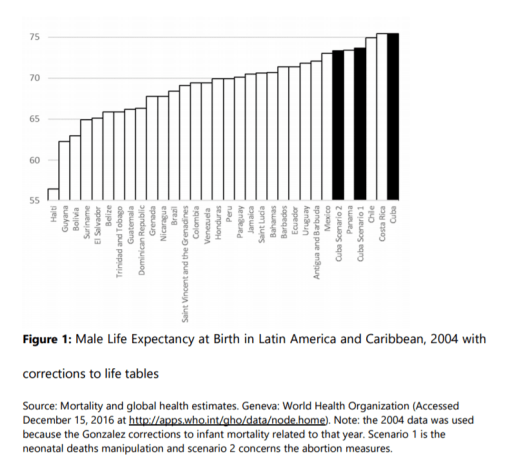
The Protestant Reformation and freedom of conscience

This year we celebrate 500 years of the Protestant Reformation. On October 31, 1517, the then Augustinian monk, priest, and teacher Martin Luther nailed at the door of a church in Wittenberg, Germany, a document with 95 theses on salvation, that is, basically the way people are led by the Christian God to Heaven. Luther was scandalized by the sale of indulgences by the Roman Catholic Church, believing that this practice did not correspond to the biblical teaching. Luther understood that salvation was given only by faith. The Catholic Church understood that salvation was a combination of faith and works.

The practice of nailing a document at the door of the church was not uncommon, and Luther’s intention was to hold an academic debate on the subject. However, Luther’s ideas found many sympathizers and a wide-spread protestant movement within the Roman Catholic Church was quickly initiated. Over the years, other leaders such as Ulrich Zwingli and John Calvin joined Luther. However, the main leaders of the Roman Catholic Church did not agree with the Reformers’ point of view, and so the Christian church in the West was divided into several groups: Lutherans, Anglicans, Reformed, Anabaptists, later followed by Methodists, Pentecostals and many others. In short, the Christian church in the West has never been the same.

The Protestant Reformation was obviously a movement of great importance in world religious history. I also believe that few would disagree with its importance in the broader context of history, especially Western history. To mention just one example, Max Weber’s thesis that Protestantism (especially Calvinism, and more precisely Puritanism) was a key factor in the development of what he called modern capitalism is very accepted, or at least enthusiastically debated. But I would like to briefly address here another impact of the Protestant Reformation on world history: the development of freedom of conscience.

Simply put, but I believe that not oversimplifying, after the fall of the Roman Empire and until the 16th century, Europe knew only one religion – Christianity – in only one variety – Roman Catholic Christianity. It is true that much of the paganism of the barbarians survived through the centuries, that Muslims occupied parts of Europe (mainly the Iberian Peninsula) and that other varieties of Christianity were practiced in parts of Europe (mainly Russia and Greece). But besides that, the history of Christianity was a tale of an ever-increasing concentration of political and ecclesiastical power in Rome, as well as an ever-widening intersection of priests, bishops, kings, and nobles. In short, Rome became increasingly central and the distinction between church and state increasingly difficult to observe in practice. One of the legacies of the Protestant Reformation was precisely the debate about the relationship between church and state. With a multiplicity of churches and strengthening nationalisms, the model of a unified Christianity was never possible again.

Of course, this loss of unity in Christendom can cause melancholy and nostalgia among some, especially Roman Catholics. But one of its gains was the growth of the individual’s space in the world. This was not a sudden process, but slowly but surely it became clear that religious convictions could no longer be imposed on individuals. Especially in England, where the Anglican Church stood midway between Rome and Wittenberg (or Rome and Geneva), many groups emerged on the margins of the state church: Presbyterians, Baptists, Congregationalists, Quakers, and so on. These groups accepted the challenge of being treated as second-class citizens, but maintaining their personal convictions. Something similar can be said about Roman Catholics in England, who began to live on the fringes of society. The new relationship between church and state in England was a point of discussion for many of the most important political philosophers of modernity: Thomas Hobbes, John Locke, Edmund Burke, and others. To disregard this aspect is to lose sight of one of the most important points of the debate in which these thinkers were involved.

The Westminster Confession of Faith, one of the most important documents produced in the period of the Protestant Reformation, has a chapter entitled “Of Christian Liberty, and Liberty of Conscience.” Of course there are issues in this chapter that may sound very strange to those who are not Christians or who are not involved in Christian churches. However, one point is immediately understandable to all: being a Christian is a matter of intimate forum. No one can be compelled to be a Christian. At best this obligation would produce only external adhesion. Intimate adherence could never be satisfactorily verified.

Sometime after the classical Reformation period, a new renewal religious movement occurred in England with the birth of Methodism. But its leading leaders, John Wesley and George Whitefield, disagreed about salvation in a way not so different from what had previously occurred between Luther and the Roman Catholic Church. However, this time there was no excommunication, inquisition or wars. Wesley simply told Whitefield, “Let’s agree to disagree.”

Agreeing to disagree is one of the great legacies of the Protestant Reformation. May we always try to convince each other by force of argument, not by force of arms. And that each one has the right to decide for themselves, with freedom of conscience, which seems the best way forward.