Brazil-Africa Relations, Now and Then

The first academic paper I ever published was about Brazil-Africa Relations, approximately from the 1960s to the 2000s. The main point of the article was to compare three moments of Brazilian Foreign Policy Towards Africa: the Independent Foreign Policy of the Early 1960s; the Foreign Policy of the latter Military Governments (late 1970s) and the Foreign Policy of the Lula administration (2003-2011). My main conclusion was that the foreign policy towards Africa of these three moments was very similar. Although some would exalt Lula’s foreign policy as something extraordinary, the truth, as I saw it, was that it was very well grounded in a tradition of Brazilian Foreign Policy.

Today I feel somewhat ashamed of that paper. I failed to highlight the irony: the leftist government of Lula had a foreign policy strikingly similar to that of the (supposedly) far-right military regime. The information, to be sure, is all there. One has simply to come to this obvious conclusion.

The foreign policy of Lula and Dilma was indeed very similar to that of Ernesto Geisel and João Batista Figueiredo, the last two generals to be presidents of Brazil, and not only regarding Africa. Dilma’s economic policy was extremely similar to that of Geisel, the same policy that, by the way, led Brazil to the hyperinflation of the 1980s and early 1990s.

It is definitely ironic. The Workers Party began as an opposition to the military government in Brazil. Dilma was a terrorist guerrilla warrior who fought against that regime (and never publicly apologized for that). However, once in power, they became very similar to their enemies. I’ll leave the readers to come to their own conclusions about this. But regarding Africa: I wasn’t able to continue my research. But I’m still very interested in that continent. Brazil is geographically and culturally very similar to many African nations. I believe there are great opportunities for mutual aggrandizement. But “mutual” is not what I saw in my research. I saw Brazil being hypocritical: The US is (in the sick mind of some leftist Brazilian politicians and diplomats) imperialist towards Brazil; therefore, Brazil will be imperialist towards Africa. I hope that a more market-friendly Brazil will be able to do something different.

“10 things you didn’t know about World War I”

That’s the title of my weekend piece over at RealClearHistory. The structure of the pieces, if you’ll remember, is Top 10 style, but I try to throw some more in-depth stuff into the mix, too. An excerpt:

3. World War I showed the world what a united Germany could do. Germany was formed in 1871, making it almost 100 years younger than the United States and much younger than France and the United Kingdom. Prior to the formation of Germany, which came about due to Prussian diplomat Otto von Bismarck’s genius machinations, observers and thinkers throughout the world penned works speculating on what a unified German-speaking world would do, politically, economically, culturally, and militarily. Rome’s decentralized barbarian enemies were from Germania, the Holy Roman Empire (which was neither Holy nor Roman nor an Empire), the Hanseatic League, and the German Confederation which all tried, in vain, to do what Bismarck did. Many of the attempts to unite Germany were foiled by French, British, Austro-Hungarian, and Russian statesmen because of fears that a united Germany would come to dominate Europe and upset the balance of power that European elites had come to rely on as their foreign affairs blueprint. They weren’t wrong.

Please, read the whole thing.

Revisiting Epstein’s Freedom and Growth


I was fortunate to be invited give the Epstein Lecture at LSE this March. The series is named after the great LSE economic historian Larry (Stephen) Epstein. Here I’ll summarize why it was such an honor to give the lectures. The content of the lecture will be another post.

Epstein was a historian whose origin field of expertise was medieval Italy. I encountered him through Freedom and Growth. Published in 2000, I first read it a couple of years later, perhaps in 2002 or 2003. At the time I was devoted to a story of economic growth shaped by Douglass North, particularly Structure and Change in Economic History (1981).

The focus of Structure and Change was on transaction costs. High transaction costs limited market exchange and kept societies poor for most of history. Sustained economic growth could only occur once transaction costs fell to a level that allowed markets to expand and the division of labor to develop. On this view, market expansion or Smithian growth was itself a stimulus to technological innovation. But what kept transaction costs high?

One answer North gave was the state. To paraphrase: the state had the ability to both keep a society mired in poverty through predatory behavior and to provide the preconditions for growth by securing property rights. The origins of sustained economic growth for North lay in institutional changes that occurred secured property rights and lowered transaction costs. The most important such institutional change was the Glorious Revolution of 1688.


North’s account received many challenges, but the issue that Epstein honed in on was the assumption that there was such a state, able to either revoke or secure property rights. It was assumed that “rulers rule”. Epstein contested this arguing that New Institutional Economists

“project backwards in time a form of centralised sovereignty and jurisdictional integration that was first achieved in Continental Europe during the nineteenth century; they therefore fundamentally misrepresent the character of pre-modern states.”

North, Wallis, and Weingast would address this in their 2009 Violence and Social Orders. But Epstein’s criticism was spot on in 2000. Epstein argued that alongside the problem of predatory states, a central problem was the lack of integrated markets. He attributed market disintegration to coordination and prisoners’ dilemma problems between political authorities. In so doing, Epstein set the agenda for the subsequent “state capacity” research agenda.

Epstein made several points which continued to be expanded upon by current research (see here). First, he documented that the lower interest rates that the British state paid after 1688 were characteristic of city republics from the middle ages onwards. He argued that the English monarchy in the 17th century was characterized by an anomalously backwards financial system. Lower interest rates after 1688 partly represent a convergence to the Republican norm achieved by Italian city-states centuries earlier.

Second, he challenged the argument that monarchies “overtaxed” cities. There was “no evidence that townspeople paid higher taxes under monarchies than republics”. Per capita taxes were likely higher in Republican city-states.

Third, he disputed that Republican city-states like Florence brought economic freedom noting that “republican subjects faced several limitations to their economic and political freedoms that monarchical subjects did not”. All of this challenged generalizations made by historical sociologists like Charles Tilly and economic historians like North.


Epstein’s historical evidence came from medieval Italy. Late medieval Italy was highly urbanized and prosperous by pre-industrial standards. According to Broadberry’s estimates, per capita GDP in Italy in 1450 was not matched by England until 1750. Like growth elsewhere in the premodern world, it was Smithian growth, driven by trade, market integration, and the division of labor. But unlike in England, this Smithian growth did not continue and blossom into modern growth. Epstein’s explanation for why this did not take place was that late medieval Italy suffered an “integration crisis”.

He saw the late medieval period as characterized by new opportunities for growth and innovation. Urbanization increased. Capital markets expanded and deepened. Interregional trade developed. Proto-industrialization took place. But Epstein contended these opportunities were only seized in areas where political authority was centralization.

In reference to proto-industrialization, he observed that

“Crucially, the success of regional crafts was inversely proportional to the concentration of economic and institutional power in the hands of a dominant city.”

With respect to the establishment of permanent fairs, he noted that

In fifteenth-century Lombardy, new fairs proliferated only after the balance of power shifted decisively from the former city-states to the territorial prince with Francesco Sforza’s victory in 1447.

Market integration was complemented and perhaps driven by political integration. Integrated urban hierarchies were themselves the product of political centralization.

“Centralisation underlies all the major institutional changes to market structures previously described. It lowered domestic transport costs, made it easier to enforce contracts and to match demand and supply, intensified economic competition between towns and strengthened urban hierarchies, weakened urban monopolies over the countryside, and stimulated labour mobility and technological diffusion.”

The more centralized parts of Italy — notably Lombardy — were better able to benefit from these trends than was Tuscany. But in general, political fragmentation and regional diversity were “distinctive features of pre-modern Italy” in general and an impediment to its long-run growth prospects.

Unlike in his analysis of interest rates, Epstein brought little data to bear on these claims and I am unaware of subsequent research on late medieval Italy. As such, the thesis of a late medieval integration crisis laid out in Freedom and Growth remains speculative. Epstein would no doubt have fill in the details had he lived longer. Subsequent research has mostly focused on early modern rather than medieval Europe (see here).  But the larger message: the importance of the state for premodern economic development has been central to subsequent research, including my own work (e.g. here).

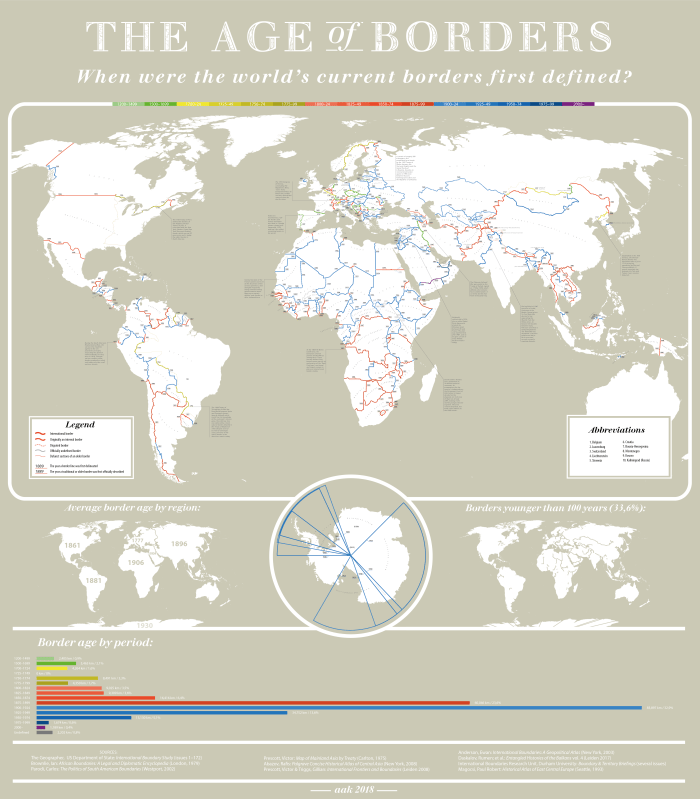
Eye Candy: The Age of Borders

NOL map the age of borders
Click here to zoom

I think the border dates for Europe are a disingenuous in places, such as the Czech Republic’s 1459 border with Germany (neither of these two countries existed then) and the borders of the Balkan states (Yugoslavia?). Other than a few discrepancies here and there, it’s a pretty cool map. (h/t Bill Easterly)

The President’s commission on opioids (1/2)

Given Zachary’s post on the drug war and opioid crisis, I thought I would share parts of an essay I wrote for a class last semester about Trump’s commission on opioids, which is the first policy step the new administration took in dealing with the issue. It’s edited for links and language and whatnot.


One of the more recent executive steps to combat the opioid crisis — the “abuse” of prescription and illegal opioid-based painkillers — was the creation of The President’s Commission on Combating Drug Addiction and the Opioid Crisis (hereafter, the Commission) two years ago by the Trump administration. The commission, led by Chris Christie, was instituted to investigate the issue further and produce recommendations for the government and pharmaceutical industry. It released its final report in November and seems set to work on opioid use with the same sort of strategies the federal government always treats drugs, except maybe a little more progressive in its consideration of medicinal users. Looking at the Commission’s report, I argue that a refusal to treat unlike cases dissimilarly will lead to less than effective policy.

The President’s Commission

The DEA first asserted that overdose deaths from opioids had reached an epidemic in 2015. In March of last year, Donald Trump signed an executive order establishing the policy of the executive branch to “combat the scourge of drug abuse” and creating The President’s Commission. The Commission is designed to produce recommendations for federal funding, addiction prevention, overdose reversal, recovery, and R&D. Governor Chris Christie of New Jersey served as Chairman alongside Gov. Charlie Baker (R-MA), Gov. Roy Cooper (D-NC), representative Patrick J. Kennedy (D-RI), former deputy director of the Office of National Drug Policy and Harvard professor of psychobiology Bertha Madras, and Florida Attorney General Pam Bondi.

Included in the final report is a short history of opioid use in the United States, characterized by a first crisis in the mid- to late-19th century of “unrestrained … prescriptions,” eventually reversed by medical professionals “combined with federal regulations and law enforcement.” A public distrust of opioids developed afterward, but this was “eroded,” and now the new crisis, traceable to 1999, has become more perilous by innovations since the 19th century: large production firms for prescription drugs, a profitable pharmaceutical industry, cheaper and purer heroin, new fentanyl imports from China.

Since the Commission’s report, several bills have been introduced in the House or Senate currently awaiting judgment (e.g., H.R.4408, H.R.4275, S.2125). Declaring widespread addiction and overdoses to be a national emergency in August, Trump fulfilled one of the interim steps proposed by Christie in an early draft of the report; since, the President has met with drug company executives to discuss nonopiate alternatives for pain relief. Within the next few months we should start to see large scale moves.

Through all of this, the treatment of opioids by the Commission and the US government uses a traditional framing. The National Institute on Drug Abuse (NIDA) defines drug abuse in the following way:

[Use of substances] becomes drug abuse when people use illegal drugs or use legal drugs inappropriately. This includes the repeated use of drugs to produce pleasure, alleviate stress, and/or alter or avoid reality. It also includes using prescription drugs in ways other than prescribed or using someone else’s prescription. Addiction occurs when a person cannot control the impulse to use drugs even when there are negative consequences—the defining characteristic of addiction.

This definition by the federal government does not discriminate between various levels of damaging consumption behavior. The weakness of this definition is that, because all illicit drug consumption is categorized as abuse, there can be no standard for misuse of a black market drug for recreation. An entry-level dose of heroin qualifies as equally “abusive” as a lethal dose because of the binary character of the definition. Other federal agencies give similar definitions; in its report on recommendations for abuse-deterrent generic opioids (see below), the HHS and FDA use a definition of abuse characterized by the “intentional, nontherapeutic use of a drug product or substance, even once, to achieve a desired psychological or physiological effect.” This terminology still characterizes any and all recreational consumption of opioid analgesics as abuse, and not misuse, regardless of dosage or long-term dependency. It will be seen that this is a problem for the success of any sort of policy aimed at quelling usage, and particularly hazardous for the opioid problem.

Legal Background

First, the legal background and a more extensive history. The category “opioid” covers much drug terrain both prescription and illegal. Opioids in the most expansive sense are synthetic derivatives of alkaloids in the opium of the West Asian poppy species Papaver somniferum. Opium resin contains the chemicals morphine, codeine and thebaine. Morphine is the basis for powerful pain relievers like heroin and fentanyl. Codeine is considered less powerful for pain relief but can be used to produce hydrocodone; it also doubles as a cough suppressant. Lastly, thebaine is similar to morphine and is used for oxycodone. 90% of the world’s opium production is in Afghanistan.

All opioids are criminalized under federal Drug Scheduling. Heroin is a Schedule I drug as part of the Controlled Substances Act. Several synthetic opioid drugs that contain hydro- or oxycodone are Schedule II (Vicodin, Dilaudid, OxyContin). Fentanyl is also a Schedule II drug. Heroin is just a brand name for the chemical diacetylmorphine (invented by Bayer), still used as treatment in plenty of developed nations like the United Kingdom and Canada; after heroin was completely criminalized in the United States (“no medical benefits”), synthesized opiate drugs became more popular for prescriptions.

The Pure Food and Drug Act of 1906 introduced labels on medicine containing codeine and opium in general after Chinese immigrant workers introduced the drug to the states. Through 1914, various federal laws restricted opium further until the Harrison Narcotics Tax Act on opium and coca products (which are not narcotics, and the colloquial language has been messed up ever since) effectively criminalized the prescription of opioid products to addicted patients. Shortly afterward, the amount of heroin in the U.S. skyrocketed. Only in recent decades have synthesized opiates occupied the public mind, however. Between 1999 and the present, deaths from overdoses of opioids and opioid-based painkillers like OxyContin, Vicodin, morphine and street heroin have risen almost fourfold.

The data on overdoses and deaths does not paint a straightforward picture, and the group “opioid” obscures the different trends between drugs. The CDC classifies data according to four varieties of opioids: natural/semi-synthetic opioid analgesics like morphine, codeine, oxy- or hydrocodone, and oxy- or hydromorphone; synthetic opioid analgesics like tramadol and fentanyl; methadone; and heroin. The last is the only completely illegal opioid. Overdose deaths that have included heroin and completely synthetic opioids have increased exponentially from 2010 and 2013, respectively, while deaths from natural/semi-synthetic opioids and methadone have roughly stabilized or gone down over the last decade. Taken altogether, the deaths from opioid overdoses per 100,000 from 2000 to 2015 have increased from three to eleven people. (As of 2016, natural/semi-synthetic opioid deaths have actually started to go up again, but its still recent in the trend.)

OpioidDeathsByTypeUS

In 2016, the CDC issued guidelines for treating chronic pain that warned physicians against prescribing high dose opioids and suggested talking about health risks. It also advised to “start low and go slow” — a slogan later mocked by John Oliver in a segment on opioids. And, according to a CDC analysis, prescriptions for the most dangerous opioids have dropped 41% from 2010 to 2015, and so have opioid prescriptions in general dropped. This has resulted in patients with physical dependency suffering withdrawal, often without programs to ease the transition to nonopioid pain relievers. Opioid dependants with withdrawal, or average citizens in need of pain relief, often turn to stronger street narcotics, since heroin is the cheaper and stronger alternative to oxycodone. For example, with the drop in first-time OxyContin abuse since 2010, heroin use has spiked. In Maine, a 15% decrease in opioid analgesic overdoses came with a 41% increase in heroin overdoses in 2012. The use of prescribed opioids, then, looks like it might be strongly connected to the use of street narcotics. The Commission, for its credit, notes that “the removal of one substance conceivably will be replaced with another.”

One fact lost in the discussion is that the use of nonmedical opioids has decreased but the amount of overdose deaths has increased. And “opioid epidemic” when discussing overdoses highly obscures that heroin is the major contributor alongside fentanyl — not merely prescription analgesics. We hear a lot about OxyContin and Vicodin, which are actually leveling out (or were until 2015), and less about the drugs which are already policed more, have been policed longer, and cause more physical problems.

What the Commission proposes

In its report, the Commission concludes the goals of its recommendations are “to promote prevention of all drug use with effective education campaigns and restrictions in the supply of illicit and misused drugs.” The President’s Commission doesn’t want to interfere too strongly, despite all of Trump’s suggestions of a revamped drug war. The report notes that coming down hard on opioids will hurt patients with real needs, as has already happened, and, in a way, has happened since 1924. Much of the Commission’s recommendations come from a market approach, e.g. the suggestion (Rec. 19) to reimburse nonopioid pain treatments. The current Centers for Medicare and Medicaid Services (CMS) policy for reimbursement for healthcare providers treats nonopioid, postsurgical pain relief treatments the same as opioid prescriptions, issuing one inclusive payment for all “supplies” at a fixed fee. Nonopioid medications and treatments cost more, and so hospitals opt for dispensing opioids instead. The Commission recommends “adequate reimbursement [for] a broader range of pain management” services, changing the bundle payment policy to accommodate behavioral health treatment, educational programs, “tapering off opioids” and other nonopioid options.

Trump himself suggested an educational approach in a public announcement, which triggered critical comparisons to the failed D.A.R.E. program and “your brain on drugs” commercials. Educational programs are a less coercive option than direct regulation of opioids, but their effectiveness seems to be hit and miss. The Commission cites the Idaho Meth Project from 2007 (ongoing), conducted by a private nonprofit to inform young adults on the health problems associated with methamphetamine use, as a success story: “The Meth Project reports that 94% of teens that are aware of the anti-meth campaign ads say they make them less likely to try or use meth, and that Idaho has experienced a 56% decline in teen meth use since the campaign began.” This meth project is one success story out of many failures. For instance, the Montana Meth Project from 2005, on which the Idaho project was modelled, “accounting for a preexisting downward trend in meth use,” was determined to have “effects on meth use [that] are statistically indistinguishable from zero,” according to an analysis by the National Library of Medicine. Then again, one large scale anti-drug educational campaign, truth, which encourages youth to avoid tobacco, might be having success. Their modern guerrilla tactics are a major improvement on the old model of Partnership for a Drug-Free America. 

In another market approach to help recovering addicts reenter society, the Commission recommends decoupling felony convictions and eligibility for certain occupations (Rec. 50). The report cites Section 1128 of the Social Security Act, which prohibits employers that receive funding from federal health programs from hiring past convicts charged with unlawfully manufacturing, distributing or dispensing controlled substances. Any confrontation with law enforcement is a barrier to landing a job — a protected area of discrimination — and government laws that specifically ban their hiring make it worse on ex-users and -dealers trying to get clean. Recommendations like these lessen the role that the state has in keeping ex-convicts out of work. 

Much of the funding requested by the President’s Commission is authorized by the Obama administration’s major contribution to combating opioid usage, the Comprehensive Addiction and Recovery Act (CARA), signed into law July 2016 and credited as the “first major federal addiction legislation in 40 years.” CARA helped implement naloxone (an opioid overdose-reversal nail spray) in firefighting departments and strengthen drug monitoring programs. 


I’ll post the second half soon, and then a bonus post on my personal favorite solution.
The Abraham Lincoln Brigade

My latest over at RealClearHistory went up on Tuesday. The schedule for my work over there goes as follows: I’ve got a regular Friday column and a Tuesday blog post, so be on the lookout! Here’s an excerpt:

The volunteers were to be used as cannon fodder for the Republicans, which explains the high casualty rate, but it was the disorganized front put on by the democratically-elected Republican government that is to blame for the high casualty rates, rather than some sort of prejudice or malice on the part of the Spanish Left. The volunteers almost all came from non-military backgrounds, too, as most were starry-eyed urban idealists who believed they were fighting injustice. After a meager 30 days of training, the Lincoln Battalion was marched to the front lines to fight a bunch of battle-hardened troops that mostly hailed from Spain’s colonies, where military governance was practiced and honed to near perfection.

Read the rest. This was a fun one to write. I initially wanted to do something about the Spanish Civil War and international meddling (Madrid fell to Franco on March 29), before tying it in to the events in Syria.

My editor gently reminded me that the blog posts should be about American history, so I threw in the Abraham Lincoln Brigade. And check out my RCH colleague’s post on the birth and rise of the Republican Party.

Eye Candy: the Russian Civil War

Click here to zoom

(h/t Adrián)

What on earth was the Dervish state?

That’s the topic of my latest column at RealClearHistory. An excerpt:

2. Sovereignty and suzerainty are concepts that have little to no bearing on today’s world, but perhaps they should. Prior to the end of World War II, when the U.S. and U.S.S.R. became the globe’s alpha powers, suzerainty was often used by imperial powers to manage their colonies. Suzerainty is a formal recognition, by a power, of a minor polity’s independence and autonomy, and a formal recognition by the minor polity of the power’s control over its diplomatic and economic affairs. Suzerainty was used especially often by the British and Dutch (and less so by France and other Latin states, which preferred more direct control over their territorial claims), as well as the Ottoman Empire. The U.S.-led order has focused on sovereign states rather than unofficial spaces, and this has led to many misunderstandings. Somalia, which has long been a region of suzerains, is a basketcase today largely because it is approached by powers as a sovereign state.

Please, read the rest. The Dervish state was an ally of the Ottoman and German empires during World War I.

Electricity in Quebec before Nationalization (1919 to 1939)

A few weeks ago, I mentioned that  I am generally skeptical of “accepted wisdom” on many topics. “Accepted wisdom” is a construction of a stylized fact by a party with intense preferences that is gradually able to remove nuances over time to solidify its preferred narrative. The example I gave a few weeks ago concerned antitrust laws. There are many more. One of those concerns a research agenda that I laid claim to in a recent article in Atlantic Economic Journal (co-authored with my dear friend Germain Belzile): the nationalization of electricity in Quebec.

My home province of Quebec is basically one giant network of rivers well-suited for the production of hydro-electricity – a potential that was noticed in the late 19th century and led to a rapid expansion of the network. Historians (and some economists) have depicted the early electrical industry in Quebec as a “trust” (a cartel) that gouged consumers and could only be resolved, as witnessed by the neighboring province of Ontario, by nationalization (which occurred in two waves – one in 1944 and one in 1962).

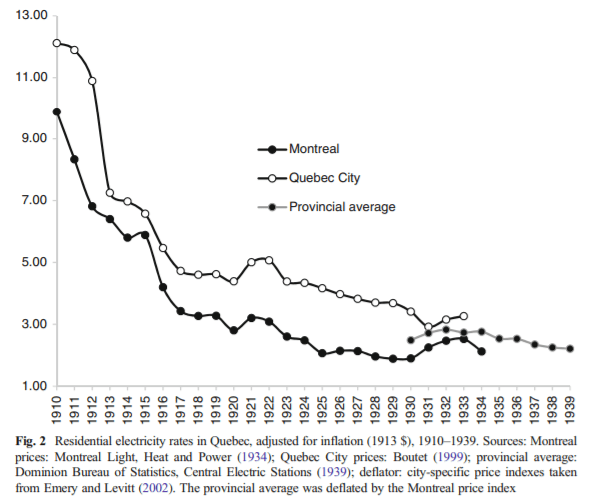
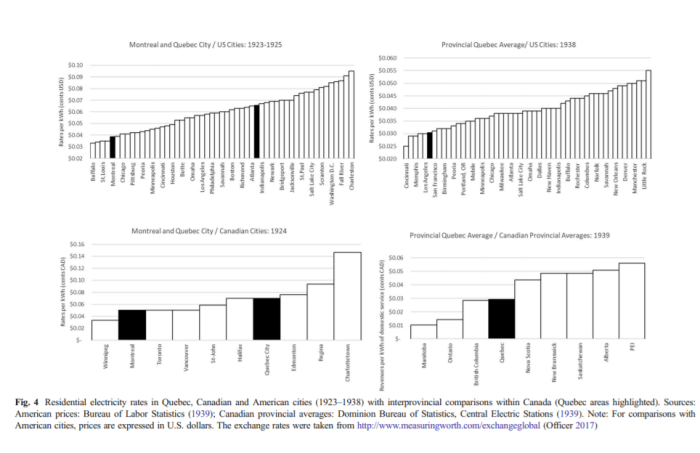
In the article I published with Belzile, I argue that this narration is largely incorrect. First, before nationalization prices in Quebec were falling and were low by North American standards (see figures below). Second, production was expanding rapidly. This is in spite of the fact that taxes imposed on the electrical industry grew rapidly over time from less than 10% of total expenditures to close to 30%.  Moreover, we point out that looking at residential prices is bound to yield bad comparisons (if we can call those made above as “bad”) if there is price discrimination. The industry price discriminated and offered incredibly low prices for industrial customers (large power) than in Ontario or anywhere else in Canada  (in spite of the taxes it was operating under and the fact that Ontario subsidized its own).

We also point out that there was a dynamics of interventionism problem. The neighboring province of Ontario (more populous and richer than Quebec) nationalized its industry and set prices well below the market level which is an implicit subsidy. However, at the subsidized rate, Ontario could not supply its own demand and had to buy at the market price in Quebec. Its over-equilibrium quantity of energy demanded was transferred on the freer Quebec market, thus increasing prices on that market.

We also argue that there was wide heterogeneity of rates in Quebec that relate to the structure of municipal regulation (the level at which electricity was regulated pre-1935). The price differences depended on the political games involving rent-seeking firms and politicians (best exemplified by the case of Quebec City). Cities with high prices were places where the electrical market was heavily politicized and franchises (i.e. the contracts fixing rate schedules over long periods of time to recoup capital investment) were short and subject to holdups.

This latter point is meant for us (me and Germain) to stake a claim on future research to document the nationalization and regulation process at the municipal level and see what the effects on prices and outputs were. In a certain way, I am trying to establish a research agenda extending the skepticism of “accepted wisdom” that has emerged with the economic history of antitrust in the United States to the case of electricity trusts in Quebec. This first article is, I believe, a promising start for such an inclusion.


Figure2Electricity

Figure4Electricity


Rosenbloom on the Colonial American Economy

Joshua Rosenbloom is an economic historian worth following if you are interested in American economic history during the colonial era. He has recently published what appears to be an overview article of the topic (probably for a book or an invited symposium) which perfectly summarizes the current state of the research. I believe that this should be widely read by interested parties.  Here are key excerpts for some of the topics he discusses. I provide some comments to enrich his contribution, but these should be understood as complements rather than substitutes to this excellent overview of the American economy during the colonial era.

On Economic Growth 

Mancall and Weiss (…) concluded that likely rates of per capita GDP growth could not have been higher than 0.1 percent per year and were likely closer to zero. In subsequent work, Mancall, Rosenbloom and Weiss (2004) and Rosenbloom and Weiss (2014) have constructed similar estimates for the colonies and states of the Lower South and the Mid-Atlantic regions, respectively. Applying the method of controlled conjectures at a regional level allowed them to incorporate additional, region-specific, evidence about agricultural  productivity and exports, and reinforced the finding that there was little if any growth in GDP per capita during the eighteenth century. Lindert and Williamson (2016b) have also attempted to backcast their estimates of colonial incomes. Their estimates rely in part on the regional estimates of Mancall, Rosenbloom and Weiss, but the independent evidence they present is consistent with the view that economic growth was quite slow during the eighteenth century.

This is still a contentious point (see notably this article by McCusker), but I believe that they are correct. In my own work, using both wages and incomes, I have found similar results for Canada and Leticia Arroyo Abad and Jan Luiten Van Zanden have found something roughly similar for the Latin American economies (Mexico and Peru).

It is also consistent with even simplistic accounts of the neoclassical growth model. The New World was an economy of abundant land input whose outputs (agricultural produce) were mostly meant for local consumption. If one wanted to increase his income, all he had to do was use more inputs at really low costs. There is very little in this situation to invest in increasing total factor productivity and incomes would only increase at the dis-aggregated level (following the same region over time) as we are capturing the extent of inputs included over time (e.g. the long-settled farmer has a high income because he has had the time to build his farm, but the short-settled farmer brings the average down because he is just starting that process).

On Monetary History and Monetary Puzzles

In lieu of specie, the colonists relied heavily on barter for local exchange. In the Chesapeake transactions were often denominated in weights of tobacco. However, tobacco was not used as a medium of exchange. Rather merchants might advance credit to planters for the purchase of imported items, to be repaid at harvest with the specified quantity of tobacco. Elsewhere book credit accounts helped to facilitate transactions and reduce the need for currency. The colonists regularly complained about the shortage of specie, but as Perkins (1988, p. 165) observed, the long run history of prices does not suggest any tendency of prices to fall, as would be expected if the money supply was too small. (…) With only a few exceptions the colonies issuance of these notes did not give rise to inflationary pressures. There is by now a large literature that has analyzed the relationship between note issuance and prices, and finds little evidence of any correlation between the series (Weiss 1970, 1974; Wicker 1985; Smith 1985; Grubb 2016. As Grubb (2016) has argued, this suggests that while the circulation of bills of credit may have facilitated exchange by substituting for book credit or other forms of barter, they did not assume the role of currency.

In this, Rosenbloom summarizes a puzzle which has been the subject of debates since the 1970s (starting with West in 1978 in this Economic Inquiry article). In many instances (like South Carolina and Pennsylvania), the large issues of paper money had no measurable effect on prices.  This is a puzzle given the quantity theory of the price level. The proposition to solve the puzzle is that as the paper money printed by colonies tended to be backed by future assets, they were securities that could circulate as a medium of exchange. If properly backed and redeemed, people would form expectations that these injections were temporary injections and there would be no effect on the price level all else being equal. Inflation would only occur if redemption promises were not held or were believed to be humbug. This proposition has been heavily contested given the limited information we hold for the stock of other media of exchange and trade balances. I have my own take on this debate on which I weigh using a similar Canadian monetary experiment (see here), but this is a serious debate. Basically, it is a historical battleground between the proponents of the fiscal theory of the price level (see notably the classical Sargent and Wallace article) and the proponents of the quantity theory of the price level.  Anyone interested in the wider macroeconomic debate should really focus on these colonial experiments because they really are the perfect testing grounds (which Rosenbloom summarizes efficiently).

On Mercantilism, the Navigation Acts and American Living Standards

The requirement that major colonial exports pass through England on their way to continental markets and that manufactures be imported from England was the equivalent of imposing a tax on this trade. The resulting price wedge reduced the volume of trade and shifted some of the producer and consumer surplus to the providers of shipping and merchant services. A number of cliometric studies have attempted to estimate the magnitude of these effects to determine whether they played a role in encouraging the movement for independence (Harper 1939; Thomas 1968; Ransom 1968; McClelland 1969). The major difference in these studies arises from different approaches to formulating a counterfactual estimate of how large trade would have been in the absence of the Navigation Acts. In general, the estimates suggest that the cost to the colonists was relatively modest, in the range of 1-3 percent of annual income. Moreover, this figure needs to be set against the benefits of membership in the empire, which included the protection the British Navy afforded colonial merchants and military protection from hostile natives and other European powers.

The Navigation Acts were often cited as a burden that the colonists despised, but many economic historians have gone over their impact and they appear to have been minimal. It does not mean that they were insignificant to political events (rent-seeking coalitions tend to include small parties with intense preferences). However, it does imply that the action lies elsewhere if someone wants to explain the root causes of the revolution or that one must consider distributional effects (see notably this article here).

These are the sections that I found the most interesting (as they relate to some of my research agendas), but the entire article provides an effective summary for anyone interested in initiating research on the topic of American economic history during the colonial era. I really recommend reading it even if all that you seek is an overview for general culture.

World War I destroyed Christianity

That’s the argument I put forth in this week’s RealClearHistory column. As usual I frame the argument in the form of a “Top10,” and in this case I used battles. An excerpt:

6. Battle of Asiago: May 15 – June 10, 1916. Another nasty battle fought along the Austro-Italian Front, Asiago is considered a victory for Italy even though it lost more men than the Austro-Hungarians. Altogether, the surprise attack launched by the Hapsburgs inflicted severe casualties on the Italians, with the latter losing 140,000 men and the aggressor losing 100,000. The surprise did not work for the Hapsburgs, either, as their armies were turned back and the position continued to be held by the Italians. There is a beautiful war memorial dedicated to both sides in Asiago today, and there are no crosses to be found for the dead there.

Please, read the rest.

On demography and living standards in the colonial era

This is a topic that has been bugging me. Very often, historians will (accurately) point out mortality statistics in the United States, Canada (Quebec) and the Latin America during the colonial era were better than in the comparable Old World (comparing French with French, British with British, Spanish with Spanish). However, they will argue that this is evidence that living standards were higher. This is where I wish to make an important nuance.

Settlement colonies (so, here there is a bigger focus on North America, but it applies to smaller extent to Latin America which I am more tempt to label as extractive – see here) are generally frontier economies. This means that they are small economies because of small populations.  This means that labor and capital are scarce relative to land. All outputs that come from the relatively abundant factor will thus tend to be cheaper if there is little international trade for the goods that they are best at producing. The colonial period pretty much fits that bill. The American and Canadian colonies were basically agricultural colonies, but very few of those agricultural outputs actually crossed the Atlantic. As such, agricultural produces were cheap. This is akin to saying that nutrition was cheap.

This, by definition, will give settlement colonies an advantage in terms of biological living standards. As they are not international price takers, wheat is cheaper than in the old world. This is why James Lemon spoke of the New World as the “Best poor man’s country” (I love that expression) : it was easy to earn subsistence. However, beyond that it is very hard to go beyond. For example, in my dissertation (articles still in consideration at Cliometrica and Canadian Journal of Economics) I found that when wages were deflated by a subsistence basket containing very few services and manufactured goods and which relied heavily on untransformed foods, Canada was richer than the richest city of France. Once you shifted to a basket that marginally increased transformed goods and manufactured goods, the advantage was wiped away.

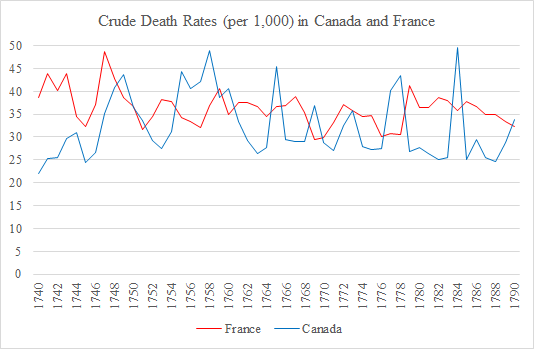
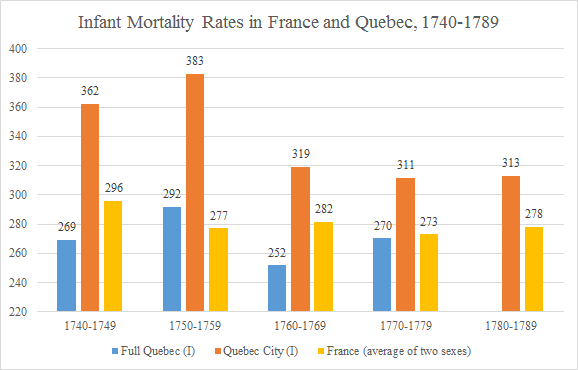
Yet, everything indicates that mortality rates were greater in Paris and France and than in Quebec City and Quebec as a whole (but not by a lot) (see images below).  Similar gaps seem to exist for the United States relative to Britain, but the data is not as rich as for Quebec. However, the data that exists for New England suggests that death rates were lower than in England but the “bare bones” real incomes measured by Lindert and Williamson show that New England may have been poorer than Great Britain (not by much though).

Crude Death Rates

IMR

I am not saying that demographic and biological data is worthless. Quite the contrary (even I wanted to, I could not since I have a paper on the heights of French-Canadians from 1780 to 1830)! The point is that data matters in context.  The world is full of small non-linearities between variables. While “good” demographic outcomes are generally tracking “good” economic outcomes, there are contexts where this may be a weaker relation (curvilinear relations between variables). I think that this is a good example of that point.

How poor was 18th century France? Steps towards testing the High-Wage Hypothesis (HWE)

A few days ago, one of my articles came online at the Journal of Interdisciplinary HistoryIt is a research note, but as far as notes go this one is (I think) an important step forwards with regards to the High-Wage Hypothesis (henceforth HWE for high-wage economy) of industrialization.

In the past, I explained my outlook on this theory which proposes that high wages relative to energy was a key driver of industrialization. As wages were high while energy was cheap, firms had incentives to innovate and develop labor-saving technologies.  I argued that I was not convinced by the proposition because there were missing elements to properly test its validity. In that post I argued that to answer why the industrial revolution was British we had to ask why it was not French (a likely competitor). For the HWE to be a valid proposition, wages had to be higher in England than in France by a substantial margin. This is why I have been interested in living standards in France.

In his work, Robert Allen showed that Paris was the richest city in France (something confirmed by Phil Hoffman in his own work). It was also poorer than London (and other British cities). The other cities of France were far behind. In fact, by the 18th century, Allen’s work suggests that Strasbourg (the other city for which he had data) was one of the poorest in Europe.

In the process of assembling comparisons between Canada and France during the colonial era (from the late 17th to the mid-18th centuries), I went to the original sources that Allen used and found that the level of living standards is understated. First, I found out that the wages were not for Strasbourg per se. They applied to a semi-rural community roughly 70km away from Strasbourg.  Urban wages and rural wages tend to differ massively and so they were bound to show lower living standards. Moreover, the prices Allen used for his basket applied to urban settings. This means that the wages used were not comparable to the other cities used. I also found out that the type of work that was reported in the sources may not have belonged to unskilled workers but rather to semi-skilled or even skilled workers and that the wages probably included substantial in-kind payments.

Unfortunately, I could not find a direct solution to correct the series proposed by Allen. However, there were two ways to circumvent the issue. The most convincing of those two methods relies on using the reported wages for agricultural workers. While this breaks with the convention established by Allen (a justifiable convention in my opinion) of using urban wages and prices, it is not a problem if we compare with similar types of wage work. We do have similar data to compare with in the form of Gregory Clark’s farm wages in England. The wage rates computed by Allen placed Strasbourg at 64% of the level of wages for agricultural workers in England between 1702 and 1775. In comparison, the lowest of the agricultural wage rates for the Alsatian region places the ratio at 74%. The other wage rates are much closer to wages in England.  The less convincing methods relies on semi-skilled construction workers – which is not ideal. However, when these are compared to English wages, they are also substantially higher.

Overall, my research note attempts a modest contribution: properly measure the extent to which wages were lower in France than in Britain. I am not trying to solve the HWE debate with this. However, it does come one step closer to providing the information to do so. Now that we know that the rest of France was not as poor as believed (something which is confirmed by the recent works of Leonardo Ridolfi and Judy Stephenson), we can more readily assess if the gap was “big enough” to matter.  If it was not big enough to matter, then we have to move to one of the other five channels that could confirm the HWE (at least that means I have more papers to write).

World War I: a pity

I will be dedicating many, if not most, of my columns at RealClearHistory to World War I over the next few months, mostly because it’s been 100 years since an armistice ended a war that was supposed to end all wars. Some of my thoughts will be heavy, but some, like this week’s, will be playful:

3. The Dervish state. This small state in the Horn of Africa was renowned throughout Europe and the Middle East for ably fending off challenges from Italians, the British, and the Ottomans during the roughly 25 years of its existence. The Dervish state openly resisted attempts at colonization during the Scramble for Africa and was recognized as a major ally by the German Empire and the Ottoman Empire. Being a small, independent state in the Horn of Africa, Dervish’s leaders played it smart and offered Ottoman and German troops assistance lightly, preferring instead to pay close attention to the realities of its allies’ war situation. When Istanbul and Berlin surrendered in 1918, no tears were shed by the Dervish. The state was conquered by the British Empire two years later, in 1920.

The piece is about some of the countries that played lesser roles in World War I. Please, read the whole thing. Any suggestions for next week’s column? (Bearing in mind that the theme is World War I.)

On Antitrust, the Sherman Act and Accepted Wisdom

I am generally skeptical of “accepted wisdom” on many policy debates. People involved in policy-making are generally politicians who carefully craft justifications (i.e. cover stories) where self-interest and common good cannot be disentangled easily.  These justifications can easily become “accepted wisdom” even if incorrect. I am not saying that “accepted wisdom” is without value or that it is always wrong, but more often than not it is accepted at face value without question.

My favorite example is “antitrust”.  In the United States, the Sherman Act (the antitrust bill) was first introduced in 1889 (passed in 1890). The justification often given is that it was meant to promote competition as proposed by economists. However, as often pointed out, the bill was passed well before the topic of competition in economics had been unified into a theoretical body.  It was also rooted in protectionist motives. Moreover, the bill was passed after the industries most affected saw prices fall faster than the overall price level and output increase faster than the overall output level (see here here here here and here). Combined, these elements should give pause to anyone willing to cite the “accepted wisdom”.

More recently, economist Patrick Newman provided further reason for caution in an article in Public Choice. Interweaving political history and the biographical details about senator John Sherman (he of the Sherman Act), Newman tells a fascinating story about the self-interested reasons behind the introduction of the act.

In 1888, John Sherman failed to obtain the Republican presidential nomination – a failure which he blamed on the governor of Michigan, Russell Alger. Out of malice and a desire of vengeance, Sherman defended his proposal by citing Alger as the ringmaster of one of the “trusts”. Alger, himself a presidential hopeful for the 1892 cycle, was politically crippled by the attack (even if it appears that it was untrue). Obviously, this was not the sole reason for the Act (Newman highlights the nature of the Republican coalition which would have demanded such an act). However, once Alger was fatally wounded, Sherman appears to have lost interest in the Act and left others to push it through.

As such, the passage of the bill was partly motivated by political self-interest (thus illustrating the key point of behavioral symmetry that underlies public choice theory). Entangled in the “accepted wisdom” is a wicked tale of revenge between politicians. At such sight, it is hard not to be cautions with regards to “accepted wisdom”.