- What does the word “liberal” mean? Nathan Schlueter, Law & Liberty
- Shadows and lights of globalization Branko Milanovic, globalinequality
- How countries use passports as a geopolitical tool Krishnadev Calamur, the Atlantic
- China’s struggle for India’s ocean Francis Sempa, Asian Review of Books
liberalism
Conservatives vs Liberals vs Libertarians
What I’m going to say here is far from original, but I believe it is worth reminding from time to time. Yes, there is a lot of over-simplification here, but bear with me! This is the difference between conservatives, liberals, and libertarians (or at least this libertarian who writes):
Gun control:
- Liberal: Guns are dangerous! People should not have guns!
- Conservative: From my cold dead hands!
- Libertarians: I personally don’t like guns and I wouldn’t like to have one. But I believe that people who so desire should have the right to own guns.
Drugs:
- Liberal: Marijuana is less dangerous than alcohol and should be legalized!
- Conservative: Marijuana is a gateway into heavier drugs and should be prohibited!
- Libertarian: Although I personally never did drugs and have no desire to do so, nor have deep knowledge of how particular drugs are heavier than legalized substances or not, I believe that people who want to do drugs should not be prohibited from doing so.
Foreign Policy:
- Liberal: We have to send more foreign aid. It is our moral responsibility! And who are we to judge which nations are democratic or not?
- Conservative: The world is a dangerous place and it is our responsibility to police it!
- Libertarian: Although I can see that the World is a dangerous place and I feel personally obligated to do something to help those in need, I don’t believe it is the role of the government to interfere in other nations.
Labor laws:
- Liberal: We have to protect the poor!
- Conservative: Capitalism is God’s way of deciding who is poor and who is smart!
- Libertarian: I feel for the poor, and I believe we should do something to help. I believe that some governmental policies predictably hurt the poor and therefore should be changed. However, I believe that helping the poor should be mainly done by individuals and independent organizations, not by the government.
Crime in general:
- Liberal: He is a victim of society!
- Conservative: The chair!!!
- Libertarian: External circumstances can explain and even attenuate certain crimes, but never justify it. On the other hand, if we are cruel towards criminals, we are becoming just like them. Also, throwing people in jail is very clearly an awful and simplistic way of dealing with crime and should think of other ways of punishment, always having reconciliation as an ideal.
Economics:
- Liberal: We need more government oversight!
- Conservative: The market will solve everything!
- Libertarian:
Immigration:
- Liberal: Open the border!
- Conservative: Build a wall!
- Libertarian: Completely opening the borders is abandoning any notion of nation-state. Nevertheless, we should be welcoming, though thoughtful, about immigration.
Education:
- Liberal: Your kids are mine!
- Conservative: We need to bring prayer back to public schools!
- Libertarian: Education is fundamentally religious and reflects the values we aim to have. Maybe the state can have a very limited role in it, but the main responsibility belongs to the parents, who likely will instill their values on the children.
Politics in general:
- Liberal: My party will solve everything!
- Conservative: My party will solve everything!
- Libertarian: There are no perfect solutions, especially not through politics. Do you want to change the World? Start by cleaning your room.
Free Immigration is not a Classical Liberal Right
My eye caught this article, which stands in a long tradition among libertarians.
It is the kind of fairy tale theory that gives liberal thought a bad name in general, and classical liberal thought in particular, as it is often confused with libertarianism in the US.
My problem with arguments like these is that they make logical sense, but are practically non-sensical at the same time. I am more than willing to admit that in the ideal libertarian world free immigration indeed is a right. Yet I do not think arguments like these help us to get that libertarian ideal one inch closer. On the contrary, I am afraid it only fosters disdain and outright disbelief, even among potential supporters.
The main problem of course is that there is no ideal libertarian world. Yet libertarians all too often do not seem to care about that. They rather continue to argue about what fairy tales makes the most logical sense, rather than using their sometimes brilliant minds to come up with ideas and theories to actually foster a more liberal world. Let alone a classical liberal or a libertarian world.
To make a case for free immigration on the basis of rights is to deny the property rights of current populations. Roughly, that argument goes like this: in this world most immigrants will make some claim to these existing property rights once they arrive in their host country. Higher taxation to pay for the immigration system is one thing, but also think of housing, claims to health and medical systems, social welfare programs, schools, roads, et cetera. The majority of the current population has put money into (these) public goods, certainly in Europe, and thus property rights were created. These should be protected and can only consensually be changed.
Also, there are more intangible effects, think for example of the change in culture and social cohesion, certainly before the new arrivals are fully integrated. Hayek warned against precisely these destabilizing effects of large groups of immigrants entering a relatively homogenous territory, drawing on his own Viennese experience in the interwar years. He openly supported Margaret Thatcher to this end in a letter to The Times on February 11, 1978, which were followed by further explanations in the same newspaper in the weeks thereafter.
This is not to say we should all build (or rather attempt to build) walls, or close off borders completely. Some form of immigration is indeed called for, if only out of humanitarian perspective. That is something completely different than free immigration though.
Should the US intervene in Venezuela?
With the ongoing troubles in Venezuela some commentators ask for a humanitarian intervention, by the US. Intervention by other countries, for example Brasil, seem to be out of the question. And of course the US has long regarded Central and South America their backyard, going back to the Monroe doctrine. What would be a liberal perspective on this? Basically, there are three answers.
Most people who call themselves liberal in the US have a favourable attitude towards humanitarian intervention. Or used to have this over the past decades (until it went wrong -at least in their view- in Iraq and Afghanistan). Their motives differ, but they would probably argue that there is a moral duty to intervene on behalf of the suffering majority. This moral duty, however defined in detail, is seen to exist when grave abuse of human rights take place in failed state situations, people’s lives are under threat, when a danger of genocide exists. The intervention may take place unauthorized (without United Nations Security Council mandate), or authorized. Dangers of intervention are recognized by liberals, as for example the potential for abuse by the intervening state is ever present. Liberals are less concerned about the duty of the governments of intervening countries towards their own citizens.
Classical liberals start by pointing out there is never a moral duty to intervene, because, as Adam Smith wrote, for humans there is only the duty to mind the happiness of their relatives, friends, country. This is not to say there is never a right to intervention in the classical liberal view. For sure, this right should be exercised in very rare circumstances, as international relations is more about preserving order than about achieving justice for all, and more about the importance of sovereignty for individual liberty than about obligations or rights following from a shared humanity. Yet prudent leaders do have some room for manoeuvre in international politics, according to classical liberals. However, intervention can only take place if they are able to explain to their voters and countrymen how the intervention would promote natural liberty. Foreign intervention is often counterproductive, and only an option when international disorder is seriously under threat. However, most often, the benefits of nonintervention outweigh the costs of attempting a universal protection of even a limited set of rights. Interventions start with the best intentions, but will often have unforeseen, negative consequences, which only in rare cases will be justified.
Libertarians normally have the most straightforward position: the anarcho-capitalists will not allow their private armies to conduct foreign adventures, while most minarchists (Rand excepted) are of the same opinion in case of (partly) publicly funded armies. So for them it is easy, no troops to Caracas.
How about the classical liberal and social liberal (as I continue to call them) position towards Venezuela? First of all: there is no question the situation is bad for large groups of Venezuelans. Maduro is a rotten and corrupt leader, standing on the shoulders of his socialist fairy tale teller predecessor – who was by the way democratically elected by those same Venezuelans, in very large numbers. Closing borders is the common instrument of autocratic leaders without any societal support. Inflation is high, the oil sector is in peril, basic medical services are beyond the reach of millions. There is a contending president, Guaidó, yet he appears to lack the support of the army and other crucial actors. The Catholic church refuses to take a position, for example.
Yet the costs of an intervention are high and the outcome uncertain. The military part might not be so easy, and will cost lives and lead to tremendous economic damage, both in Venezuela and the US. Guaidó, who now seems the reasonable alternative, is basically a young and unproven guy, without any track record. No certainty exists that he will lead the country in the good direction, even if he wants too. To reconstruct the country will almost certainly demand billions of dollars, which will not be easily recouped once the oil sector is on its feet again (remember that argument from the start of the intervention in Iraq?). It will take years before US troops on the ground can return home.
Needless to say this analysis is incomplete and lacks sufficient detail for any policy decision. Still, all in all, I would advise against intervention. Despite the bad situation, the proposed cure seems worse, not least from the perspective of the intervening country.
Nightcap
- How Mao took over the CCP Francis Sempa, Asian Review of Books
- Pentagon walks back Trump idea of using Iraq base to counter Iran Jack Detsch, Al-Monitor
- Hayek against the planners Anne Rathbone Bradley, Modern Age
- The internal contradictions of liberalism and illiberalism Scott Sumner, EconLog
John Rawls had good reason to be a reticent socialist and political liberal

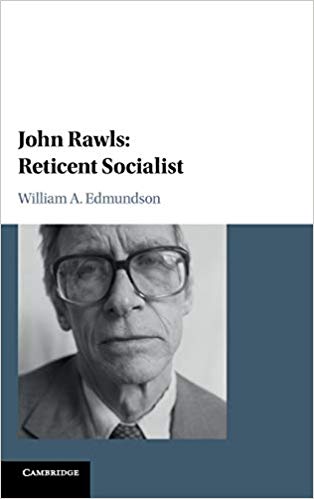
John Rawls: Reticent Socialist by William A. Edmundson has provoked a renewed attempt, written up in Jacobin and Catalyst, to link the totemic American liberal political philosopher with an explicitly socialist program to fix the problems of 21st century capitalism, and especially the domination of the political process by the super-rich. I found the book a powerful and enlightening read. But I think it ultimately shows that Rawls was right not to weigh his philosophy down with an explicit political program, and that socialists have yet to respond effectively to James Buchanan’s exploration of the challenges of non-market decision-making – challenges that bite more when states take on more explicit economic tasks. The large-scale public ownership of industry at the core of Edmundson’s democratic socialism is plausibly compatible with a stable, liberal political community in some circumstances but it is unclear how such a regime is supposed to reduce the scope of social domination compared with a private-property market economy in similar circumstances once we look at public institutions with the same skeptical attention normally reserved for private enterprise. A draft review is below.
Nightcap
- The many lives of liberalism David Bell, New York Review of Books
- Is the political leader teachable? Avi Mintz, Law & Liberty
- Why ex-churchgoers flocked to Trump Timothy Carney, American Conservative
- A history fit for the Taliban Hugh Beattie, History Today
Nightcap
- “Make America Free Again” isn’t Trump’s agenda Jacob Levy, Cato Unbound
- What’s wrong with liberalism? Daniel Wootten, History Today
- China’s long history of trouble with Islam Ian Johnson, ChinaFile
- “A hot dinner and a bloody supper” Felix Schürmann, Age of Revolutions
The Americanism of Aureliano Cândido Tavares Bastos
Life has been very busy, and so I am not blogging nearly as much as I would like to. Nevertheless, I would like to share my last published paper with you guys. Here is the abstract:
Aureliano Cândido Tavares Bastos was one of the main ideologists of the Brazilian Liberal Party in the 1860s and 1870s. Through several books, pamphlets and articles, Tavares Bastos defended that Brazil should follow a greater political and administrative decentralization, granting greater autonomy to the provinces. Another way to summarize Tavares Bastos’s political thinking is to say that he had great admiration for the United States, and understood that Brazil should, within the possibilities, copy more the political model of this country. Thus, this text interprets the political thinking of Tavares Bastos emphasizing as central factor of this the proposal that Brazil should not only more closely copy US federalism, but also get closer to the US in its foreign policy.
I do believe that Tavares Bastos is a great political thinker in Brazilian history and even beyond. Someone very worth knowing. Today Brazil is turning right, and the debate between Conservatives, Classical Liberals, and Libertarians is getting hotter. That is one reason why I believe Tavares Bastos is important today. A classical liberal, he opposed the nationalists/conservatives of his day. Here is the link for the complete article.
Liberalism, Democracy, and Polarization
Is polarization a threat to democracy and what is the liberal position on this?
As I pointed out in Degrees of Freedom, most liberals have a preference for democracy. Modern-day democracy – with universal suffrage, a representative parliament, and elected officials – has been developed over the course of the twentieth century. The idea has its roots in antiquity, the Italian city states of the Renaissance, and several forms for shared political decision-making in Scandinavia, Switzerland, the Netherlands, and England. Democracy is not a liberal “invention,” but the term ‘liberal democracy’ has taken firm root. This is true because modern democracy is based on liberal ideas, such as the principle of “one man, one vote,” protection of the classical rights of man, peaceful change of political leadership, and other rules that characterize the constitutional state.
Remarkably, the majority of liberals embraced the idea of democracy only late in the nineteenth century. They also saw dangers of majority decision making to individual liberty, as Alexis de Tocqueville famously pointed out in Democracy in America. Still, to liberals democracy is better than alternatives, such as autocracy or absolute monarchy. This is not unlike Sir Winston Churchill’s quip “it has been said that democracy is the worst form of government, except all the others that have been tried.” Yet there is a bit more to it for liberals. It is has proven to be a method that provides a decent, if imperfect, guarantee for the protection of individual freedom and the peaceful change of government.
Of course there is ample room for discussion inside and beyond academia about numerous different issues, such as the proper rules of democracy, different forms of democracy, the role of constitutions in democracy, whether referenda are a threat or a useful addition to representative democratic government, the roles of parties, party systems, and political leaders, et cetera. These are not the topic here.
In the context of the election of President Trump, but also before that, both inside and outside the US, there is a wide debate on the alleged polarization in society. By this is meant the hardening of standpoints of (often) two large opposing groups in society, who do not want to cooperate to solve the issues of the day, but instead do everything they can to oppose the other side. Consensus seeking is a swear word for those polarized groups, and a sign of weakness.
There appears less consensus on a number of issues now than in the past. Yet this is a questionable assumption. In the US it has been going on for a long time now, certainly in the ethical and immaterial area, think about abortion, the role of the church in society, or freedom of speech of radical groups. Yet most (Western) societies have been polarized in the past along other lines, like the socialist-liberal divide, the liberalization of societies in the 1960s and 1970s, or more recent debates about Islam and integration. Current commentators claim something radically different is going on today. But I doubt it, it seems just a lack of historical awareness on their side. I can’t wait for some decent academic research into this, including historical comparisons.
As a side note: a different but far more problematic example of polarization is gerrymandering (changing the borders of legislative districts to favour a certain party). This has been going on for decades and can be seen as using legal procedures to rob people not of their actual voting rights, but of their meaningful voting rights. Curiously, this does not figure prominently in the current debates…
The (classical) liberal position on polarization is simple. Fighting for, or opposing a certain viewpoint, is just a matter of individual right to free speech. This also includes using law and legislation, existing procedures, et cetera. The most important thing is that in the act of polarizing there cannot be a threat to another person’s individual liberty, including the classical rights to life, free speech, and free association, among others. Of course, not all is black and white, but on the whole, if these rules are respected I fail to see how polarization is threat to democracy, or why polarization cannot be aligned with liberalism.
Nightcap
- Don’t say that to me Stephen Cox, Liberty Unbound
- Misconceptions about religiously radicalized women Chelsea Daymon, War on the Rocks
- Ukrainian autocephaly Bruce Clark, Erasmus
- Why liberalism’s critics fail Deirdre McCloskey, Modern Age
Nightcap
- The transformation of the liberal political tradition in the nineteenth century Pamela Nogales, Age of Revolutions
- Kurds have conditions for an alliance with Shiites in Iraq Omar Sattar, Al-Monitor
- Mau-Mauing Myself Harry Stein, City Journal
- Is the sharing economy exploitative? Per Bylund, Power & Market
Why Hayek was Wrong about American and European Conservatism III
I am continuing from here, where I mainly discussed definitions of liberalism and conservatism. This sequence of posts was inspired by F.A. Hayek’s essay ‘Why I am Not a Conservative’. I am happy to share Hayek’s sentiment that market liberalism is not the same thing as conservatism, but I find some of the argument rather unsatisfactory. What I have concentrated on so far is what I see as the inadequacy of Hayek’s view of conservatism as just a position of slowing down change. What I am getting on to is firstly his view of European liberalism and then of American conservatism.
Hayek’s essay seems to me to contain rather odd claims about the difference between British and continental European liberalism. He suggests:
the majority of Continental liberals stood for ideas to which these men were strongly opposed, and that they were led more by a desire to impose upon the world a preconceived rational pattern than to provide opportunity for free growth. The same is largely true of what has called itself Liberalism in England at least since the time of Lloyd George.
I certainly sympathise with his suggestion that British (unfortunately Hayek makes the common place but still highly incorrect error of substituting England for Britain, particularly absurd here because David Lloyd George was Welsh) liberalism went to much in the direction of top down rationalism (i.e. statism) from about the time of Lloyd George in the early 20th century. It is of interest here that LG (as he was frequently know) split the Liberal Party and was Prime Minster with Conservative support, wishing his faction of the Liberal Party to merge with the Conservative Party, while advocating statism at home and foreign policy adventurism abroad (in Ottoman Anatolia, shortly before it became Turkey), topped by a rather Caesarist personal style.
Returning to the main issue, the sweeping views Hayek indicates of continental liberalism are rather reductive. He equates continental liberalism (or at least a very large part of it) with what comes out of the French Revolution. He can only be thinking of neo-Jacobin currents in France (known as ‘radicals’) and related national-republican currents elsewhere. There is certainly also a history of more individualistic market liberalism on the continent along with what could be called a kind of liberal moderate constitutional royalism.
It would be better, I suggest, to think of continental liberalism as tending to split between the poles of national-republicanism and constitutional royalism. Hayek concedes in this essay that conservatism can be aligned with nationalism, but claims he cannot follow this up because he is not sympathetic enough to nationalism to be able to talk about it. This does not stop him from a more unrestrained attack on the nationalist tendencies of neo-Jacobins, though frequently such people had a desire for a union of European nations. The Italian national-republican and admirer of British liberalism, Giuseppe Mazzini, is a good example.
It seems clear enough that Hayek leans in the conservative direction of the two pole distinction I mention above. We can see this in his list of liberal heroes in the essay: Edmund Burke, Thomas Babington (Lord) Macaulay, Alexis de Tocqueville, David (Lord) Acton, and William Ewart Gladstone. Burke is a hero of conservatism and my last post explains why I think he stands for conservatism rather than liberalism, calling Benjamin Constant as my prime witness.
Macaulay was a Whig Liberal, deeply attached to the landowning classes and the empire, the sort of people who abandoned Gladstone when he started to emphasise the rights of the Irish. Macaulay ought to be read by liberty advocates. He was a great historian and had some admirable pro-liberty sentiments, but we cannot doubt that he leaned towards the conservative imperial state end of liberalism.
Tocqueville is someone popular with conservatives, but then there are also many left leaning Tocqueville admirers. It is part of the character of his writing that there is something for almost anyone. There was certainly an aristocratic and imperial side of his thinking, with strong criticisms of the Jacobins during the French Revolution and after. However, it should also be noted that he was at least happy to work with moderate republicans in French politics, that is those following a toned down Jacobinism and preferred them to the strong royalists. He saw the world as taking a democratic turn, which he thought had some dangerous aspects, but which he said should be followed in a way foreign to Burke and Macaulay.
Acton’s view of liberty leaned strongly in the direction that any restraint on central power was a good thing, to an extent that meant disregarding universal rights. The most famous example of this is his support for the slave states during the American Civil War and his correspondence with Robert E. Lee, which expressed gushing admiration for this prominent Confederate general and slave holder. Acton had some very pertinent things to say about the dangers of democracy, but failed to see that the danger is unrestrained majoritarianism rather than democracy as such, or at least failed to see that democracy constrained by constitutionalism was a better corrective for democratic vices than his attempts to cling onto non-democratic forms of government, or at least very attenuated forms of democracy (as in indirect elections). We can safely place him on the extreme right of the liberty movement.
Gladstone was a friend of Acton and was strongly influenced by him for many years. However, Gladstone, who started off as a High Tory (traditionalist conservative), ended up as a radical promoting home rule for Ireland and Scotland (to the horror of the Whig, that is conservative, Liberals) and extension of the suffrage beyond the property owning classes, who restricted the rights of Irish and Scottish landowners when he saw how they were treating their tenants against natural justice. These measures led him to be condemned as a dangerous socialist at the time, which is of course nonsense. He had an understanding that traditional property rights could become abusive and oppressive over time and that it was the legitimate role of the representative state to use its law making capacity to to challenge such abuse despite the protests of traditional landowners. Though he was influenced by Acton in his view of the US Civil War, he took a rather more national-republican leaning view of the Risorgimento (Italian movement of unification), and his later policies certainly suggest a less Burke-Macaualy-Acton oriented approach.
Hayek’s views of 18th and 19th century liberalism show a strong inclination towards the conservative end of liberalism (even if we assume that we are only concerned with individualistic market based liberalism here) and a very strong reaction against any national-republican elements of liberalism, while evading the issue of conservative-nationalist affinities.
To be continued
Why Hayek was Wrong about American and European Conservatism II
The first post in this series concentrates on the more radical authoritarian populist side of conservatism in Europe. Before getting on to American conservatism and other aspects of European conservatism, I will respond to requests in the comments for definitions of what I mean by liberalism and conservatism. The shortest class definition I am aware of is that of David Hume in his essay ‘Of the Parties of Great Britain’ where he suggests that Whigs (liberals) favour liberty with a monarchy and that Tories (conservatives) favour monarchy with liberty. This can be expanded with little, if any controversy, to be taken as: liberals advocate liberty with order; conservatives favour order with liberty.
I will move from Hume to Benjamin Constant in Principles of Politics Applicable to all Governments. Constant is surely an unimpeachable source on what it is to be a classical liberal and it is important to note that Constant thinks there is something different in a politics based on principles of freedom than the thought of Edmund Burke. The distinction Constant makes is key to thinking about the relation between classical liberalism and conservatism, so is key to the claim that I make that (classical) liberalism are very distinct.
To increase the force of collective authority is never other than giving more power to some individuals. If the wickedness of men [an emphasis on this is a mark of conservative thinking], it is an even stronger one against power. For despotism is only the freedom of one or a few against the rest. Burke says that freedom is power. One can likewise say that power is freedom.(Book XV, Chapter 2)
This thought flows right into this thought from a later chapter:
Freedom is a power only in the sense that a shield is a weapon. So that when one speaks of possible abuses of the principle of freedom, such an expression is inaccurate. The principles of freedom would have prevented anything under the heading of abuses of freedom. These abuses, whoever their author, taking place always at the expense of another’s freedom, have never been the consequence of these principles, but rather their reversal. (Book XVII. Chapter 1)
In my summary of the above: conservatism defines freedom as limited because of a dangerous power in excess, so requiring tradition, hierarchy, and the aggressive use of state sovereignty to to curb it, while liberalism suggests that more freedom is the answer to abuses of power.
Since Burke is a key figure for those advocating some kind of kind of intimate alliance, or even identity, between (classical) liberalism and conservatism or libertarian conservative fusionism, Constant’s criticism of Burke is important. I won’t get into the detail of Reflections on the Revolution in France, Burke’s central text on politics here, I will just note that the reader of this classic of conservatism will find many passages on the absolute sovereignty of the state, the virtues of rigid social hierarchy and of traditions supporting such hierarchy, along with the perfection of the British constitution of the time.
These passages, it seems to me, should raise concern to the advocate of liberty, which I believe derives its energy from the criticism of tradition, hierarchy, and existing institutions. As Constant recognises, we should not be quick to replace institutions that have grown over centuries with a perfect new design, but we should certainly not be afraid to innovate either, as we should not be slow to notice the growing faults of institutions over time as they come into conflict with new circumstances.
Burke was perhaps a bit more liberty-minded and a bit more innovation-friendly than the other famous critics of liberalism and Jacobinism – de Maistre, de Bonald and Donoso Cortés, but the understanding of liberty as particular Liberties inherited from tradition, upheld by a state that insists on its own absolute authority is something he has in common with them. For Constant, the excesses of the French Revolution are a reason to argue for more liberty, for Burke they are a reason to uphold hierarchy, tradition, and royal authority along with endless war against the French.
While addressing comments to the last post, I should refer to my fellow Notewriter, Edwin van de Haar, though thinking just as much of a previous social media conversation as his recent comment. As far as I understand, he advocates a definition of conservative liberalism that corresponds with F.A. Hayek’s views in The Constitution of Liberty and a share of GDP devoted to public spending substantially below the the average in advanced industrial countries. I’m not aware of anywhere in which Hayek used such a term, though he was certainly more sympathetic to Burke than I am here.
My argument is that there is nothing inherent to conservatism that makes it opposed to expanding the state in terms of welfare intervention or in terms of the police power of the state. Otto von Bismarck is just one particularly notable conservative from history who had a great belief in an intrusive state in various ways, including measures designed to take voters away from the strong Marxist-socialist current of the time, through incorporating socialist-friendly policies. Conservatism is a doctrine of order, state power (where national or imperial), and tradition.
Where conservatives have favoured market-friendly and relatively small state polices, they have done so in order to preserve order, the core of state power and tradition. Economically liberal conservatives like Margaret Thatcher and Ronald Reagan were also great believers in narratives of restored national grandeur, the security state, ‘law and order’ and ‘war on drugs’ polices expanding state power, while sucking an increasing number of people into the extreme state-socialist institution of prison.
As far as I can see Thatcher and Reagan are the heroes of ‘liberal conservatism’. With all due respect to their valuable economic reforms, the liberalism seems to me to be very subordinate to the conservatism. As I pointed out in the last post, ideas of aggressive populism are growing in the conservative world, ideas which have deep precedents in the ways that Bismarck figures have mobilised nationalism, statism, and reactionary identity politics against liberals.
Why Hayek was Wrong About American and European Conservatism I
The title of this post refers to F.A. Hayek’s essay ‘Why I am Not a Conservative’, which can be found as an appendix to his 1960 book The Constitution of Liberty. What this post is really about is the deficiencies of American conservatism and the general idea of liberal conservatism or a natural alliance between classical liberals and conservatives. However, first a few words about Hayek’s essay as Hayek is an important figure for liberty advocates. The essay in question is well known and particularly easy to find online.
Hayek’s criticism of conservatism overestimates the extent to which it is just a limiting position, slowing down change. The relation of conservatism to tradition is seem too much as conservatism being too slow to accept changes to tradition. Traditionalist conservatism, however, has been a much more active and dangerous force than that. ‘Traditionalism’ as far as I know is a 20th century term used particularly in France (René Guénon) and Italy (Julius Evola) to refer to a spiritual based for politics of an extreme conservative kind which found natural alliance with fascism. It seems clear enough that it has precedents in late 18th and 19th century conservative monarchist thinkers like Joseph de Maistre, Louis de Bonald, and Juan Donosó Cortes.
Carl Schmitt, who was maybe the greatest 20th century admirer of those thinkers, joined the Nazi Party in 1933, though found himself purged as not properly Nazi from his post as head of a jurists’ association in 1936. Not only did Schmitt admire the French and Spanish thinkers mentioned, he was a great admirer of Edmund Burke. Burke is a favourite of those claiming a conservative-liberty affinity. It would be unfair to suggest that Burke would have welcomed National Socialism (though the same applies to de Bonald, de Maiste, and Donosó Cortes).
It is a fact that a large part of conservative thinking of the time of the rise of Fascism, and allied forms of illiberal government such as corporatism, regarded it as a legitimate counter to Bolshevism and disorder. Even Ludwig von Mises defiled his own 1927 book Liberalism with generous words about Fascism as a counter to Bolshevism. The reality is that at the time such regimes came to power there was no immediate risk of Communist take over and this is a horrifying position, which cannot be justified by suggesting that Mises was writing in the heat of the moment as Bolsheviks stalked power in any particular country. Winston Churchill welcomed Fascism in Italy and even initially welcomed Hitler’s rise in Germany, before becoming acquainted with the reality of his regime. It is of course the case that Fascism and National Socialism had socialist roots as well as traditionalist conservative roots, but then a liaison between socialism and traditionalist conservatism as a counter to liberal individualism has a history going well back into the 19th century.
We can see right now in Europe the growing force of conservatism with a populist-nationalist emphasis targeting abnormals (as in everyone who does not fit their assumptions of a normal person in their country). This is not some new addition to the repertoire of the right. The strong man of the Northern League in Italy, Metteo Salvini, has aligned himself with Mussolini recently by tweeting a variation of Mussolini’s slogan ‘many enemies, much honour’ on Mussolini’s birthday. The Hungarian equivalent of Salvini, the Prime Minister Viktor Orbán, has rehabilitated the pre-war authoritarian leader Miklós Horthy. The Legue, Orbán’s Fidesz party, the Bannonite wing of the Republican Party and the like are stuffed with Vladimir Putin apologists, or at least as in Bannon’s case slippery arguments according to which he does not like Putin, but we should ally with him. In any case, Bannon is very active supporting the pro-Putin parties in Europe.
These parties draw on long traditions of conservative populism, monarchist anti-liberalism, and the like. The appeal to conservative love of monarchy, state church, and social conformity was a major weapon of monarchist conservative forces after the 1848 Springtime of the Peoples in Europe, helped by violent Russian intervention in the Austrian Empire to ‘restore order’. We see something like this now in the growing strength of a brand of conservatism which does not just limit change but fosters change in the direction of illiberalism, nationalism, xenophobia, Islamophobia, Christian identity, free trade, liberal protections of the individual from state power, the rights of civil society organisations to stand up to the state, and economic protection, seeking inspiration from the kleptomaniac nationalist authoritarian regime in Russia.
Enthusiasm for Recep Tayyıp Erdoğan is less obvious, but Orbán has put him on his list of ‘illiberal democracy’ heroes, and we can reasonably say that the rhetoric and methods of Erdoğan have been an inspiration for the populist right throughout Europe, even as, like Órban, it puts Islamophobia at the centre.
The role of Donald Trump and Steven Bannon as friends of, and models for, European populists should give reason to wonder whether Hayek misunderstood US conservatism. More on this in the next post.