Economics and the Mirror of Nature

Editorial Note: This is an old and longform essay I wrote on the philosophy of economics and economic methodology originally for a history of economic thought class as a sophomore undergraduate at Hillsdale College back in April of 2015. I am uploading it here mostly for posterity as a historical interest in my own intellectual development and for any curious onlookers interested in what interpretive economic social theory could look like–at least at a high, sketchy and not detailed level.

It is worth noting that there is an obvious thing I should have done differently: it really should have treated the “ecological rationality” of figures like Vernon Smith and the later FA Hayek as a fourth alternative paradigm to the sort of rationality practiced by neoclassicals, the interpretive rationality practiced by some Austrians and the Bounded Rationality practiced by behavioral economists. This ecological notion of rationality which makes room for neoclassical-style constructivist theories of rationality–so long as they are understood as maps and not the terrain–is something I am more sympathetic towards these days alongside the intepretive, hermeneutic sort of rationality argued for in this essay.

I still think it gets a lot of the genealogical and psychological diagnosis of what historically has gone wrong in economic questions about rationality as developed by neoclassical, behavioral, and Misesean Austrian economics by relying too much on an unquestioned epistemic foundationalism , but I think normative pragmatists like Robert Brandom offer us a more constructively and ecologically critical way forward than I was aware of when I penned this paper.

The essay is presented here largely as it was originally written, with only minimal editing. Its sophomoric sketchiness, grand but unrealized ambitions, and rough edges are intact.

Economics and the Mirror of Nature: Richard Rorty’s Hermeneutics as an Approach to the Historical Study of Rationality in Relation to Economic Theory and Method

The conception of man as a “rational actor” is one of the key foundations of modern economic thinking. However, what exactly economists mean by “rationality” in the technical sense has historically been a fairly sticky issue that has evolved as economic theory has evolved. In some ways, rationality is tied up with epistemological problems in economic methodology. In other ways, it has been tied to value theory, expectations theory, and a host of other issues that seem like pure theoretical theory than meta-economic questions of method. However, a historical treatment of how economists have come to understand rationality deserves sensitivity to how economists have understood internal problems to economics itself and the relationship to the nature of the economic science.

FA Hayek (1952) lays out the potential for a progressive research program in the history of thought in the social sciences in his work Counterrevolution of Science. For Hayek, “scientism,” viewing the research program of the social sciences as essentially the same as the natural sciences, is prevalent the intellectual discourse about the social sciences. Hayek objects to “the objectivism of the scientistic approach” insofar as it treats the data of the social sciences as fundamentally the same as the data of the physical sciences, objective, measurable phenomena. For Hayek, this leads to “rationalist constructivism” in approach to solving the problems of society. Examples of “rationalist constructivism” include most primarily August Comte’s approach to social engineering and sociology and socialist attempts to design economies.

In a similar vein, Richard Rorty’s Philosophy and the Mirror of Nature (1980) objects to what he calls the “Platonic Kantian” approach to philosophy. For Rorty, the “image of the mind as a great mirror, containing various representations—some accurate, some not—and being capable of being studied by pure, nonempirical methods” (12) has lead philosophy astray into a series of non-constructive topics such as philosophy of mind and philosophy of language in which philosophers tried to “ground” all of knowledge in a way that every rational being could agree.

This paper proposes that FA Hayek’s program of “rational constructivism” should be viewed as a complementary approach to Richard Rorty’s program in the history of philosophy as laid out in the Mirror of Nature. Following the tradition of Lavoie (1990), this paper argues that a hermeneutical exegesis of economics as a whole, not simply one or the other tradition, might help bring the various “schools” of economics into better dialogue with each other. The first part lays out a partial history of one subject, utility theory, in which economics has attempted to objectify itself into the realm of natural science drawing heavily off of Zouboulakis’ Varieties of Economic Rationality (2013). The second part argues that Rorty’s hermeneutical approach can explain the historical narrative in a Hayekian way. A concluding section reflects on areas needed for further research.

Part 1: Our Utilitarian Essence
One of the fundamental assumptions, especially of the English school during the marginal revolution, in the formation of the economics science as we know it today was presupposing a fairly simple psychology of utilitarianism drawing from Bentham. However, this idea of utility theory as foundational to economics was eventually replaced by Pareto’s ordinal approach to utility theory. The title of this section draws from the title of the first section of Rorty’s Mirror of NatureL “Our Glassy Essence,” which reflects on how the image of “the mind as mirror” came into existence. This section lays out how utility came to be viewed as “essential” to the meaning of economics

Rationality as Utility Maximization: Jevons and the English Marginal Revolution
When economists say “rationality,” they have always intended it as a term of art. Thus phrases such as “rational action,” “rational actor,” and “rationality” in the technical economic sense have never really meant what is thought by these phrases in the everyday sense. In the everyday sense, what is typically meant by “rational” is that one is holding a belief based on reasonable evidence. However, for early economists rationality has always been tied up with some sense of individualized self-interest.

The most primitive version of rationality as an economic term of art was found in the work of classical political economist and utilitarian philosopher Jerome Bentham. For the early nineteenth century economists, to be rational was to maximize utility in the Benthamite sense; to maximize pleasure and minimize pain in a very broad sense. Thus early economic ideas of a rationally self-interested actor were intimately related to utility. An example of this idea of rationality as pursuit of utility is the work of William Jevons. Though Jevons never used the term “rationality,” it is clear in his work that the concept today called “rationality” is very central to Jevon’s work. Jevons adopted a very strong conception of rationality in line with homo economicus.

In order to understand how Jevons conceived of economics, it is important to understand its place in his broader context of economic thought on economic method. In his Theory of Political Economy (1871/2013),Jevons claimed that “Economics, if it is to be a science at all, must be a mathematical science” (434). This is largely because Jevons had a strong commitment to making economics analogous to physics. As he wrote in the first edition of TPE (1871/2013):

The theory of economy, thus treated, presents a close analogy to the science of Statistical Mechanics, and the Laws of Exchange are found to resemble the Laws of Equilibrium of a lever as determined by the principle of virtual velocities. (cited in Zouboulakis 2013,  26).

Unlike physics, however, Jevons claimed economics was “peculiar” because “its ultimate laws are known to us first by intuition, or at any rate they are furnished to us ready made by other mental or physical sciences” (cited in  Zouboulakis 2013, 30).

As Zouboulakis (2013) notes, a very strong conception of rationality Jevons insisted upon almost axiomatically was necessary to give economics this extreme level of mathematical and scientific rigor. In order to make rationality such a strong concept, Jevons would rely upon a Benthamite utilitarian theory with a heavily scientific flavor. He argued the idea that people maximize pleasure and avoid pain is an “obvious psychological law” on which “we can proceed to reason deductively with great confidence” (cited in Zouboulakis 2013, 30-31). For Jevons (1871/2013), “pleasure and pain bare undoubtedly the ultimate objects of the Calculus of Economics” (440). Utility, therefore, is the the central object of Jevon’s economic inquiry. Jevons, quoting Bentham, defines as “that property in any object, whereby it tends to produce benefit, advantage, pleasure, good, or happiness” (1871/2013, 438). Jevons maintains a concept of “total utility (440) that may be “estimated in magnitudes” (435). This idea of rationality is, to quote Herbert Simon (1978) “omniscient,” meaning is there is little to no concept of uncertainty, limited information, or psychological error taken into account in how people pursue rational self-interest, it is simply a law of psychology that people always seek to maximize utility, a law that is central for his understanding of economics as a science.

Jevons was not alone in his strong conception of understanding of rationality as a maximization principle. Zouboulakis (2013) argues that Cournot, Walras, and Marshall, all shared a similar conception of rationality to Jevons (35). In fact, Walras (Zouboulakis 2013) in line with Jevons adopted a strong conception of economics as another sort of mathematical physics. Edgeworth (1881/2013), though he doubted that Jevons was entirely correct on to what extent total utility was quantifiable still generally adopted the utilitarian outlook Jevons had assumed, as well as the mathematical outlook as he extensively compared it to physics (504-505).

To summarize, the concept of rationality as formulated by Jevons consists of the following four unique theoretical features:

  1. Defined as a maximization of total cardinal utility
  2. United with a psychological hypothesis
  3. Irrefutable, obviously true about human nature
  4. Assumes omniscience

It is dependent on another methodological feature: that economics is to be viewed mathematically and analogous to physics on some important level. It is important to note, however, that the early neoclassical economists were not wholly homogeneous in their outlook of economics as a science. Alfred Marshall argued that “economics cannot be compared with the exact physical sciences: for it deals with the ever changing and subtle forces of human nature” (qtd. in McKenzie 2009). Though Marshall’s conception of rationality was still largely in line with Jevons, his softer methodological positions would allow for a softening of rationality as a concept after the marginal revolution.

Rationality asInstrumentalism: Pareto’s Departure from Utility Theory
In addition to the concept of economics as a completely mathematical science, other assumptions that led to Jevon’s omniscient conception of rationality would be threatened. After the marginal revolution, primary cornerstones of how Jevons conceived of rationality, cardinal utility as a quantifiable concept, would be rejected by the economics profession. The key insight from Jevon’s subjective utility theory was his marginal analysis, his insight from the theory of exchange that consumers seek to equilibrate the ratios between the marginal utilities (what Jevons calls the “degree of utility”) of goods.

Though Jevon’s conception of total utility “constituted the metaphysical foundation of utilitarian economics, neither [its] measurement nor even their existence was central to their methods” (Read 2004). At the dawn of the twentieth century, Pareto had brought about the ordinal revolution. Any reference to “cardinal utility,” that is utility as a measurable concept, was completely removed. Instead, for Pareto, any measurable cardinal utility was replaced by ordinal utility—utility as a relative comparison of some basket of goods (cited in Read 2004).

With the change in utility followed a change, in the conception of rationality. Since one of the key theoretical implications of Jevon’s rationality thought was disproven, economists could greatly weaken what they meant by rationality. First, Pareto distanced rationality from being any sort of an axiomatic psychological claim. He did this by adopting a more positivist, experimental approach to economics, he declared “I am a believer in the efficiency of experimental methods. For me there exist no valuable demonstrations except those that are based on facts” (cited in Zouboulakis 2013, 37). However, given his rejection of cardinal utility, the hypothesis that rational actors can maximize utility becomes meaningless and untestable since it is unclear what they are maximizing (Zouboulkis 2013, 38). As Pareto said, “Let us suppose that we have a schedule of all possible choices indicating the order of preference. Once this schedule is available, homo œconimicus can leave the scene” (cited in Zouboulakis 2013, 38).

Instead, Pareto focuses only on the “facts” which he asserts are “the sales of certain goods and certain prices” (cited in Zouboulakis 2013, 38). In other words, Pareto is only concerned with the impact of rational choice theory in a market setting, not with the psychology behind those facts. For Pareto, then, “rationality is simply a choice of efficient means for serving any independently given objective,” Zouboulakis (2013) calls Pareto’s an “instrumental” conception of rationality (38).

For Pareto, contra Jevons, the extent to which rationality was wholly applicable to all of humanity was extremely limited. In his later works, he made a strong distinction between “logical” and “non-logical actions.” As Zaboulkis (2013, 39-41) puts it, logical actions are those in which the “subjective aim of the actor is reasonably connected with the action’s objective goal,” whereas everything else are things that man do not have control other such as psychological factors that an economist takes as given. This greatly limits the extent of human action that economics studies from Jevon’s attempts to universalize utilitarian psychological hypotheses.

To summarize, Pareto’s conception of rationality has the following theoretical features:

  1. Non-psychological
  2. Given within a means-ends framework (Instrumental)
  3. Non-universal, non-omniscient

Rationality as Purposeful Action: Mises’ Austrian Tautology

While Pareto had developed a fairly weak conception of rationality in contrast to Jevons, a separate tradition in the Austrian school of economists had developed a similar, though different, conception of rationality. This latter type of rationality is the conception primarily taken up by Ludwig von Mises and Carl Menger. In order to understand the Austrians, it is important to understand the historical context it was born out of in contrast to Pareto. Pareto was primarily influenced by Anglophonic and Francophonic marginalists, and had inherited from that tradition a strong conception of rationality wedded to cardinal utility that he had to soften with ordinal utility. In contrast, Mises had inherited the marginal utility theories of Menger (which included no reference to “total utility” as a cardinal concept to begin with), and had participated in the climate of the Methodenstreit which had placed heavy emphasis on theoretical methodology. Because of this, Mises’ idea of rationality bears resemblance to Pareto in important ways, however differs because of Mises’ and Pareto’s differing methods.

For Mises, to say that man is a rational actor is a tautological truth, he claims that “[h]uman action is necessarily rational” (1949/1998 18-19).[1] Though this sounds like a universalist claim found in Jevons, it is fundamentally different. For Mises to be a rational actor is not a psychological hypothesis, it simply means that man acts, or that he “the employment of means for the attainment of ends” (13). To be rational is simply to act purposefully, not to choose anything that an economist would normatively say one should chose such as maximization of cardinal utility.

It is important to note that unlike Jevons, the Austrian school adopted from the outset that rational actors are not omniscient. As Menger argued in his first statement of subjective value theory:

Even individuals whose economic activity is conducted rationally, and who therefore certainly endeavor to recognize the true importance of satisfactions in order to gain an accurate foundation for their economic activity, are subject to error. Error is inseparable from all human knowledge. (148)1

Likewise, Mises devoted a whole chapter of his magnum opus (1949/1998) to the concept of uncertainty (105-118).

It may be seen that there is a certain overlap between Mises’ idea of rationality and Pareto’s. Both have significantly weaker ideas of rationality than is implied by the utilitarians, and both distinguish economic rationality very carefully from psychology. For Mises, this means defining action as rational and defining its opposite “not irrational behavior, but a reactive response to stimuli” (1949/1998, 20). For Pareto, this means distinguishing between logical action and non-logical action and applying economic rationality only to the former.

However, there are important differences between Pareto and Mises: namely, Mises universalizes rationality as applied to all human action, Pareto does not. This is primarily due to differences in what is meant by “action,” Mises tautologically defines all action as rational, whereas Pareto simply makes action an instrument that is applied to a means-end framework. Thus, for Mises rationality defines the means-ends framework, for Pareto it is a tool that helps men pursue ends. The reason for this difference lies in their different views on economic methodology. Recall that Pareto is only concerned with facts that can be experimentally derived. However, Mises includes tautologies as an important part of his economic method which he calls “methodological a priorism” (1949/1998). Mises claims “tautologies” are helpful in providing “cognition” and “comprehension of living and changing reality” (38). Whereas Pareto would have scoffed at Mises idea of rationality as useless, for Mises it was a helpful a priori assumption for economic analysis, or in his terms “praxeological reasoning.”

To summarize, Mises’ weaker idea of rationality is marked by the following three qualities and assumes an a priorist methodological background:

  1. Rationality defines a means-end framework (is tautological)
  2. Is universal by a non-omniscient definition
  3. Non-psychological

The extent to which Mises’ idea of theory can be thought of as “foundational” to the rest of his social science is disputable. Clearly, Mises thought his theory was absolutely foundational, however that need not be the “foundation” of the rest of his economics. Zoboukalis seems to oversimplify in claiming that there’s a fundamental difference between Weber’s conception of an “ideal type” of rationality as universal and Mises’ conception of rationality as to some extent tautological. Boettke and Leeson (2006) claim that Mises rejected the analytic/synthetic distinction, thereby placing him in a more complex position than simple Kantian epistemology. However, Boettke, Lavoie, and Storr (2001) claim that Mises’ distinction between theory and history was “arbitrary” and use the philosophy of John Dewey to argue against it.

Rationality: How Lionel Robbins Misunderstood Mises, How Hayek Challenged Mises

The extent to which there is a universal “Austrian” conception of rationality is also disputable. Zaboukalis understands this in comparing the rationality of FA Hayek to Mises. Zaboukalis argues that Robbins presented Mises’ concept of rationality as “consistency” for a normative ideal in his work The Nature and Significance of Economic Science. This is supportable when Robbins (1932/2005 140) says:

There is nothing in its generalisations which necessarily implies reflective deliberation in ultimate valuation. It relies upon no assumption that individuals act rationally. But it does depend for its practical raison d’etre upon the assumption that it is desirable that they should do so. It does assume that, within the bounds of necessity, it is desirable to choose ends which can be achieved harmoniously.

Mises’ welfare economics clearly do not include all the presumptions that consistent action is “normative” that Robbins’ neoclassical misinterpretation of Mises presupposes. Mises explicitly says in Human Action that man’s preferences are situated in time and therefore are inconsistent over time. Mises places emphasis on man’s preferences as situated in time and uncertainty, Robbins makes the preferences sound as if they are independent of time and uncertainty in every sense.

Rizzo (2013) puts emphasis on how Mises postulated the meaning of economics to be primary. This passage is worth quoting at length:

First, we must distinguish between the meaning of behavior and criteria for the rationality of behavior. Abstract criteria of rationality cannot be applied without first understanding what individuals mean by what they do. Getting the meaning wrong may result in inaccurately labeling the behavior as irrational.

In Zoboukalis’ presentation, this lead Samuelson (1938) to present his revealed theory of preferences, which included the assumption of invariance, in Economica. Samuelson seems to have misunderstood Robbin’s misunderstanding of Mises on an even deeper level. In 1937 which Zoboukalis presents as “the year of uncertainty,” there were several challenges to Mises, one of which included Hayek’s challenge to Mises in Economics and Knowledge (cited in Zoboukalis, 1938). Kirzner (2001 81-89) argues that Hayek misunderstood what Mises thought about rationality. Mises did not take invariance through time to be normative, he took it to be positive at a particular instance.

Economics without Constancy in Utility: Preference Theory, Behavioral Economics as Paradigms aiming to be “Successor Subjects”

In response to the challenges to invariance raised by Hayek, Friedman and Samuelson, Zoubakalis argues, made a defense of the normative criterion of rationality, which became standard in the “neoclassical synthesis.” This was primarily the “as-if” methodology of Friedman which Austrians find so objectionable. In the research program of this paper, Lavoie’s (1980) hermeneutical way of dealing with the problem of pure methodological instrumentalism will be an issue. Lavoie argues for a way of doing economics without epistemic foundationalism, drawing directly off Rorty. The extent to which there is a balance established between what Lavoie sees as the crude epistemic foundationalism of Freidman’s positivist approach and the possibly foundationalist a priori approach of Mises will be perhaps the main focus of further research in this program. However, unlike Lavoie, the Hermeneutics will be more likely drawn directly from Rorty than Gadamer.

After Freidman, the invention of behavioral economics in Kahneman and Tverskey challenged several of the positive assumptions of neoclassical theory. Kahneman (2012) describes the Chicago school’s views on the matter in relation to the behavioral economic one as follows:

The only test of rationality is not whether a person’s beliefs and preferences are reasonable, but whether they are internally consistent. A rational person can believe in ghosts so long as all her other beliefs are consistent with the existence of ghosts. A rational person can prefer being hated or being loved, so long as his preferences are consistent. Rationality is logical coherence, reasonable or not. Econs are rational by this definition but there is overwhelming evidence that humans cannot be.

In modern neo-classical economics, which has incorporated Kahneman’s theories of loss aversion and hyperbolic discounting as mathematically as possible, this is an oversimplification. However, there is reason to believe that the rigid formalism of modern Chicago economics may or may not be consistent with the best means of developing a research program, however useful it might be in many contexts.

Recent scholarship on the relationship between behavioral economics and neoclassical theory has tried to figure out how to get past utility without invariance through time. This issue suggests there is no such thing as “true preferences” as Pareto, Samuelson, and Friedman implicitly assumed. Stigler (1977), in violation of typical Chicago school method posited a way of assuming there were “true preferences” by making appeal to the possibility that our preferences are developed into some preferences everyone could agree on in time. For example, one who tastes wine initially might not know what they are doing; however, with time, they become a wine connoisseur, and in general wine connoisseur agree on their preferences. Drawing of Stigler, Robb (2009) draws of Nietzsche’s psychology to further support Stigler’s theories. Heckman (2009), in a comment on Robb’s paper responded in typical neoclassical fashion, claiming the psychological theories of Neitzsche can be made endogenous in the neoclassical model with some mathematical tweaks. Robb made some amazingly insightful comments in response:

However, I am not prepared to take the easy way out and fully accept (R1) as Nietzschean Economics. Sticking with Occam’s razor, I would propose, as an alternative to (R1), that our engagement with time is twofold and a portion of it lies outside of pleasure maximization. While lacking the precision of fully specified models, the WTP approach gives specific predictions that are useful in practical problems in economics. Nietzsche, along with Heraclites, Kierkegaard, Hegel and Bergson, was the philosopher of becoming – whether I have expressed the point with any useful clarity at all, he should have a great deal to teach us.

I should acknowledge that Nietzschean Economics has a personal objective beyond explaining various phenomena in economic life. I wanted to arrive at a “framework for modeling intertemporal choice that is more closely aligned with our immediate experience.” A formative event for me was a yearlong spell of unemployment in 2001 after leaving a job managing the global derivatives and securities business of Japan’s largest bank. I was looking forward to inputting some ti, ei, Xi and realizing U(Z). But when my unexamined faith in U(Z) was put to the test, it did not turn out like I expected. Without obstacles to overcome, I discovered that the day is long. I got back to work. I believe my experience is not uncommon.

Rizzo (2012), meanwhile, draws on three ways Austrians in general have tried to reconcile the balance between psychology and economics. Rizzo draws off of Wittgenstein’s philosophy of language, Schutz’s phenomenological sociology, and Hayek’s gestalt psychology in The Sensory Order.

What is striking about Robb’s “Nietzschean economics” and Rizzo’s work on Austrian economics is they are two economists from two very different schools doing the same exact thing Rorty attempted to do with epistemology in the 70s. Much as there was an aversion to psychology in economics throughout the early formulations of utility theory, in philosophy there was an eversion to implementing psychology into epistemology because epistemology conceived of itself as the epistemic foundation on which all of philosophical knowledge stood. Likewise, economists have been reluctant to let any psychology into their utility theories at all. Rorty proposed a form of “behavioral epistemology” modeled after the work of William James, however Rorty proposed that “behavioral epistemology” should not be thought of as foundational to the philosophical project as a whole. “Behavioral economics” has, from a neo-pragmatist perspective, committed the sin Rorty avoided in trying to be the new foundation of preference theory and choice theory.

Just as Rorty was skeptical extensively in Philosophy and the Mirror of Nature” about “successor subjects” such as philosophy of mind and language attempting to be substitutes for Kantian epistemology as the foundation of all of philosophical, economists should be skeptical of possible “successor subjects” to Jevons-style utility theory in economics. Pareto once famously described his war against the English School as a war against “(t)hose who have a hankering for metaphysics” (McLure 199 312). Preference theory, behavioral experiments, and even Neitzschean psychology in Robb’s formulation could be viewed as merely “successor subjects” to Jevon’s ordinal utility theory. Just as Rorty claimed philosophers clung to “our glassy essence” in Kantian epistemology by postulating a whole bunch of “successor subjects” to epistemology, economists may need to be careful in clinging to “our utilitarian essence” in trying to relegate the “foundation” of the social sciences to other realms.

Part II: Utility Theory to Hermeneutics

It is striking that many of the philosophers that the economists who are trying to figure out where to go in the neoclassical and Austrian traditions are appealing to the same philosophers Rorty did. Lavoie (1990) appealed to Heiddeger and Gadamer under Rorty’s influence to rid economics of its foundationalism in the way I described. Boettke is appealing to Quine and Dewey, two pragmatists to understand Mises’ apriori assumption of rationality over human action. Rizzo is appealing to Wittgenstein, one of Rorty’s “heroes” of Philosophy and the Mirror of Nature for his philosophy of language. Robb is appealing to Neitzsche, another one of Rorty’s major influences. Rorty is in some sense what got Lavoie going in the Hermaneutic research program to begin with. Perhaps, a return more specifically to the manner in which Rorty presented hermeneutics is what is necessary for economists to approach the question of rationality at this point, this section aims to more narrowly analyze Rorty’s hermeneutics, a concluding section suggests general lessons from the history of rationality out of a Rortian Hermeneutic research program in the subject of economic rationality.

Kuhn, Rorty, and Incommensurability

In chapter seven of Philosophy and the Mirror of Nature, Rorty appeals most fully to Thomas Kuhn’s philosophy of science. Kuhn’s philosophy of science includes the idea of “paradigms” in research, that is basic fundamental assumptions that go into a scientist’s work. Khun then carefully distinguishes between “commensurable paradigms,” those fundamental assumptions that can work together, and “incommensurable paradigms,” those fundamental assumptions that cannot. If there are two incommensurable paradigms at once, there will be a “paradigm shift.” The most famous and widely cited example is the shift from Newtonian physics to Quantum Mechanics in physics.

Rorty posits the new place of philosophy should be to “edify,” to be therapeutic in some sense on the personal level of the philosopher. To some extent, that idea of an “edifying philosophy” seems to be going on in the back of Robb’s mind in his response to Heckman on Nietzsche. But not only is philosophy to edify, it is also possible to use philosophy as hermeneutics to commensurate seemingly incommensurable paradigms. It may be the case that this is the direction economics in which must go.

In Vernon Smith’s Nobel Prize lecture (2002), he laid out a way in which paradigms could be thought to relate to each other in this question of rationality in economics. Smith distinguishes between “constructivist rationality,” drawing off Hayek’s program mentioned at the outset of this paper in The Counterrevolution of Science, and “ecological rationality.” “Constructivist rationality,” to Smith, is rationality stems from Cartesian rationalism (506) and “provisionally assumes or ‘requires’ agents to possess complete payoff and other information—far more than could ever be given to one mind.” Ecological rationality, on the other hand, is rationality that is identified with Hayek and the Scottish enlightenment. It is a “concept of rational order, as an undersigned ecological system that emerges out of cultural and biological evolutionary process” (508).


Vernon Smith thought that the research paradigms between the two are somehow commensurable. Though this is likely the case, most economists researching the literature in the behavioral and neoclassical traditions seem to disagree. Most of the economists in the hermeneutic tradition researching the issue seem to have Lakatos’ philosophy of science more prominent in their minds than Kuhn’s (Cachanosky 2013). Perhaps, for the moment, economics is in a place that is closer to Kuhn’s philosophy of science than Lakatos, and we need to assume that the paradigms between “ecological rationality” and “constructivist rationality” are incommensurable in some sense, though agree with Vernon Smith that they need not be. Further research in the Rortian hermeneutic tradition may help commensurate those paradigms.

Conclusion: Open-Mindedness in Rational Economic Discourse

Often, debate over rationality gets extremely heated thanks to its connection at times to politics and the nature of capitalism. For an example, in Nudge Thaler and Sunstein primarily place blame for the financial crisis on behavioral factors (2009 255-260). New Keynsians might respond to this by yelling at the top of their lungs that they’re ignoring aggregate demand, Austrians might respond by yelling at the top of their lungs that they’re ignoring the interest rate and business cycle theory. But perhaps a combination of the three, a pluralism, is necessary for the explanation. The problem with economic debates is too often when it gets associated with the political spheres, the arguments get personally provocative and nasty. This is how incommensurable paradigms occur, and that is likely what has occurred with the debate about rationality. Thaler and Sunstein are probably oversimplifying the complex myriad of institutional factors that went into causing the recession, but yelling that your business cycle theory explains it is not the right solution.

Zouboulakis ends Verities of Economic Rationality by proclaiming “What is Rational after all?” Rorty would say something like, ‘Rationality is not a human faculty, it’s a social virtue.’ In order to maintain open-minded discussion and approach a point when there can be normal discourse in the economics profession, perhaps this is the answer that is needed. Perhaps all the actors in a market economy are the “rational” ones in Rorty’s use of the term, and economists are not.

References:

Allen, R.G.D., and J.R. Hicks. 1934. “A Reconsideration of the Theory of Value.” Economica 1(1) (Feb. 1934): 52-76.

Arrow, Kenneth J. 1959. “Rational Choice Functions and Orderings.” Economica 24(102) (May): 121-27.

Boettke, Peter and Peter Leeson. 2006 “Was Mises Right?” Review of Social Economy 64(2). (June): 247-265.

Boettke, Peter J., Don Lavoie, and Virgil Henry Storr. 2004. “The Subjectivist Methodology of Austrian Economics and Dewey’s Theory of Inquiry.” Pp. 327–56 in Dewey, Pragmatism, and Economic Methodology, ed. Elias
L. Khalil. London: Routledge.

Edgeworth, Francis. “Mathematical Physics.” 2013. In The History of Economic Thought: A Reader edited by Steven G. Medema and Warren J. Samuels. New York, NY: Routledge. (Originally published 1881).

Hammond, Peter J. 1997. “Rationality in Economics.” Unpublished. http://web.stanford.edu/~hammond/ratEcon.pdf.

Hayek, Friedrich. 1952. The Counterrevolution in Science. Indianapolis, Indiana: The Free Press.

Jevons, William S. “The Theory of Political Economy.” 2013. In The History of Economic Thought: A Reader edited by Steven G. Medema and Warren J. Samuels. New York, NY: Routledge. (Originally published in 1871).

Kahneman, Daniel. 2003. “Maps of Bounded Rationality: Psychology for Behavioral Economics.” American Economic Review 93 (December): 1449-75.

Lavoie, Donald. 190. “Economics and Hermeneutics.” In Economics and Hermeneutics ed. by Don Lavoie. Abidingdon, Oxfordshire: Routledge.

—. 2011. Thinking Fast and Slow. New York, NY: Farrar, Straus and Giroux.

McKenzie, Robert B. 2009. “Rationality in Economic thought: From Thomas Robert Malthus to Alfred Marshall and Philip Wicksteed.” In Predictably Rational, edited by Robert McKenzie. Berlin Heidelberg: Springer. http://link.springer.com/chapter/10.1007%2F978-3-642-01586-1_4?LI=true.

Menger, Carl. 1976. Principles of Economics. Auburn, AL: Ludwig von Mises Institute. http://mises.org/sites/default/files/Principles%20of%20Economics_5.pdf. (Originally Published in 1871.)

Mises, Ludwig. 1998. Human Action. Auburn, AL: Ludwig von Mises Institute. (Originally published in 1949).

—. 2013. Epistemological Problems in Economics. Indianapolis: Liberty Fund, Inc. http://oll.libertyfund.org/titles/2427. (Originally published in 1933).

Read, Daniel. 2004. “Utility theory from Jeremy Bentham to Daniel Kahneman.” LSE Department of Operational Research Working Paper LSEOR 04-64.

Rizzo, Mario. 2012. “The Problem of Rationality: Behavioral Economics Meets Austrian Economics.” Unpublished. http://econ.as.nyu.edu/docs/IO/28036/BEHAVIORAL_ECONOMICS.pdf.

Robb, Richard. 2009. “Nietzsche and the Economics of Becoming.” Capitalism and Society. 4(3) (January). < http://papers.ssrn.com/sol3/papers.cfm?abstract_id=2209313>

Robbins, Lionel. An Essay on the Nature and Significance of Economic Science.

Rorty, Richard. 1979. Philosophy and the Mirror of Nature. Princeton, NJ: Princeton University Press.

Samuelson, Peter. 1938. “A Note on the Pure Theory of Consumer’s Behaviour.” Economica, New Series, 5(17) (February): 61-71.

Thaler, Richard and Cass Sunstein. 2009. Nudge. Penguin Books.

Simon, Herbert A. 1972. “Theories of Bounded Rationality.” In Decision and Organization edited by C.B. McGuire and Roy Radner. Amsterdam: North Holland Publishing. http://mx.nthu.edu.tw/~cshwang/teaching-economics/econ5005/Papers/Simon-H=Theoriesof%20Bounded%20Rationality.pdf.

—. 1978. “Rational Decision-Making in Business Organizations.” Paper Presented at Nobel Prize Memorial Lecture Pittsburg, PA.

Zouboulakis, Michel. 2013. The Varieties of Economic Rationality. New York, NY: Routledge.


[1] Though Mises’ 1949 work Human Action is cited here, it is important to note that he had laid out very similar positions much earlier (1933/2013).
Liberal Democracies and Authoritarian Regimes: The Case for Law Enforcement. (Part 3 of 12)

This reference to the distinction of values ​​between the short and the long term also refers to the theory of capital and interest that Eugen v. Böhm-Bawerk and Austrian and Swedish economists who followed him in such developments, such as Ludwig v. Mises, Knut Wicksell, the already named Friedrich Hayek, Ludwig Lachmann, or the British economist John Hicks. Current economic science recognizes the element of time preference in the interest rate, but emphasizes the predominance of the value of money as its main component. In contrast to this, the Austrian and Swedish economists referred to had emphasized a characteristic of homo economicus that brought them closer to the behavioral presuppositions of David Hume: agents prefer the same good in the present than in the future, or, expressed in other terms, for an individual to agree to defer the use of a present good towards a future time, such abstention from consumption must be compensated by an increase in the future value of such good. Thus, if a person lends a certain sum of money and therefore incurs an opportunity cost by abstaining from its consumption, it is because he expects to receive compensatory interest on his waiting in the future. Of course, Böhm-Bawerk’s theory of interest received its timely evaluation by numerous economists, pointing out its weaknesses and subsequent developments by his disciples met with mixed luck – to the point that, for example, Friedrich Hayek declared that he had never undertaken the task of writing the second part of his work The Pure Theory of Capital attentive to the extreme complexity of the theory of interest that inspired him. However, re-expressing David Hume’s legal-political theory in terms of the Austrian and Swedish theory of capital represents an intellectual exercise with a significant heuristic function.

In “natural” terms, an individual will “spontaneously” fulfill a promise if he calculates that the present value of breaching it is less than the future loss of credit with respect to his creditor or the community with which he habitually – a term proper to the Humean empiricism – it interacts. This is consistent with Hume’s own theory of empathy, according to which each individual can understand how his neighbor would feel and judge a certain situation, better if he is someone known than a complete stranger. Thus, the tendency to cheat is less corroborated with those who have the expectation of interacting more than those in whom the interaction will occur in a single play – as illustrated by the best known game theory.

We can thus see how, in the absence of the incentives provided by the coercive powers on the part of the state, the natural tendency to keep promises is better corroborated among acquaintances, with continuous interaction over time, than with strangers with what will have to be done. interact only once. This is what led David Hume, likewise, to reject any theory of the social contract – since, by definition, in the supposed state of nature there would be no one to guarantee its fulfillment – and to consider that, in a primitive stage of the individual and society, the primordial political unit would have to be the family – in fact, the very etymological meaning of this term conveys a “micro-political” connotation.

It will be later Adam Smith who will extend the foundation of a human interaction order beyond the nearby nuclei through his concept of “Great Society,” in which unknown subjects are capable of spontaneously coordinating their respective activities through the signals transmitted by the system. of prices, which indicates the relative modifications in the terms of exchange of complementary and substitute goods, contemporary or deferred in time. However, neither did Adam Smith deny a fundamental function that some mechanism must fulfill in order to emerge and sustain such an extended cooperation order: the application of the norms of peaceful coexistence, which guarantee stability in the possession of goods, the transfer by consent of said possession and the fulfillment of the contracts entered into for the purpose of perfecting said transfers.

Consequently, the problems of law enforcement, which concern the degree of effective compliance with the legal norms that condition human conduct, must represent a major chapter of the political philosophy and theory that characterizes legal institutions and policies as true incentive systems.

[Editor’s note: this is Part 3 in a 12-part essay; you can read Part 2 here or read the essay in its entirety here.]

Nightcap (again)

(Ooops, lol. I hope all of NOL‘s American readers had a good Memorial Day, and that everybody else had a good Monday. The Glasner piece is an excellent discussion of the Austrian School of Economics.)

  1. An Austrian (School) tragedy David Glasner, Uneasy Money

Nightcap

  1. An Austrian (School) tragedy David Glasner, Uneasy Money

Crisis, governments and the micro-macro conundrum

Layoffs and salary cuts are individual firm responses to a crisis that may make sense from a micro perspective- it is about saving money – but they will have dire consequences on the macro level.

I lived through this in Greece. Ten years ago, every firm was expecting the worst to come from the memorandum. They started making people redundant, pulling out from planned investment and cutting salaries. Unemployment went up, demand collapsed, public revenue went down, more austerity measures were needed and the downward spiral deepened. The country ended up losing one third of its economy in just four years.

Will it now be Greece on steroids everywhere?

The side effects of myriads of micro adaptations appear on the macro level. This is a key problem for economics and is particularly challenging for Austrian economics. Entrepreneurs creatively respond to a crisis by adopting a cautious and defensive approach long before some of them could spot new opportunities for investment and take positive action to exploit them. But if they all choose to first play ‘defense’, they shape the macro-environment in patterns that keeps telling most of them “keep on protecting yourself”, “there are more risks than opportunities out there”. Both supply and demand are on a continuous downward spiral. While some discerning entrepreneurs will spot some opportunities even in the direst of the circumstances, their plans need time to materialise and some may never come to fruition. In the meantime, most economic actors are not well positioned to start what they know to do well, and many have already lost their money in activities that went downhill.

On the other hand, the side effects of a large top down intervention such as the global lock down confirms the Austrian critique that central planning is also a risky endeavour. In an effort to control a complex reality, radical top-down interventions can divert investment to the specific activities they prop up, which appear sustainable for as long as this diversion lasts. Restrictive measures can also backfire, such as Greece’s shock austerity that was intended to balance the budget in Greece, or can prolong a precarious environment, such as the debt-fuelled bailouts elsewhere to save the banking system.

The problem is that policymakers do not have the tools to gain a full grasp of any potential unintended or undesired consequences from their actions. When they focus on one range of analysis, such as preventing a spike of deaths during the epidemic, the measures they take can generate a cascade of negative side effects in areas off their alarmed radar which they may have no idea how to arrest or fix.

I don’t see this micro-macro antithesis as an automatic validation of post Keynesianism in the sense that capitalism is always inherently unstable. It is unstable in periods of crisis when the micro and the macro can become a contradiction.

Exogenous shocks periodically happen. But it is worth studying what post Keynesians state: a crisis can emerge endogenously as in the financial markets.

The way out may be to think in terms of resilience rather than stability. I am inspired by Hilton Root’s forthcoming book Network Origins of the Global Economy. Resilience is the capacity of a system to accommodate turbulences and absorb shocks in recurrent episodes of instability. The system is unstable but can withstand the stresses.

Are multiple adjustments by adaptive agents able to bring about resilience in a system? Or do we need a central node to gain control and bring about order? Is a centrally-induced order a structure of relations that can be resilient over time, given that it depends on the health of the central node and knowing that the capacity of governments to understand and predict is limited?

“Medicare For All” will never work: a Brazilian view

Even though I don’t follow the news, it’s somewhat impossible not to know that Bernie Sanders is making a lot of buzz as the possible Democrat candidate for the coming presidential elections. I know: he presents himself as a democratic socialist; he says that some European countries are good examples for the US. I believe that as a Brazilian I have something to say about that.

Bernie Sanders often compares the US with countries like Denmark or Sweeden. I believe there is a fundamental problem with that: the US is a gigantic country with a gigantic population. And a very diverse population at that! Nordic countries are tiny, with a tiny and homogenous population. How about comparing the US and Brazil? The two countries have about the same size and the population is not too different. Besides, Brazil is as culturally diverse as the US. Maybe more!

So here are some things about Brazil that I think people should know. Brazil is by definition a social democracy. That is not written anywhere, but one has only to read our constitution to be aware of that. Brazil’s constitution is very young: it was promulgated in 1988. As so, it reflects more recent political ideas. For example, it basically puts healthcare as a human right that the government has to provide for the population. So, Brazil has (in theory) a free universal healthcare system.

How is healthcare in Brazil in reality? Horrible. Inhumane. Media news are basically the same every week: long waiting lines for the most basic treatments. People dying without care. Few doctors. Overprice. Medication and equipment rooting without use. I don’t think that people in Brazil are different from people in the US. We have the same chromosomes. The difference is in how we deal with the issue. Brazil decided that healthcare is a right and that it should be provided by the government. The result is that we don’t have healthcare.

I believe I know why things are the way they are in Brazil: healthcare is a need. No doubt about that! But there is something really bad when a need is turned into a right. A right means that you have to get it, no matter what. But, really? No matter what? Second, there is something very deceiving when one talks about “free” healthcare. Really? Free?! Doctors have to get paid. Medicine costs money. One can’t possibly be serious when they say “free healthcare”. Finally, I suspect that the Austrian School of economics has something very important to say about the government running the healthcare system. More than anyone else, Friedrich Hayek pointed to how free prices are important for the economy. In a truly free economy, supply and demand interact with prices: high prices mean low supply; low prices mean high supply. This simple mechanism functions as a compass for everyone. However, when the government interferes, the result is inefficiency.  Too much medicine is bought and just rots. Or too little, and people die.

I’m not sure how many Bernie supporters read Notes on Liberty. But I really wish some of them would check what happens in Brazil. We tried to have a free universal healthcare system. We tried to have free college. We tried all these things. It didn’t work. I believe that the Austrian School can explain why. I know, it’s a bummer. There is nothing nice about people dying for lack of treatment. However, if you agree with me that this is a problem, I believe I’m in the right position to say that socialism – democratic or not – is not the solution.

Wiener Moderne and Austrian Economics – A product of times of turmoil

There are some certain incredibly rare constellations of time and space which result in one of a kind decades. The peak of Greek civilization from 5th to 4th century BC, the Californian Gold Rush from 1848–1855 and the Fin de Siecle from 1890-1920. The latter one is of specific interest to me for a long time. Some of the most worlds most famous painters (Gustav Klimt, Oskar Kokoschka), philosophers (Ludwig Wittgenstein, Karl Popper, Edmund Husserl) or authors (Georg Trakl, Hugo von Hofmannsthal, Arthur Schnitzler) coined the decade. Even more intriguing for me is that the Viennese intellectual live happened in very close circles. All intellectuals being witnesses of the downfall of one of the greatest empires of the 19th century, each discipline coped with this fate in their very own way. Especially if one compares the movements of that time in literature and economics, it becomes clear that the self-imposed demands of the authors and scientists on their science differ considerably.

The Wiener Moderne:  Flight into the irrational

Driven by the predictable crumbling of the Austro-Hungarian empire, the anticipated increasing tensions in the multi-ethnic empire and the threating of financial recession, the civil society was teetering on an abyssal edge. Furthermore, the Halleyscher comet was predicted to “destroy” the world in 1910, the titanic sunk in 1912, a European war was lingering just around the corner. Concerning the breakdown of stable order, people sought a way out of ruins of what once has been a stable authoritarian order. When existential threats become more and more realistic, one would expect cultural life to totally drain or at least decrease sufficiently. However, the complete opposite was the case.

At first, art merely revolted against the prevailing naturalism. Why would anybody need a detailed, accurate depiction of reality if reality itself is flawed with incomprehension, irrationality and impenetrability? Missing a stable external framework, many writers turned the back against their environment and focused on the Ego. To express the inner tensions of most contemporary people, many authors sought to dive deep into the human consciousness. Inspired by the psychoanalytical insights provided by Sigmund Freund, who had vivid relationships with many important authors such as Arthur Schnitzler, human behaviour and especially human decision making became a topic of increasing interest. Therefore, news ways of narrating such as interior monologue were founded.

Many writers such as Albert Schnitzler, Hugo von Hofmannsthal and Georg Trakl found in transcendence a necessary counterbalance to supra-rational society. Reality and dream blurred into a foggy haze; rational preferences gave way to impulsive needs; time horizons shortened, emotions overcame facts. The individual was portrayed without any responsibility towards society, their family or other institutions. In the Dream Story (By far my favourite book) by Arthur Schnitzler, the successful doctor Ferdinand risks his marriage and his family to pursue subconscious, mysterious sexual needs. If you have the time, check out the movie based on the novel “Eyes Wide Shut” by Stanley Kubrick, truly a cinematic masterpiece.

Karl Kraus, on the other hand, founded the satirical newspaper “The Torch” in 1899 and offered often frequented point of contact for aspiring young talented writers. The content was mostly dominated by craggy, harsh satirical observations of the everyday life which sought to convince the public of the predictable mayhem caused by currents politics. Franz Wedekind, Adolf Loos and Else Lasker-Schüler could use the torch as a stepping stone for their further careers.

What they have in common is their understanding of their craftmanship: It is not of the concern of art to save civilization or to convince us to be better humans, but to describe, document and in a way aestheticize human behaviour. This does by no way means that the Viennese authors of the early 20th century were not politically or socially involved: Antisemitism (Karl Kraus & Arthur Schnitzler), Free Press (Karl Kraus), Sexuality (Franz Wedekind and Arthur Schnitzler) were, for example, reoccurring themes. However, in most works, the protagonist struggles with these problems on an individual level, without addressing the problem as a social problem. Also, the authors seemed to lack the entire puzzle picture: Although many individual pieces were criticized, the obvious final picture was rarely recognized (Especially Schnitzler).

Economics – Role of the scientist in society

Meanwhile in economics another exciting clash of ideas took place: The second wave of the Historical School economist, mainly Gustav Schmoller, Karl Büchner and Adolph Wagner, were waging a war against Austrian School of Economics, mainly Carl Menger. The Historical School sought to identify the patterns in history through which one could deduce certain principles of economics. Individual preferences are not the result of personal desires, but rather the sum of social forces acting on the individual depending on space and time, they asserted. Thus, instead of methodological individualism, methodological collectivism must be used to conduct economic research. To determine the historical-temporal circumstances, one must first collect an enormous amount of empirical material, based on which one could formulate a theory. Austrian Economists, in turn, claim that individual preferences stem from personal desires. Although the Austrian emphasize the constraints emerging from interpersonal interactions, they rejected the idea, that free individuals are confined in their will through culture and norms. Thus, economics is a science of aggregated individual preferences and must be studied through the lens of methodological individualism.

As Erwin Dekker (Dekker 2016) has argued, the works of Austrian Economists must be seen as an endeavour to understand society and civilization in the first place. One must carefully study human interaction and acknowledge the ridiculously small amount of knowledge we actually possess about the mechanism of a complex society before one can “cure” the many ills of humankind. With the socialist calculation debate, Austrian Economist tried to convince other academics of the impossibility of economic calculation in the absence of prices.

Apart from their academic debates, they were very much concerned with the development of common society: Authoritarian proposal, the constant erosion of norms as a foundation for civil society, the increasing overall hostility lead them to the decision to leave the ivory tower of economics and argue for their ideas in public discourse. “The road to serfdom” is THE peak of this development. Hayek impressively explains to the general public the fragility of liberal democratic order and how far-reaching even well-intended governmental interferences can eventually be. Joined by Karl Popper’s masterpiece “The open society and its enemies”, Austrian Economist were now defending the achievements of liberal democracy more vigorously than ever.

Conclusion

It would be exaggerated to claim that the literary-historical “flight into the irrational” had excessive influence on the economic debate between the historical school and the Austrian school. Nevertheless, it has already been proven that intellectual Viennese life took place in a few closely networked interdisciplinary circles. There is no direct connection between the Viennese literary circles and famous contemporary economic circles such as the Mises-Kreis. However, the intellectual breadth of contributions and the interwoven relationships of many contributors became an important point of study in recent years (See: Dekker 2014). Especially Sigmund Freud could have been a “middle man” between Austrians (especially Hayek) and the authors of the Wiener Moderne (especially Schnitzler).

What definitely is remarkable is how different the various scientists and artist reacted to the existential threats of the early 20th century.
Resignation? Internal Exile? Counterattack? There were many options on the table.

The “flight into the irrational” pursued by many, by far not all, authors of Wiener Moderne was a return to surreality, irrationality and individualism. Austrian Economist, however, went from individualism to social responsibility. According to them, scientists had an obligation to preserve that kind of liberal democratic system, which fosters peaceful human cooperation. To achieve this shared goal, many Austrian Economists left the ivory tower of academic debates, where they also fought for the same purpose, and temporarily became public intellectuals; starting a much more active defence of liberal democracy.

The long-run risks of Trump’s racism

hayekvstrump

This week, the United States and much of the world has been reeling from Trump’s xenophobic statements aimed at four of his Democratic opponents in Congress. But the U.S. economy continues to perform remarkably well for the time being and despite his protectionist spasms, Trump is widely considered a pro-growth, pro-business President.

This has led some classical liberals to consider Trump’s populist rhetoric and flirtations with the far right to be a price worth paying for what they see as the safest path to keeping the administrative state at bay. Many classical liberals believe the greater risk to liberty in the U.S. is inevitably on the left with its commitment to expanding welfare-state entitlements in ways that will shrink the economy and politicize commercial businesses.

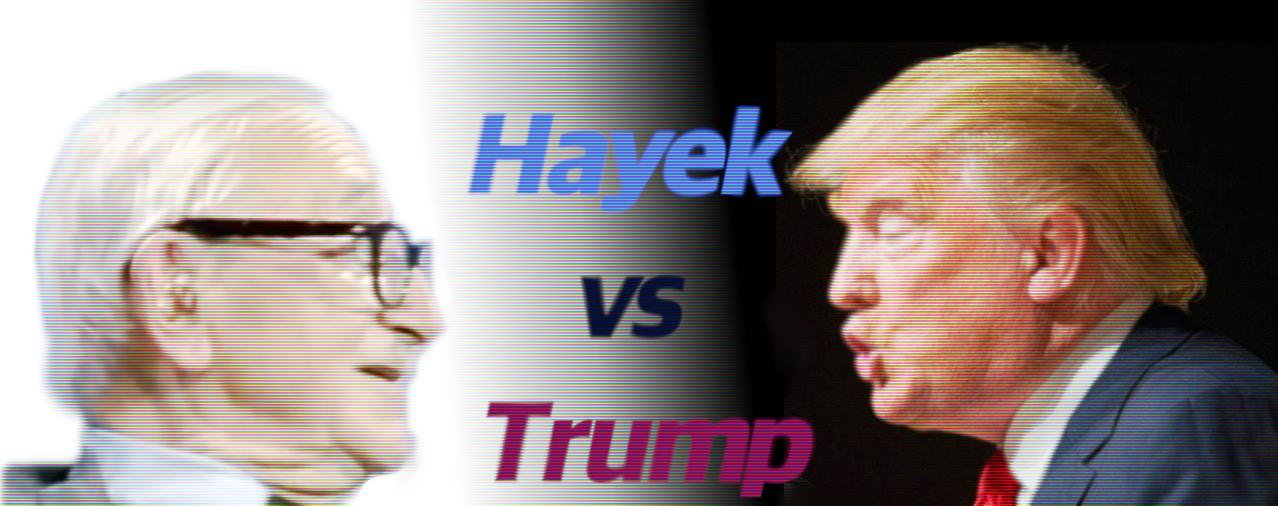
In ‘Hayek vs Trump: The Radical Right’s Road to Serfdom’, Aris Trantidis and I dispute this complacency about authoritarianism on the right. In the article, now forthcoming in Polity, we re-interpret Hayek’s famous The Road to Serfdom in light of his later work on coercion in The Constitution of Liberty.

We find that only certain forms of state intervention, those that diminish the rule of law and allow for arbitrary and discriminatory administrative oversight and sanction, pose a credible risk of turning a democratic polity authoritarian. A bigger state, without more discretionary power, does not threaten political liberty. Although leftwing radicals have in the past shown disdain for the rule of law, today in the U.S. and Europe it is the ideology of economic nationalism (not socialism) that presently ignores democratic norms. While growth continues, this ideology may appear to be compatible with support for business. But whenever the music stops, the logic of the rhetoric will lead to a search for scapegoats with individual businesses in the firing line.

Several countries in Europe are much further down the 21st road to serfdom than the U.S., and America still has an expansive civil society and federal structures that we expect to resist the authoritarian trend. Nevertheless, as it stands, the greatest threat to the free society right now does not carry a red flag but wears a red cap.

Here is an extract from the penultimate section:

The economic agenda of the Radical Right is an extension of political nationalism in the sphere of economic policy. While most Radical Right parties rhetorically acknowledge what can be broadly described as a “neoliberal” ethos – supporting fiscal stability, currency stability, and a reduction of government regulation – they put forward a prominent agenda for economic protectionism. This is again justified as a question of serving the “national interest” which takes precedence over any other set of values and considerations that may equally drive economic policy in other political parties, such as individual freedom, social justice, gender equality, class solidarity, or environmental protection. Rather than a principled stance on government intervention along the traditional left-right spectrum, the Radical Right’s economic agenda can be described as mixing nativist, populist and authoritarian features. It seemingly respects property and professes a commitment to economic liberty, but it subordinates economic policy to the ideal of national sovereignty.

In the United States, President Trump has emerged to lead a radical faction from inside the traditional right-wing Republican Party on a strident platform opposing immigration, global institutions, and current international trade arrangements that he portrayed as antagonistic to American economic interests. Is economic nationalism likely to include the type of command-and-control economic policies that we fear as coercive? Economic nationalism can be applied through a series of policies such as tariffs and import quotas, as well as immigration quotas with an appeal to the “national interest.”

This approach to economic management allows authorities to treat property as an object of administration in a way similar to the directions of private activity which Hayek feared can take place in the pursuit of “social justice.” It can take the form of discriminatory decisions and commands with a coercive capacity even though their authorization may come from generally worded rules. Protectionism can be effectuated by expedient decisions and flexible discretion in the selection of beneficiaries and the exclusion of others (and thereby entails strong potential for discrimination). The government will enjoy wide discretion in identifying the sectors of the economy or even particular companies that enjoy such a protection, often national champions that need to be strengthened and weaker industries that need to be protected. The Radical Right can exploit protectionism’s highest capacity for partial discriminatory applications.

The Radical Right has employed tactics of attacking, scapegoating, and ostracizing opponents as unpatriotic. This attitude suggests that its policy preference for economic nationalism and protectionism can have a higher propensity to be arbitrary, ad hoc and applied to manipulate economic and political behavior. This is perhaps most tragically demonstrated in the case of immigration restrictions and deportation practices. These may appear to coerce exclusively foreign residents but ultimately harm citizens who are unable to prove their status, and citizens who choose to associate with foreign nationals.

Nightcap

  1. Enchiladas, a culinary monument to colonialism Alexander Lee, History Today
  2. The Marginal Revolutionaries of Austria-Hungary Tyler Cowen, MR
  3. The other side of British India Soni Wadhwa, Asian Review of Books
  4. Old Tokyo, time telling, and the Chinese zodiac Claire Kohda Hazelton, Spectator

How the populists came to power

Jair Bolsonaro was elected president in Brazil. Donald Trump in the US. In other countries, similar politicians are gaining popular support. Some are calling these politicians “populists”. I don’t really know what they mean by this term. The populists that I know better are Getúlio Vargas, Brazil’s president for almost 20 years in the mid-20th century and Juan Peron, a leading political figure in Argentina in the same time period. What they had in common? Both fought the communist influence in Latin America, favored the labor movement and were anti-liberal. They were also extremely personalist, leading to something that could be understood as a cult of personality. I completely fail to see important similarities between Trump and Bolsonaro on the one hand and Vargas and Peron on the other. But I can see some similarities between Trump and Bolsonaro. The latter two both came to power against what the left became in the last few decades.

Once upon a time, there was a young German philosopher called Karl Marx. He was very well read but wasn’t very bright on economics. Anyway, he decided that he would correct the classical liberal economic theory of Adam Smith. The result was that Marx concluded that in the center of the economy, and actually in the center of history itself, was the class struggle between the workforce and the bourgeoisie. Of course, although appealing on the surface, Marx’s economic theory is pure nonsense. Maybe Marx himself knew it, for at the end of his life he was more interested in living a peaceful life in London than in leading a revolution. But this didn’t stop Marxists from starting Revolutions throughout the world, beginning in Russia.

Ludwig Von Mises brilliant pointed out that Marxism would never work as the economic foundation of a country, for it ignored private property. Without private property, there is no price formation and without prices economic calculation is impossible. In doing so, Mises founded the Austrian School of Economics. The economic debate between Austrians and Marxists ensued, but arguing with a Marxist is like playing chess with a pigeon. He will climb on the board, knock down the pieces and believe that he won. Regardless, facts don’t care about your feelings, and reality proved again and again that Mises was right.

However, at the same time, something else was happening. In Italy, a Marxist named Antonio Gramsci concluded that armed revolution was not the best way to power. He believed that a cultural approach would be better. Some German scholars in Frankfurt concluded pretty much the same. Their question was “why the proletariat will not follow us?”. The answer was that they were too alienated by capitalist culture.

Following Gramsci and the Frankfurt School, Marxists all over the world gave up studying economics and decided to study culture. They concluded that everyone can feel oppressed. The class struggle seized to be between factory workers and factory owners and turned into a fight between man and woman, black and white, gay and straight. Identity politics was born.

And that’s how the “populists” came to power. It is not so much that the common people (and especially conservatives and libertarians) are crazily in love with Bolsonaro or Trump. It is just that people eventually get tired of being called oppressors. The left, once legitimately concerned with the conditions of the poor, ignored that the best solution for poverty is the free market. Instead, they decided they would crush the common people they swore to protect, calling them homophobic, misogynists and so on. Common people answered by voting for whoever was on the other side of the political spectrum.

Battling Time and Ignorance: Mario Rizzo at 70

Last week my friend and colleague Mario Rizzo, a scholar central to the revival of  contemporary Austrian economics, turned 70. This occasion prompted a spontaneous outpouring of praise for his work, as well as messages of gratitude for his support of students and fellow academics over his decades as an intrepid professor with his home firmly at NYU. They are collected over at ThinkMarkets. Jeffrey Tucker has written an excellent summary of Mario’s intellectual contributions at the American Institute for Economic Research. Below is a segment of my birthday message:

In my home, the United Kingdom, classical liberal thought has until recently been virtually unheard within much of academia. As a student and think-tank researcher ravenous for liberal approaches to public policy, I gorged on Mario’s blog posts from ThinkMarkets. Together with Marginal Revolution and Cafe Hayek, ThinkMarkets was a critical lifeline for me facing an intellectual world dominated by various visions of authoritarianism and only slightly more benign variants of paternalism.

Thanks to Mario’s selfless contributions to the revival of Austrian economics, that intellectual world is changing, even in the UK. His co-founding of the Society for the Development of Austrian Economics and hosting the Program on the Foundations of the Market Economy at NYU has provided support and inspiration for countless young scholars.

I am very fortunate to be among that multitude.

IMG_5104


What makes robust political economy different?

17760989_10211701794931604_8034787751519057151_o

I encountered what would later become important elements of Mark Pennington’s book Robust Political Economy in two articles that he wrote on the limits of deliberative democracy, and the relative merits of market processes, for social and ethical discovery, as well as a short book Mark wrote with John Meadowcroft, Rescuing Social Capital from Social Democracy. This research program inspired me to start my doctorate and pursue an academic career.  Why did I find robust political economy so compelling? I think it is because it chimed with my experience of encountering the limits of neo-classical formal models that I recount in my chapter, ‘Why be robust?’, of a new book, Interdisciplinary Studies of the Market Order.

While doing my master’s degree in 2009, I took a methodology course in rational choice theory at Nuffield College’s Center for Experimental Social Science. As part of our first class we were taken to a brand new, gleaming behavioural economics laboratory to play a repeated prisoners’ dilemma game. The system randomly paired anonymous members of the class to play against each other. We were told the objective of the game was to maximise our individual scores.

Thinking that there were clear gains to make from co-operation and plenty of opportunities to punish a defector over the course of repeated interactions, I attempted to co-operate on the first round. My partner defected. I defected a couple of times subsequently to show I was not a sucker. Then I tried co-operating once more. My partner defected every single time in the repeated series.

At the end of the game, we were de-anonymised and it turned out, unsurprisingly, that I had the lowest score in the class. My partner had the second lowest. I asked her why she engaged in an evidently sub-optimal strategy. She explained: ‘I didn’t think we were playing to get the most points. I was just trying to beat you!’

The lesson I took away from this was not that formal models were wrong. Game theoretic models, like the prisoners’ dilemma, are compelling and productive analytical tools in social science, clarifying the core of many challenges to collective action. The prisoners’ dilemma illustrates how given certain situations, or rules of the game, self-interested agents will be stymied from reaching optimal or mutually beneficial outcomes. But this experience suggested something more complex and embedded was going on even in relatively simple social interactions.

The laboratory situation replicated the formal prisoners’ dilemma model as closely as possible with explicit rules, quantified ‘objective’ (though admittedly, in this case, low-value) payoffs, and a situation designed to isolate players as if they were prisoners in different cells. Yet even in these carefully controlled circumstances, it turns out that the situation is subject to multiple interpretations and understandings.

Whatever the textual explanation accompanying the game, the score on the screen could mean something different to the various players. The payoffs for the representative agents in the game were not the same as the payoffs in the minds of the human players. In a sense, my partner and I were unwittingly playing different games (although I lost within either rules of the game!).

When we engage with the social world, it is not only the case that our interests may not align with other people. Social interaction is open-ended. We do not know all the possible moves in the game, and we do not know much about the preference set of everyone else who is playing. Indeed, neither they nor we know what a ‘complete’ set of preferences and payoffs would look like, even of our own. We can map out a few options and likely outcomes through reflection and experience but even then we may face outcomes we do not anticipate. As Peter Boettke explains: ‘we strive not only to pursue our ends with a judicious selection of the means, but also to discover what ends that we hope to pursue.’

In addition, the rules of the game themselves are not merely exogenous impositions on us as agents. They are constituted inter-subjectively by the practices, beliefs and values of the actors that are also participants in the social game. As agents, we do not merely participate in the social world. We also engage in its creation through personal lifestyle experimentation, cultural innovation, and establishing shared rules and structures. The social world thus presents inherent uncertainty and change that cannot be captured in a formal model that assumes fixed rules of the game and the given knowledge of the players.

It is these two ideas, both borrowed from the Austrian notion of catallaxy, that makes robust political economy distinct. First, neither our individual ends, nor means of attaining them, are given prior to participation in a collective process of trial and error. Second, the rules that structure how we interact are themselves not given but subject to a spontaneous, evolutionary process of trial and error.

I try to set out these ideas in a recent symposium in Critical Review on Mark Pennington’s book, and in ‘Why be robust?’ in Interdisciplinary Studies of the Market Order edited by Peter Boettke, Chris Coyne and Virgil Storr. The symposium article is available on open access and there is a working paper version of my chapter is available at the Classical Liberal Institute website.

AEM Europe and PCPE in Prague, April 21-24 2016

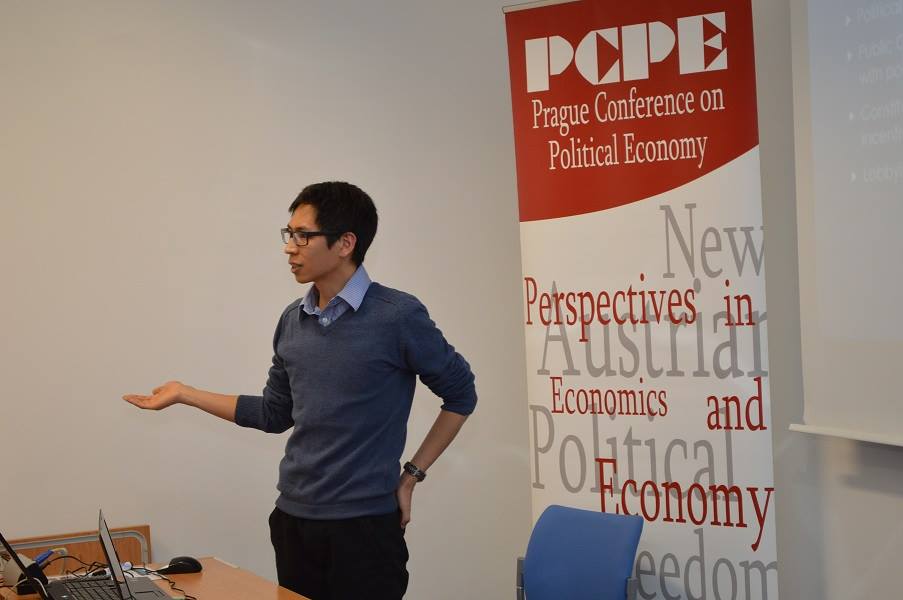
I have recently returned home from 4 days of Prague, Czech Republic, where I attended two conferences: Austrian Economics Meeting Europe and the Prague Conference on Political Economy. After having been secluded from Austrian economists and Libertarians for almost 2 years, it felt like a homecoming to be surrounded again by people who share similar thoughts. This was after all the only place in the last two years where I was able to fully express my (´controversial´) ideas about society. Being surrounded by tremendously smart people – you have to be rather smart and geeky to give up part of your free time or professional work in order to visit conferences and discuss philosophy, politics and economics – within the beautiful city of Prague made it a wonderful experience.

The AEME came about after the summer of 2014 when those from Europe who visited Mises University that year decided to come together again to discuss classical liberal ideas in the spirit of Carl Menger, Ludwig von Mises, Friedrich von Hayek and Murray Rothbard. The first AEME event took place in 2015 in Vienna, Austria, the city where the Austrian School of economic thought emerged from the works of Carl Menger, Eugen von Böhm-Bawerk, Friedrich von Wieser, and others. The Austrian School is famous for its methodological struggle against the Prussian Historical School and their idea that economics is culture- and time-specific and therefore does not contain universal validity. The Austrian School is also famous for such theoretical contributions as the subjective theory of value (as opposed to Marx’ labour theory of value), theory of marginal utility, opportunity cost doctrine, Austrian business cycle theory, the time structure of production and consumption, methodological individualism and the economic calculation problem that was first formulated by Ludwig von Mises in 1920 and later expanded upon by Friedrich von Hayek to show that pricing systems in socialist economies were necessarily deficient. From a socio-political perspective, the School argues for limited government and some even for libertarian anarchism.

AEME pub
AEME participants sharing their last evening in Prague in a local pub

What was great about the second AEME is that it took place right before the PCPE conference at the CEVRO Institute. Most of us who attended AEME have stayed two extra days to attend the PCPE conference as well. The CEVRO Institute is a private university founded in 2005 that is located in the very centre of the city of Prague. The university prides itself in its emphasis on freedom, markets, and its innovative character that is for example manifested in its PPE (Philosophy, Politics, Economics) programme taught by such international illustrious professors as Michael Munger who is also director of Duke University’s PPE programme, Peter Boettke who is the director of the F.A. Hayek Program at George Mason University, David Schmidt who is director of the Center for the Philosophy of Freedom at the University of Arizona, Boudewijn Bouckaert who was the former dean of the Faculty of Law at the University of Ghent, and Josef Sima who is the president of the CEVRO Institute. The institute has invited several prominent speakers for its conference. Prof. Mark Pennington (London School of Economics) was for example invited to present “Why most things should probably be for sale”. Prof. Benjamin Powell who is the director of the Free Market Institute at Texas Tech University, the University to which I almost applied to to pursue my PhD in the academic year of 2015 but eventually decided to work as a software engineer, was there as well to speak about “Migration, Economic Calculation, and the European Situation.” Prof. Mario Rizzo (New York University) had the honour to be the keynote speaker and spoke about “The four pillars of new paternalism” which was followed by commentaries from Prof. Pascal Salin, former president of the Mont Pelerin Society.

PCPE 2016
Mario Rizzo’s welcome speech to PCPE

The second day of the PCPE conference, there were 27 speakers spread over 9 sessions on such topics as economic theory, anarcho-capitalism, the Austrian School, entrepreneurship, cryptocurrencies, the role of family and more. I was one of the speakers and spoke on the “Philosophical investigation of seasteading as the means to discover better forms of social organization”. The thesis of my talk was that one core focus of political philosophy is to deal with the realities of value pluralism and political disagreements. I contended that the most common form of social organization, representative democracy, does not satisfactorily deal with these realities. Therefore, we should look for political possibilities beyond representative democracies and that in order to discover these possibilities, we should experiment with new forms of social organizations. By approaching the issue from a meta-system level perspective and realizing that governments are resistant to structural societal changes we should then introduce competition into the industry of governments. Seasteading, the creation of habitable dwellings on the oceans, could serve as a means to introduce more competition in the industry and lessen political tensions between citizens who hold different comprehensive doctrines.

Chhay Lin - PCPE
Me speaking at PCPE about Seasteading as the means to deal with such political realities as value pluralism and political disagreements

If I could mention one thing that has made the most remarkable impression on me, it would be the warning issued by Prof. Stephen Baskerville (Patrick Henry College, USA) that the most immediate threat to our liberties is feminism and the social justice movement. He maintained in his talk that there is an ensuing crisis of the family which is perpetuated by the state. According to Prof. Baskerville, family courts can enter homes uninvited, take away people’s children, confiscate their property, and incarcerate them without trial, charge or counsel. With over 50% of all first marriages ending in divorce and more than half of all these divorces involving children, the greatest threat to our liberties is the colluding social work state bureaucracies with radical feminism. These groups have colluded to suppress information on such injustices. Listening to Baskerville’s talk, I felt the great urgency to engage in an intellectual battle against feminism and the social justice movement.

Other than the many intellectually invigorating moments, the city itself provided many magnificent sites. To mention several sights: we visited a beer garden, experienced a classical music concert at the Mirror Chapel, walked over the Charles Bridge, and visited the Prague Castle.

Prague Charles Bridge
The beautiful Charles Bridge crossing the river Vltava

All in all, the city of Prague, AEME and PCPE were an unforgettable experience! It has already been decided that next year’s AEME conference will take place in Krakow, Poland. The conference will be open for anyone who is interested in Austrian economics and libertarianism. For more information on AEME and the papers that were presented in the previous editions, you can find our website here. In case you are interested in studying at the CEVRO Institute and its MA PPE programme with specializations in “Austrian Economics”, “Studies of Transition”, and “International Politics”, you can visit their website here.

Economics in the ancient world?

Part of my research is located between philosophy and specific disciplines in the humanities and social sciences. I’m currently working on a project on several facets of economic life in the ancient Near East. I’m very serious about it, and even did some study in Akkadian, Sumerian, and Hebrew to understand some of the debates on the interpretation of primary sources.

Some crucial questions that anybody in my situation have to ask relate to theory: Was there any such thing as an economy, to begin with? Okay, the answer is straightforward: people were indeed allocating scarce resources, trading them, producing them, and so on. I don’t know of anyone who doubts that, and in case anyone tries, I’d point them to the enormous amount of ancient Mesopotamian contracts, receipts and court cases dealing with the issue, not to mention the famous “law codes” of Hammurabi and other kings.

The answer to next question, though, is less obvious: Can we apply contemporary economic theory to interpret, understand, explain, model, etc. economic behaviour in the ancient world? So far, I’ve identified three schools of thought on this matter in the field of Ancient Near Eastern Studies.

First, there are those who focus on particulars on the “micro” level. Their research is predominantly concerned with the publication, translation, and commentary on hundreds and hundreds of inscribed clay tablets containing valuable information about everyday life in the ancient world. These scholars won’t have much to say in terms of generalisation, because the questions they address are a degree further removed from the questions we tend to ask, say, in economics or sociology.

A common type of research in this line (and, frankly, a type of research I wouldn’t mind executing someday) looks at the complete set of cuneiform tablets found in a specific place and tries to elucidate some patterns within that set of texts. I’ve heard, for example, of someone who did his PhD on the archives of a certain family in Babylon which was involved in trade. That scholar didn’t stop at telling the story of that family, but also synthesised a considerable amount of information about economic transactions and the everyday struggles for that town in that particular period. He also pointed out some interesting linguistic features present in the contracts, letters, and receipts that he transcribed, translated and published as part of his thesis.

In this kind of research, the emphasis is on detailed observation and description, and on a modest type of generalisation to a mid-range view of the local situation. It doesn’t really deal with the economy in general and, arguably, doesn’t make much room for any of today’s economic theories to be used.

The second school of thought borrows from economic sociologists and anthropologists the idea that any economy is intrinsically linked to the way a specific society operates in a given period of history. The works of Karl Marx, Max Weber and, more recently, Karl Polanyi and Immanuel Wallerstein are examples of broad statements of this thesis. Polanyi, in particular, has applied some of this thinking to ancient economies, arguing that, in the ancient Near East, there was no such thing as a “market” in the modern sense. If that’s indeed the case, then the task is to develop a new economics (or at least a new economic theory) to account for phenomena which are particular to that historical context.

In this second kind of research, a key procedure is to ask what the ancients thought they were doing when they were engaged in economic activity. This is analogous to the anthropologist’s “thick description” of a culture in its own terms. Hermeneutics and interpretation should play a major role. We’d need to read those primary sources in search for clues about the ancient view of the economy. Did they imagine the economy as we imagine it today? Or was it something different in their view? What were the words and notions they used to describe economic activity? And so on.

However, how would we know what to look for in the first place? Wouldn’t the very notion of an “economy” be alien to the ancient mind, at least until much later with the Greeks and Romans? Because of this tricky implication, people in this line of research may choose to ignore any subjective or discursive features and may opt instead for a reduction of ideas to material factors, perhaps driven by a Marxist philosophy.

Then, thirdly, there’s the view that presupposes the applicability of contemporary economics to ancient economies. So far, I’ve come across two lines of research, both of which seem underexplored because of the lack of interest of economists in the ancient world, or lack of ability to tackle primary sources. The first line of research looks at the relationship between institutions and the general operation of the economy. I’d place this within the broader approach of neo-institutional economics, or also the so-called law and economics tradition of economic thought.

One interesting question that has been asked in this line of research has to do with the impact of government regulations in the everyday functioning of the economy. For example, how clear were property rights? If we look at the “law codes” of ancient Mesopotamia, we see a large number of definitions of what was allowed and what was forbidden, but were those rules enforced? Were they simply a suggestion? Sometimes, there’s a contrast between what the law code says and what local judges decided in a concrete court case. This way of researching ancient economies, in my view, is more productively executed as teamwork, with an economist and a specialist in ancient texts, languages, and archaeology joining forces.

A second way of applying contemporary economic science to ancient economies resembles the mainstream way of doing research. A model is constructed on the basis of some initial hypothesis, and then the hypothesis is tested against “data”. An important problem with this is that there’s a dearth of concrete and unambiguous information amenable to this sort of treatment. However, this is not the case for all periods. As a matter of fact, we do happen to have access to sizeable sets of information about prices and wages for Babylonia in the Hellenistic period. The crucial source is a set of records that people made correlating the position of the stars and planets with all sorts of information, including economic information. Some preliminary analysis of those series has suggested that prices, for example, behaved more or less like a mainstream economist would expect them to behave.

This issue of the dearth of data leads me to the following thought. I believe that even a mainstream economist should be open to the possibility of another style of economics in the study of ancient economies. I don’t think economists should give up studying them altogether. Some cross-theoretical dialogue with those engaged in other ways of thinking about ancient economies may be in order. However, I understand that many on both sides of the attempted dialogue will feel uncomfortable. After all, a mainstream economist and a Marxist don’t just disagree on method. They also disagree on politics, ethics, the meaning of life, and a number of other issues.

As a possible avenue of research, then, I’d like to suggest a more deductive approach in theory construction and a more discursive approach in the study of historical patterns. From the deductive system we’d know how an economy works in general, even if there are historically-specific possibilities to tackle. From the discursive approach we’d be able to make the most of the “data” that we do have in abundance – thousands of clay tablets with textual information – and with that illustrate the general points.

In my view, this would look like a combination of Austrian political economy with rigorous philological use of primary sources. It would be the sort of research programme to be tackled with a team of people, good libraries, near a museum and in constant dialogue, learning, and interaction. Both fields could potentially benefit from the original interdisciplinary research programme that would emerge.

Riding Coach Through Atlas Shrugged: Part 4 – Governor’s Ball

Pages 48 – 53

Chapter Summary – A group of industrialists sit around a shadowy table plotting the downfall of our favorite rugged individualist.

[Part 3]

I love how cliché this chapter is. Four figures sitting around a table, their faces shrouded in darkness as they scheme over the fate of the world, the sycophant politician sniveling his consent to their plans. This is one of those times where I am not quite sure if the fiction created the trope or the fiction is following the trope but it is okay either way, it is delightful to read.

We have at our table:

James Taggert: Who is far less whiny when not in the presence of his sister.

Orren Boyle: Our socialist-industrialist representative in the story.

Wesley Mouch: Our aforementioned politician, in the pay of Hank Rearden but in the pocket of Orren Boyle.

And finally –

Paul Larkin: The man at Rearden’s dinner party last chapter.

Essentially they spend the chapter plotting against Hank Rearden and promoting a philosophy of non-competition among businesses. From a historical standpoint this is essentially what happened with Hoover and the industrialists leading up to the great depression. A series of price and wage controls were set up that distorted normal market activity leading to the boom-and-bust cycle as described by Ludwig von Mises. As a side-note it is an interesting historical misconception that Hoover “did nothing” during the great depression. Hoover was arguably the most meddling president up to that point in regards to the economy except perhaps for Abraham Lincoln, but total economic warfare is hard to beat.

But to get back on track here, for what it lacks in literary creativity this chapter makes up for with pure economic and political insight that is delightful to read. The most illuminating part is a speech, or perhaps rant, by Orren Boyle that goes as follows, some of Taggert’s responses are edited out for brevity:

“Listen Jim…” He began heavily.

“Jim, you will agree, I’m sure, that there’s nothing more destructive than a monopoly.”

“Yes.” Said Taggart, “on the one hand. On the other, theres the blight of unbridled competition.”

“That’s true. That’s very true. The proper course is always, in my opinion, in the middle. So it is, I think, the duty of society to snip the extremes, now isn’t it.”

“Yes,” said Taggart, “it isn’t fair.”

“Most of us don’t own iron mines: How can we compete with a man who’s got a corner on God’s natural resources? Is it any wonder that he can always deliver steel, while we have to struggle and wait and lose our customers and go out of business? Is it in the public interest to let one man destroy an entire industry?”

“No,” said Taggart, “it isn’t.”

“It seems to me that the national policy ought to be aimed at the objective of giving everybody a chance at his fair share of iron ore, with a view towards the preservation of the industry as a whole. Don’t you think so?”

“I think so.”

This exchange is a fantastic summary of the process involved when the government gives special privileges to favored industries under the guise of regulation. Essentially Rearden is out-competing his fellow steel producers and since they cannot compete under market conditions they intend to compete politically by ham-stringing his business through the legal process.

This process has happened time and time again throughout history and the ironic part is that these actions have almost universally been heralded as “anti-business” when in fact it is the businesses itself that propose this regulation. The first anti-monopoly laws in America were lobbied for by the competitors of the successful oil, rail, and steel businesses which resulted in the *rise* in prices of those goods. It seemed the “natural” monopolies were pro-consumer while the regulation was pro-business.

There are also historical comparisons to be made to the great depression. The whole concept of “protecting an industry” at the expense of a single, productive, individual was the cornerstone of “Hoover-nomics” especially in the farm industry. The industrial revolution brought about a massive increase in farming productivity which naturally led to a decline in prices and a surplus of labor in that industry that came to a head during the “dirty thirties”.

The natural course of the market would be for inefficient firms in that industry to liquidate; with the entrepreneurs and workforce moving to other industries. This would cause a short period of transitional unemployment as workers moved into similar or growing industries while the more efficient firms and prospective entrepreneurs would buy the liquidated capital goods of the inefficient businesses at a discount.

Consumer goods prices would fall to equilibrium where only firms able to produce goods below that price would be able to maintain production. This would have the net effect of expanding the labor pool and be a net gain for society as new areas of production would be made available by the increases in productivity. Instead, Hoover organized industrial cartels that maintained price and wage controls over the entire economy propping up inefficient businesses that continued to waste and malinvest resources resulting in what we know today as the great depression.

To summarize, this chapter is a fantastic must read five page tour de force of economic insight.

Next chapter: More Dagny, more snark, and more family drama.