Legal Immigration Into the United States (Part 12): The Shape of Anti-immigrant Hostility

After fifty years of participant-observation and of a scholarly reading, both, I have come to think that hostility toward immigrants tends to follow a U-shaped curve, with degree of hostility on the vertical axis and numbers of immigrants on the horizontal axis. The first immigrants, those who do not go unperceived, evoke hostility because we are hard-wired to mistrust strangers and also because they are usually culturally incompetent. (Only usually; see my description of Indian immigrants in Silicon Valley who often land functionally capable). They don’t know how to act properly, often they don’t even know how to ask for help to learn how to act. In addition their newcomer status usually places them near the bottom of the relevant employment pyramid. Frequently, they perform unpleasant work. They are the disagreeable poor. Even rich immigrants may be summarily rejected for being “vulgar.”

As their numbers rise, the early instinctive hostility diminishes among many of the host population. Immigrants’ manners improve as the first comers coach the recently arrived. They do so directly and also through ethnic publications and via their churches. In the meantime, the host population learns that the immigrants are mostly not dangerous. With rising numbers also, there are growing opportunities for the native population to observe immigrants fulfilling useful functions, such as digging ditches in the hot sun and practicing medicine. At the same time, the opportunities for personal, face-to-face interaction rise exponentially. At some point, many in the host population begin to create exceptions in their own minds to their remaining hostility: Deport them all, except Lupita; she is a good housekeeper and I trust her with my possessions; Mexicans are lazy, except Diego, he is a really hard worker. After a while, exceptions have become the rule. Soon, hostility toward the immigrants is at its lowest. Fewer natives resent them and they don’t resent them deeply. (I think this is a useful distinction; ask me.)

If the number of immigrants continues to increase, however, more and more of the host population begin to feel that they are not at home anymore. They are like strangers in their own  land, the land of their ancestors. Unavoidably, with large numbers, some of the immigrants will turn out to be talented, or lucky, and they will occupy visible positions of power, like bank branch president. Many will rise faster than the members of the original population. Envy makes matters worse, of course: He got here only fifteen years ago, he still has an accent, and he is the School Principal (or better, the president of a big university, a real case). My people have been here for two hundred years and….Hostility increases again; it’s become anew a simple function of too many of the other kind.

I think California has reached that area of the U-shaped curve, near the top of the second branch of the U. The three most common last names here are said to be: Garcia, Hernandez and Lopez, instead of the normal Smith, Williams, Anderson, or Miller. Many of my neighbors (many) think that not knowing Spanish has become an unfair work handicap. As I said, local hillbilly women with a high school education (Did I say “hillbilly”?) used to find reasonably good employment as receptionists in medical offices. Those jobs have dried up because the daughters of Mexican immigrants who know enough Spanish to deal with Spanish-only speakers cost no more than they. Some mothers also claim that the use of Spanish by other kids isolates their children at school. It’s probably rare because Spanish speakers are generally a minority but impressions matter, however devoid of basis.

Accordingly, it seems to me that, in my area, there is more hostility to Mexicans and Central American immigrants now than there was ten years ago. It’s dangerous hostility because it’s now fairly well informed hostility. Some of the derogatory ethnic stereotypes may well be realistic: Mexicans drive without insurance. (I don’t have hard figures but I would easily wager on this.) The hostility also remains somewhat abstract, for the moment. It hinders but little face-to-face, personal interactions. The exceptions regimen is still holding up to a large extent. The proof is that the number of anti-Mexican jokes remains remarkably low, steady, and repetitive, kind of boring, really. Bitterness, however seems more and more freely expressed in the social media where there is almost no price to pay for doing so. Incidentally, I don’t know where the inflection point is, where the hostility curves turn up. I wish I knew. It’s a doable study. Someone else will have to do it. Good topic for a doctoral thesis, maybe.

[Editor’s note: in case you missed it, here is Part 11]

Ottomanism, Nationalism, Republicanism X

In my last post in this series, I discussed Turkey of the 1970s, starting with the 1971 Coup by Memorandum. Now I will move onto the Turkey of the 1980s, starting with the 12th September Coup in 1980, its impact and the foundations of civilian politics after the military left government. The coup was in reaction to political violence in the streets, political deadlock in the National Assembly and a worsening economic situation. It was overwhelming popular when launched, but since has become thought of as the darkest moment of the Turkish state. Despite its retrospective unpopularity and the ways that Recep Tayyıp’s Erdoğan AKP (along with Islamist predecessor parties) has positioned itself as the biggest victims of the coup, there are clear continuities with the current illiberal Erdoğanist-AKP regime and the 12th September regime.

At the time of the coup the Chief of the General Staff of the Armed Forces was Kenan Evren, and he became head of the military council which administered the country until 1983. He also assumed the office of President of the the Republic, which he retained after the return of civilian rule in 1983. He was still respectfully known as Evren Paşa to some when I first came to Turkey in 1997, but all lingering respect and affection has disappeared. There is some ingratitude here as Erdoğan’s way of running the country clearly owes a lot to Evren and the 1982 constitution promulgated by the coup regime, with its lack of restraints on executive power, enabled Erdoğan to take over the state and turn the kind of power Evren exercised during a military regime into the permanent power of a civilian president, based on a crudely majoritarian understanding of democracy. Majoritarian in two senses, which will be discussed below. The regime became famous for abuse of human rights, including mass detentions, widespread torture and widespread use of the death penalty for political linked crimes, including a man of only 17 years. The brutality and the crude political understanding of the generals in power undermined the idea that a full scale military coup was acceptable and it never happened again, though the story of military involvement in politics was not over.

The 12th September regime stabilised the economy with the help of Türgut Özal who was then a professional economist and then the first civilian Prime Minister when elections returned. The original plan was presented to the last pre-coup government and so the coup regime’s initial economic plan was a continuation of ideas entering the centre-right civilian political sphere sphere. This reduced some forms of state intervention in the economy and opened it more to the world economy, so could be labelled neo-liberal, a term now used largely as a term of abuse, but which can be used in a more meaningful way. Inevitably, there are left-wing analysts who treat the economic changes that came out of 1980 as the equivalent of the economic changes introduced in Chile after the September 1973 coup. This conceals more than it illuminates. The military adopted Özal’s plans out of pragmatism of the moment rather than conviction, soon moving away from economic liberalism, when a military figure replaced Özal as head of economic planning in 1982.

The 12th September regime organised a referendum in 1982 to pass a constitution which was far less liberal than that of 1961 (itself introduced by referendum during a period of military rule). It retained the role of the army in influencing the government through a National Security Council, introduced by the 1961 constitution. The 1980 constitution is still in place, though heavily amended. The 1982 constitution retained the centrality of the National Assembly as the expression of the national will, going back to the constitutional ideas at the beginning of the Republic. It increased executive privilege though in over-ruling court decisions and gave the Presidency just enough power so that once Erdoğan came to power with a strong willingness to ignore precedent and the norms guiding the constitution, he could turn Turkey into a de facto presidential republic with a weak national assembly, even before the 2016 referendum which formalised the change.

The electoral rules for the National Assembly were changed to exclude parties with below 10% of the vote. The system of proportional representation introduced (a version of the d’Hondt system), favoured the largest party so that it could take the majority of seats with about 35% of the vote (lower is possible but that in practice is how it has worked, depending on the distribution of votes between parties), which is how the AKP gained a majority. The rules were biased towards rural constituencies over urban constituencies, so favoured the right-wing parties.

The 10% rule is sometimes seen as aimed against Kurdish based parties, but if we look at the election results before 1980, it would be more reasonable to think of it as aimed against Idealist Hearths/Grey Wolf Turkish ultranationalists and National View Islamists. Preventing radical left parties and Kurdish based parties from entering the National Assembly may have been an aim in 1982, but surely only secondary to a wish to keep the far right out of the National Assembly. The system had adjusted to a kind of absolutist majoritarianism in which the ‘majority’ could be a plurality with much less than half the vote. The less formal design was to make Turkey a permanently majoritarian country in the sense that it would be dominated by forces rooted in the Sunni religious majority and dominant Turkish ethnicity resolutely committed to a very homogenous understanding of the nation in which the more extreme versions of ethnic nationalism and religious conservatism would be marginalised but so would religious minorities (most significantly Alevi Muslims), ethnic minorities (most significantly Kurds), and open non-believers. Evren himself publicly quoted from the Koran, completely against the spirit of Kemalism, and suppressed the teaching of evolutionary theory in schools. Erdoğan has imitated him in both these respects.

The coup regime created its own national-conservative party with a left-Kemalist (national republican party) as the preferred opposition, both of which disappeared before long. Özal was allowed to create a middle ground party, Motherland (which now exists only as an on-paper micro-party satellite of AKP). This gathered members of the Menderes-Demirel centre-right tradition along with three other pillars: ultranationalists who had been active in the Grey Wolf  associations, former members of the left (including far-left) turned ‘liberal’, members of Sunni religious communities. All the pre-coup parties were illegal during the 1983 elections and the Motherland Party was the only legal party led by people with political experience and talents, so it was in the ideal position to get the most votes, to the irritation of the military leaders who nevertheless accepted the result.

Özal himself was a member of the Nakşibendi Sufi lodge (a very old religious community linked to very orthodox Sunni Islam, originating in the Ottoman lands but also present in other Muslim areas) so was the first Turkish leader from the world of religious communities in the history of the republic. More on Özal and the politics of the 1980s in the nest post.

Is this patriotism?

I’ve always had a weird relationship with patriotism. As a Canadian kid I wondered if the thing I was supposed to be proud of was that Canadians weren’t so brashly patriotic. Later I moved to America and jumped on the “we’re #1” bandwagon. I got off after first realizing that politics is messy and there aren’t any leaders worth admiring, then realizing that that’s always been true (and may even have been worse in the past). My default position over the past few years (before and after getting citizenship) has been “America The world is a nice place, with nice people. And America has one of the better (deeply flawed) political systems.” But I’m not the sort of person who goes out of his way to say the pledge of allegiance.

But I might have stumbled on a secret patriotic feeling that swells in my heart nearly every time I read the news: a profound embarrassment.

Maybe bureaucratic reports have worn me thin, but I’m increasingly shouting “Get it together America! You’re embarrassing me!” any time I encounter news.

When crazy people do crazy stuff I’m not inclined to feel embarrassed, because I don’t know that angry lady who doesn’t understand traffic lights! But family can embarrass you. Embarrassment is an expression of your fear that you’re more like Uncle Joe than you feel comfortable with.

If this is what patriotism feels like, I don’t get it.

Legal Immigration Into the United States (Part 7): An Exemplary Social Science Attempt to Disentangle

Using estimations of the relationships between several sets of good data to infer causation is an old endeavor, of course. The difficulties to which I pointed above are not new. For a little over one hundred years, the social sciences have emerged largely with the mission to solve or circumvent such difficulties. Their efforts have been broadly productive; inferences of causation based on quantitative estimations that respect state-of-the-arts social science rules are more trustworthy than practically everything else. In brief, the more complex the issues under study, the more back-of-the-envelop calculations suffer in comparison with modern social science methodology. Issue of comparative immigrant vs native born criminality are pretty much at a level of complexity for which those methods were developed.

The rules of social science include an obligation to publish in scholarly journals where the findings will be subjected both to pre-publication and to post-publication critical assessment. (See my didactic essay on scholarly submission: “What’s Peer Review and What it Matters) Publication in scholarly journals also facilitates eventual attempts at replication with its potential to root out major research-based fallacies. I realize that duplication is a rare event, but the threat of it keeps researchers on their toes. Note: This doesn’t mean that the degree of confidence one should award to serious social science products should be high, in absolute terms. There is a difference in practice between, “bad,” and “very bad.” Also, in spite of formidable recent successful hoaxes against pseudo-journals, some disciplines hold the line, including left-leaning Sociology. (Read Gabriel Rossman’s “Sokal to the Nth Degree” in the November 8th-11th issue of the Weekly Standard.)

As it happens, there is a recent study that addresses the topic of immigration and criminality that fulfills good social science criteria. It’s Michael T. Light and Ty Miller, “Does Undocumented Immigration Increase Violent Crime?” published in Criminology, March 3, 2018. The study relies on data from all 50 states plus the District of Columbia, collected from 1990 to 2014, inclusive. Its design is reasonable; it allows for the observation of change over time in the relationships of interest. The 24-year period of observation is a convenience sample of any longer period one would prefer, but it’s not known to what extent it is representative of a longer period. This is a common limitation on interpretation. Twenty-four years of observation is a lot better than one year for the purpose of generalization though. The estimation methods used in their study to express the relationship between numbers of illegal immigrants, on the one hand, and several well accepted measures of serious criminality, on the other, are up-to date. The same methods allow for the elimination of alternative formulations – that is, they allow for “controlling” for variables other than the main variable of interest, the number of illegal immigrants. The article contains a useful and thorough review of the literature. It’s written with remarkable clarity, given the inherent complexity of the endeavor it describes.

The study gives a straightforward answer to the straightforward question it poses:

The increase in the number of illegal immigrants (in the US) is associated with a decrease in serious crime.

The authors dispose fairly well of an interpretation of these counter-intuitive findings based on the idea that more illegals results in less crime reporting in the relevant populations, rather than in actual decrease in crime. This explanation would make their startling main finding practically spurious.

It is not equally clear to me that the authors have disposed completely of the hypothesis that an influx of illegal immigrants is causally linked to stepped-up law enforcement, and only thence to crime reduction. This formulation has important policy implications. It says: Illegal immigration does not increase crime, provided you do what needs to be done about it. And, you may be lucky and overshoot your mark. Ideally, I would  have liked to see a measure of cost per some unit of crime reduction included in the estimation models.

It’s unfortunate for my purpose that this study focuses on illegal immigration specifically, since my own primary interest is in legal immigration. It matters little in the end because a secondary analysis within this study indicates that increase in legal immigration (considered separately from illegal immigration) is also associated with a decrease in serious crime.

As quantitative social scientists are unfortunately inclined to do, Light and Millet give us a literal expression of their main finding, like this (I think this practice, of making findings shout instead of whispering should be heavily taxed.):

A one-unit increase in the proportion of the population that is undocumented corresponds with a 12 percent decrease in violent crime.

We don’t have to take literally this metric wording and the causality it suggests. For example, there is no need to believe that if enough additional illegal immigrants enter the US, at some point, serious crime will disappear completely. It’s enough to acknowledge that a very good study on the relationship between immigration and serious crime leaves little room for the possibility that the more of the one, the more of the other.

Note, however, that the Light and Miller findings do not exclude this formulation completely. It’s possible that in some states an increase in illegal immigration is associated with a surfeit of serious crime. It’s possible even that for all states, but for a brief period, an increase in illegal immigration is quickly followed by a rise in serious crime. Because of these possibilities, the public perception and the startling results of this study may well be compatible. These would probably not be casually detected. Few regular observers, be they politicians, journalists, or public servants are likely to have a clear view of events in 51 separate entities sustained for twenty-four years. Intelligent, rigorous minded observers may be right about what they know and drastically wrong about what they have not studied through hard facts.

Light’s and Miller’s is a classically good article. It’s thorough without sacrificing detail; it offers a good quality and a useful review of the relevant sociological literature; it’s tightly reasoned. The estimations it reports on seem impeccable. I think Light and Miller is the standard against which all reports on the relationship between immigration and crime should now be assessed. Practically, this article should contribute to switching the burden of proof: Although they are less educated, poorer, and younger on average than the native-born population, immigrants appear to commit less serious crime than the latter. More surprisingly to some, illegal immigrants, who begin their American career by demonstrating their willingness to violate American law, do not appear to be prone to criminal violence.  But, as I have mentioned before, an illegal status is a strong incentive to keep one’s nose clean.

I am not proposing here that Light and Miller’s article should forever block the progress of more conventional ideas  to the effect that more immigration is associated with more crime. All it would take would be a single study of similar quality to overturn this remarkable study’s findings. In the meantime, it would be reasonable to shift the burden of proof  away from where it has implicitly stood: immigrants tend to be criminal.

[Editor’s note: in case you missed it, here is Part 6]

Legal Immigration Into the United States (Part 6); Immigrants, Crime and Incarceration: Another Mostly Local Cost and a Causal Tangle.

There exists a widespread impression, deliberately fed by some conservative media and sometimes by President Trump himself, to the effect that illegal immigrants are especially prone to crime, and to violent crime. By extension, by illogical implication, immigrants in general are tarred with the same brush.

Immigrant crime agitates for different reasons that are not always disentangled from one another. First, there is the general social disorganization that any crime causes and the worsening of the quality of life it entails. Second, mostly youthful immigrants could have the power to reverse the general decline in crime that accompanies the aging of American society. They might be the agent of a step backward for American society. Third, capturing, trying, and incarcerating anyone is very expensive, more expensive than schooling, for example. Immigrant crime in general is especially apt to disturb emotionally because it seems to involve a kind of crass ungratefulness: I let you into my living room, or you enter while I am not paying attention, and you show your appreciation by stealing the silverware, and worse.

Belief in the criminality of immigrants as a group is not necessarily the result of a kind of emotional prejudice. Immigrants are predominantly young, ill-educated, and poor, all known ingredients of criminal propensity in any context. (To my surprise, current immigrants are not predominantly male, although maleness is a strong factor of criminality.) So, if immigrants to the US are like just about every population of the same age, income, and education ever studied, they should exhibit a higher crime rate than the native-born population that is, on the average, better educated, more prosperous, and, especially, considerably older.

It’s difficult to figure out the basic truths about immigration and crime because gross miscounting by partisan journalists is common. For instance, in his 2018 article in Reason on a report based on 2009 figures, Alex Nowrasteh shows how easy it is to make horrendous but simple mistakes of enumeration: Counting single events of incarceration as if they were individual immigrants, for example, as if illegal immigrants could not be repeat offenders. (“Restrictionists Are Misleading You About Immigrant Crime Rates.” Reason, Feb. 1, 2018.)

I explicitly do not accuse the authors cited below of such miscounting.

In his 2006 article in Liberty, Cox showed that about 2.6 % of inmates in federal prison and an astonishing 12% of people incarcerated in local jails and prisons were illegal immigrants in 2002. That’s 14.6% of all persons then incarcerated in the US. The highest estimate of the number of illegal aliens I could locate for any year is 15 million. With that estimate, conservatively, incarcerated illegal aliens would be about 5% of the then US population of 293 million. Roughly, illegal aliens, according to Cox, were thus incarcerated in 2002 at almost three times the rate of their occurrence in the general population. This rate did not include incarcerations for merely being illegally present in the US (which must have been a small number since that was only a misdemeanor). Cox’s study is based on figures for only one year for the whole country.

At any rate, Cox’s incarceration figures concern mostly illegal aliens. It’s not clear whether illegal immigrants’ propensity to commit crimes is similar to the corresponding propensity of legal immigrants, nor if their crimes are similar. Legal and illegals may come from different countries and regions. Even if they come from the same places, they may issue from different classes in their societies of origin. Even if from the same places and same classes, they may constitute different samples of the populations of origin from the standpoint of motivation and thus, of personal psychology. It takes different virtues to arrange for legal immigration via whatever path, on the one hand, and to swim the Rio Grande, or coolly to overstay one’s visa, on the other. These different virtues could easily be associated with different levels of different criminal tendencies. Finally, legal and illegal immigrants have different incentives to break the law or not, the latter being in a good position to not draw attention to themselves. That’s at least until the sanctuary movement.

A study published by the libertarian Cato Institute in February 2015 examined criminal conviction data provided by the Texas Department of Public Safety. It found that native-born residents were much more likely to be convicted of a crime than immigrants in the country either legally or illegally. For all crimes together, the legal immigrants’ score was less than one third that of the native-born. The difference in the likelihood of being convicted of homicide, specifically, was very large between legal immigrants and the native-born. The former were 15 times less likely to be convicted of homicide. Even illegal immigrants were only 70% as likely as the native born to be convicted of homicide. (“Two charts demolish the notion that immigrants here illegally commit more crime,” Christopher Ingraham, Washington Post on-line accessed circa June 28 2018.)

Note that the Cato Institute study is for one state only and for only one year. Cox’s figures cited above are also for one year only but for the whole country.

It’s not obvious how one should relate these contradictory sets of findings to one another. (There are many more such studies. I chose two researchers on my side of the political fence that seemed to me to have worked with seriousness.) First, figures about comparatively rare events such as homicide are notoriously unstable. The corresponding homicide figures for 2004 or for 2014 might be very different. Moreover, both sets of figures, Cox’s and Cato Institute’s use the heterogeneous categories “legal immigrants” and “illegal aliens.” To generalize from their findings requires making the silent assumption that the composition of both is stable from year to year. This assumption is unwarranted. Nothing regulates the composition of illegal immigration and little insures that the composition of legal immigration will be similar from year to year. The varying numbers of refugees alone could sway the legal figures one way or the other.

Here is a realistic scenario: For a period of a few years, both immigration flows consist mostly of rural, mountain Mexicans from rural areas where crime is scarce. In a subsequent and contiguous period, a large flood is added, through both refugee legal immigration and through illegal immigration, of urban Central Americans (thus, of people from some of the highest crime areas of the world). Both the frequency and the nature of immigrant crime may change swiftly as a result  of this sudden (and realistic) change in  the composition of immigration, legal or illegal, or both. The composition of legal immigration may change drastically in a single year because of the influx of refugees from a single location hitherto unrepresented in the US. The composition of illegal immigration may also change suddenly because of a disaster in a region that the American federal government does not recognize as a legitimate source of refugee status. It’s hazardous to extrapolate from one period to any other period. Hence both Cox’s and Cato Institute’s findings may be correct but, at the extreme, each of them for one year only.

It’s also risky to extrapolate from one domestic location, for example, Texas, to another, for example, the whole United States. Here is one reason among others why it is so: The (innocent) rural mountain Mexicans I mention above are likely to move to the Central Valley of California and to similarly agricultural areas in Florida. Crime-prone Central Americans, on the other hand, may seek their fortune in the more familiar big cities anywhere, including, Los Angeles, Chicago, and Houston. In this imaginary scenario, immigrant crime in Texas (Houston and Dallas, per chance) may be grossly unrepresentative of immigrant crime anywhere else in the US.

Finally, as Cox pointed out to me in a personal communication, the comparison category, “native-born” is itself heterogeneous with respect to crime. The rates for African-American  – most of whom are native-born – are several times as high as others’. Perhaps, the native-born would far better for incidence of crime if blacks were excluded from the comparison. I suspect this is true but I don’t know according to what theoretical principle, this exclusion should be made.

[Editor’s note: In case you missed it, here is Part 5]

Small thought on the fundamental revolution of Blockchain

Mankind made a huge leap forward regarding human organization when it implemented the Constitution. Man was no longer to be ruled by kings and despots, but by a document that stipulated the rule of law. Still, we had the issue of who was going to interpret these laws and who was allowed to add new rules.

Now, we have made another revolutionary leap forward in human organization. We don’t need a third party – kings, governments, courts – to interpret the laws anymore if we have self-executing smart contracts that eliminate the need to trust these third parties. Trust is established through mass collaboration and clever code. On top of that, everyone is free to opt-in, to submit new rules, and to participate in a set of rules. No one is forced to participate. You can always secede. We have had many secessions in the blockchain space. Bitcoin Cash seceded from Bitcoin Core, Ethereum seceded from Ethereum Classic etc. It is therefore a peaceful means to organize human beings.

This is, in my opinion, the fundamental revolution of blockchain: a peaceful trust machine for social agreements and human organization.

Blockchain trust

Immigration Into the United States (Part 3)

Substituting Immigrant Labor for Native Workers: A Mental Experiment

Although the area where I live is not representative of the US in general, it’s exemplary in important respects. What happens here often happens later, elsewhere in the country, in attenuated form. Santa Cruz, California is separated from Silicon Valley by a chain of hills that takes 25 minutes to cross at the right time of a good day, and up to 90 minutes at other times. On my side of the hills is a rich agricultural zone, probably the main vegetable and strawberries garden of America, plus some resort areas and several well-respected schools of higher education. I taught in an MBA program in Silicon Valley, on the other side of the hills, for 25 years. I have been the owner of needy houses in Santa Cruz for just as long, and thus a habitual user of various kinds of labor. On both sides of the hills, high-tech industries and high-margin industrial agriculture powerfully attract immigrants – although, mostly, somewhat different kinds of immigrants.

The claim that immigrants of all kinds take work from citizens is a constant background noise in my area. In general (only in general; it happens) I am skeptical of the notion that immigrants directly take jobs from the native-born, or that they threaten to do so. This is based on my parochial, local, but not insignificant experience. Employers on both sides of my hills have been complaining of a labor shortage for seven or eight years. Booming Silicon Valley employers require more engineers, more software writers, but also more of a little bit of everything, because industrial growth generates demand for all kinds of ancillary services, including dish washing. There was not a sufficient rush of diversely qualified labor while the unemployment rate was fairly high, right after 2008. It’s unlikely to happen now that it’s ultra-low (September 2018).

Big farmers on my side of the hills regularly lament their inability to pick crops in the field in timely fashion because of a perennial dearth of the requisite kind of labor. Many think that the requisite kind of labor has to be cheap. In fact one habitual user of farm labor declares publicly that he pays $26 an hour on average. This would mean, of course, that some of his laborers earn more than three times the federal minimum wage.(This is embarrassing but I cant find the reference for this item. It’s from a recent article – 2018 -. I am 95% certain that it’s from the Wall Street Journal. I looked at the article carefully when I came across it and assessed it as trustworthy.) This figure would add up to about $50,000  annual for a full time farm worker. The Economic Policy Institute only assigns a yearly full time wage of $35,000 in 2015. (“Farm worker wages in California: Large gap between full-time equivalent and actual earnings.” Posted March 21, 2017 by Philip Martin and Daniel Costa.) That’s for the best paid farm workers, those in vegetable growing and picking. Assuming a 5% rise in wages yearly because of labor scarcity, still leave farm workers much below that $50,000 figure. I read locally that the labor shortage is so acute that some farmers switch to crops not especially suited to the climate or to their skill-set but that are less labor-intensive. The lament has not lessened in several years, although there is an abundant supply of potential labor nearby, in the form of college students.

Local housing rents are high; the cost of living is also high; tuition keeps increasing. Most of the farm work that goes begging requires little more than a basic work ethic and good health. Yet the thousands of college students in nearby Santa Cruz and Monterey compete for a handful of low-paying barista positions rather than going for far more lucrative seasonal farm work. (I must say that my perverse heart is waiting for a real-life experiment in which farmers explicitly bid up dormant student picking talent: I would like to find out how high the remunerations offered can go without eliciting a response.) The cliché that there is some work that Americans reared in a soft society won’t do, is not completely absurd, it seems to me. The lack of exposure to hard physical labor of most Americans who have been students in the past ten years may play a role, possibly a preponderant role. And yes, I admit that at $60 an hour, for example, growers would probably find all the local unskilled labor they wanted. Yet, I doubt that this is what commentators mean when they complain about immigrants taking work from the native-born.

And, of course, I have to notice that very high wages paid for the production of ordinary goods corresponds to a pay cut for everyone. Nevertheless I do believe that in agriculture the pay cut would probably amount to little, in most cases. Take local strawberries retailing at $2.00/lb. Suppose field labor accounts for a full ten per cent of this retail cost. If this labor cost goes up by 100% net, the same strawberries will retail at about $2.25, at most. It seems to me that’s probably not enough to affect sales much. Farmers would have to agree among themselves to raise wages and prices which may be illegal or of dubious legality.

The Hidden Cost of Cheap Labor: Missed Mechanization

Somehow, one of the hidden costs of the importation of inexpensive labor seldom comes up in discussions of immigration. Inexpensive labor is often an invisible substitute for mechanization. As discussions amplified in 2017-2018 about a national $15 an hour minimum wage, the media produced numerous examples of employers of inexpensive labor, such as fast food restaurants, quickly increasing their reliance on robots. In those media stories, the causality was seldom well established, but it stands to reason that the relative scarcity or dearness of labor is a spur to mechanization. Conversely, the routine availability of inexpensive labor must prevent decision-makers from adopting new tools of automation, and inhibit inventors from creating others.

This relationship is demonstrated in one kind of farming after another. The European Union is a live laboratory in this respect. As the EU’s heavy fringe benefits, including its high social insurance costs, were imposed on new member countries, cheap labor turned correspondingly expensive, and mechanical ingenuity was quickly unleashed. French grape growers who swore for 200 years that their precious wine grape demands the incomparable dexterity of the human hand found themselves happily riding newly invented vine cultivating machines.

Faced with the same compensation hardships, Greek olive growers relinquished manual picking for crude tree shaking machines designed to drop the fruit onto a tarp spread on the ground. Turns out, there is actually an effective olive tree shaking device that is also deft enough to avoid endangering trees that are sometimes a hundred years old. Mechanical agricultural inventions notably now move from the Old World to the New, a historically rare pattern that tests the notion of labor substitution. As labor becomes quickly more expensive in the European Union, its farmers mechanize, while American farmers slumber in the comfort of an abundance of reasonably priced labor from Latin America. In the eighties, I helped a French fruit-drying entrepreneur sell his trailerable, self-contained, stainless steel, gleaming modern machine to California plum processors still relying on a 19th century, fixed, brick, drying tunnel. It was like standing next to a state of the art sports car while chatting with a hay wagon. As expected, much of the superiority of the French machine resided in its labor efficiency that was several times better than that of the old-fashioned brick tunnels.

A Localized Cost: Schooling Expenditures

As we saw, the first qualification to the thesis that immigration enhances economic growth is that it is simply a form of population growth. It does enhance growth, but this sounds almost trivial (except to draw attention to the fact that the native-born are not taking on the vigorous job of increasing the population). The second qualification is a little more complex. A positive effect of immigration on the overall (national) economy does not exclude negative localized effects. The GDP, a national quantity, rises but some local school districts, for instance, are fiscally overwhelmed by the influx of immigrant children. The economic benefits associated with population growth through immigration may be mostly diffuse, even imperceptible, but the localized costs of immigration are obvious and often dramatically painful. The schooling of immigrant children is a good example of a painful localized cost that gives immigration a bad name.

Internal domestic migrations would also cause local problems, but the effect would usually be of a different magnitude. Today, the bulk of immigrant children often (not always) bring significant special educational needs with them that are rarely found among domestic migrants. First, they may not know English; in fact, most don’t, although there are bright exceptions. Second, foreign immigrants may come from the poorest, most rural parts of poor countries, with inferior schools. (That is certainly the case for Mexican immigrants, the largest group in recent years.) Both conditions, ignorance of English and the family’s low educational status on arrival, require expensive remedial measures, the cost of which is borne largely by local taxing entities.

To make matters worse, the usual academic remedies often just don’t work. The public schools may be so utterly unable to teach immigrant children anything in a foreign language – English – that the standards for all children degrade and local Anglo children fall drastically behind, in reading comprehension, for example. Over several years, the cumulative deficiency can force some Anglo parent to switch their children to private schools. Native-born parents who are college graduates, or even merely high school graduates, often don’t accept with equanimity the news that their children are two or three grades behind in any subject. They frequently become bitter and, why not? If they complain, they are frequently charged with racism. (It happened to my brown-skinned wife.) Those who make the move to private school end up with both high local taxes and the need to pay tuition for their children, all as an indirect but obvious financial burden of immigration. Note again that this burden is borne by local families, with little help from those who make immigration decisions, at the federal level.

There are perhaps two reasons why the poor educational status of some, or many, immigrants is seldom discussed. First, the bulk of the host population may not be clearly aware of the educational backwardness of the immigrants. They may vaguely think of Mexico, for example, as 40 or 50 years behind the US educationally; yet the commonness of illiteracy in remote Mexican villages puts them more than 100 years behind the US in this respect. (Nevertheless, I have much respect – based on personal experience – for Mexican public education as delivered in small and medium-size towns.) When it comes to the many immigrant children from Asia, school authorities appear even more at sea. They don’t know what to make of the fact that a middle-class Chinese boy of 12 may not seem to be able to explain what he can and cannot read.

The second cause of timidity regarding the educational status of new immigrants is, of course, far-reaching political correctness. To say, “Luis can’t read English” passes for racist in many quarters, although it’s obvious that Luis actually can’t read English, or any language (See below). Discussion is further discouraged by the fact that in some areas, such as mine, immigration includes both broad categories of low educational achievers and of exceptionally high achievers, both farm hands and engineers with superior training. The existence of the latter grants verisimilitude to charges of prejudice regarding the former.

Here are anecdotes about the low level of preparedness of some immigrants. On two occasions widely separated in time, I had prolonged interaction with Mexican immigrants I had hired to help me work on my houses. I had opportunities to judge each of them to be intelligent, practical-minded, full of initiative, and flexible–real finds, in other words. Both times, I discovered fortuitously that they were illiterate in Spanish. I left them simple written instructions in that language, and none of the required work was done by the time I checked, although some other necessary work I had not explicitly requested had been performed.

The men were thus not shirking; they just did not know what I wanted done. (No, don’t blame my Spanish. It’s very good. I can read anything in that language except a chemistry textbook. I also write it with ease. After all, it’s just another debased Latin, like my native tongue, French.) Of course, this is a story about a tiny sample, hardly a sample at all. Yet the two episodes took place ten years apart, and I suspect they illustrate a common condition among Mexico-born men in my area. (I refer to immigrants, not to Mexicans in generals. The large and growing Mexican middle class seldom wanders across the border without a solid job and a gringo salary. I also know some of its members.) My illiterate journeymen’s children would be difficult and expensive to educate, even if they, the children, knew English well. There is just not much book learning in their households and it’s not likely to be well respected there.

In my otherwise bookstore-rich and library-rich area, books in Spanish were nearly impossible to find for twenty years. I think there is almost no demand for such articles. What little demand there is appears to be for Spanish translations of American books with television ties. This is more evidence of the low literacy status of Mexican immigrants in the area. (see footnote 4)

It’s also true that immigrants’ children who are truly bilingual may be an asset to the local economy as well as to the national economy. In my observation as a college professor, that’s a tiny number, and their usefulness can only be a long-term proposition.  It’s a tiny number because knowing a language well requires reading and, I think, writing. There are few opportunities (few, not none) for native Spanish speakers to learn to read and write, in addition to their normal schooling in English. So called “bilingual education” in public schools does not seem to do the job. I base my judgment on the tiny number of readers and writers of Spanish I encountered in local colleges where you would expect them to congregate.

Few Anglos perceive advanced bilingualism as an asset; I am guessing, (guessing) that it’s because they see it associated with individuals of low socioeconomic status. Nevertheless, it’s useful, obviously, for lowly jobs catering in part to a non-English speaking public. My daughter tells me that it’s impossible to get a job as a medical receptionist in my area if you don’t know English and Spanish. As for well-paid occupations, I have never heard this asset mentioned except, ironically, in connection with the Border Patrol. I don’t doubt that it’s also sometimes put to use in the diplomatic service, and in the armed forces. But bilingual children of immigrants have to compete there with recent immigrants who know English well.

Other Locally Borne Social Costs of Immigration

I have pointed out that schooling, though heavily affected by national immigration policies, is financed locally. Here is a roundup of other largely locally financed services:  various  social services for the poor, (“welfare,” “public assistance”), health care, jail and prison resources (some of which are funded by the Federal Government). When evaluating the cost of these resources as allocated to immigrants, it seems to me that a reasonable  baseline is to assume that immigrants consume such resources in quantities appropriate to their sex, age distribution, economic and educational levels, and marital status. In the US, men commit more crimes than women, especially violent crimes; women are more likely to be in charge of children than men and thus in need of help to maintain them; the poor commit more crime overall than the rich, except perhaps, white collar crime. The semi-literate are also less likely than the better educated to engage in white-collar crime. Married men commit fewer serious crimes than do single men.

Loud voices on the right proclaim that immigrants go on welfare and have dealings with the judicial system more frequently than do the native born.

Adopting the baseline I propose, even if only mentally, slows down the tendency to stigmatize immigrants, including unconsciously. Imagine (made up figures) that the median age of American men is 38 while the median age of a certain group of immigrants is 23. If you observe a crime rate among the latter 25 %  above the rate for native-born Americans, you may have discovered nothing about the immigrant group propensity toward crime, just that they are young. The use of such a baseline does not exclude the possibility of making policy inferences from the social costs of various immigrant groups based on their collective economic, age, and marital status characteristics, like this: We don’t need to import young men from Central America who are just about certain to increase the frequency and the gravity of crimes in our country.


Footnotes

4  I allow myself to be a bit of a bully on matters of bilingualism because the bulk of native-born Americans – who remain proudly monolingual – carry a ton of absurd ideas in their minds about the ease of language learning. Listen to me because I am able to do everything I know how to do in two languages, and because I am able to operate very well in a third –  Spanish – while I read yet two others. (Most are related languages, of course, different varieties of bad Latin.) Naturally also, like all Frenchmen, I know a little German too, just in case. Just kidding! Read my shocking essay on language learning: “Foreign Languages and Self–Delusion in America.”

Legal Immigration Into the United States: The H-1B Visas Confusion and Controversy (Part 2 of 6)

This is the right place for a painful digression. It’s painful because it’s about a program related to immigration that is both confusing and calculated, as if by design, to become controversial. Yet, as I argue below, toward the end of this essay, it’s a program with promise.

Many middle-class foreigners with college degrees are in the US on temporary working visas. By numbers, the main category of working visas is the H-1B visa. (This is confusing, but there is currently no such thing as an H-1A visa.) Holders of the H-1B visa must meet specific educational qualifications. They are sponsored by American employers – but also by employers who look much like labor contractors based abroad. They may stay in the US for a period of three years, renewable for an additional three years. That’s except if they work for a university or for a research institute, in which case their visa is pretty much eternal. Although the number of visas allotted each year is capped, by accumulation, the program involves significant numbers of people, about 350,000 in 2016. Some or most H-1B visas are allocated by lottery on an annual basis. (It’s completely separate from the diversity lottery described above [in Part 1], as I said.)

The rationale behind the H-1B visa is to supply workers in specialties that industrial and other organizations cannot find domestically. The program is controversial for two reasons. Continue reading

Legal Immigration Into the United States: Introduction (Part 1 of 6)

This an essay about legal immigration. It includes a theoretical framework, essential facts, and subjective opinions. In this old-fashioned piece, there is no pretense of scholarly detachment. It’s a personal endeavor that I hope will be useful to others. I don’t have a hidden agenda but topical preferences I think I make clear. Footnote 1 describes my qualifications to discuss immigration. You might surmise that I have a more pro-immigration bias than most small-government conservatives but not than most libertarians (but who knows about them?). I deal with American immigration, specifically. I present rough figures only, trying to add some orders of magnitudes to the current complicated media narrative, and to establish distinctions that don’t always occur naturally. I don’t aim at precision. If mistakes of fact slip into my story, I hope readers will draw attention to them and thus, perhaps, start a conversation here. My few policy recommendations are all tentative but I hope they are logically linked both to orders of magnitudes and to conceptual distinctions.

I choose to address legal immigration specifically for two categories of reasons. First, there are reasonably good, trustworthy figures regarding legal immigration, while numbers for illegal immigration are largely estimated from data gathered for other purposes and often according to wobbly rules. Second, the relationship between legal immigration and illegal immigration is complicated enough to justify an essay all of its own. Here is a sample: Many illegal immigrants, especially many Mexicans, argue that there would be less illegal immigration into the US if there were more doors open through legal immigration. Yet, as I show below, to a considerable extent legal immigration facilitates illegal immigration and thus increases the numbers of illegal immigrants. So the numerical relationship between the two appears both negative and positive. In a co-authored article (referenced in Footnote 2) I examined the complex links between legal and illegal immigration in the special and numerically important case of Mexicans. Though that article dates back to 2009, it remains remarkably current in some respect. In the present essay I only refer tangentially to illegal immigration and only insofar as it serves my main object. Continue reading

Sine qua non: No shortcuts

This past summer at language school a young man invited me to a party, which I had to refuse since there was a major exam coming up. In response he said, “But you’re smart, why do you have to study?” He was genuinely astonished at the idea that intelligent people have to study; for him, intelligence meant that one was spared the bother of having to work to master a skill or a subject. His bewildered reaction made me start thinking about the nature of the work surrounding achievement and how it is perceived.

Bluntly put, achievement is very hard work and requires tremendous sacrifice. Last weekend, Oxford had its matriculation ceremony, after which the individual colleges arranged group photoshoots. While waiting for one shoot, I overheard two young women discussing a celebratory evening party. One said that she couldn’t go because she had to finish the reading for the next day, but the other said that she had risen at five o’clock that morning in order to finish her reading so that she could attend the party. Neither one was bothered by the choices she had to make, and they were united in their agreement that study came first. Missing a party or missing sleep were simply prices for achievement.

There is an ancient Egyptian legend about a couple who stole the Book of Thoth, which contained all the wisdom of the natural and supernatural worlds, copied it down on a stone writing tablet, washed the stone, and then drank the runoff water; in doing so they acquired all that knowledge without having to read the book. (For those who are interested, the story doesn’t end well, mostly because Thoth is annoyed that his book is gone, but also because, having not genuinely learned the material, the couple can’t control their new-found powers.) In the Folger Museum in Washington DC, there is a medieval manuscript (MS V.b.26 (1)) that contains a spell to compel the spirits to do your writing for you, though as a friend of mine drily pointed out, there’s nothing promised about the quality of writing delivered. What is interesting about myths and spells concerning shortcuts to knowledge and accomplishment is that they are all focused on bypassing the sacrificial process, while still being crowned with the laurels.

The ancient/medieval view was that the spiritual sphere, being responsible in the first place, could help create a world where everyone could achieve without the bother of the foundational work. Now, in a post-Frankfurt School, Utilitarianist world, society speaks in terms of “talent,” as if it is a supernatural thing that requires no cultivation, existing fully formed in a vacuum. We have come from Thomas Jefferson arguing that every person should be free to pursue his own interests according to his endowments to John Rawls’ yowling about the “injustice” of modern society and a world where smart, talented people appear to “have it all.” In order for the Rawlsian vision of the world to work out in completely equitable justice, the work put in by achievers in pursuit of their goals must be negated.

On a personal note, I remember one chillingly funny episode when, during a seminar, a classmate informed a group of us that our coming in prepared, having done the readings and written up commentary, was an act of oppression against her. Her basic argument was that we were too smart, and it wouldn’t cost us anything to show up unprepared once in a while in order to let her shine. We finished on time; I ran into her three days before all MA theses were due for submission and she hadn’t started writing yet. I’m willing to bet, though, that in her movie she’s a victim and we’re all oppressors.

In a way, the romaticization and mythicization of people of genius has been very unhelpful to society, especially since the popular conception of these people appears to support Rawls and Co.’s complaints. Let us take the example of Wolfgang Amadeus Mozart, partially because his myth is a perfect example and partially because this is a topic I would be happy to discuss for days on end. The popular myth is fairly well established: genius infant who miraculously taught himself everything and created beautiful music as a three-year-old, before dying tragically young, in keeping with the romantic tradition of great geniuses.

The reality, while hardly prosaic, is much less romantic. W.A. Mozart’s parents, Leopold and Anna Maria, were superbly well-educated for the standards of their time. Their familial letters, written in a mix of German, French, Italian, Latin, some English, and mathematical substitution ciphers are a jumble of thoughts and observations on literature, music, art, history, political events, social commentary, and professional talk, along with some infantile humor. Musicologist Nicholas Till wrote a wonderful book, Mozart and the Enlightenment: Truth, Beauty and Virtue in Mozart’s Operas, that covers exactly how having an Enlightenment-era (possessing an unbound belief in the benefits of education and faith in the individual), Renaissance man (good at everything) for a father affected Mozart and his sister.

Due to the extensive concertizing tours undertaken throughout Wolfgang and Marianne Mozart’s childhood,[1]music history tends to treat their father as the epitome of a deranged stage parent. But one of Leopold’s primary reasons for the tours was to procure music lessons for his son with the best musicians in the world. On the infamous “Grand Tour,” where the Mozart family travelled across Europe, from 1763 to 1766, the family spent over a year in England, on stretched financial means, so Wolfgang could study composition with Johann Christian Bach, one of Johann Sebastian Bach’s surviving sons and a much-sought after composer and teacher. Leopold was absolutely determined that his son would study with a Bach and the family had first spent time in the Netherlands in an unsuccessful effort to contact Carl Philipp Emmanuel Bach, J.C.’s brother. Mozart senior also applied the same strategy to obtaining private instrumental and voice lessons for Wolfgang. So much for the spontaneous aspect of the child genius story; during his boyhood, the composer had lessons with masters for whom he had to prepare work and have it judged. Genius might exist, but it had to be formed and cultivated, a process that the Mozart myth has completely and deceptively lost.

Losing sight of the work, sacrifice, and constructive elements of achievement has, I believe, provided valuable fuel to the social resentment industry. It is easier to envy the accomplishments and standing of others if one believes that they are unearned endowments because the person holding them is “gifted.” In my own path and work that I do, I’ve seen many people of envious or resentful inclination become devastated emotionally and psychologically when they come into close contact with high-achievers and see the amount of work, time, investment, and sacrifice that being one requires.

In my experience, these people either develop personal persecution narratives, such as the girl from my class, or flounce out proclaiming that they “have a life.” My personal experience has made me doubt the efficacy of Charles Murray’s solution, proposed at the end of Coming Apart: The State of White America, 1960 – 2010, that the best cure for the culture of resentment and anger is for the top twenty percent, representative of the high-achieving, to become visible to the bottom eighty and in doing so to allow the bottom sectors to see how hard the top actually works. Historically, the argument is probably justified; returning to the example of the Mozart family, their close association with the aristocracy, both hereditary and professional, certainly provided impetus for the children to set themselves new challenges as part of winning respect and recognition. But that family had an openness to self-improvement, a belief in the possibility of it that as a larger cultural force was, as Nicholas Till repeatedly pointed out, unique to the Enlightenment.

The people of contemporary society not only lack such a belief, they are closed even to the possibility that there is room for improvement. This is not new; Nietzsche observed and decried the culture of ressentiment– defined by the OED as “a psychological state resulting from suppressed feelings of envy and hatred that cannot be satisfied.” Only now there is no suppression. Achievement through self-improvement is replaced with cries for equality of outcome. People are no longer willing to work for achievement, instead they want is for what they have done, no matter how small, no matter how inadequate, to be recognized as achievements, citing that they did invest time, energy, and money it their banalities. Since the investment aspect is very important, I’ll close here and we’ll look at it next.


[1]Marianne Mozart was, according to the entire family, the better musician and performer of the two siblings. By the time of her early teens, she had surpassed her father and brother as a violinist and pianist to such an extent that her brother gradually ceased playing seriously himself in order to concentrate on composing for her. However, her parents had her retire from the stage once she turned seventeen in order to leave her open for an aristocratic marriage, which she eventually made. After she was widowed, she became a very successful teacher and was able to support single-handedly her children, step-children, and nephews and leave behind a massive fortune.

Economic Liberalism and (Re)Building Europe after WWII.

It is important to understand that economic recovery and growth in Europe after World War II is not as tied to Keynesianism, unfunded welfarism, and corporatism as is sometimes assumed.

The Glorious Thirty Years of European recovery from world war and subsequent growth were not due to ‘Keynesianism’ etc. The Thirty Years ended because the influence of liberal policies had weakened and the costs of other policies had accumulated to create an obviously dysfunctional system. Left-wingers (and communitarian-corporatist conservatives) who think ‘market fundamentalists’ overthrew a well functioning social and economic settlement which was behind all the economic growth and associated institution building (post-war national recovery and European Union construction) are in error. It is a major error to ignore the influence of Austrian School liberals (see the discussion by a leading current practitioner of Austrian economics, Peter Boettke) and the related Ordoliberalismus of the Freiburg School.

My remarks on what the major terms and schools in this paragraph refer to have become uncontrollably long, so they are relegated to the bottom of the post. I hope readers will have the patience to reach them.

The key points are that the German post-war Economic Miracle came from Ordo-liberal policies, while economic growth in France after Charles de Gaulle came to power for the second time in 1958 comes from the policies of Jacques Rueff, a civil servant, judge, and economist who participated in the 1938 Walter Lippmann Colloquium in Paris, a decisive event in the revival of liberal economic thinking attended by Hayek and many other notable liberal thinkers.

Such ideas have had a lot more influence in France than lazy propagators of clichés about statist France and liberal America understand. Of course, if we look at the French and American economies we can see notable ways in which the US economy is more liberal, but that should not obscure the reality that France has had good economic times and that these have come about because liberal economic policies were applied, even where, as under de Gaulle, the political narrative of the government was not liberal. The France of 1958 and after was able to stabilise institutionally after a real danger of the collapse of constitutional democracy and have a good economic period because of neoliberal economic ideas.

Some on the left think the relative revival of market liberalism in the 1970s can be rooted in the Chilean Coup of September 1973, after which economic policy was to some degree influenced by Chilean economists with doctorates from the University of Chicago. This revival of market liberalism is known as neoliberalism, a potentially useful term which came out of the Lippmann Colloquium (see below) that has unfortunately collapsed into an empty term of abuse for any kind of market thinking in government policy, wherein even the most modest accommodation of economic rationality is labelled ‘neoliberal’ and therefore extreme, authoritarian, and based on the narrow greed of the rich. It is sometimes accompanied by attempts to read enlightenment liberals as somehow ‘really’ left-liberal, social democratic, or even socialist.

The reality is that neoliberal ideas were first obviously influential on Continue reading

Liberalism, Democracy, and Polarization

Is polarization a threat to democracy and what is the liberal position on this?

As I pointed out in Degrees of Freedom, most liberals have a preference for democracy. Modern-day democracy – with universal suffrage, a representative parliament, and elected officials – has been developed over the course of the twentieth century. The idea has its roots in antiquity, the Italian city states of the Renaissance, and several forms for shared political decision-making in Scandinavia, Switzerland, the Netherlands, and England. Democracy is not a liberal “invention,” but the term ‘liberal democracy’ has taken firm root. This is true because modern democracy is based on liberal ideas, such as the principle of “one man, one vote,” protection of the classical rights of man, peaceful change of political leadership, and other rules that characterize the constitutional state.

Remarkably, the majority of liberals embraced the idea of democracy only late in the nineteenth century. They also saw dangers of majority decision making to individual liberty, as Alexis de Tocqueville famously pointed out in Democracy in America. Still, to liberals democracy is better than alternatives, such as autocracy or absolute monarchy. This is not unlike Sir Winston Churchill’s quip “it has been said that democracy is the worst form of government, except all the others that have been tried.” Yet there is a bit more to it for liberals. It is has proven to be a method that provides a decent, if imperfect, guarantee for the protection of individual freedom and the peaceful change of government.

Of course there is ample room for discussion inside and beyond academia about numerous different issues, such as the proper rules of democracy, different forms of democracy, the role of constitutions in democracy, whether referenda are a threat or a useful addition to representative democratic government, the roles of parties, party systems, and political leaders, et cetera. These are not the topic here.

In the context of the election of President Trump, but also before that, both inside and outside the US, there is a wide debate on the alleged polarization in society. By this is meant the hardening of standpoints of (often) two large opposing groups in society, who do not want to cooperate to solve the issues of the day, but instead do everything they can to oppose the other side. Consensus seeking is a swear word for those polarized groups, and a sign of weakness.

There appears less consensus on a number of issues now than in the past. Yet this is a questionable assumption. In the US it has been going on for a long time now, certainly in the ethical and immaterial area, think about abortion, the role of the church in society, or freedom of speech of radical groups. Yet most (Western) societies have been polarized in the past along other lines, like the socialist-liberal divide, the liberalization of societies in the 1960s and 1970s, or more recent debates about Islam and integration. Current commentators claim something radically different is going on today. But I doubt it, it seems just a lack of historical awareness on their side. I can’t wait for some decent academic research into this, including historical comparisons.

As a side note: a different but far more problematic example of polarization is gerrymandering (changing the borders of legislative districts to favour a certain party). This has been going on for decades and can be seen as using legal procedures to rob people not of their actual voting rights, but of their meaningful voting rights. Curiously, this does not figure prominently in the current debates…

The (classical) liberal position on polarization is simple. Fighting for, or opposing a certain viewpoint, is just a matter of individual right to free speech. This also includes using law and legislation, existing procedures, et cetera. The most important thing is that in the act of polarizing there cannot be a threat to another person’s individual liberty, including the classical rights to life, free speech, and free association, among others. Of course, not all is black and white, but on the whole, if these rules are respected I fail to see how polarization is threat to democracy, or why polarization cannot be aligned with liberalism.

Ottomanism, Nationalism, Republicanism IX

After a break dealing with proofs and indexes of two forthcoming books, a process that overlapped with getting a new university semester started, I can return to this series, which I last added to here. I set the scene of the late 1960s in Turkey, so I will turn to the next big upheaval, the Coup by Memorandum on March 12th 1971.

The Coup by Memorandum followed an attempted coup by far left/third worldist revolutionaries amongst the officer corps. Any unity created by the Kemalist project (secularist national-republican tradition of Turkey’s founder, Kemal Atatürk) was effectively ended, though this decomposition could be said about the whole period from the 1940s to 1971, especially after the adoption of multi-partyism by Atatürk’s successor, İsmet İnönü.

The 1971 coup forced the resignation of the conservative Prime Minister Süyleman Demirel and the implementation of a program to crush the far left, while also implementing some of the more left-wing ideas associated with the 1960 coup (particularly land reform and trade union rights). National View, the first Islamist party in Turkey, founded by Necmettin Erbakan, was closed down along with leftist groups so that an appearance of balance could be maintained in opposing the extremes on both sides. The reality, though, is that the level of state repression, including violence, and further including illegal violence (torture of the arbitrarily detained) directed against the far left, including Kurdish autonomists, drastically exceeded that directed against the far right.

The level of oppression that affected the mainstream right (in that the Justice Party was temporarily removed from government) and religious right was enough to create the idea that the right in Turkey was in some way the liberal part of Turkish politics. This not only influenced liberals, but even some people with very left wing views. It is part of how the AKP could come to power and hollow out state institutions, while subordinating civil society from 2002 onwards. The right continued with a militant anti-communist discourse, in all parts, while in part posing as the liberal friends of leftist rights, along with the rights of the Kurdish autonomists. This was pioneered by Turgut Özal in the 80s and taken further by the AKP. Presumably, Turkish liberals and leftists of the most anti-Kemalist sort have now learned a lesson, but possibly too late to benefit from it for at least a generation.

The military establishment’s implicit tolerance of the religious right, along with the ultranationalist grey wolves, in comparison to the secularist leftists tells an important story about the reality of ‘Kemalist domination’ of Turkey. It had evolved into a Turkish-Islamic synthesis, a compromise with the more conservative parts of the Kemalist establishment, in which the Turkish-Islamic synthesis became more prominent and the ‘Kemalism’ became more and more gestural, including a pointless obsession with preventing young women with covered hair from entering the university, at the same time as the rights of non-Muslim minorities.

The picture is more complicated in that the anti-leftist post-memorandum government in 1971 closed the Greek Orthodox seminary in the Princes Islands off the Marmara Sea coast of Istanbul, as part of a general closure or nationalisation of private (largely foreign) institutions of higher education. This was a policy in accordance with the demands of the far left, including campus radicals. So a measure to deny rights to a Christian minority coincided with the demands of the far left and was undertaken by a notionally secularist government, in reality more concerned with crushing the far left and extending a conservative form of statism.

The above, in any case, did not resolve the real problems of political violence to which the 1971 coup responded. The period between the end of the very temporary government appointed in 1971 and the coup of 12th September 1983 was one of increasing political violence and extremism, with a lack of stable governments as the Justice Party lost majority support (though it remained in government most of the time). Neither it nor the Republican People’s Party were able to form stable coalitions or parliamentary agreements, while the economy suffered and political violence increased between far left and far right groups. Unexplained massacres of demonstrators and political assassinations accompanied barricades that violent groups put up to signify control of urban areas.

The National Assembly failed to elect a President of the Republic in 1980, despite 115 rounds of voting during increasing political and economic disruptions. When the army seized power again on the 12th September, there was widespread public support, but this was the most brutal of the military governments. Its attempt to create a more ‘stable’, i.e. authoritarian, democracy gave Turkey a constitution and system which enabled the AKP to come to power with 35% of the vote in 2002 and then erode the weak restraints on executive powers when held in conjunction with a one party majority in the National Assembly.

More on this in the next post.

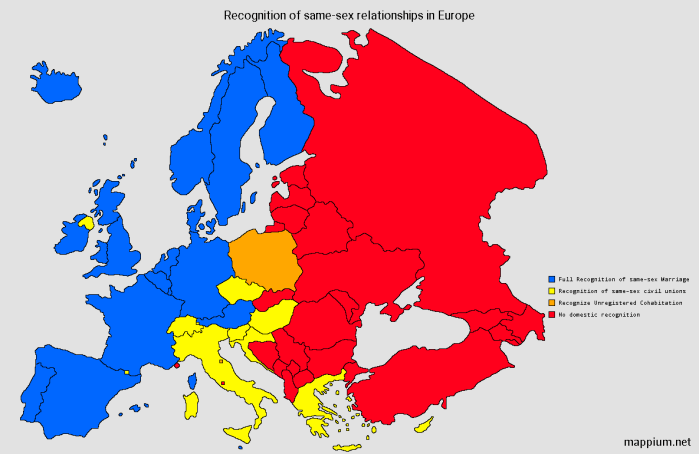
Eye Candy: Gay marriage in Europe (2018)

NOL gay marriage Europe
Click here to zoom

Opponents of gay marriage might have trouble explaining this one, at least in the free world.

Too many shadows whispering voices. Faces on posters too many choices. If when why what how much have you got…

Opportunities for blockchain-based social media in developing countries

IMG_0488.JPG

On September 22nd, I presented my Serey project – a blockchain based social media platform in Cambodia – at BitFest 2018 in Amsterdam. It was organized by the BitShares Foundation and mainly attended by enthusiasts of BitShares and Graphene technology. Being part of the Bitshares/Graphene family, I was invited to speak at the conference.

We shared the stage with other graphene projects as BitSpark, DasCoin, PayGer, BitCrab, RuDEX and many others. I look forward to work together with anyone that seeks to decentralize our future, that has a vision in which every human being is free, and where blockchain technology provides the tools to secure our rights to life, liberty, and property.

Stan Larimer was there as well, and he had something interesting to say about how BitShares will import EOS technology through a middle-layer. This will greatly benefit the whole BitShares/Graphene community, including Serey.

Regarding my own presentation, I have made the case that Blockchain is not only a technological revolution, but essentially a social, political and economic revolution. I believe it’s a tool that will move us into a more decentralized world that was envisioned by the earliest internet adopters. As more internet applications were built, it became clear that it would not become as decentralized as these adopters hoped. These applications suffered from a centralized system in which data was stored and controlled on a single or a small number of servers. Those who controlled these servers, the men-in-the-middle, dictated the rules of the platform. They could look into your data, modify your data, prevent you from accessing your data etc.

Blockchain eliminates these so-called “men-in-the-middle”. Its censorship-resistant property provides many great opportunities for developing countries where the rule of law are often weak or underdeveloped. One opportunity that I have been trying to seize in Cambodia is the creation of a social media platform that could not be controlled or censored by a single party. As Cambodians are becoming more tech savvy, and more connected to the outside world through internet access, it’s a great time to roll out a Blockchain-based social media platform where people can express themselves freely. The advantage of a social media is that it’s easier to build the network effect that can reach critical mass in a relatively short period of time. Once we gain enough momentum, I would like to tokenize the national currency, the Riel, develop a Serey Wallet, and provide anyone who has access to the internet the opportunity to open a wallet (bank account) for free and use our tokenized Riel for e-commerce, remittances, savings, loans etc. Although Cambodia has experienced tremendous economic growth in the past two decades and the World Bank has moved Cambodia’s status from a lower-income bracket to a lower-middle-income bracket, 83% of Cambodians still remain unbanked.

Doing so, I hope we will promote freedom of expression and an intellectual society in Cambodia, as well as help banking the unbanked.

Below, you can find my slides for the presentation.

1.jpg


2.jpg


3.jpg


4.jpg


5.jpg


6.jpg


7.jpg


8.jpg


9.jpg


10.jpg


11.jpg


12.jpg


13.jpg


14.jpg


15.jpg


16.jpg


17.jpg


18.jpg