Deviant Tendency: An inside look at the politics of Iran

[Editor’s note: the following is a short essay by Payam Ghorbanian. Payam was born in Tehran, Iran. He got his bachelor of science in Engineering from Zanjan University in Zanjan, Iran. He has been participating in liberal political activities and he was involved with some think tanks in Iran. He is doing research in the field of international relations and Iran’s foreign policy as an independent activist. He is now living in San Jose, California.

I am excited to post his thoughts because of their potential as a conduit for intercultural dialogue and exchange. I have left his essay largely intact, but did break up some of his longer paragraphs for clarity’s sake. Thanks to Payam for taking the time to write this, and you can find his other essay at Notes On Liberty here, here, and here]

Last month was kind of exciting for me. Mahmoud Ahmadinejad’s brother said “… my brother has gotten rid of his deviant friends…”. The term “Deviant Tendency” has been using in Iran for calling Mr. Esfandiar Rahim Mashaei and his followers. Mr. Mashaei had been represented by Ahmadinejad for being the next president of Iran but the Guardian Council of the Constitution turned that willing down. Therefore Ahmadinejad left his office while he was so disappointed and at that time he said that the council has just deprived Iran of having a distinguished president. Although with “Approbation Supervision”, which implies the right for acceptance or rejection of elections legality and candidate’s competency, probably just the supreme leader and his followers can be qualified through the barrier of the Guardian Council.

I do not really care about this rumor whether or not Ahmadinejad and Mashaei are separated, the issue would be what Mr Mashaei’s political and social views are and what it is wrong with that. Also why the supreme leader and his followers do not like him? Why they tried to make him isolated even though he has no official title? As you might know during the second term of Ahmadinejad’s presidency, Mashaei was the chief of staff of the president of Iran. But why are they still scared of him? I should mention this that from my point of view, I am 100 percent sure that they (Ahmadinejad and Mashaei) just made this ending relations story up to have this chance for getting qualified for the next presidency election. But why are the supreme leader’s followers so excited of hearing that rumor? Apparently they still like Ahmadinejad but just him and as they said there would not be another chance for the combination of Ahmadinejad plus Mashaei to survive.

Now pay attention to these quotes:

“The area of Islamism has come to end, we had an Islamic revolution in 1979 but the area of Islamism is finished”

or

“Today, Iran is friend with American and Israeli people, No nation in the world is our enemy.”

These sentences and quotes have been told by the nearest person to Mahmoud Ahmadinejad, who is Mr. Rahim Mashaei. Obviously one could talk about these ideas in the free world and no one is going to be prosecuted because of that. However, talking about ending of Islamism inside a revolutionary country like Iran would be insane. I believe these types of moderation comments about Islam and also talking about people of Israel and United States not to be enemy of the Iranian people were all about politics, and Mr. Mashaei did not believe in what he said. But what were his points at that time?

It was the time that Green Movement and protestors confronted against rigged election. I would say Mashaei did all these things to reduce pressures over Ahmadinejad and in order to deceiving and poisoning the people’s mind, those people of the middle class who desperately believe in the new relations between Iran and the free world. Also I believe Mashaei did all these things to be a target instead of AhmadiNejad, which is literally about what old friends do for each other.

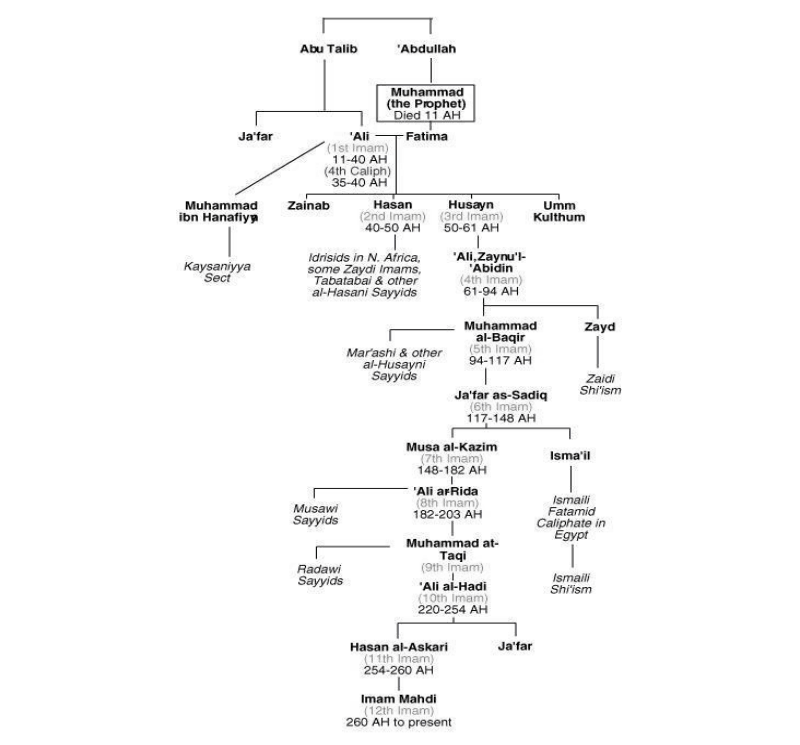
In Iran and especially in Shia beliefs of Islam, an ultimate savior of humankind and the final Imam of the twelve Imams will emerge with Jesus Christ and will set the kingdom of heaven on the earth to bring peace and justice to the world. It is the belief that the twelfth Imam disappeared hundreds of years ago and went into occultation state, but he will definitely re-appear around the end of the world, before the Day of Judgment. Before the Islamic revolution in Iran and probably before uprising of Ayatollah Khomein, there was a common trend that Shia would wait up until its survivor comes back. However, Khomeini argued that government should be run with traditional Islamic rules and for this to happen a leading Islamic jurist must provide “Guardianship” and as he said “Wilayat” over the people. This guardianship would be remained till the Twelfth Imam returns.

At that time this theory was accepted by the revolutionists and as the result of that, the last king of Iran felt down and “Wilayat AL Faqih” (guardianship of the Islamic Jurists) popped up. The terms of your majesty were destroyed and the Imam and the Wilayat was established and then the supreme leader was considered as the twelfth Imam’s deputy, which means that his orders are the lord’s orders and any questions or criticizes would be called as hostility against the twelfth Imam. This chart will help you out to understand more clearly about the hierarchy of Imams in Shia.

When I was living in Iran I always heard some rumors about the distinguished people who they or their followers believe that they are in connection with the twelfth Imam. They claim they can talk to him in person and get orders from him without any problem. Probably in the past they could take advantage of people’s stupidities. However, they had never been accepted by the politicians inside Iran before Ahmadinejad’s presidency started. Now you can tell why they have been called as Deviant Tendency. Mashaei claimed that he could talk to the twelfth Imam in person and he believed that when we can have access to the real source, why we should follow his deputy, who does not have any confirmation from the real lord.

chart of persian imams

Before Mashaei tried to extend his theory, the revolutionary guard crippled all of his ambitions subsequently. His followers were arrested and he was about to get caught too but it seemed that Ahmadinejad was completely in agreement with what he was saying. Ahmadinejad tried to protect Mashaei but as you know he lost the protection of the supreme leader. As a result, his authority dropped considerably. He got teased and he lost his connections and finally he got kicked out of the power circle and all of these were about his friendship with Mashaei, which he truly believed in him.

And now the new game has just started. First it was announced by Ahmadinejad’s brother that there would not be any connection between his brother and the deviant tendency. Then Ahmadinejad had a speech in Mashahd, one of the most religious cities in Iran where the 8th Imam of Shia has been buried, and he said:

“… the only way to overcome the enemies of the nation is standing on the value of our goals in the same way that Khomeini has showed us. I would totally remain on that way to serve the nation and revolution and its values and principles.”

He also tried to imply on revolution principles, the principles that revolutionists believe has been neglected after Rohani became a president.

From the Comments: Has the deontological puzzle been solved?

Dr Fred Foldvary (yes, THE Fred Foldvary, the one who predicted the 2008 crash in 1998writes:

It is not clear what the policy consequences are regarding those who lose out due to competition. If we are free to choose our friends, there will be losers who lose someone’s friendship. Should we be forced to stay friends with those we no longer like? If not, then such a loss has no policy implication. Such incidental injuries have less damaging consequences than a law that prohibits ending a friendship. Thus the deontological and consequential effects are complements: Likewise, the consequences of prohibiting economic competition are worse than the losses due to competition. And entrepreneurs should know that the system is a profit and loss system, and anyone in business is vulnerable to losses. The losses due to competition are not torts and they are not coercive harms. They are injuries not deliberately inflicted but incidental to individuals and firms pursuing their happiness.

This is in response to my short post on the ethical divide within libertarianism between deontologists and consequentialists. I don’t think there is too much that we disagree on here; Indeed, it seems as if we are complimenting each other quite nicely (if I do say so myself!).

My one quibble is more of a question than a quibble: Although we cannot predict who will lose out to competition in markets, shouldn’t we be able to make some solid inferences? For example, if the US and Europe were to abolish subsidies to farmers and open up their markets to foreign competition, it stands safe to reason that Western farmers will lose out, at least in the short-run.

The logic behind Dr Foldvary’s comment is relatively clear: abolish protectionist subsidies (which are aggressive legislative acts perpetrated against Western consumers and foreign farmers) and this paves the way for non-aggression. Not only is this logic clear, it is irrefutable. It also shows how deontology and consequentialism are complimentary. However, logic and facts are not very useful when it comes to persuading the public. Philosophically this argument makes perfect sense, and politically and rhetorically Dr Foldvary makes it work, but in the general public sphere (especially the internet) the appeal to deontology has earmarked liberalization for disaster.

I suppose, if we follow Jacob Huebert’s line of reasoning, that the politics and the rhetoric of our ideas should not matter, but on the other hand we live in a world where even in the West libertarians have become a minority. The world will continue to liberalize as long as libertarians continue to be as lucid as Dr Foldvary, but I fear that men of his caliber are in very short supply today.

Are drugs actually bad for you?

There are a lot of psychedelic substances coming out of tribal cultures and we’re finding them to be of immense benefit for mental health issues in the West.

This is from an interview with Scottish filmmaker David Graham Scott conducted by Chem Squier for Vice. The whole interview is worth reading, and it is about using psychedelics to wean people off of opiates (pharmaceutical and illicit). One of the things that bothers me about proponents of drug liberalization is the phrase “We all know drug use is harmful, but…” because it’s not necessarily true that “drug use is harmful.”

Drug use can lead to addiction, but this is not the same thing as drug use is harmful. In fact, echoing Audrey’s recent post on heroin markets, I would argue that the War on Drugs actually creates the dangers associated with drug use. This is so because the base product that illicit drugs are made from is very different from the product that appears on the streets (or in the pharmacy), and the product that hits the streets is different from the initial base product because of the initial product’s illegality.

Slow down Brandon. Let me see if I can rephrase that last sentence. Drugs are made of plants. Drugs in their final street form are not usually consumed in their natural plant form because drug manufacturers have an incentive to alter the plant to avoid detection by government authorities.

Does this make sense? So cocaine, for example, is snorted in a powder form because it is illegal, not because drug manufacturers are trying to get more people hooked on their product.

Drugs have been with us since we first became human beings. So-called “tribal” peoples have continued to show us this through their long-running practices associated with psychedelics and opiates (and cannabinoids for that matter). In fact, there is some archaeological evidence that drugs were with other humanoids long before we homo sapiens were even around. Aside from the fact that “tribal” peoples still have a lot to teach us about ourselves and about the world in general, their drug use habits also show that there is a distinct, legitimate place in society for the use of drugs. Passing legislation to punish this long-held practice will only make life worse for everybody in society (it is important to note that addicts and recreational drug users are not the only ones affected by the War on Drugs).

Think about coffee. Coffee is essentially an addictive product of a plant that may, in the years to come, be recognized as such. Remember that cocaine was consumed in much the same way coffee was a hundred years ago. Should coffee be outlawed by government?

Lastly, addiction rates have hovered around 2% of a given population since data on vices have been available (the early to mid 19th century). This trend has continued to the present day. The only difference between then and now is that drug markets and drug use have become much more dangerous because of government laws that pretentiously state individuals should not consume a product government agents (drugs users themselves, no doubt) think is bad for society. (h/t Ben Huh?)

Surowiecki on Intellectual Piracy

James Surowiecki had an excellent article in the June 9 issue of the New Yorker about countries committing intellectual piracy. It includes a nice summary of how “stealing” patented ideas played a major role in the early economic development of the United States. In the process, it surveys some of the considerable historical evidence debunking the widespread myth that intellectual property is necessary for, or even makes a contribution to, economic growth.

“A SWAT team blew a hole in my 2-year-old son ” [SALON]

Not much to add to this one folks.

A few nights ago, my 8-year-old woke up in the middle of the night screaming, “No, don’t kill him! You’re hurting my brother! Don’t kill him.” How can I ever make that go away? I used to tell my kids that if they were ever in trouble, they should go to the police for help. Now my kids don’t want to go to sleep at night because they’re afraid the cops will kill them or their family. It’s time to remind the cops that they should be serving and protecting our neighborhoods, not waging war on the people in them.

Request for Technical Opinions

Readers of Notes On Liberty must include a fair number of information technology-savvy people. I am not one. I wish to gather opinions on the following question:

Is it possible, over a period of two years, to lose completely two years worth of email emanating from a high-ranking government bureaucrat as well as the emails of six other people?

I ask because I was under impression that you have to try hard to lose any computer information for good. I am also under under the impression that what emails are physically on my computer is irrelevant in the middle-run because everything is stored on a server even if it’s not deliberately backed up. (I back up everything although I am not obligated to do it by law, the way federal agencies are obligated.)

Thank you in advance.

The Lost Sergeant Lost Again! (Updated)

If I were Sergeant Bergdahl and  if I were not a deserter, I would ask for a court-martial. Given the public airing of rumors concerning his case, I don’t see how his request could be turned down. He has been damaged by a very public discussion of his case. He is entitled to his day in court to clear his name. For a member of the military, this means a court-martial, a procedure giving good guarantees concerning the presumption of innocence.

The Army is keeping him incommunicado in a military hospital in Germany. It’s as if he had been lost a second time. Some say he has forgotten English. That’s completely absurd. It could be that the Army is merely trying to avoid the accidental spilling of military secrets. It could be that there is another, darker secret involved.

Could it be that he did not particularly wanted to be rescued? Had he cast his lot with the other side who cynically sacrificed him in return for the huge prize that Mr Obama provided?

Usually, I am quick to blame the Obama administration ineptness rather than criminal intent for its actions that look like sabotage of the USA. This time, the debacle is so huge that my judgment vacillates. Really, one lost soldier for five battle-hardened generals of armies who throw acid in school-girls’ faces? We are returning to the struggle people who were only one degree  of separation removed from 9/11?

President Obama, he of the Veterans Administration, suddenly speaks like a military patriot: We don’t leave any of our soldiers behind no matter who they are. Period! What if the Taliban barbarians had asked for a nuclear device in return for delivering Sergeant Bergdahl into our hands?

We don’t leave any of our soldiers behind. Period?

Update: It’s been one week and Sergeant Bergdhal has still  not been allowed to talk to his mother. Maybe he has forgotten how to say “Hi” in English, or “Mom,” or something.

It’s because of concerns for his health, says the administration. It has not told us what the health concern is.

I don’t much like conspiracy explanations as a rule but I can’t help notice that medical doctors are professionally obligated not to talk about their patients. And military officers usually follow orders including orders to keep their mouths shut irrespective of what they think. If this were not true, why in the world was Palestinian leader Yasser Arafat sent to die in a French military hospital?

Abstract Ideas Don’t Deserve Patents [NY Times]

In preparation for something special that I will finally complete this week (Rothbard willing) lets talk about this editorial from the New York Times.


The article starts accurately enough explaining the US government’s monopoly power of ideas saying:

The Constitution gives Congress the power to grant inventors a temporary monopoly over their creations to “promote the progress of science and useful arts.”


I am actually shocked at the strong language used here, the four letter word “monopoly” is rarely used in reference to any government service.  At least in polite company.  I would also like to point out the subjective language quoted from the constitution.  “Useful arts”.  Useful to whom?  To the inventor?  To consumers?  To the government?  To humanity?  Like most state activities the ability to decide what is “useful” is left to bureaucrats in service to the government rather than in the free market where useful services will generate profits and those that generate disuse (or disutility) are met with losses.  Back to the article though:

“But in recent years, the government has too often given patent protection to inventions that do not represent real scientific advances.”


No argument there.  The “copyright troll” phenomenon is more than enough to make this libertarian squeamish.  Where is this editorial going I wonder?

  “The issue in this case, Alice Corporation Pty. v. CLS Bank International, is whether using a computer to implement a well-established economic concept can be patented. The court should rule that such ideas are not eligible for patent protection.


Alice Corporation obtained four American patents that cover a method of settling trades between investors in currency and other financial markets. The approach depends on a neutral middleman to make sure traders complete the transactions they have agreed to. The corporation, which is based in Australia, has accused CLS Bank, a London-based company that settles foreign exchange trades for investors around the world, of infringing its patents.”  

To make a long story short the US patent office granted the Alice Corporation a copyright on a form of interaction between a buyer, a middleman and a seller.  An absurd concept to be sure.  Now the question is what does the editorial suggest?

“The Supreme Court should make clear that nobody should be allowed to claim a monopoly over an abstract idea simply by tying it to a computer.”

I agree; but why stop there?  Why the artificial endpoint of “abstract ideas tied to a computer”?  If we shouldn’t allow patents on abstract ideas what would the author suggest if we proved that all ideas are necessarily abstract and therefore not able to be owned, sold, or monopolized?  Would he follow his logic to the conclusion that perhaps all patents are invalid?

Princeton Concludes What Kind of Government America Really Has, and It’s Not a Democracy

Princeton Concludes What Kind of Government America Really Has, and It’s Not a Democracy

A new scientific study from Princeton researchers… found that in fact, America is basically an oligarchy.

“Princeton” concludes?! “A new scientific study…”?! This is some sloppy journalism that you should immediately ignore. But it gets worse…

“Perhaps economic elites and interest group leaders enjoy greater policy expertise than the average citizen does,” Gilens and Page write. “Perhaps they know better which policies will benefit everyone, and perhaps they seek the common good, rather than selfish ends, when deciding which policies to support.

“But we tend to doubt it.”

That’s the close of the article; these “scientists” are about as unsophisticated as the journalist reporting it. They repeat the same old adages about inequality that don’t really mean much: The rich are getting richer, the poor are getting less richer, and (we wrongly assume) membership in these groups is stable over time. Their conclusion is basically “rich, powerful interests promote their own interests… if only the middle class was in charge to promote the public good instead of their own interests!”

And yet, I think there’s something worth reading here. I think the conclusion that the U.S. is an oligarchy is roughly correct. The importance of politically connected individuals and lobbying groups affects wealth creation and distribution. This is an example of where the Left and Right should agree with libertarians: centralization of political power is leading to wasteful rent seeking that weakens the economy (Right/libertarian) and the outcome is that politically powerful groups are given an unfair advantage (Left/libertarian).

We know that Democrats are libertarian on social issues (and this is one of them!) and Republicans are libertarian on economic issues (ditto), but we hit a snag. Each group tends to see the faults of the other party’s pet projects and miss the root causes. Republicans see Democrats centralizing power and weakening property rights and step in to save the victim: businesses. The result is pro-business policy recommendations that also centralize power. The Democrats see this and step in to save the victim: the little guy (poor people and consumers). The result is centralization of power that creates rent seeking opportunities for big business!

3,278 Americans Are Serving Life Sentences for Nonviolent Crimes, Report Says

Around 79 percent of the nonviolent life sentences without parole are drug-related, according to the ACLU, and around 20 percent are for property crimes. The remaining 1 percent are for traffic and other infractions in Alabama and Florida”

This seems like as good an opportunity as any to talk about libertarian law.  First of all, to the libertarian, there is no such thing as non-violent or “victimless” crime.  There can be no “crime against the state” or “crime against society” since there would be no state and “society” is an abstract concept that cannot be a victim.  Crime can only occur when there is a clear perpetrator and a clear victim.

This is the logic used to deduce that there can be no punishment for consuming or selling drugs for example.

Second, libertarian punishment is confined to the concept of “proportionality”.  Proportionality is described by Murray Rothbard as:

“…the criminal, or invader, loses his own right to the extent that he has deprived another man of his. If a man deprives another man of some of his self-ownership or its extension in physical property, to that extent does he lose his own rights.  From this principle immediately derives the proportionality theory of punishment-best summed up in the old adage: “let the punishment fit the crime.””

Walter Block famously expanded on this concept with his “Two Teeth for a Tooth” rule saying:

“In encapsulated form, it calls for two teeth for a tooth, plus costs of capture and a
premium for scaring. How does this work?

Suppose I steal a TV set from you. Surely, the first thing that should occur when I am captured is that I be forced to return to you my ill-gotten gains.

So, based on the first of two “teeth,” I must return this appliance to you.

But this is hardly enough. Merely returning the TV to you its rightful owner is certainly no punishment to me the criminal.

All I have been forced to do is not give up my
own TV to you, but to return yours to you.

Thus enters the second tooth: what I did (tried to do) to you should instead be done to me. I took your TV set;
therefore, as punishment, you should be able to get mine (or some monetary equivalent). This is the second tooth.2″

The claim is often made that a libertarian society would be less just for the poor and disadvantaged but take this list of crimes that caused human beings to be sent to prison for the rest of their lives and compare it to the logical corresponding punishment called for by the proportionality rule and tell me which is more just.

“Among the most obscure offenses – mostly from Louisiana and Mississippi – documented in the report as the impetus for life sentences:

  • Possessing stolen wrenches
  • Siphoning gasoline from a truck
  • Shoplifting a computer from WalMart
  • Shoplifting three belts from a department store
  • Shoplifting digital cameras from WalMart
  • Shoplifting two jerseys from an athletics store
  • Breaking into a parked car and stealing a bag containing a woman’s lunch
  • Stealing a 16-year-old car’s radio
  • Drunkenly threatening a police officer while handcuffed in a patrol car”

Polystate – book 3

This is my nth response to Polystate and covers the third and final portion of the book (for the 1st through n-1th responses see here, here, and here).

As a quick reminder, the purpose of this book is to consider a possible political structure where individuals choose their own government (“anthrostate”) and these governments operate in the same geographic area (under a “polystate”). This is in contrast to the current system of geographical monopolies on coercion (“geostates”).

Book three attempts to identify insoluble problems with the idea of a polystate. The first problem is the potential for bureaucracy explosion (no, not that kind). A greater (which is to say any) degree of customized service in our current government would surely come with increased costs. There may be technological solutions to this problem, and competition between anthrostates would surely add pressure to get around these costs. In any event, the administrative questions are actually quite interesting. I suspect that many government services would end up moving back into civil society and private markets and the result would be lower monitoring costs in the case of civil society (e.g. for social security through mutual aid societies), and greater use of specialization and innovation in the case of market goods (e.g. for safety standards).

Another big one is the importance of “sacred locations.” If we had always lived in a polystate, Jerusalem might be considered a state of mind. But in the world we live in, it’s a geographical location, and different groups want it for themselves. A market with private property allows these groups to express the importance of this location by outbidding others for its purchase, but such a system is likely not good enough for some members of the relevant groups, and it’s plausible that violence could be resorted to. At the risk of sounding like an insensitive social Darwinist… maybe that’s not the worst possible outcome?… But certainly still a bad, though the root problem is the beliefs of those people; determining which political structure (all of which have costs and benefits) is “best” is an interesting question.

I think the biggest area of potential contention (by non-libertarians) is demonstrated by the issue of gun control. One anthrostate’s gun control is meaningless if it coexists with another that doesn’t have gun control. In other words, a polystate is less polycentric confederacy and more anarchist default plus an odd contract structure for particular firms. This leads to the final problem: transition.

The epilogue discusses the “issue” that the proposal is for a minimal polystate. We can think of this as a contemplation of federalism. This is a thought experiment in radical federalism that is so far down the spectrum of possibilities that it puts the onus of governance on the individual. In many ways, discussions by libertarian political economists can be thought of more as discussions of federalism than discussions of liberty; I think it’s worth thinking about the connection between federalism and freedom, as well as different potential forms of federalism.

Here are my overall thoughts: The book presents an interesting thought experiment and the author does an excellent job of providing well thought out analysis without going overboard. There is plenty to think about, and plenty more discussion to be had (note: read this book with friends and discuss it over beers). ZW had a choice of going into more detail and making a stronger case, or going into less detail and leaving more of the thought experiment to the reader. I think he perfectly balanced these two goals.

Note: an ungated version of that last link is available here. The article is “Afraid to be free: Dependency as desideratum” by James Buchanan.

Polystate: Book 2

This is my third entry on Polystate and will cover book 2 (entries one and two covered book 1). This section covers a thought experiment in polystates and begins immediately with the flattering implication that macroeconomists can make speculative predictions about complex systems. This is typically where an Austrian would say “the world is too complex to make speculative predictions which is why  we need a flexible system.”

Quick reminder: a polystate is a state that contains non-geographical anthrostates. Anthrostates have rules relevant to their members, while polystates have rules relevant to the interaction of anthrostates and their members.

My first qualm with ZW’s conception of anthrostates is that there are local spillovers in governance, culture, etc. that would likely lead to enclaves. ZW addresses this now with rule number one of polystates being that no anthrostate may claim territory. My general feeling on federalism is that the higher units will have rules that are more universally accepted, so that a nation will have prohibitions on murder, while regions of states/provinces may have fairly uniform rules on abortion, drug use, etc., individual states have their own traffic laws, and cities have their own rules on neighborly conduct. Polystates are a radical form of federalism, but in order for them to work adequately, they must start with fairly uniform basic rules on property rights over land.

Rule two is that individuals choose their anthrostate annually (by birthday). The specific interval is fairly arbitrary but it seems obvious that it should be neither too long (in which case anthrostates gain monopoly power) or too short (in which case they can’t credibly commit to govern in difficult situations such as collecting taxes or enforcing punishments). The alternative to a time-based restriction would be a social-stigma based restriction which has pros and cons of its own but I’m tempted to think would be more effective (though with some very important caveats that warrant further discussion!). The birthday rule is interesting as it staggers political change leading to greater stability than having “global revolution” at each shift; we face a similar problem in today’s world of election days.

Rule three is where things get tricky: anthrostates that take territory lose their government status under the polystate order. This creates a collective action problem among other anthrostates as enforcing this rule won’t be free and won’t have uniform benefits to others. ZW recognizes this, but the problem still stands. This is essentially the same as the national defense problem. This is really the big one: are geostates unnecessary but inevitable? Essentially this book is considering a special form of anarchy and so belongs in the same category of other classic thought experiments.

It obviously isn’t statelessness, and so it isn’t quite anarchy, but I’m not so sure anarchy is quite anarchy either. Even the sort of state imagined by David Friedman has coercion, it’s just decentralized. Likewise, polystates specifically allow anthrostates to act coercively, but it subjects them to competition. In essence, the polystate proposal is to increase competition among governance structures by allowing them to be geographically diffuse.

An interesting institutional feature of polystates is that anthrostates are no longer bound to seek something like an end state. Where as the USA tries to set up a system for the median voter who is expected to be there for life, an anthrostate could specialize in particular stages of individuals’ lives. There could be a state for students and one for seniors (… I wonder what a world with AARP running an anthrostate would look like…).

ZW doesn’t mention this, but if individuals can be members of more than one anthrostate (of course, based on the rules and enforcement of those rules by the relevant anthrostates) then it is conceivable that government services not be so horizontally integrated. This raises an interesting line of inquiry: is a polycentric polystate possible?

A big problem is the “inherent goodness” of imposing rules on people who don’t want them. It’s easy for libertarians to say that drug laws are dumb (because they are), but as Ryan Murphy surely writes somewhere, where people see value/justification in imposing their views on others we run into problems. We’re pretty much all cool with prohibiting murder, but what about less clear cut issues? If I saw veganism as having the same moral weight as murder (“I don’t think humans should be treated like that.”) then I would be morally justified in striking down with great vengeance and furious anger those who attempt to poison and destroy my brothers with icky lentils. The best solution would be for me to stay the hell away from Berkeley. Again, we’ve got local spillovers in governance. We also have tribalistic barriers to the sort of integration economists want to see for the good of everyone.

In the final section on war ZW raises an interesting point regarding the possibility of war-mongers self-selecting into aggressive anthrostates. This is a troubling notion, but such behavior is expensive. North Korea is aggressive, but manageable because Kim Jong Un isn’t wealthy enough to pose a more drastic threat to NATO. With self-sorting, a North Korean anthrostate would lose many of its productive people and be even less of a threat. But ZW doesn’t raise the question of nuclear weapons…

The example of Kidnappocracy drives home the point that ultimately coercion underlies any system of governance. Rights are as rights are enforced. Political structures are created to resolve rights disputes in an amicable (sort of) fashion, and polystates will still need means of resolving these disputes. Even in a geostate, some people are willing to fight and die for their views, but the institutional change to a polystate seems somewhat orthogonal to such issues. Anthrostates will serve as focal points, and having more disparate focal points may increase the possibility for conflict. But mostly it would just be a different sort of federalism; if we don’t see violence between people from different states, and if effective institutions emerge quickly enough, this problem may be small and quickly swamped by other benefits.

Ultimately the resolution of problems between members of different anthrostates would require that 1) their disputes are matters of honest disagreement that can be resolved with arbitration, 2) interactions that may lead to such disputes are minimized by a general refusal to interact, or 3) there is a strong and near universal support for (this sort of) federalism such that people are willing to resolve differences to support the overarching system. The second seems most likely, supporting the hypothesis that geostates will typically be more successful even if they will be less prosperous.

I come away increasingly convinced that perhaps the most fundamental aspect of governance is geographical sorting. I don’t like geostates (I don’t think many people truly do), but I think geographically localized governance is effective because it reduces interaction by people with contradictory conceptions about good behavior and so reduces conflict while supporting order. I think ZW’s ideas are largely influenced by a sort of a sci-fi view (that I’m highly sympathetic to) which reflects the sort of governance we see on the Internet. 4chan is a very different place from Facebook and every subreddit has it’s own unique culture. In such a world, “geography” is a different matter; it takes a different form, but it’s still there.

Polystate, part 2

After much distraction I’m back to continue my review of Polystate: A Thought Experiment in Distributed Government (part 1 is here). But now that I think about it, this isn’t so much a review, as a book club (of one…) where I respond to the book.

In this section, ZW gets into the benefits of polystates. He starts with the benefit of choice. Someone born into North Korea is utterly screwed, but someone born into an unattractive anthrostate can simply leave when they reach the age of consent. The reverse is also true: someone may join an anthrostate that the rest of us see as distasteful. Want to join a cult? You’re free to. The thought of that possibility will certainly make your inner-paternalist squeamish, but remember that if you aren’t free to make mistakes, you simply aren’t free.

Another benefit I wouldn’t have thought of is that traditionally problematic systems of government have a higher chance of success when they are separated from geography. For example:

It may be that the failure of collectivization has not got to do with the individual so much as the aggregate. If 95% of people work poorly in a collectivized environment, any random collectivized farm will perform poorly. But it may be the case that 5% of people would excel in such an environment.

I would expect a communist to protest that geographic seclusion is necessary to create New Communist Man. How are people supposed to learn how to shed their egoism if they cannot help but see the vulgar bourgeoisie all around them? But that sword cuts both ways and shows a benefit of polystates ZW didn’t bring up: a child raised in a fascist anthrostate can see non-fascists and so make a more informed decision of whether to stick with fascism when they get older.

ZW sees the polystate as offering a sort of decentralized Tiebout competition. That covers the demand side (what benefits to provide to whom). Adding in the supply side (who will face what opportunity costs) raises the problem of economic calculation in socialism. But ZW takes it in a different direction, hypothesizing that sorting between anthrostates would lessen decision making costs due to more homogeneous populations.

Choice ensures we get more of what we want with less hassle but also provides the option of exit at low cost. Taking geography out of the equation means that there is a larger number of potential state-competitors, as well as more credible movement on the part of citizens.

He raises an interesting problem related to a recent post of mine:

[T]here may be a difference between good governance and governance which pleases one’s constituency… But, regardless of the philosophy of good government, there is an extent to which good governance must have to do with what voluntary citizens decide is good.

First off: No! Government and governance are two different things! But putting that aside, the big problem we face is how to not just aggregate preferences (a difficult problem in itself), but how to ensure that (or even determine if) our method of aggregation results in something good.

I think cable TV is pretty good at giving people what they want, but I also think that the product is overwhelmingly bad. It’s not a big deal with TV because there are so many alternative sources of entertainment and information (although cable news might have existential dangers). Similarly, I think government broadly gives people what they want (not peace and prosperity, but xenophobia, “doing something,” paternalism, and the like) but that’s not a good thing. The idea of the U.S. senate was to prevent people from having too much choice so that good institutions could be preserved. So could the degree of choice offered by polystates be to much? On the other hand, how could you determine an answer without incorporating the revealed preferences of the governed?

Finally, ZW gets into an especially meaty benefit of anthrostates: peace. It’s hard to start a war with a disbursed enemy (“semi-random geographic distribution), and hard to finance one when your citizens can switch to a more peaceful government. This could be especially important in avoiding territory disputes as humans explore and colonize space (for example, if resources on the moon become valuable enough to justify the expense of following Newt Gingrich up there).

That concludes Book 1 of Polystate, and that’s where I’ll stop for now. I’ll be picking through the book fairly slowly, so I recommend that you buy the book for yourself!

Le nouveau racisme américain et l’impérialisme français

La tache est infinie d’eduquer les Francais pour leur faire jeter aux orties les cliches anti-Americains plus ou moins malveillants qu’ils trainent depuis soixante ans. Comme personne d’autre ne le fait, je me porte volontaire, de temps en temps, pour les aider a les remplacer par des cliches plus frais sur les Etats-Unis.

La Cour d’Appel qui correspond a la region de San Francisco vient de donner raison au directeur d’une ecole secondaire qui avait interdit a ses eleves le port ou l’affichage du drapeau …americain. Le tribunal a donne pour raison que ce drapeau risquait d’offenser les “Mexicains” de l’ecole.

Le debut de l’histoire remonte a Cinco de Mayo (en Espagnol dans le texte) de l’annee derniere. Il s’agit d’un fete officielle de l’Etat de Californie qui commemore une victoire militaire Mexicaine de 1862. C’est une fete qui passe inapercue presque partout au Mexique.

L’Etat de Californie l’a adoptee on ne sait plus trop pourquoi. Peut-etre que c’etait sous l’impulsion propre de la gauche cul-cul bien pensante locale aussi ignorante qu’avide demontrer sa sensibilite vis-a-vis des “minorites.” Peut-etre que cela a ete impose par un groupe de pression de Mexicano-Americains, raciste et fascisant qui se nomme lui-meme: “La Raza, ” “la Race.” (Ai-je meme l’imagination d’inventer de telles insanites?) En tous cas, selon mes sondages, forcement peu scientifiques mais tres frequents, le pourcentage d’Anglos capable de d’identifier les evenements ainsi commemores tourne autour de 0. Le pourcentage des jeunes d’origine hispanique monte jusqu’a 5. Il me faut ajouter pour etre honnete, qu’un 5% additionnel de ces derniers est en mesure d’affirmer: “Je ne sais pas ce que c’est mais je sais que ce n’est pas l’anniversaire de l’independance mexicaine.” En tous cas, cette commemoration a des effets positifs sur la consommation californienne de bieres mexicaines (d’ailleurs tres bonnes).

Et l’imperialisme francais alors, vous dites-vous? Et bien voila, en 1861, l’armee francaise du soi-disant Empereur Napoleon II (socialiste pour une bonne partie de sa carriere ploitique) a recu l’ordre d’aller attaquer la Prusse. Manque de chance, elle a tourne a doite au lieu d’a gauche. Elle s’est donc retrouvee au Mexique. De fil en aiguille, ell a fini par conquerir brievement tout le pays et a y installer un empereur fantome, un Autrichien obscur et palot. Ell profitait alors bien sur du fait que les Etat-Unis etaient eux-memes preocupes par le projet de s’entretuer pendant leur propre guerre civile. En attendant, au debut, les Mexicains de presidet Benito Juarez avaient bel et bien gagne contre le corps expeditionaire francais.

Pour en revenir a la Californie, le 5 Mai de l’annee derniere, dans une ecole sans importance d’une ville sans importance situee au sud de San Jose (Silicon Valley), des eleves d’origine mexicaine s’etaient presentes en class a portant des t-shirt figurant le drapeau mexicain. Des eleves Anglos avaient replique en enfilant des t-shirts a l ‘image du drapeau americain. Il y avait eu des bousculades entres eleves des deux groupes sans nulle doute echauffes par la presence de filles, aussi des deux groupes, en t-shirts sans dessins particuliers mais bien moulants.

La Cour d’Appel, en interdisant de fait de montrer le drapeau americain en Amerique a elle-meme fait la preuve d’une sorte de racisme, anti-blanc, cette fois-ci. En plus, elle a bien demontre son prejuge racial inconscient en identifiant comme “Mexicains” la categorie sociale que sa decision est censee proteger des bobos spirituels. Il est certain qu’elle voulait dire: “Americains d’origine mexicaine” car il n’y probablement pas ou que tres peu de “Mexicains” dans cette ecole. (N.B.: Toute personne nee aux Etats-Unis est citoyenne americaine, un point, c’est tout.)

PS Moi-meme, je suis tres satisfait de l’existence en Californie d’une forte emigration d’origine mexicaine (30% ou plus de la population de ‘Etat.) , y compris les sans-papiers. D’une part, se sont de gens faciles a aimer. D’autre part, ils apportent beacoup. Je crois meme bien que les enfants qu’ils font aujourd’hui supporteront la majeure partie du poids financier de la retraite Securite Social de mes propres enfants, vers 2045.

Constitutional Political Economy and Jeopardy

Arthur Chu, the “mad genius” of Jeopardy has continued his streak with the power of game theory! But apparently many viewers are upset. Chu is playing within the rules of the game, but he’s been accused of being unsportsman like. He responded:

‘Being unsportsmanlike is calling your opponents names or refusing to shake their hands. It shouldn’t apply to playing the game as hard as you can and trying to win as hard as you can, within the confines of the rules.

‘Not giving my opponents a chance to answer’, to me, is just like not giving your opponents the chance to shoot in basketball or not letting them get within range of the goal in soccer. It’s not ‘unsportsmanlike’, it’s playing defense,’

We know that rules affect how people compete and that in spectator sports that affects how fun it is to watch. So Chu’s success might mean that Alex Trebeck has to change the rules to give viewers what they want. If he does, this is what I would have to say: