Liberty and pro-choice arguments

Abortion never struck me as a liberty issue. Fundamental ideas that inform libertarian thinking don’t pick a “side” for or against abortion, late-term or otherwise. Abortion is a random issue. But my pro-choice credentials face greater and greater scrutiny as I pal around right-libertarians and conservatives, and I’ve had to re-investigate my own decision-making process here.

I find each political side — abortion jurisprudence — wholly unconvincing. When a sperm and egg becomes “life” is so outside thousands of colloquial years of the word, there’s nothing analytic in the definition to illuminate policy choices; I don’t think medical science is going to answer the philosophical question of the concept of “life” either (“clinical death” violates what should be commonsense notions of death); etcetera. And then, of course, the pro-choice camp (which emphasizes parental choice) rarely cares about parental choice afterward, like in education, and the pro-life camp is an absurdly broad name for their legitimate concerns. The philosophy of abortion is probably interesting — the politics is a waste of time.

Here is what, I think, enforces my libertarian advocacy of choice. I am probably more radically pro-choice than most people I know, but this provides a basic defense.

If the question of whether or not life is “worth it” is a sensible question in the first place, then it is not one that can be answered a priori. Life is an inherently qualitative experience. This is clear enough by the fact that some people would rather choose to have died at age 60 after having lived to age 80, if we take their judgment as the best authority on their own life’s worth (and I do, and I think we should). Therefore, in advance, its not knowable if a person’s life will be worth it. People generally do enjoy living (more than they would otherwise?); this might not be the case if, for instance, the Nazis won and we all were born in camps. This is an accidental property of the current world. We live in a generally worthwhile time period, suggesting life is generally going to be determined to be worth it by each individual.

Since the worth of life is not a priori, the best guess in advance is that from local knowledge. Parents have the most local knowledge about the future of their child’s immediate life, before it gets unpredictable and the knowledge gets divided by millions of individuals who will impact their life and also understand ongoing trends. Therefore, parents are the best option to make a judgment call about whether or not their child’s life will be worth it — if they can care for it, if they will have a genetic problem, etc. Not politicians. Not voters. Not interest groups concerned with in utero life in the abstract.

Thus, parental choice.

It’s been said this is an “anti-human” argument. Lots of us came from lower income or impoverished households, myself included. Our lives are still found worthwhile. Why strawman, as if we’re in countries with terrible childhood obesity, malnutrition, drug addiction, gang violence?

It’s true that in general life is found to be worthwhile. But there’s no Leibniz-like principle that it must be. Nor does the aggregate data that people do, often, qualify life as worth living, mean that random individuals overcome parental ownership of the best localized knowledge.

This, I think, is a libertarian argument for choice. It depends on the point that abortion is a unique sort of event — we’re not talking about an old man’s caretaker, who must have the best local knowledge about whether or not we should pull the plug. The question need not arise about who makes important choices once someone is cognizant and autonomous. The argument rides on the point that there’s a vacuum in decision-making autonomy for fetuses by their very intrinsic nature, and we have to make proxy choices in advance.

We give parents plenty of other choices by law. When we are debating potential- or possible-beings still in the womb, before our language game definitively identifies them as “alive,” choice should default to the parents, and I should have no right to the woman’s body to make choices for her about a possible-being I will never see, feed, care for or otherwise worry about except to force the woman to take care of it for nearly two decades.

Bad Religion

The Heidelberg Catechism is one of my all-time favorite Christian documents. Written in 1563, mostly by Zacharias Ursinus, the Heidelberg (as it is sometimes called) is composed by 129 questions and answers (the classical format of a catechism), supposed to be studied in 52 Sundays (that is, one year). I believe it is very telling that, being a catechism, the Heidelberg was written thinking mostly about younger people, even children. Ursinus himself was only about 29 years old when he wrote it. Maybe it is a sign of the times we live in that the Heidelberg sounds extremely deep for most readers today.

Throughout its questions and answers, the Heidelberg covers mostly three Christian documents: The Ten Commandments, the Lord’s Prayer (“Our Father who art in Heaven…”) and the Apostle’s Creed. The catechism is also divided into three main parts: Our sin and misery (questions 3-11), our redemption and freedom (questions 12-85), our gratitude and obedience (86-129). Probably an easier way to remember this is to say that the Heidelberg is divided into Guilt, Grace, and Gratitude. That is also, according to many interpreters, the basic division of the Apostle Paul’s Letter to the Romans, historically one of the most important books in the Bible.

I mention all these characteristics about the Heidelberg Catechism because I think they are worth commenting on. As I learned from a friend, that is the Gospel: Guilt, Grace, and Gratitude. As C.S. Lewis observed in Mere Christianity, Christians are divided on how exactly this works, but all agree that our relationship with God is strained. That is the guilt. However, in Jesus Christ, we can restart a peaceful relationship with God. That is the grace. This should be followed by a life of gratitude. That is the way the Gospel is good news. If you don’t emphasize these three points you are not really presenting the Biblical gospel. To talk about grace without talking about guilt is nonsense. To talk about guilt and not grace is not good news at all. To talk about guilt and grace but not of gratitude is antinomianism. To talk about gratitude (or obedience) without talking about guilt and especially grace is legalism. But also, notice how unbalanced the three main parts are: Ursinus dedicated way more space for grace and gratitude that he did for guilt.

That’s not accidental. Also, it is very interesting that he talks about the Ten Commandments when he is dealing with gratitude. It didn’t have to be this way. Ursinus could have included the Law when talking about guilt. He could use the law to show how miserable we are for not fulfilling it. But instead, he wanted to show that obeying God is a sign of gratitude. You are free already. Obeying will not make you any more saved. But it is certainly the behavior of a truly restored person.

If you read so far, I should first thank you for your attention, but also say that I am completely unapologetic for speaking so openly on Christian themes. At some point in history, Christians decided to adapt to the modern culture. That was the birth of Christian Liberalism. Modern man, some of them assumed, could no longer believe in stories of gods and miracles. Modern science was able to explain things that societies in the past thought to be supernatural occurrences. The Bible was at worst pure nonsense or at beast a praiseful reflection of the piety of people in the past, but certainly not a supernatural revelation from God. But if you take away the supernatural elements of the Bible, what do you have left? Good morals, some thought. I believe they were wrong.

The social gospel is one consequence of Christian liberalism. The central miracle in the Bible is that Jesus, a mortal man, was dead for three days and resurrected. That is indeed a miracle. Make no mistake: people in the first century knew as well as we do that people don’t come back to life after three days. Maybe they knew it better than we do, for in the 21st century, for many of us, death is not a part of everyday life. For them, it certainly was. Christians have believed through almost two thousand years that Jesus’ death and resurrection have something to do with us being reconciled to God. But if Jesus didn’t resurrect, and no one really heard from God that he is angry, what do we have left? The answer, according to Christian liberals, is social justice. Reform society. I believe that for this, they own society at large an apology, and I will explain why.

I heard from too many people that the reason they don’t go to church is that Christians are hypocrites. “Do as I say, but not as I do”. Maybe they are right. The balance between guilt, grace, and gratitude if fundamental for Christianism to work. Salvation (reestablishing a rightful relationship with God) is by grace, not by works. Say that salvation is by works and you set the board in a way that you are sure to lose. As I already mentioned, I think it is just wonderful that the Heidelberg Catechism talks about the Law of God (The Ten Commandments) when it is discussing gratitude, not guilt, and I believe this is a great lesson for us today.

I say all this today because I believe that political correctness is (at least to a great degree) the bastard son (or daughter) of the social gospel. See the recent Gillette commercial that caused so much controversy, for example. Are they really saying anything wrong? Don’t men behave sometimes in ways that are less than commendable? I believe we do. Especially coming from a Latino culture as I do, I am more than willing to say that men all too often are disrespectful towards women and also towards other men. However, how the people at Gillette know this? If there is no God, or if he didn’t speak, how can you tell what is ethically commendable behavior and what is not?

I am no specialist, but as far as I know, more than enough atheist philosophers are willing to admit that in a sole materialist worldview there are no universal grounds for morality. As the poet said, “if there is no God, then all things are permissible”. It is always important in a conversation like this to explain that I am not saying that atheists cannot be ethical people. That is absolutely not what I am saying. Some of the best people I ever met were atheists. Some of the worst were Christians who were at church every single Sunday. With that explained, what I am saying is that there is no universal guide for human behavior if there is no God and everything just happened by chance. There are particular guides, but not a universal one, and to adhere to them is really a matter of choice.

The way that I see it, people at Gillette want men to feel bad and to change their behavior. They want men to feel guilty and to have gratitude. But where is the grace? I believe that is why this commercial irritated so many people. It makes people at Gillette look self-righteous or legalistic. Or both! But it definitely doesn’t help men to change their ways, supposing that there is something to change. I believe there is. There is a lot to change! But political correctness is not the way to do it.

Blame it on Rio

I grew up in Rio de Janeiro in a very middle-class neighborhood. Not the fanciest one, but also not the poorest. Very much in the middle. This neighborhood also had the characteristic of being surrounded by hills. Many if not most hills in Rio de Janeiro have favelas. Favelas are poor neighborhoods that are formed by poor people who mostly want to live close to where the jobs are. Because I grew up in a middle-class neighborhood, studied in middle-class schools and had a middle-class family I was in danger of only knowing middle-class people. The thing that prevented me from that the most was going to church. In church, I lived with people from all kind of social backgrounds – including people who lived in favelas.

The history of Rio de Janeiro is mostly a history of expansion from the area we today call downtown. On several occasions, poor people (including my grandfather and his mother) were relocated (or frankly expelled) from their houses by the government that wanted to make some urban reform. People faced two options: to be relocated to far removed areas, far away from their jobs, or to occupy some undeveloped area in the vicinities of where they previously lived and form a favela.

Because Rio de Janeiro is the historic capital of Brazil, it received a lot of investment by governments over the decades. Many governments wanted to make it a vitrine of Brazil’s development. Also, Brazil has a strong history of developmentalism. Especially since Getúlio Vargas, who rule the country from 1930 to 1945 and again from 1951 to 1954, Brazilian presidents tend to believe that it is their job to bring economic development to the country. The higher the GDP growth, the best. I mean, who am I to say that GDP growth is a bad thing?! But we have a lot of stories worldwide of countries that grew too fast in too little time leading among other things to major population dislocations and new pockets of poverty around great cities. Lagos, in Nigeria, is a textbook example. So is Caracas, in Venezuela. So is Rio de Janeiro. This kind of development is pretty much like using steroids: the results are fast, but the side effects are terrible. Fernando Henrique Cardoso tried to “flip the page” from Vargas in the 1990s, but Lula da Silva and Dilma Rousseff returned to developmentalist policies in the 2000s. Even Jair Bolsonaro often talks as a developmentalist, apparently a tic from his military years. Anyways, developmentalism led to the fast growth of Rio de Janeiro over the decades – and the formation of new favelas.

One of the best stories of developmentalism in Rio de Janeiro is the neighborhood of Barra da Tijuca. Until the 1960s this part of the city, caught between the hills and the ocean, was basically desert. That’s when the government commissioned the architect and urbanist Lucio Costa to develop the area. Mr. Costa was also responsible for designing the city of Brasília, and it shows: Brasília and Barra da Tijuca are fairly similar. Not my kind of city or neighborhood. It’s very hard or even impossible to explore Barra da Tijuca on foot. Its area is roughly the size of Manhattan, but it has no subway lines. The bus lines are not very dependable. The city blocks are very large. Everything is very distant.

In my evaluation, Mr. Costa thought that he was God. Brasília and Barra and very interesting if looked from above, from the sky. But if you are on the ground level and don’t have a car, they are just not friendly. But that’s how modernists (including socialists) are: they swear they love humanity but hate human beings.

The news that the government was developing the Barra da Tijuca area spread fast. Many families came to the region looking for jobs in construction. Many of them settled in the vicinity of Rio das Pedras. Rio das Pedras became one of the main favelas of the region. In the absence of government, people started to organize themselves in neighborhood associations. Even with most of the construction projects done, the families never left. Barra da Tijuca became an affluent neighborhood with many jobs. Alongside came drug trafficking.

The “pre-history” of drug trafficking in Rio de Janeiro is almost idyllic. You just have to watch the movie City of God (2002). Of course, one could not sell drugs in fancy neighborhoods like Ipanema or Copacabana, where the government is strongly present.

So, most drug trafficking happened in the favelas, including Rio das Pedras. The first generation of drug dealers was mostly respectful towards residents of the favelas and other poor neighborhoods. Some even became legendary for pacifying the neighborhoods from other forms of crime: because they didn’t want to have trouble with the police, drug dealers would punish criminals themselves. However, this changed very fast. The dispute for territory led drug dealers to become more and more violent.

In response to drug dealers and the slackness of the government, people organized in militias. What once were neighborhood associations became paramilitary organizations. Just like happened with the drug dealers, the vigilantes were initially friendly towards the people living in the neighborhoods. However, this changed very fast. The dispute for territory led militias to become more and more violent. Eventually, drug dealers and militias became mostly indistinguishable. Some militia leaders entered politics.

Marcelo Freixo, a Rio de Janeiro politician of the PSOL (Socialism and Liberty Party – as I said before, a contradiction in terms) rose to fame in the 2000s for presiding over a parliamentary inquiry on the militias. Mr. Freixo had a character inspired on him in the movie Elite Squad 2 (2010). The first Elite Squad (2007) was a very good movie. The sequel, not so much. Elite Squad is somewhat based on real events and tells the story of (what else?) BOPE, an elite squad in the Rio de Janeiro military police (somewhat analogous to the SWAT), especially during the visit of Pope John Paul II to the city in the late 1990s. The movie has some similarities to Black Hawk Down (2001). If you haven’t watched it and want to be spoil free, you might want to skip to the next paragraph.

Pope John Paul II decided to stay in a dangerous neighborhood, surrounded by favelas. The BOPE was responsible for his security. Although disagreeing with the strategic intelligence of allowing the Pope to stay in a dangerous region of the city, the squad did its job. In very military fashion, “orders are orders”. The movie shows the police officers as very dubious figures: they are extremely violent and often disrespectful towards citizens. But they are also very honest and dutybound. Captain Nascimento, the main character, is a tragic figure. He became a police officer to protect innocent citizens. He discovers that by obeying orders he is often just putting his life in risk for very little or no results. Worse, he is misunderstood by all those around him, including his family.

Even his son ends up calling him a fascist. Elite Squad also portrays the drug dealers in a nuanced way. They are violent and vengeful, but Captain Nascimento himself understands that no one grows up dreaming about becoming a drug dealer. Drug dealers and BOPE members fight a private war and ironically might be the only ones to truly understand one another. The real villains of the movie are the upper-middle class youngsters who use drugs, financing the drug dealers who the BOPE fights. It is against them that the police officers direct most of their rage.

So, I believe that Elite Squad is a very good movie, that pictures quite well how life in Rio de Janeiro is for many people. Most of the time it is hard to precisely identify villains or heroes. However, no wonder, despite being very popular, the movie was trashed by leftist intellectuals who called it fascist. The sequel gains in quality in almost everything but the characters, and this makes it worse than the original. The villains are completely villainous and the heroes, heroic. It lacks the nuances of the original. The character inspired by Marcelo Freixo is morally perfect. The vigilantes whom he fights are cartoonish evil.

Brazilian and international media gave much attention last year to the assassination of Marielle Franco, a Rio de Janeiro politician who, just like Mr. Freixo, was a member of the PSOL. Ms. Franco’s assassination, like any other, is a tragedy. The police investigation is still ongoing, and no one really knows who killed her, but it seems very likely that she was murdered by members of a militia. Despite what international media might lead one to believe, Ms. Franco was far from being the first Rio de Janeiro politician to be murdered in the last few years. Mr. Freixo himself is under police protection for many years now. Other politicians from several political parties were not so lucky and didn’t receive the same attention from the media. The left’s last blow against president Jair Bolsonaro is to say that one of his sons, Flávio Bolsonaro, is somehow connected to Ms. Franco assassination. In their narrative, Flávio would be connected to militias who in turn killed Ms. Franco. All things are possible. Not all are plausible. Definitely, not all are proven. To be honest, there are people in the right saying that Jean Wyllys, also from the PSOL, is connected to Jair Bolsonaro’s assassination attempt last September. Maybe they should all go have a drink together. They have much in common.

Making a generalization (but I hope not an overgeneralization), politicians and intellectuals from the left tend to romanticize drug dealers. They are pictured as social victims or social bandits, almost Robin Hoods. On the other hand, they vilify the militias in a cartoonish way. Just like Elite Squad 2. I began this text mentioning that going to church prevented me from entirely growing in a middle-class bubble. Because of that, I heard people saying that old drug dealers had at least some sense of justice. Younger ones (sometimes as young as 16 years old) are almost animals, psychopaths without any sense of empathy. If you watched The Godfather trilogy you know what I mean. I also heard people frustrated with the government, that offered no protection against criminals. The same people were (at least initially) supportive of militias.

Politicians in the right, in turn, consider unimaginable to legalize any drug. But on the other hand, they were very slow to understand the danger of the militias, and citizens making justice with their own hands in general.

So, this is a story about Rio de Janeiro, one of Brazil’s most important cities. For decades politicians believed it was their job to bring economic development to the country – and to the city. This led to fast economic growth, which in turn led to the development of favelas. Favelas are areas where the official government is generally not present.

Therefore, its residents form neighborhood associations. Favelas are also places where, because of the lack of government, drug dealers can work in relative peace. However, over time drug dealers become more and more violent in their dispute for territory. The neighborhood associations, in turn, become militias. And the militias quite often become mafias. Some politicians rise to fame fighting these mafias, but the policies they defend are the same that begin this story in the first place. Politicians on the right are accused of dangerous liaisons. And no one seems to be willing to limit government to its primary function of protecting life and private property.
Government shutdown – private vs. public responses

The recent shutdown of the government in America has caused a midsize crisis for state employees leaving them unpaid for 35 days straight. Although the shutdown ended on the 25th of January, one can still draw a conclusion about the crisis handling from a public and a private perspective.

A failure of government

When you take a closer look at the history of governmental crisis management, you mostly look at a huge collection of mismanagement. In the last few years there has been a tremendous amount of intriguing works dealing with the failures of public crisis responses, especially the case of hurricane Katrina (Wikipedia here lists more than 100 references), which has been one the of most investigated disasters in recent history.

Crisis can provoke the good as well as the bad inside humans. One might think of the countless volunteers after nature catastrophes doing their very best to help. On the other hand, there have also been stories of grieving and plundering mobs on the streets, after hurricane Katrina for example. So, what we can say for sure is that crises push human behaviour to the extremes. Keeping this in mind it sounds reasonable to leave it to the government to set up an agenda of rules to coordinate humanitarian efforts. However, the government fails most of the time to deliver effective responses to crises, whether they are man-made or exogenous.

Not being able to find an agreement over the federal budget indicates that the government also has very limited options to offer to their employees. And indeed, Lara Trump gave some very handy advice to unpaid workers: “Listen, it’s not fair to you, and we all get that, but this is so much bigger than any one person. It is a little bit of pain but it’s going to be for the future of our country. […] Their children and their grandchildren will thank them for their sacrifice right now.” Yes, please explain to your children how you nearly starved to death because of a dispute over a wall. Sounds reasonable.

Whereas Donald Trump’s kind of clumsy attempt to clarify Ross Wilbur’s statement that government workers should take out loans (Maybe a small loan of a million dollars, huh?) was not too stupid at all. He emphasizes that worker should “work along” with local grocery shop owners they know. He was very clear that employees could not expect help from the government, but instead, they should look out for support on a local level. I do not think that this is a good method of communicating this issue, but it is for sure a very honest one.

Mac & Cheese

A 35-day shutdown, so to speak nearly a missed monthly wage, might not sound unbearable for a central European. But keeping in mind the saving habits of many Americans, a huge amount of government workers are facing existential problems. A recent FED survey found out that about 40% of the American population is not able to cover a 400$ emergency expense without selling or borrowing something.

Witnessing the inability of the government to provide payments for their workers, private enterprises reacted in a remarkable way. The huge food company Kraft rented space for pop-up stores in Washington in which they gave away food entirely for free. One of the most demanded products was Mac & Cheese. The celebrity Chef José Andrés provided free groceries for affected government worker through his NGO “World Central Kitchen.” When the government stopped caring, people started to do so.

Learnings

The overwhelming care for the unpaid government workers by the private sector further strengthened the role and importance of individual responsibility. In situations of crises, people tend to be less submissive to authority and focus on voluntary cooperation of human beings. I feel like it is important to mention here that I do not want to praise crises as a suitable method of bringing people together. But when we take a closer look at the history of humanity it becomes evident that instead of governmental decisions, voluntary human cooperation made our modern life possible. And in times of crises, people become clear about the relevance of these values and processes, which normally guide human progress subconsciously and unnoticed. Private responses to crises are a sign to me that humans are capable to display kindness, cooperation, and humanity beyond the borders of government.

Time to emerge from the campaign finance mythology

Campaign finance laws long ago ascended to the Mount Olympus of political mythos. The mantra that we must exorcize money from politics has become an article of faith. But the basic premises undergirding this creed rest on a sandy foundation made up of unsound logic and unsupported claims. Not to mention a total disregard for First Amendment rights. The Supreme Court, however, will soon have a chance to reconsider campaign finance laws’ often dubious rationales and uncomfortable relationship with the First Amendment.

Campaign finance laws kicked off in the late nineteenth and early twentieth centuries with some early laws that banned corporation contributions, but they mostly gathered dust. Then, ironically, Republicans in 1947 used campaign finance laws to try and stifle union contributions, which led unions to create the much-hated PAC to dodge the restrictions. Then first serious attempt at comprehensive campaign finance regulation swept through in 1971 with the Federal Election Campaign Act. FECA laid down strict contribution and expenditures limits. Six years later, FECA led to the Supreme Court’s major canonical work in campaign finance lore, Buckley v. Valeo.

Buckley was a mixed bag. On the one hand, it struck down limits on independent expenditures by people who spend their own money on political communication during a campaign. On the other, it upheld limits on direct campaign contributions. Hence, both sides of the campaign-finance divide gripe about Buckley—First Amendment advocates want campaign contributions to be just as uninhibited as independent expenditures, and campaign-finance believers think government should be able to curtail independent expenditures to the same degree as campaign contributions.

As a speech advocate, I fall into the camp that feels Buckley did not do enough to protect First Amendment interests. Buckley relied on flawed notions about the nature of campaign contributions and the alleged need for limiting them. For example, the Buckley Court claimed that contributions don’t deserve as much First Amendment protection as expenditures because the speech facilitated by the contribution is someone beside the contributor. The trouble is that the same is true of expenditures—typically a political spender’s message is conveyed through a go-between, like an ad agency or a TV station. Courts have never held that reliance on someone else to convey your message robs you of the right to promote that message. Except for Buckley.

Another rationale for distinguishing contributions and expenditures is the “general” nature of a contribution. An expenditure allows the speaker to tailor his precise message. I.e.: I support Daenaerys Targaryen because she fries Lannisters with dragon fire. But if you just give a contribution to the Targaryen campaign, then no one knows why you support her. Anti-slavery? Dragons? Small Hands? You could be contributing for any reason, and the lack of specificity translates to a weaker First Amendment right. This is another lame excuse. After all, does the guy holding a “Warren 2020” deserve less First Amendment protection than someone holding a “Harris for better healthcare” sign? No case has ever said so or will ever say so. Except for Buckley.

The third rationale for contribution limits is that the quantity of the contribution does not strengthen or weaken the speech being regulated. That is, Buckley says if you give $5 or $500 to the Palpatine campaign, your message is the same. But surely the number is a clear metric for degree or intensity of support. If you gave $1 to Albus Dumbledore and $100 to Lord Voldemort, that says something about your viewpoint. If a cap is placed on contributions, the government is essentially saying that you can only support your candidate up to X amount—that’s more than a minor burden on someone’s right to political expression and participation. Plus, the contribution is not just about the symbolic act of giving—it’s also about the speech facilitated by that contribution, which is obviously affected by the quantity of the donation.

Buckley allowed contribution limits for the sake of combating corruption or the appearance of corruption. Here, too, Buckley falters. Study after study has failed to demonstrate that campaign contributions purchase special favors on anything approaching a widespread basis. Yet contribution limits take a widespread approach. Certainly, anecdotal evidence of quid pro quo exchange of contributions for favors exists. But that can hardly support a widespread cap where the overwhelming majority of contributions are motivated by ideological commitment, not a desire to obtain special political favors post-election.

Bereft of actual evidence, campaign finance zealots resort to bumper sticker slogans like “money buys elections.” Certainly, candidates who receive a lot of money tend to also receive a lot of votes. But this is just correlation. People will tend to donate to strong candidates, and people will also tend to vote for strong candidates. The likely variable here is a candidate’s popularity, not campaign contributions.

And what in the world is the “appearance” of corruption? No other First Amendment right that I know of lives or dies by the grace of the subjective feelings of the public. Rights are supposed to exist despite any prevailing hostility from the public. Yet that’s the Buckley standard. Indeed, courts have looked to public opinion polls and other tenuous evidence to uphold severe contribution limits in cities and states across the country.

While contribution limits likely don’t do any good, they do plenty of harm. Even beyond the injury done to the First Amendment interests of contributors, campaign finance laws tend to only help one group of people: incumbents. Campaign finance laws erect such arcane labyrinths that only the savvy, experienced politicians who can afford pinstriped election-law attorneys and have lots of name recognition will come out ahead. Contribution limits also do huge favors for wealthy, self-funded candidates.

Often, what political amateurs with no name recognition need is a concentrated boost of support from a small group of supporters to kickstart a competitive campaign. Contribution limits make this nigh impossible. But instead of loosening campaign finance laws that fortify incumbency, politicians peddle terrible ideas like term limits. If they truly wanted competitive politics (which they don’t), then they’d liberalize campaign finance.

Since we can hardly rely on the incumbents to break down incumbency protections, the time has come for the Supreme Court to return to Buckley. The Court will have the chance to do just that with a petition from a case called Illinois Liberty PAC v. Madigan. We could do for some fresh air in politics—the way to do that is to strip away an orthodoxy that only serves to protect the powerful.

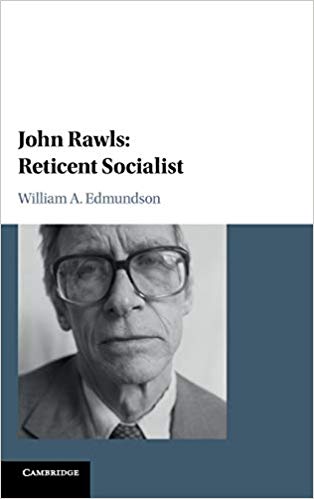
John Rawls had good reason to be a reticent socialist and political liberal

31u2bmz6ytl._sx312_bo1,204,203,200_

John Rawls: Reticent Socialist by William A. Edmundson has provoked a renewed attempt, written up in Jacobin and Catalyst, to link the totemic American liberal political philosopher with an explicitly socialist program to fix the problems of 21st century capitalism, and especially the domination of the political process by the super-rich. I found the book a powerful and enlightening read. But I think it ultimately shows that Rawls was right not to weigh his philosophy down with an explicit political program, and that socialists have yet to respond effectively to James Buchanan’s exploration of the challenges of non-market decision-making – challenges that bite more when states take on more explicit economic tasks. The large-scale public ownership of industry at the core of Edmundson’s democratic socialism is plausibly compatible with a stable, liberal political community in some circumstances but it is unclear how such a regime is supposed to reduce the scope of social domination compared with a private-property market economy in similar circumstances once we look at public institutions with the same skeptical attention normally reserved for private enterprise. A draft review is below.

Continue reading

Spaghetti Monsters and Free Exercise

Should Flying Spaghetti Monster worshipers be allowed to wear colanders on their heads in drivers’ license photos? Maybe so. Today, four conservative justices hinted that someone might want to bring them a good Free Exercise case soon so they can unseat a long-standing and long-criticized case called Employment Division v. Smith. That case, penned by Justice Scalia, had in turn uprooted several decades-worth of precedent that had built up a robust bulwark of religious rights under the First Amendment’s Free Exercise Clause.

It’s a funny twist. Liberal justices like Justice William Brennan had built up strong protections under the Free Exercise Clause, such as allowing Amish to pull their children from high school early because of their faith, or allowing Saturday Sabbath worshipers to enjoy certain exceptions to work requirements for unemployment benefits. Then the penultimate conservative justice, Antonin Scalia, dealt a severe blow to those precedents in Smith. Scalia said that religious practices did not merit exemption from generally applicable laws.

Now, the conservative justices want to rethink Smith, while the liberal justices may hang back. Perhaps the shift in the culture wars has caused this parallel shift in jurisprudential alliances. In any case, I think we should welcome reconsideration of Smith.

Scalia’s opinion in Smith raised some legitimate concerns. He argued that if we allowed judges to have a heavy hand in deciding which religious practices deserved special exemptions from the law and which did not, then judges would inevitably engage in subjective judgment calls and descend into the very parochialism that the First Amendment is designed to thwart. He also worried that allowing exemptions from generally applicable law would court anarchy—we would have a legal code peppered with holes for a thousand individualized religious beliefs and practices. Both are legitimate concerns.

Smith did prompt a strong legislative response. Congress and quite a few states thereafter passed Religious Freedom Restoration Acts (RFRAs) that basically revived the pre-Smith law. But legislatures can and do exempt some laws from RFRAs, and many states do not have them.

My primary issue with Justice Scalia’s Smith opinion is that his worry about subjective judgment calls seems to prove too much. Judges are called upon to make these kinds of sensitive and controversial decisions all the time. We rely on things like tenure and salary protection to shelter their independence and impartiality as much as we can, but these kinds of difficult decisions arise in innumerable other contexts. I would prefer a robust and imperfectly enforced Free Exercise Clause to one that does almost nothing at all.

Likewise, the concern about courting anarchy may be overblown. Laws and religious practices usually do not clash in a fundamental way, and under the pre-Smith “compelling interest” test, legislators can still forbid child sacrifice while allowing Muslim police officers to keep their beards. Plus, freedom of speech and many other rights already require exceptions to the scope of otherwise legitimate laws—they just can’t be applied in certain circumstances. The Free Exercise Clause is not unique in that way.

If the Court does confront Smith, it may also have to deal with the Flying Spaghetti Monster problem. That is—the Court may have to address a question which it has mostly avoided: what is a “religion” under the First Amendment. Does the Church of the Flying Spaghetti Monster count? Should Pastafarians be allowed to wear colanders on their heads in drivers’ license photos while everyone else has to go bareheaded? What about the Church of Diego Maradona, a real church dedicated to the Argentine soccer legend? Clearly, asking a court to define a “religion” raises the same concerns of parochial judgment calls that drove the decision in Smith. But maybe the answer is to let them all in, with perhaps just a low-threshold sincerity requirement. Beyond the occasional colander-clad guy in the DMV line, we haven’t seen a huge number of people adopting faux beliefs just so they can get a religious exemption for smoking dope. But then, there is an International Church of Cannabis that would surely see a surge in conversions if Smith is overturned.

“If you work for peace, stop paying for war”

The most omnipresent slogan of libertarianism in the digital age is the one that argues, or maybe just declares, taxation is A, theft is B, and A is B. Everyone has a gut feeling about being stolen from or coerced into losing his or her property, and so whether it’s extortion or theft anyone is apt to understand what “taxation is theft” means on a primitive level.

Even if anyone can understand what it means, it seems there’s little agreement about what it encourages — since, “the government’s up to no good again” doesn’t really have a telos behind it and pitching a preferred state of arrangements is useless without appropriate connected action.

I was thinking about this, and ran into a short essay by Gina Lunori that looks to answer the question, with the same frustration.

I heard someone praise a conscientious objector who refused
to fight in Iraq, and I asked him if he was still paying taxes. He told
me that the government hadn’t created a “conscientious objector”
category for taxpayers, so he was sorry to say he wasn’t able to
stop paying. As if you only have a conscience when the
government issues you a permit for one!

I told him I know people who’ve stopped paying their taxes
without waiting for permission, just by lowering their income and
living below the tax threshold. He told me that he wasn’t prepared
to make that kind of sacrifice. If I had a pocket calculator I could
have told you the maximum price of his conscience. If I had a
quality postal scale I probably still couldn’t discern its weight.

Like Walter Mitty these armchair peaceniks burn their draft
cards in their daydreams, meanwhile the people who serve in the
military in their place are equipped, and shipped, and paid for by Walter Mitty’s tax dollar.

The biggest obstacles to change aren’t the few who are
abusing the government, but the many who are submitting to it and
facilitating the abuse.

A government that loved liberty would be trying at every
opportunity to expand and protect that liberty. Our government
tries everything it can to evade the few protections that have
survived since its founding. Look at how shamelessly it has
whisked people off to Cuba — Cuba! — in order to sweep them out
from under the protection of the Constitution.

A person who loves liberty would not shovel coal into a
tyrant’s engine just to earn a higher salary. Why does a person in
the United States who claims to love freedom, and who is
intelligent enough to understand that the government is freedom’s
enemy, still feel that it’s worthy of respect to be a taxpayer, and the
more salary — and therefore the more taxes — the more respect?
If you love liberty, if you hate war, you should at once withdraw
your support from the government. Withdrawing your moral
support isn’t enough — it’s your practical support that the
government feeds on — it doesn’t give a damn what your opinions
are.

This is something you must do because you know the
difference between right and wrong and you know, when you look
the facts straight in the face, that when you willingly give practical
support to the government you participate in its wrongs. But this is
more than a matter of personal integrity.

Imagine the power of this statement. What if every person
who felt that the government had lost their moral support also
withdrew their practical support? What if only one in ten did? It
would be the beginning of the end. It would be that nonviolent
revolution we’re praying for.

Maybe the best tests of intellectual integrity are consistency and hypocrisy. How do the people that swear off voting as aggression feel about funneling taxed income to the government to enable its aggression? How do the people that mantra “taxation is theft” feel about surrendering their goods, each and every year, in a way they would never, ever tolerate from a burglar?

Where are our manners?

“Manners Makyth Man.” William of Wykeham said that back in a distant past when the letter “y” was at peak popularity. I thought of that quote today as I read about the shrill outrage over Karen Pence’s unremarkable job at a Christian school. There’s a great speech expounding on William of Wykeham’s quote, delivered about a century ago by Lord John Fletcher Moulton in London. He entitled his speech, “Law and Manners,” and its message could really use another go around.

Lord Moulton’s speech begins by dividing human action into three domains: the domain of positive law, the domain of absolute choice, and the domain of what he calls “manners.” This last domain is his essential topic, which he defines as “obedience to the unenforceable.”

Manners, by which he means something akin to duty or morality but encompassing more than both, are sandwiched between the worlds of positive law and absolute choice. This realm of manners is where we may act as we choose but we nonetheless face constraints that are outside the force of law. His basic premise is that the larger the middle domain, the healthier the society. He says, “The true test is the extent to which individuals composing the nation can be trusted to obey self-imposed law.” Encroachment from the realms of positive law and absolute choice pose a danger.

Lord Moulton does not suggest that the two outer domains are bad. They are vital. But if either expands too far into the middle, trouble awaits. If positive law expands too far, it stifles the freedom necessary for a flourishing society. On the other hand, if people feel completely unrestrained in their exercise of freedom, civil society begins to sag, and the danger that positive law will sweep in to pick up a perceived slack increases. As one religious leader put it, “We would not accept the yoke of Christ; so now we must tremble at the yoke of Caesar.”

Given these threats to the middle domain, Lord Moulton feared that “the worst tyranny will be found in democracies.” Minority interests will get chewed up by the voracious appetite of a positive law driven by a majority.  The representatives of the majority “think that the power and the will to legislate amount to a justification for that legislation. Such a principle would be death to liberty. No part of our life would be secure from interference from without. If I were asked to define tyranny, I would say it was yielding to the lust of governing.”

The maintenance of the middle domain depends on growth of a robust civil society sheltered from majority dominance. Religion, culture, tradition, diasporas—communities independent of the state must exist with some genuine autonomy for the middle domain to survive and thrive.

And this brings me back to Karen Pence working at a Christian school that (trigger outrage) requires students and teachers to abide by traditional Christian values. Whether or not those values are correct or not is not at all the point. Those eager to slap down a law at the first hint of a disagreement need to understand that tolerance for even genuinely illiberal viewpoints is essential to the success of liberal democracy. Organizations must have some power to define themselves apart from the prerogatives of the state to establish a framework for obedience to the unenforceable. As the Supreme Court put it, people must have space to organize communities separate from state interference that can serve as competing purveyors of norms. Such groups provide an essential “counterweight . . . to the State’s impulse to hegemony.” Thus, organizations that can establish their own norms apart form majority interference prevent the encroachment of positive law into the middle domain.

I worry that we are seeing simultaneous encroachment from both the realms of positive law and absolute choice. People outraged at Karen Pence’s new job feel convinced that the positive law should thrust its tentacles into group dynamics, thereby swallowing civil society into an all-pervading state orthodoxy. On the other hand, a sneering sense of moral relativity that frowns upon any attempt to speak up for solid norms encroaches from the other end—the perversion of tolerance that believes in no genuine moral structure outside what the law “makyth.” The letter “Y” may be a consonant and a vowel, but that doesn’t mean we can live without unenforced rules. Lord Moulton warned us about this. It’s time we mind our manners.

A humorous aside, out of context

<Scene: A wood-paneled study where a smartly-dressed person sits reading aloud from an oversized King James Bible.>
“Isaiah 9:7 – Of the increase of government … there shall be no end… .”

<Our hero pauses, turns to the camera and deadpans.>
“You got that right, brother!”

<Exeunt>

Libertarianism and the shutdown

Yesterday, Paul Krugman published a deceptive, sloppy, and self-contradictory opinion article in the New York Times entitled “Trump’s Big Libertarian Experiment.” The premise: the shutdown delivers what all libertarians want, and the shutdown (this is strongly implied) demonstrates just how silly libertarians are.

This is nonsense. First off, Trump is decidedly not a libertarian. Second, government shutdowns have occurred for decades–are all of these “libertarian” experiments? Finally, no libertarians that I’m aware of have ever favored mercurial spending freezes that sweep the rug out from under people who’ve come to rely on government programs. Principled reform is a bit different from abrupt financial lurches.

The disruption and harm caused by sudden spending jolts have no bearing on whether a libertarian society could work or not. Krugman points out that businesspeople are already enraged that the Small Business Administration has ceased issuing loans, an organization that many libertarians have claimed is unnecessary. Of course they’re angry–they expected something that suddenly has ceased. That has absolutely nothing to do with whether the SBA is necessary; it just demonstrates that people get ticked off when their expectations are suddenly dashed. The shutdown proves nothing about whether the private market could ultimately supply any benefits offered by the SBA.

He also says that work at the FDA has dwindled. Routine inspections have ceased. He has zero evidence that this has caused even an iota of harm to anyone, but the implication is clear: we’ll all be confined to the toilets soon as E. coli swamps the country. He marshals no evidence to confront whether state regulators can adequately fill this role, or whether tort law and market forces can suffice.

Libertarians envision a society in which many roles currently served by government can find contractual and common-law counterparts (or not, if it turns out no one wants the service). Libertarians certainly don’t believe in blasting holes in long-standing social structures without warning, without forethought, or without transition.

Ironically, to the extent we do confront Krugman’s silly claims, it appears that the shutdown’s impact has been minimal despite huge numbers of furloughed employees. The New York Times, aside from Krugman’s disposable rhetoric, also published a comparison of the number of furloughed employees (800,000 by their estimation) to private industries. The number of furloughed employees, for example, exceeds twice the number of people employed by Target. I don’t think this tells us what the New York Times thinks it tells us. These stats beg the question as to whether these positions are necessary at all. That said, any negative impact from the shutdown that actually does exist–aside from the furloughed workers losing money–should be attributed to social and economic disruption resulting from spending turbulence, not to the actual necessity of the government programs affected.

Why Christmas materialism is awesome

It has always struck me as odd that capitalism’s usual defenders abandon it when commercialism seems to be on its best behavior. Every year, we religionists love to rail against Christmas materialism. What a terrible curse–people in the marketplace thinking of others’ interests and needs for once.  All the efficiency of the market PLUS good will toward men–why are we complaining, again?

Yet we do. Without fail, twitter feeds and chapel lecterns ring with invectives against Christmas commercialism. The warning voice, though, never seems to strike with precision. The concern seems to be that a focus on stuff gives rise to an idolatrous dethroning of deity.  This religious criticism appears to mimic the secular and progressive criticism that commerce somehow defiles us and strips us of virtues like compassion or solidarity.

I don’t buy either of these criticisms, largely for the same reasons: commerce brings people together, builds trust, and fosters goodwill. These benefits are in addition to the efficiencies that market advocates typically emphasize. And these three aspects of commercial exchange are in special abundance during Christmas.

Perhaps the materialism complaint stumbles at the outset by focusing on the largely mythical human calculator that predominates in economic theory–the man focused only on maximization of personal utility. That portraiture does not explain the fact that so much commerce occurs on behalf of someone else–a reality underscored and amplified during holiday shopping. Thus, Christmas supports Amartya Sen’s critique of the rational-man theory: “The purely economic man is indeed close to being a social moron.” He’s the one who gives you lotion samples and leftover hotel shampoo in your stocking. But most of us don’t do that. Instead, the market provides a forum for us to express and cultivate virtue. As Deirdre McCloskey says, “In other words, it’s not the case that market capitalism requires or generates loveless people. More like the contrary. Markets and even the much-maligned corporation encourage friendships wider and deeper than the atomism of a full-blown socialist regime.” I think a simple test proves this point. If you walk about a shopping mall during the Christmas holiday (setting aside for a moment your inner misanthrope), how are people behaving? By and large, there is an overpowering sense of goodwill among people engaged in (shudder) holiday materialism. I’d say this is mostly true at any time of year, but we may as well notice this phenomenon when it stands at its apex.

Beyond just the goodwill generated by the act of commerce, the materialism critique seems to ignore the very purpose of the materialistic behavior being condemned. Shouldn’t we celebrate this key example of how commercialism can enhance friendship through gift-giving? If you’re a religious capitalist, what is there not to like here?

A friend pointed out recently that Christmas giving seems fruitless, since the value-for-value gift exchanges offset each other. He concluded we may as well just keep our money. From an efficiency standpoint, it does seem strange to engage in a transaction cost without any expectation that you’ll achieve a pareto-efficient state of affairs. Samuelsonian economics alone can’t really explain why people engage in this ritual. That’s probably because the ritual is not purely economic. It’s about connection, relationship, and opportunity to think beyond ourselves. In other words, at bottom, it really is not about materialism in the shallow, desiccated sense that these Christmas puritans rail against. Commerce can be about compassion and camaraderie–not just self-interested calculation (though there’s nothing wrong with that either).

I don’t think the Babe of Bethlehem would disagree. After all, Jesus, while no aristocrat, was not a severe ascetic by any means–somewhat of a contrast to his cousin, John the Baptist. Perhaps the most poignant example of his view toward extravagant gift-giving occurs when a woman anoints him with an extremely valuable ointment. His disciples complained of the waste, griping that the ointment should’ve been sold and the proceeds given to the poor. Jesus defended her: “Let her alone; why trouble ye her? She hath wrought a good work on me.” In other words, a materialistic act can still be a virtuous one. In fact, I’d go as far as to say that the vast majority of them are. We need, after all, an earthly vehicle by which to exercise heavenly virtue. The market is well-suited for that role. God can be in a market–he’s that good.

Of course, a post about Christmas and materialism must make obligatory mention of Ebenezer Scrooge. Dickens was no fan of capitalism, but his reformed villain ironically proves a point about Christmas materialism: it’s the lack of virtue in the individual operating in the market, not the market itself, that desiccates the soul. So perhaps I can end with a simple “Scrooge” test: is Scrooge the guy standing back and pointing the finger, or is Scrooge the person that the finger aims at–the mom who braves the crowded mall to plop her kids on Santa’s lap and wraps gifts until 3:00 AM in the morning?

Eroding norms and political transformation: A new chance for liberty?

The Hammelsprung

Usually, the debates in Germany’s highest political body – The Bundestag – right before Christmas are not that exciting for the public. Parliamentarians are exhausted from long nights and intense discussions from the past weeks. But on Friday the 14th December, the last scheduled plenary session this year, something remarkable happened in the Bundestag, symbolically standing for the erosion of political norms, which democracies experience for a few years. The topics this day were not too fascinating – they discussed how to make the country more appealing to top-level researchers and if fixed book prices should be abolished. Not trifling, but nothing too crucial either.

But around noon the right-wing party AfD decided to initiate a Hammelsprung. The Hammelsprung is a control mechanism to ensure two crucial things.

First, it can be used to achieve absolute clearness of a voting result. Since the counting of votes mostly takes place via counting hands, a Hammelsprung can help to bring about a final decision in close polls. The process is relatively old-fashioned and quite funny in my opinion: The parliamentarians have to get out of the plenary hall first and then reenter through doors labeled “Yes,” “No,” and “Abstention” while an official counts these votes loudly.

Second, it is a tool to assure that crucial decisions of the parliament are made by a majority of the parliamentarians. If a parliamentary group has doubts that more than half of the parliament’s members are present to an assembly, it can propose a Hammelsprung to determine the exact amount of parliamentarians present. If there are less than half of the parliamentarians present, the parliament does not have a quorum and thus the parliamentary session gets canceled.

How the parliament works

At this point, it is important to mention that the German parliament is a working parliament rather than a debating one (such as the British house of commons). Hence, most of the parliamentary work takes place in exclusive committees. These committees consist of members from each party and are all dedicated to certain political topics such as defense policy, health policy and so on and so forth. Parties look for alliances to back up their policy proposals within these committees. Thus, the majority ratios regarding political proposals are played out not in the big parliamentary debates, but in rather small expert working groups. So one can expect that what gets resolved within a committee, gets resolved in the parliament as well.

These committees meet simultaneously to the parliamentary debates. On top, a parliamentarian has to inform himself, manage his team, be present in his election district and many more things. So it is impossible for him to be present in every parliamentary session. So over the years the norm established, that not every member of parliament need to be physically present during the parliamentary session, but only the experts in the certain relevant subject. During their election campaign, the AfD aggressively attacked this particular norm by labeling parliamentarians of established parties as “lazy” and “self-indulgent”, referring to the many empty seats during parliamentary debates.

A battle against norms and the establishment

The AfD used the Hammelsprung on Friday the 14th December in the second meaning mentioned above: To enforce a cancellation of the parliamentary session regarding the acquisition of top-level researchers. This was not a topic related move to ensure the necessary quota, it was rather yet another milestone in the ongoing battle against existing norms. We can say this for certain because AfD didn’t even re-enter the hall: they purposely stayed outside in order to enforce a cancellation of the session. Alexander Gauland, the party whip of the AfD, explained that they wanted to show that the AfD wants to give the government a “hard time” and added: “He that will not hear must feel.” This can be seen as an act of revenge against the parliament because the AfD’s candidate for the vice presidency of the Bundestag failed to get elected a second time in a row. Contrary to their expectations, enough parliamentarians somehow made their way quickly enough into the parliament to reach the quota necessary to proceed with the debate.

How norms foster social cohesion

But the danger remains: There are several tools populist parties (right or left wing) can use to impede effective governing within a perfectly legal framework. This development is not at all a specifically German one. Steven Levitsky and Daniel Ziblatt provide an in-depth description of the erosion of norms in the American political system in their book How Democracies Die. According to their theory, functioning democracies do not only rely on a thought-out constitution and functioning political organs but also on shared norms. The most important norms for Ziblatt & Levitsky are mutual tolerance and forbearance.

Mutual tolerance describes the recognition of the political enemy as an opposed actor instead as an existential threat to the country. Contrary, forbearance means to restrain the urge of using every legal means to achieve a political end.

It is certainly not too difficult to quantify the erosion of these two norms in America, specifically when one pays closer attention to the skyrocketing amount of “filibustering” in the Congress or, as seen recently, to the increasing times of governmental shutdowns caused by a lack of agreement between Republicans and Democrats over the federal budget. We can see the effects of this abandonment of norms on a daily basis: The more hostile political environment, the lack of respect for other political opinions, the increasing difficulties for finding a compromise between parties. The political opposition is on the verge of drifting away from constructive criticism towards impeding the government in every possible way.

A liberal response?

In my opinion, there are two ways to react to this threat.

First, we could change the rules of the game and narrow the legal framework for processes which can be used to impede effective governing such as filibustering and the Hammelsprung. I do not think that this is the right way to counteract populist parties (or tendencies more generally). These processes exist for a good reason. But they hinge on the observance of forbearance. There was no extensive problem of filibustering in the Roosevelt, Truman, or Wilson administrations, although their policies were also quite controversial. The problem is not the rules themselves, but the lack of shared norms for a solid foundation to put them to good use. Furthermore, changing the rules would only foster the thought that a perfect constitution is somehow reachable. And here I see the danger, that we might jeopardize the status of the law as a neutral guardrail for society and it instead becomes an arbitrary mean to achieve political ends, as Frederic Bastiat describes in his work The Law.

The second option is to adjust our own behavior to the changing circumstances brought by the new populist players one the pitch. Therefore the established political actors need to carefully reevaluate the importance of certain norms and if necessary transform them. Of course, this is not as easy as said: It presupposes a willingness to cooperate among established actors (which is nothing to take for granted in today’s times) as well as a vigilant public, which backs up those norms. Additionally, norms do not emerge from scratch. They are rather the result of a slow change in the mutual understanding of social human interaction.

What the future will bring

The AfD already has announced that they want to continue to use every legal (and in some cases illegal) way to make it harder to govern the country, which is their way to battle the establishment. Whereas the established parties tried various strategies to cope with this right-wing populist party ranging from ignoring to direct confrontation. Still, nobody knows exactly how to deal with these new political circumstances. But what is for certain is the political landscape is further going to change; and thus also politicians and parties will need new strategies, structures, and norms.

Although this development is mostly seen as the road to a gloomy and authoritarian future, I believe (or at least I hope) that democratic parties will find new ways to counter right and left wing populist proposals. Instead of trying to engineer our legal framework to preclude populist from polls, politicians should focus on giving scope for spontaneous order and new alliances. This process is incredibly exciting to me. As Steve Davies describes it, we are currently witnessing a “great realignment” of party structures in Europe. And where old structures break up, there is room for new ones. European liberal party leaders (carried by the Axis of Linder – Rutte – Macron) are still looking for their place in this new power vacuum. Nobody can predict where this development will lead us. That is why we must proceed to fight for our liberty: inside and outside of political party structures.

Merry Liberty Christmas!

Christmas, as I hope everybody (at least in the West) still knows is Jesus’ birthday. I don’t want to spend too much time here talking about how it is very unlikely that Jesus was born on December 25, and how this date was probably just chosen at some point in the late Ancient times/Early Medieval times to Christianize European pagans. The Bible never specifies when Jesus was born (although it does offer some hints), and so, some very devout Christians over history (Puritans, for example) thought that we should not even celebrate Christmas. The gospel according to John doesn’t even talk about Jesus’ birth. In it, Jesus simply appears as a grown man. The same thing happens in Mark’s gospel. Matthew and Luke give accounts of Jesus’ birth, with Luke being more detailed. So, ½ of our gospels don’t seem to be very interested in Jesus’ life before he was about 30 years old. Someone has said (and I think somewhat appropriately) that the gospels are accounts of Jesus passion (his death and resurrection) with long introductions.

But anyways! I don’t think that celebrating Christmas is bad, not at all! I believe it is a good occasion to remember Jesus, the founder of Western civilization. May we like it or not, the West is profoundly linked to Christianity. Christianism begin as little more than a small and persecuted Jewish sect, but eventually became the main religion in Europe (and northern Africa, and the Near East), and from there to the World. Some might say (and I think that sadly they might be right) that today Europe lives in a post-Christian era, but we should not forget that someday in the past to be European and to be Christian were basically synonyms. And I also believe that we, professing Christians or not, should be thankful to Christianity in a number of ways. I am very convinced that it was thanks to Christianity, especially after the Reformation, that we have many of the things that we, as liberty-lovers, are thankful for, such as science, capitalism and lots of individual liberty.

Of course, from the human perspective, the link between Christianism and West is merely accidental. I myself, as a Brazilian, am not sure if I classify as a Westerner. Maybe I am from the far West? It is very clear that for many decades now Christianism is moving to the global south: Latin America, Africa, Asia, and I hope not to be forgetting anyone. And I think that is just beautiful! I don’t believe that there is one essential Christian culture. Instead, I believe that culture is an essential human phenomenon and that Christianism can give a new birth to cultures, just as it does to individuals, bringing forward what they have best and leaving behind the bad stuff.

Sadly, the very places where Christianism is growing the most today are usually also the places where Christians suffer more persecution. Although we tend to connect the first few centuries of Christianism with martyrdom, with people being crucified, thrown to the beasts and the like, the fact is that the 20th century had more martyrs than any other century before. It is also sad for me that most people, including Christians and liberty-lovers, tend to ignore this. In the last few weeks, I heard of at least two churches being closed in China, with all members being taken to jail. I wish that people who care about freedom paid more attention to this. I also wish that people who care about Human Rights did the same. Some people are worried about gay couples not getting wedding cakes from Christian bakers, but they don’t seem to have the same concern about Chinese Christians being thrown in jail just because they are Christians.

Speaking of which, I want to be very honest and say that Marxism (or post-Marxism, or cultural Marxism) can easily become a religion. Marx is a prophet, The Capital is a holy book, the proletariat (or any oppressed minority, for the modern left) is both Messiah and holy people, a future communist utopia is Heaven. I believe that it was a Catholic apologist who said that “the problem with not believing in God is that we start to believe in any dumb thing – including in ourselves”. The problem with Marxism as a religion is the same problem I see with every other religion apart from Biblical Christianity: it is performance driven. It is about what you do. And as so, it can create a slippery slope in your heart. You become self-righteous and judgmental (in a bad way) of people outside your faith-group or even people inside your faith-group who you consider not holy enough. Of course, Christians are not exempt from this either, but I believe we have the right medicine for this.

As much as I believe that the New Left is one of the greatest problems in the West today and that several forms of totalitarianism are one of the main problems elsewhere, I don’t believe that libertarianism or conservatism are in themselves the solution. I became a libertarian (or a conservative-libertarian) because I am first a Christian. My first question was “what the Bible has to say about politics and economics”? I believe that somewhere in the libertarian camp we have the best answer for that. I believe the Bible teaches that very small and simple governments and market freedom are the answer. However, I would say that this is just partly the answer.

The way that I see it, the conflict between the left and the right is very much a conflict between Rousseau and Locke, or a conflict between two kinds of freedom. For Rousseau, you are only free when you are your true inner self. If necessary, the community can make an intervention to force you to become who you truly are. For Locke, you are free when you can make your own choices, regardless if they look good for others. As libertarians like to say, a crime without a victim is not a crime.

I believe this is also a basic conflict between modern western culture and more tradition culture – the conflict between collectivism and individualism. My answer as a Christian (and a libertarian) is that we should not force people to be Christians. That would, at best, produce external conformity – which is actually really bad. My understanding is that, as long as they are not predictably and willfully hurting others, people should be let free to do whatever they want. And I do mean whatever. On the other hand, I don’t think that this is good – or as good as it can be. Ironically, I believe that Rousseau is onto something important: you are only truly free when you are who you are really supposed to be.

One great irony or paradox in Christianism is that you are only truly free when you are a slave to God. Understanding 1st-century slavery helps to get the analogy better. God bought us for a price. We belong to him. However, God is not satisfied with having us as slaves. Instead, he adopts us as sons. That is the (I believe) famous parable of the prodigal son: a son abandons his father and loses all his money. He comes back hoping to become a slave in his father’s house. His father takes him back as a son. So, Jesus gives us a new identity as sons of God. And I do mean sons, and not sons and daughters or children. In the 1st century daughters had no inheritance, but in Christ, we all share of it. So that is our true identity if we walk after Christ. And that is when we are truly free.

I don’t want to force anybody to be Christian. I believe that one of the greatest mistakes in Christian history was exactly that: to force people to become Christian. As I said, religion can easily create a slippery slope in the heart, and Christianism is not necessarily an exception. But while other religions are about what we do, Christianism in its essence has at least the potential to be what has been done for us. And that is truly humbling. And I believe this has important political implications: we pray for all. We hope for the best. We trust in God. We respect others.

So Merry Christmas to all! I hope that this is a time for remembering the birthday boy, and what he did, especially on the cross. And that we can all work for a world freer, where people can become Christians – if they choose so.

Where will NoL notewriters be in 2019?

With a new year comes two certainties: (1) reviewer #2 will continue to stop our articles from being published and (2) we have to attend academic conferences.

Which conferences will NoL notewriters attend this upcoming year? I plan to attend MPSA, WPSA and APSA.