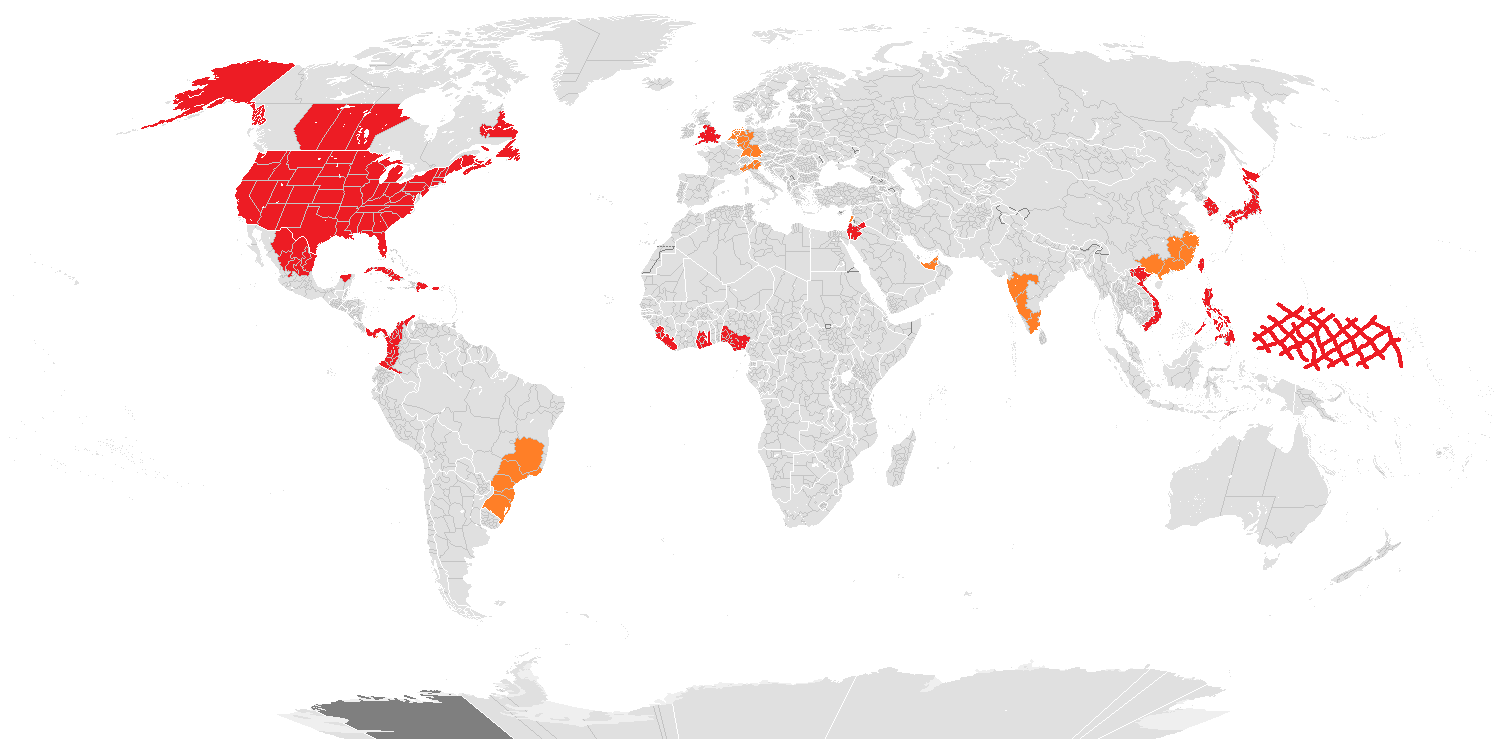
Meanwhile, in India

Hundreds of workers marched with the red flags of the labor unions and chanted anti-government slogans in India’s capital on Tuesday as part of a two-day nationwide strike that began Monday.

And this:

Elsewhere in the country, protests were held in eastern West Bengal state where demonstrators stopped trains at several locations. In southern Kerala, where the state government led by the opposition Communist Party of India backed the protest, streets were empty and shops shuttered.

India’s economy has bounced back after experiencing a major blow during the first two years of the pandemic. But many jobs have disappeared, with unemployment rising to 8% in December.

It’s hard to tell which parties are reactionary in India. Modi’s Hindu-centric party certainly seems to fit the bill, but it looks to me like the Communists want to turn back the clock, too. Where are India’s liberals (classical or otherwise)? Here’s the rest.

Oil Prices and the Ukrainian War

On March 8, 2022 US President Joe Biden imposed a ban on imports of Russian oil, gas, and energy . Said the US President: “This is a step we’re taking to inflict further pain on Putin.” Biden also said that Americans may have to deal with the economic repercussions of this tough decision for sometime. Gas prices in the US had touched well over $4/gallon, which was higher than the previous record set in 2008, before the announcement. 


Over the past few days, the US has been looking for alternatives to Russian oil. Last week, a delegation of US officials visited Venezuela, and apart from the release of detained US citizens in Venezuela, the removal of sanctions was also discussed (as a goodwill gesture, two prisoners were released on Tuesday, March 8, 2022). The US delegation also met with President Nicolas Maduro.

In the Middle East, the US and other countries are looking to Saudi Arabia, the UAE, and Iran for making up for the shortfall caused by the sanctions on Russia. Iran, which currently pumps over 2 million barrels per day (bpd), could raise this number significantly to 3.8 million. This would reduce global oil prices and the pressure on countries dependent on oil imports. During his address, last month, to the Gas Exporting Countries Forum (GECF) held at Doha (Qatar), Iranian President Raisi had said that Iran was willing to fulfil the energy needs of countries, including European nations.

The Biden Administration’s decision to look at alternatives for oil supplies has drawn stinging criticism. A Republican policy maker, while commenting on this decision, said:

The decision to explore alternative sources of oil and gas has fit would be outrageous to even consider buying oil from Iran or Venezuela. It’s preposterous that the Biden administration is even considering reviving the Iran Nuclear Deal.

It would be important to point out that while Iran may be an important option for the US and other countries, this would only be possible if the Iran Nuclear deal 2015 is revived, and sanctions are removed. Russia has created a major hurdle by asking for a written guarantee from the US that sanctions imposed by it will not apply to Russia’s economic linkages with Iran. The US has dismissed Russian demands and said that the sanctions imposed are not linked to the Iran deal. Apart from this, there are sections of US policy makers vehemently opposed to the deal. 

If one were to look at the case of the UAE and Saudi Arabia, both countries have refused to take the calls of President Biden – the two Gulf countries have turned down US demands to pump more oil. Both countries also took time to vote for the UNGA resolution against Russia’s invasion of Ukraine (in recent years there economic and defense ties with Russia have improved). It is important to understand that ties between Washington and both the Gulf nations have soured for a number of reasons.

Reasons for deterioration in Saudi-US ties 

If one were to look at the instance of Saudi Arabia, Washington’s ties with Riyadh have gone down hill due to a number of issues including two big ones: Washington’s withdrawal of support to the Saudi Arabian war offensive in Yemen, and strained ties between Biden and Crown Prince Muhammad Bin Salman (MBS). Biden, unlike Trump, has refused to deal with MBS and has been speaking to MBS’ father (King Salman) instead. One of the major bones of contention has been the release of an unclassified report in 2021, which clearly points to the role of MBS in the brutal murder of Saudi journalist Jamal Khashoggi (Trump had refused to release this report). Visa restrictions were imposed on 76 Saudi citizens involved in harassing journalists and activists by the Biden Administration, but no such measures were announced against MBS.

During his presidential campaign, Biden had been stinging in his criticism of Saudi Arabia’s human rights record and vowed to treat Saudi Arabia as a “pariah,” and the decision of the Biden Administration not to sanction MBS directly drew strong criticism from certain quarters within the Democrats. Saudi Arabia’s growing proximity towards China has also been a bone of contention in US-Saudi relations. In December 2021, US intelligence agencies suspected that China was assisting Saudi Arabia with the development of its ballistic missiles program. In a recent magazine interview, MBS said that he did not care if the US President had misunderstandings with regard to the former. 

Riyadh moving closer to Beijing?

Earlier this year, in January 2022, during a meeting between Chinese Defense Minister Wei Fenghe and Saudi Deputy Defense Minister Khalid Bin Salman, there was a focus on strengthening defense ties. Saudi Aramco and China’s North Industries Group (Norinco) have recently decided to take forward an agreement for the development of a crude oil refinery and petrochemical complex in Panjin, China. What is significant is that Norinco is also a defense contractor, and was amongst the eight Chinese companies that joined the recently held World Defense Show exhibition in Riyadh. Significantly, Saudi Advanced Communications and Electronics Systems Company (ACES) signed a strategic agreement with China Electronics Technology Group Corporation (CETC), one of the world’s largest defence companies, to manufacture drone payload systems in Saudi Arabia. 

Abu Dhabi-Washington relations 

The UAE’s ties with the US have also witnessed a downturn. One reason is the UAE’s blossoming relationship with China. US has been uncomfortable with Huawei being part of UAE’s 5G program and had suspected that China was developing a military facility inside the Khalifa Port close to Abu Dhabi. The UAE subsequently cancelled a $23 billion deal to buy F35 jets from the US. 

The UAE has also been unhappy with the US decision not to designate Yemen’s Houthis as terrorists. A missile and drone attack by the rebel group, in January 2022, resulted in the death of 3 people and injured 6. While commenting on the current state of the UAE-US relationship, UAE’s envoy to the US, Yousef al-Otaiba, said:

Today, we’re going through a stress test, but I’m confident that we will get out of it and we will get to a better place.

In conclusion, while the US is looking for ways of minimising the problems caused by the ban on Russian oil and gas, it is absolutely imperative for the US to convince the Saudis and the UAE to start pumping more oil, and for the revival of the Iran nuclear deal at the earliest.

Some Friday Links – Ukraine in Moscow

Also, 1-year mark of blogging achieved

We visited Moscow twice, in late 2010 and mid-2011. I remember a clean, buzzing – if a bit intimidating – metropolis, rich in signature sites. I thought to share that where we stayed, Ukraine was all over: Across the street was located the Hotel Ukraina, one of the “Seven Sisters” (skyscrapers of the Stalinist era). Ukrainskyi bulvar, a pedestrian walkway run along our block. It featured a small park with a statue of writer Lesya Ukrainka. Down the green walk was the Kiyevski railway terminal, a badass station (it was in good company, I prefer no 5, Yaroslavsky station) that serviced metro lines and trains to the Ukrainian capital (Kiyv/ Kiev, see relevant link below).

Here be few links on the Ukrainian front, not of the “latest headline” kind. The discourse at least here in Greece is polarized, and geographically we are close enough that the infamous Chernobyl disaster haunted our parents when we were kids.

Understanding the War in Ukraine (A Collection of Unmitigated Pedantry. I picked this blog from Naked Capitalism).

A Drunken Grandfather Goes to War (Economic Principals)

Tocqueville and Ukraine: European Union, Freedom, and Responsibility (Quillette)

Why Is Ukraine’s Capital City Now Called ‘Kyiv,’ Not ‘Kiev’? (Mental Floss)

The Greek word is squarely in Kiev mode.

Thoughts, Hopes And Disappointments in Kyiv: A Street Photographer’s Photos of Ukraine – 2001-2021 (Flashbak)

The US-France-Germany triangle and the Ukraine crisis

Introduction

After French President Emmanuel Macron’s visits to Ukraine and Russia, German Chancellor Olaf Scholz embarked on visits to Ukraine and Russia as well. Scholz had visited the US last week and discussed the Ukraine issue with Biden.

The timing of Scholz’s visits to Ukraine and Russia were important, given that the Biden administration has said that Russia could attack Ukraine at any point in time (significantly, only last week, Putin had assured Macron that Russia had no plans of escalating conflict, and would not like to escalate tensions). In a media interaction on Monday, Pentagon Spokesperson John Kirby had said:

This is a military that, that continues to grow stronger, continues to grow more ready. They’re exercising, so we believe that he has a lot of capabilities and options available to him should he want to use military force.

The US has pulled out its diplomatic staff from Ukraine, while EU and NATO member states, including Germany, have urged their citizens to leave Ukraine. 

Economic repercussions

The US and other members of the G7 have issued a stern warning to Russia, saying that it would face strong economic repercussions if Moscow invades Ukraine. During his conversation with Vladimir Putin, on February 12, 2022, Biden had conveyed that any aggression by Russia would result in strong measures, and G7 Finance Ministers also reiterated the same in a statement on Monday, February 14, 2022.

It would be important to point out that apprehensions with regard to a Russian invasion of Ukraine have also impacted global markets and oil prices. European indexes, including the UK’s FTSE 100, Germany’s Dax, and France’s CAC 40, dropped significantly on Monday, February 14, 2022, along with US and Indian markets. Apart from this, crude prices went up to a seven-year high, crossing $95 a barrel.

Differences between the US and France and Germany

One of the reasons cited for Russia’s aggressive stance is US support for Ukraine’s membership in NATO. France and Germany have, however, differed with the US on this issue. In 2019, then Ukrainian President Petro Poroshenko signed a constitutional amendment which made a commitment towards making Ukraine a member of both the EU and NATO.

During his visit to Ukraine, Chancellor Scholz said that membership is not such an important issue, and that it was “strange that Russia makes this the subject of major political problems.”

The Ukrainian President, Volodymyr Zelenskiy, also said that for Ukraine, “NATO membership is not the absolute goal.”

It would be pertinent to point out that Ukraine’s Ambassador, Vadym Prystaiko, in a media interview, had made remarks indicating that Ukraine may consider giving up its stand of joining NATO, in order to avoid war, but later denied the same.

Before embarking upon his visits to Ukraine and Russia, Scholz had warned that Germany would be compelled to impose sanctions, and that the Nord Stream 2 Project, which runs from Western Siberia to Germany, would be shelved (Russia accounts for 40% of Germany’s energy supplies). During Scholz’s US visit, Biden had also said that if tensions rise then the $11 billion project owned by Gazprom would not go ahead. Said Biden:

The notion that Nord Stream 2 is going to go forward with an invasion by the Russians — that’s not going to happen.

The role of both France and Germany has been important; while on the one hand they have kept the channels of communication with Putin open, and conveyed the reservations of the US and its allies, on the other their stand vis-à-vis Ukraine membership in NATO is different. 

Biden’s focus on working with allies has been beneficial, but at the same time the reality is that there are differences between the approach of the EU and the US vis-à-vis the Ukraine issue. EU countries, especially Germany, can not overlook their economic interests and the logic of geography. It is not just France and Germany, but many other allies which would be concerned over escalation of conflict and the likely economic consequences – specifically the rise in oil prices.

The Russian-American-Chinese Triangle: A Changing Global Landscape

Introduction

Chinese President Xi Jinping and Russian President Vladimir Putin met on February 4, 2022 (this was the 38th meeting between both of them after 2013). Putin and Xi met hours before the opening ceremony of the Beijing Winter Olympics. Putin was in China to attend the Olympics and his presence was important in symbolism given that a number of countries – including the US, the UK, Australia, and India announced a diplomatic boycott of the games.

Both sides forcefully pitched for further enhancing their bilateral relationship and referred to the need for a ‘no limits partnership.’ Putin and Xi are also supposed to have agreed on the need for finding common ground in areas like artificial intelligence, technology, and climate change. A statement issued by the Kremlin after the meeting between Xi and Putin said that Beijing was opposed to the US aim of expansion of NATO in Eastern Europe (both Xi and Putin argued that NATO was promoting a ‘cold war’ ideology). During the meeting, Putin also made it clear that Russia endorsed China’s stand on Taiwan and opposed Taiwanese independence in any form. The Russian President was critical of the US for creating blocs in the Indo Pacific. Both sides expressed concern with regard to the Australia-UK-US (AUKUS) security partnership.

The joint statement made two interesting points; first, that the China-Russia relationship is ‘superior to political and military alliances of the cold war era’ and second, that both Moscow and Beijing were firmly committed to multilateralism. 

US-Russia-China triangle 

The steady deterioration between the US and both Russia and China have resulted in Moscow-Beijing relations further strengthening in recent years.

A number of US strategic analysts have argued that Washington needs to work with Moscow and find common ground on certain global issues, and to ensure that Moscow is not compelled to move closer to Beijing. 

There has been high level engagement between both sides in recent months, and they have found some common ground on the Iran nuclear issue/JCPOA (Joint Comprehensive Plan of Action). After his meeting with Russian Foreign Minister Sergey Lavrov in Geneva last month, US Secretary of State Antony Blinken had said that Iran nuclear deal was an example of how Washington and Moscow could work together. The threat of a Russian invasion of Ukraine have ensured that ties between US and Russia remain strained in spite of high level interactions between both sides.

Russia-China ties and the impact of US sanctions

A day before the meeting between Xi and Putin, Russian Foreign Minister Sergey Lavrov and his Chinese counterpart had met and are supposed to have discussed a number of issues, including Ukraine and Afghanistan. In response to the meeting, officials in the Biden administration had stated that a close economic relationship with China would not be enough for Russia to face the impact of US sanctions. Ned Price, Spokesperson of the US State Department, also warned Chinese companies in case attempts were made to circumvent US sanctions:

We have an array of tools that we can deploy If we see foreign companies, including those in China, doing their best to backfill U.S. export control actions, to evade them, to get around them.

Russia-China economic relations 

There has been a growing thrust in both Moscow and Beijing on strengthening economic relations. After the meeting between Xi and Putin a number of trade and energy related deals were signed. Russia’s Rosneft also signed a 10-year deal with China’s state-owned CNPC to continue supplying 200,000 b/d of crude to China via Kazakhstan (shipments will flow from Kazakhstan’s Atasu-Alashankou pipeline to refineries in northwest China).

Will China support Ukraine at the cost of economic ties with the EU?

While it is true that in the current global world order, Russia-China relations are likely to further strengthen, there is also a belief that China may extend support to Russia on the Ukraine issue – only to a certain point — because Beijing shares close economic links with Europe and the US. While trade between China and the EU and US account for a significant percentage of China’s total trade, trade with Russia accounts for only 2% of China’s total trade. At a time when China’s growth rate is slowing down considerably due to a number of reasons – such as some of Xi Jinping’s economic policies seeking to prevent ‘disorderly expansion of capital,’ a serious real estate crisis, and a drop in consumer spending – China would not like its economic links with the EU to be adversely affected. Apart from this, as mentioned earlier, the US has warned China that it will be affected by the economic and security challenges arising out of any further Russian aggression vis-à-vis Ukraine.

In conclusion, while there is no doubt that Russia-China bilateral ties, which are already robust, are likely to expand in a number of areas. And in a changing global world order there is likely to be growing convergence on important geopolitical issues.  It is important, however, to bear in mind that interests are not always identical and China’s economic interests – especially its economic links with the EU – are important in this context. 

China’s new footprint in the Middle East starts with Iran

Introduction

Iranian Foreign Minister Hossein Amir Abdollahian met with Chinese Foreign Minister Wang Yi on Friday, January 14, 2022, in the city of Wuxi, in China’s Jiangsu province. Both of them discussed a gamut of issues pertaining to the Iran-China relationship, as well as the security situation in the Middle East.

A summary of the meeting, published by the Chinese Foreign Ministry, underscored the point that the Foreign Ministers of Iran and China agreed on the need for strengthening bilateral cooperation in a number of areas under the umbrella of a 25-year agreement known as “Comprehensive Cooperation between the Islamic Republic of Iran and the People’s Republic of China.” This agreement had been signed between both countries in March 2021 during the Presidency of Hassan Rouhani, but the Iranian Foreign Minister of the new Raisi government announced the launch of the agreement on January 14, 2022.

During the meeting there was a realization of the fact that cooperation between both countries needed to be enhanced not only in areas like energy and infrastructure (the focus of the 25-year “comprehensive cooperation agreement” was on infrastructure and energy), but also in other spheres like education, people-to-people contacts, medicine, and agriculture. Iran also praised the Belt and Road Initiative (BRI) and said that it firmly supported the One China policy.

China-US and the Iran nuclear deal

The timing of this visit is interesting, as Iran is in talks with other signatories to the JCPOA/Iran nuclear deal 2015 (which includes China) for the revival of the 2015 agreement. While Iran has asked for removal of economic sanctions which were imposed by the US after it withdrew from the JCPOA in 2018, the US has said that time is running out, and it is important for Iran to return to full compliance to the 2015 agreement. US Secretary of State Antony Blinken said in an interview: “Iran is getting closer and closer to the point where they could produce on very, very short order enough fissile material for a nuclear weapon.” The US Secretary of State also indicated that if the negotiations were not successful the US would explore other options along with other allies.

During the course of the January 14 meeting Wang Yi is supposed to have told his Iranian counterpart that while China supported negotiations for the revival of the Iran nuclear deal 2015, the onus for revival was on the US since it had withdrawn in 2018.

The visit of the Iranian Foreign Minister to China was also significant because Foreign Ministers of four Gulf Cooperation Council (GCC) countries – Saudi Arabia, Kuwait, Oman, and Bahrain — and the Secretary General of the GCC (Nayef Falah Mubarak Al-Hajraf) were in China from January 10-14, 2022, with the aim of expanding bilateral ties – especially with regard to energy cooperation and trade. According to many analysts, the visit of GCC officials to China was driven not just by economic factors, but also the growing proximity between Iran and Beijing.

In conclusion, China is important for Iran from an economic perspective. Iran has repeatedly stated that if the United States does not remove the economic sanctions it has imposed, it will focus on strengthening economic links with China (significantly, China has been purchasing oil from Iran over the past three years in spite of the sanctions imposed by the US). The Raisi administration has repeatedly referred to an ‘Asia-centric’ policy which prioritises ties with China.

Beijing is seeking to enhance its clout in the Middle East as US ties with certain members of the GCC, especially the UAE and Saudi Arabia, have witnessed a clear downward spiral in recent months (the US has been uncomfortable with the use of China’s 5G technology by the UAE and the growing security linkages between Beijing and Saudi Arabia). One of the major economic reasons for the GCC gravitating towards China is Washington’s thrust on reducing its dependence upon GCC for fulfilling its oil needs. Beijing can utilize its good ties with Iran and the GCC and play a role in improving links between both.

The geopolitical landscape of the Middle East is likely to become more complex, and while there is not an iota of doubt that American influence in the Middle East is likely to remain intact, China is fast catching up.

New issue of The Independent Review is out

Two of the Notewriters are featured in this issue: myself and Nick. The Independent Review, by the way, is the leading libertarian academic journal in the world today. If you want to find good, intellectually stimulating arguments about liberty, then TIR is the place to go. Many of the Notewriters have been featured in TIR. Indeed, most of my recruitment of Notewriters has been based off of stuff they’ve written that’s been featured in the journal. Edwin (“Hayekian Spontaneous Order and the International Balance of Power“), Jacques (“If Mexicans and Americans Could Cross the Border Freely“), Vincent (“Social Justice, Public Goods, and Rent Seeking in Narratives“), and Andrei (“From ‘National Socialists’ to ‘Nazi’“) all have beautiful pieces of work in the journal.

Nick’s article is part of an elite mini-symposium on Rawls and his Theory of Justice, while mine slipped in near the end of the journal as a piece on libertarian foreign policy. Both pieces are paywalled, but here is an earlier draft of Nick’s piece (titled “Rescuing Rawls from Rawls”) that you can read, and here is an earlier, readable draft of my piece.

You can buy the entire issue here, and I recommend that you do!

China, Covid, and economic slowdowns

China’s economy faces a number of challenges — three in particular:

  1. the spread of the covid19 pandemic
  2. the country’s ambitious zero-covid approach (which has resulted in severe lockdowns)
  3. and a grave real estate crisis arising out of the crackdown on the property market

The slow down of China’s economy was acknowledged by Chinese Premier Li Keqiang. In a meeting he is reported to have said: “It is necessary … to further cut taxes and [administrative] fees to ensure a stable economic start in the first quarter and stabilize the macro economy.”

During a meeting in December 2021, Chinese leadership flagged ‘stability’ as its key aim for 2022. This was in stark contrast to targets for 2021, which was focused on ‘the disorderly expansion of capital’ driven by President Xi Jinping’s objective of reducing inequalities in Chinese society.

China’s zero-covid strategy is impacting its economic links with the rest of the world as international air travel is restricted, and even the stringent lockdowns applied in the country are likely to take their toll on global supply chains. A lockdown in Xian, for instance, has already prompted Samsung Electronics and Micron Technology, two of the world’s largest memory chip makers, to red flag the possibility of their chip manufacturing bases in the area being hit.

As a result of its zero-covid strategy, and its aim of controlling the spread of the pandemic in Xian, and also before the Beijing winter Olympics next month, China has further tightened regulations for the import of products from neighbouring countries in Southeast Asia. Trucks with agricultural products from Vietnam and Myanmar have been stranded for weeks (some for well over a month), and as a result products have been rotting (especially fruits like mangoes and jackfruit) and exporters in both countries have had to face losses (exports of non-agricultural products, such as rubber and minerals, from Laos to China, have also suffered). Apart from stringent checks, exporters of commodities are supposed to carry Chinese trucks across the border – the unloading of goods and transfer is a time consuming process and this leads to further delays.

It is not just mainland China but also the important financial hub of Hong Kong that has been following a zero-covid policy, which has impacted its economy – especially the tourist sector. The fact that Hong Kong will be opening to China before it opens to the rest of the world has also not sent out a positive message to international businesses.

China faces the onerous responsibility of not just keeping covid19 under check, but also preventing a further slow down in its economy. Economic challenges and the zero-covid approach will lead not only to domestic problems, but also impact its economic linkages with the rest of the world, especially neighbouring countries in Southeast Asia (China is an important market for agricultural products of Vietnam and Myanmar). The slow down in China’s economy and the remarks by Li Keqiang with regard to the same also highlight the limitations of Xi Jinping’s economic vision and the fact that there is a growing concern with regard to the country’s possible economic challenges over the next few months.

No nightcap tonight

I’m buried in a special issue for Cosmos + Taxis. It’s gonna be awesome. It’s on libertarian foreign policy. The list of authors contributing is astounding, but the list of peer reviewers might be the crowning achievement of the issue. I’m dealing with academic rock stars.

Some of the subjects being tackled in the issue:

  • human rights and the liberal world order
  • indigenous sovereignties
  • the populist world order
  • Somaliland
  • hawkish libertarian world orders
  • F.A. Hayek
  • the polycentric orders of pre-colonial Nigeria

China’s new footprint in the post-American Middle East

Days after the UAE’s decision to cancel the agreement regarding purchase of F35 jets from the US, a CNN report (December 23, 2021) stated that assessments of senior US officials suggested that transfers of sensitive ballistic missiles had taken place between China and Saudi Arabia.

UAE’s reasons for cancelling the agreement for purchase of F35s

One of the reasons for the UAE to cancel the deal with the US was that it did not want to be caught in any sort of ‘cold war’ between both the US and China. Anwar Gargash, Diplomatic Adviser to the UAE’s leadership, said, while speaking at a think tank in Washington DC earlier this month:

I think we, as a small state, will be affected negatively by this, but will not have the ability in any way to affect this competition even positively really.

While the US has been uncomfortable with the UAE’s use of Chinese 5G technology, with Washington warning the Emirates that the latter’s use of technology will impact security ties between both countries, the findings of US surveillance that China was trying to build a military installation in Khalifa port, close to Abu Dhabi, led to serious differences. Although construction work on the site in Khalifa port was cancelled (though both the UAE and China insisted that the facility was purely commercial in nature), and both the Emirates and the Americans have publicly stated that their relationship is still strong, there is no doubt that recent events have cast a shadow on the bilateral relationship.

If one were to look at the case of Saudi Arabia developing ballistic missiles, it is important for a number of reasons. First, it shows the increasing security imprint of China on the Middle East, specifically two Gulf Cooperation Council (GCC) countries: Saudi Arabia and the United Arab Emirates (UAE). Both are considered to be close to the US, and the fact is that ties with China could emerge as a bone of contention in relations between Washington and Abu Dhabi and Riyadh.

A senior Chinese official did not deny cooperation in the sphere of ballistic technology between Saudi Arabia and China, stating that both countries are comprehensive strategic partners. Said the official:

Such cooperation does not violate any international law and does not involve the proliferation of weapons of mass destruction.

Interestingly, China also shares robust economic ties with Iran and has been pitching for revival of the 2015 Joint Comprehensive Plan of Action JCPOA/Iran nuclear deal, while the UAE and Saudi Arabia, like the US, Israel, and other countries, have expressed worries with regard to Iran’s nuclear ambitions. China and Iran have also signed a 25-year cooperation agreement, referred to as “strategic cooperation pact,” in March 2021, which sought to bolster economic and security linkages between both countries. Iran has also hinted that if the JCPOA does not revive it would go ahead and trade with China and other countries.

Second, the development of ballistic missiles by Saudi Arabia will have a significant impact on the Middle East, and make it tougher for the US and other countries to prevent Iran from developing a ballistic program.

US ties with Saudi Arabia

While information pertaining to Chinese assistance for Saudi development of ballistic missiles was available to the US even earlier, the Trump administration did not put much pressure on the Saudis over this issue. The Biden Administration’s ties with Riyadh have been strained (as a result Saudi Arabia has been attempting to reorient its foreign policy significantly), though in recent months the US has been working on remolding ties. One of the reasons why Washington did not impose sanctions on Saudi Crown Prince Mohammed Bin Salman (MBS) even though declassified reports of CIA pointed to the fact that MBS was clearly involved in the Jamal Khashoggi murder (a number of Saudi officials were put on a no travel list, while financial sanctions were imposed on some officials), was that the US did not want to allow ties with Saudi Arabia to further deteriorate.

GCC countries like Saudi Arabia and the UAE, which have shared strong economic and strategic ties with the US, have been altering their foreign policy within the Middle East (one important example of this has been attempts by both countries to improve ties with Iran) as well as outside of it. One of the propelling factors for the reorientation in foreign policy of Riyadh and Abu Dhabi is the belief that the US will be less involved in the region in the future. In the past the China factor has never been a major issue in US ties with Saudi Arabia and the Emirates, but greater security and technological cooperation between the GCC states and Beijing could prove to be a thorny issue. Apart from its increasing economic clout, the biggest advantage that China possesses in the Middle East is that, apart from strong ties with Gulf countries, it also has good relations with Iran.

The Aussie-UK Free Trade Agreement

Introduction

Australia and the UK signed a Free Trade Agreement (FTA) on December 17, 2021 (an in principle agreement had been announced in June 2021). This FTA will drastically reduce tariffs on a number of Australian exports to the UK and reduce duties on a number of British commodities to Australia. Significantly, it will also make it easier for both Australian and British workers to work in each other’s countries under the working holiday scheme (WHS).

According to estimates of the British government, the FTA could increase trade between the United Kingdom and Australia by approximately $19 billion “in the long run” while the UK’s GDP may increase by about $4.2 billion by 2035.

There are some important provisions which could benefit workers from both countries. Firstly, in an important step, both countries have increased the working holiday visa’s eligible age to 35. What is especially significant is that there is no pre-requisite for applicants under this category to be employed in any “specific work.” Second, Australia will permit up to 1,000 workers to come from the UK in the first year of a new “skills exchange” trial.

Symbolic importance of the FTA

In a post-pandemic world, society is becoming even more insular and borders are becoming more stringent, so encouraging professionals and workers is important. In June 2021, UK Prime Minister Boris Johnson had said:

We’re opening up to each other and this is the prelude to a general campaign of opening up around the world.

The UK’s Secretary of State for International Trade, Anne Marie Trevelyan, described the deal as “a landmark moment in the historic and vital relationship between our two Commonwealth nations.”

The geopolitical significance of the FTA

From the UK’s point of view the FTA is important because the UK has been seeking to become more pro-active in the Indo-Pacific. Australia has been one of the most vocal proponents of the Free and Open Indo Pacific, and is also one of the members of the Quad (the other three members are the US, Japan, and India). From an economic standpoint the FTA is agreeable because the UK is seeking to get on board the Comprehensive and Progressive Agreement for Trans-Pacific Partnership (CPTPP) (members of this group have a combined GDP of $13.5 trillion), and this deal will only bolster its chances. The UK has already signed trade agreements with two members of the CPTPP — Japan and Vietnam – in 2020. Interestingly the TPP (Trans Pacific Partnership), the precursor to the CPTPP, was conceived by former US President Barack Obama, but the US withdrew from the agreement during the Trump Administration (pulling the US out of the TPP was one of the first decisions taken by Donald Trump after he took over as President). The trade agreement had also been opposed by a number of Democrat leaders including Hillary Clinton and Bernie Sanders.

For Australia, this agreement is especially significant because ever since the souring of relations with China, the bilateral economic relationship has been adversely impacted. China has imposed tariffs on a number of commodities, such as wine and barley, and also restricted imports of Australian beef, coal, and grapes. Under the Australia-UK FTA, tariffs on Australian wines will be terminated immediately, and the FTA will give a boost to the sales of not just wine but a number of other commodities boycotted by China. The FTA with the UK may not be able to compensate for the economic ramifications of strained ties with China, but it could pave the way for Australia exploring similar arrangements with a number of other countries.

In conclusion, the agreement between Australia and the UK is an important development and a clear reiteration of the point that the UK has an important role to play as a stakeholder in the vision of the “Free and Open Indo Pacific.” Second, the Indo Pacific needs to have a strong economic component and FTAs between countries are important in this context. Third, countries like Australia willing to bear the economic ramifications of a deterioration in ties with China need to look at alternative markets for their commodities. Finally, while there are certain areas where only the US can provide global leadership, US allies need to chart their own course, as is evident not only from FTAs signed between many of them, but also by the success of the CPTPP without the US being on board.

The Quad of West Asia: New Developments, Old Problems

Introduction

The signing of the Abraham Accords in September 2020, through which Bahrain and the UAE normalised ties with Israel, was a significant development which analysts believed had the potential of altering the geopolitical dynamics of the Middle East. In December 2020, Morocco also signed an agreement for normalising relations with Israel, while in January 2021, Sudan followed suit. The 2020 accords, which many believed was more about symbolism than substance, drew criticism for ignoring the Israeli-Palestinian conflict (the events of May 2021 clearly reiterate this point) and overlooking other complexities of the region.

Hailed by the Biden Administration

The Abraham accords, which have been dubbed as one of the significant achievements of the erstwhile Trump Administration, were welcomed by Biden (who was then not President) and have been hailed by him and by senior officials within his administration repeatedly. Commenting on the Abraham Accords at the one-year anniversary, US Secretary of State Anthony Blinken said: “Today, a year after the Accords and normalization agreements were signed, the benefits continue to grow.”

Israel opened a consulate in the UAE in June 2021, while the UAE opened a consulate in Tel Aviv in July 2021.

Abraham accords and UAE-Israel ties

The accords have also given a boost to economic ties between both the Emirates and Israel (Israeli Foreign Minister Yair Lapid said that bilateral trade between both countries had surpassed $600 million in June 2021, less than a year after signing of the Abraham Accords). In the past year alone there has been a significant jump in Israeli tourists visiting the UAE (Israel, on its part, is also trying to woo tourists from the UAE). In October 2021, the Foreign Ministers of the US, the UAE, Israel, and India met and discussed potential areas of cooperation – specifically trade, infrastructure, technology, and maritime cooperation. This grouping has even been dubbed as a new ‘Quad’ in West Asia. US State Department spokesperson Ned Price, while commenting on the thrust of the meeting, said that the four countries:

discussed expanding economic and political cooperation in the Middle East and Asia, including through trade, combating climate change, energy cooperation, and increasing maritime security.

UAE’s outreach to Iran and its impact on UAE-Israel ties

While improving ties with Israel, the UAE has also been reaching out to Iran (economic ties between both countries remained robust even in the midst of tensions). Iranian Foreign Minister Hossein Amir-Abdollahian said, in a telephonic conversation last month with UAE Foreign Minister Sheikh Abdullah bin Zayed bin Sultan Al Nahyan, that Tehran attached great importance to its ties with the UAE and that it was important to give a boost to bilateral economic linkages.

National Security Advisor of the UAE, Sheikh Tahnoon bin Zayed Al Nahyan, led a high profile Emirati delegation to Iran on December 6, 2021 and met with his counterpart, Admiral Ali Shamkhan (the Iranian National Security Adviser), as well as Iranian president Ebrahim Raisi, and discussed bilateral and regional issues. This visit came days after the Vienna talks pertaining to the revival of the JCPOA (Joint Comprehensive Plan of Action)/Iran nuclear deal had broken down on December 3, 2021 (both the US and several EU countries had blamed Iran for its rigid approach). Dr Anwar Mohammed Gargash, diplomatic adviser to the UAE’s president, said that Sheikh Tahnoon bin Zayed Al Nahyan’s visit to Iran:

comes as a continuation of the UAE’s efforts to strengthen bridges of communication and cooperation in the region which would serve the national interest.

While the UAE is a key player in the Middle East and could play an important role in talks pertaining to the Iran Nuclear deal, both Israel and the US would be watching the attempts by the UAE to reach out to Iran. Many analysts argue that the Emirates could show lesser interest in getting other Gulf countries to normalize relations with Israel (Saudi Arabia, arguably the most influential country in the Arab Gulf, has also stated that it could not normalize ties with Israel without a sustainable resolution to the Palestinian-Israeli conflict).

UAE-China-US trilateral

Another important point to bear in mind is that there have been differences between the US and the UAE after the former alleged that China was building a military installation inside the Khalifa port, not far from the capital city of the Emirates, Abu Dhabi (this construction was halted after discussions between senior US officials and their UAE counterparts).

The UAE shares close strategic ties with the US (the latter has 3,500 of its troops based at Al Dhafra air base, which is 30 kilometres from Abu Dhabi), but the sale of fifty F35 stealth fighter planes (worth $23 billion) has been delayed for a number of reasons: Abu Dhabi’s use of Huawei 5 technology, the presence of China at strategically important points, and the offer of military technology by Beijing to the UAE. The agreement for the sale of F35s to the UAE had been signed during the Trump Administration.

The UAE has the ability to reinvent itself and this has stood it in good stead in the economic sphere; it will now need to recalibrate its foreign policy and keep it in sync with the geopolitical developments in the Middle East (the geopolitical landscape of the region has changed significantly ever since the signing of the Abraham accords). Its biggest regional challenge will be to maintain cordial ties with Israel and Iran, and at a global level ensuring that its strategic ties with the US do not get impacted by its cordial ties with China. In the midst of all the challenges and complexities, the UAE could leverage its ties with Iran to reduce tensions between the West and Tehran.

A Liberal View on Trade and Development

This is the pre-edited text of an article that will shortly be published in World Commerce Review (https://www.worldcommercereview.com)

The liberal tradition in political thought is by no means unified. The original ideas developed in the (Scottish) Enlightenment, most importantly by David Hume and Adam Smith, have been modified extensively. This has led to different definitions and practical applications of individual freedom, the core idea of liberalism, but also of most other ideas associated with the liberal tradition.[i] Regardless this proliferation, the wide liberal support for free trade and globalization as a means to alleviate poverty and foster human development more broadly has been rather constant, although the ideal of trade free from all government interference has never been within reach. With the World Trade Organization at shambles, the increase of bilateral and regional trade treaties which often hamper free trade more than fostering it, and a general anti-liberal sentiment across the globe, the liberal ideals may not be a very popular at present. However, this does not say anything about their empirical or moral validity. Liberal recipes to fight poverty and to foster development still work and need support, both through domestic and international policies. 

Global inequality

In international relations inequality is the norm, in many different fields. Often this is not problematic in liberal eyes, as long as individuals get the chance to use their talents in the way they see fit. Grave hindrances, for example caused by a lack of basic needs and insufficient protection of classical human rights should be removed, as they often make individual flourishing impossible.

In contrast to what is often thought, liberals are convinced it is possible for all countries to implement policies that foresee in these basic liberal preconditions. Most often, bad circumstances don’t just happen to countries, nor should they be seen as the inevitable result of regrettable historical events such as slavery, imperialism, let alone the alleged detrimental effects of capitalism. As Lomasky and Téson show, the fate of the inhabitants of developing countries lies not in the hand of failing rich countries, but are mainly due to poor domestic policies, lack of, or failing, domestic institutions and a no respect for classical human rights, such as freedom of opinion, right to property, or a free press.[ii] 

Evidence

Of course, this is a broad topic, which can be approached from many angles. In this short piece, the focus is on the above-mentioned classical liberal rights and measures, but also includes broader topics such as governance and the development of human capital, in Sub-Sahara Africa. This is made visible through an -admittedly- rough measure: the outcomes and ranking of countries in a number of well-known and internationally respected indexes. These indexes compare countries on domestic policies.

A presentation of this kind has to be treated with caution. Methodologically, the indexes are different and a comparison is not always easy or fully warranted. Definitions and operationalizations differ, just like the way results are aggregated into (final) scores.

Nevertheless, these indexes provide a useful indication of good policies from a liberal view. Especially for the countries of Sub-Sahara Africa, which mostly contain low income countries. Contrary to some assumptions that is no barrier for some governments to implement different policies. Being a low income country does not automatically lead to bad policies!

Indexes

Given space limitations, the five indexes are introduced by a broad outline. Please use the references for further information. For practical purposes 5 indexes are used, published in 2018 and 2019.     

  • Since the 1970s, Freedom House publishes the Freedom in the World Index, which determines how individual rights and liberties are applied and protected, on the basis of 25 indicators. It groups countries in ‘free’, ‘partly free’ and ‘not free’. The top 5 free countries in Sub-Saharan Africa are Ghana, Botswana, Namibia, Benin and Senegal.[iii]
  • The International Property Rights Index is published by the American Property Rights Alliance (PRI), expressing the degree of protection of property rights, both material and intellectual, per country. The PRI emphasizes that property rights are also human rights, and that they are essential for economic and social development. In 2019 Rwanda (42nd), South-Africa, Botswana, Ghana, Burkina Faso and Tanzania (73th) were the highest ranking Sub-Saharan countries.[iv]
  • Transparency International publishes The Corruption Perception Index, ranking countries to the degree there is corruption and fight corruption, surveyed among business people and experts. Corruption undermines the trust people have in the political and social-economic systems within societies. In the ranking, Sub-Saharan Africa is perceived as the region with the most corruption, still the countries that score best are Seychelles, Botswana, Cape Verde, Rwanda and Namibia.[v]
  • The Ibrahim Index measures the governance of African countries, defined as ‘the provision of political, social and economic public goods and services that every citizen has the right to expect from their government, and that a government has the responsibility to deliver to its citizens’. In the overall governance category, we find Namibia, Botswana, Ghana, South Africa and Rwanda.[vi] 
  • The World Bank publishes the Human Capital Index, which focuses on different indicators, such as infant mortality, life expectancy, and the chances on education for girls and boys. Countries that score best are: Zimbabwe, Gambia, Ghana, Namibia, Botswana and Senegal.[vii]          

This leads to the following summary:

IndexTop
Freedom in the WorldGhana, Botswana, Namibia, Benin, Senegal
International Property RightsRwanda, Zuid-Afrika, Botswana, Ghana, Burkina Faso, Tanzania
Transparency InternationalSeychellen, Botswana, Kaapverdië, Rwanda, Namibië
IbrahimNamibië, Botswana, Ghana, Zuid-Afrika, Rwanda
Human CapitalZimbabwe, Gambia, Ghana, Namibië, Botswana en Senegal

Especially Botswana, Namibia and Ghana succeed in implementing relative liberal policies, with South Africa, Senegal and Rwanda following their lead. It must be noted that a position on an index is always relative. None of the Sub-Saharan countries are in the absolute top, although some score surprisingly high. Also, this is not to claim these are countries without problems, or that they are liberal countries, let alone liberal-democratic ones. Their absolute rankings do not warrant such a suggestion. It does indicate that being a low-income country does not need to be a barrier to implement relatively liberal policies, which provide individual citizens more (social-economic) opportunities than is the case in other Sub-Saharan countries. Hence, the liberal emphasis on domestic policies is fully warranted.

Liberal international policies

Liberals believe domestic policy is most important to promote development. Still, the perennial practice in international relations also is: what can other countries do in support of this? The short liberal answer is one of restraint: stay clear, do not (militarily) interfere, be modest about the possible success of ‘helping’, while ensuring the best global economic conditions.

The latter is done through ensuring free trade, also the foreign economic policy liberals are most strongly associated with. The popularity of free trade has known its high and low tidings, ever since the Ancients.[viii] Therefore the current low esteem of free trade is nothing new. There have always been people who distrust trade, for economic, political or moral reasons.[ix] On the other hand, there are also too many liberals who have claimed way too much on behalf of free trade, especially its peace-enhancing effects, which are erroneous.[x] The lack of support for trade still deserves to be fought. Friedrich Hayek and Milton Friedman, to name two great thinkers, have shown the importance of continuing to argue against the topical grain.

The evidence continually shows the superior results of even relatively free trade, which has real effects for the improvement of the life of (poor) people. Countries that are committed to free trade become richer and are able to create more possibilities for (economic and human) development. Columbia University’s Arvind Panagariya is just one of the many who found clear evidence for that. In his book Free Trade and Prosperity he shows that developing countries have enormously profited from the recent wave of increasingly free world trade.[xi] The World Bank is even clearer:

Trade is an engine of growth that creates better jobs, reduces poverty, and increases economic opportunity. Recent research shows that trade liberalization increases economic growth by an average by 1.0 to 1.5 percentage points, resulting in 10 to 20 percent higher income after a decade. Trade has increased incomes by 24 percent globally since 1990, and 50 percent for the poorest 40 percent of the population. As a result, since 1990, over one billion people have moved out of poverty because of economic growth underpinned by better trade practices.[xii]

Yet, in contrast to Richard Cobden’s famous argument, it must be acknowledged free trade is no panacea. Domestic policies are needed to see that trade benefits find their way to the wider population. Also, when some groups are out-competed at the world market, they (temporarily) need domestic support. Still, the less than perfect trade arrangements of the last decades have had enormous positive effects on development.

Foreign Aid

By way of a closing remark, in contrast to trade, governmental development aid is not supported by liberals. It still largely is, as Lord Peter Bauer had it, ‘bringing money from the poor in the rich countries, to the rich in the poor countries’. The research of his modern day successors, most notably William Easterly and Dambisa Moyo, largely confirm this.[xiii] The structural effects of governmental foreign aid are minimal and often detrimental, resulting in ‘aid addiction’ in the receiving countries. Liberal have the same doubts about the structural effects of aid by private donors such as NGO’s (positive local effects are possible, for example in health care or education). Yet as long as these private donors donot use public money, this remains a case between donor and recipient. However, in liberal eyes it fails as an international policy to foster development.

Conclusion

Inequality and poverty remain a global reality, which can have detrimental effects to the development of individuals. Liberals think this should change, but emphasize this is mainly done through improved domestic policy in low-income countries based on proven liberal principles. This is not just theory, it is a real possibility, as the some of the countries in Sub-Sahara Africa show. The best way the world can assist in this process is to provide truly free trade, while abandoning governmental foreign aid. Global development is too important to not make the effort.  

Dr Edwin van de Haar is an independent scholar specialized in liberal international political theory and political economy (see www.edwinvandehaar.com). This article is based on a chapter published in a Dutch volume entitled Difference There Must Be. Liberal Views on Inequality, published by the liberal think tank Prof. Mr. B.M. Telders Foundation (www.teldersstichting.nl) 


[i] Edwin R. Van de Haar, Degrees of Freedom. Liberal Political Philosophy and Ideology (New York and London: Routledge, 2015).

[ii] Loren E. Lomasky and Fernando R. Tesón, Justice at a Distance. Extending Freedom Globally (Cambridge: Cambridge University Press, 2015).

[iii] Freedom House, Freedom in the World 2019 (Washington DC).

[iv] Property Rights Alliance, Property Rights Index 2019 (Washington DC).

[v] Transparency International, Corruptions Perceptions Index 2019 (Berlin).

[vi] Mo Ibrahim Foundation. 2018 Ibrahim Index of African Governance (London and Dakar).

[vii] World Bank, Human Capital Index 2018 (Washington DC).

[viii] Ronald Findlay and Kevin O’Rourke, Power and Plenty. Trade, War, and the World Economy in the Second Millennium (Princeton and Oxford: Princeton University Press, 2007).

[ix] Douglas A. Irwin, Against the Tide. An Intellectual History of Free Trade (Princeton: Princeton University Press, 1996); Jagdish Bhagwati, In Defense of Globalization (Oxford & New York: Oxford University Press, 2004); Razeen Sally, Trade Policy, New Century. The Wto, Ftas and Asia Rising (London: Institute of Economic Affairs, 2008).

[x] Edwin R. Van de Haar, “The Liberal Divide over Trade, War and Peace,” International Relations 24, no. 2 (2010); “Free Trade Does Not Foster Peace,” Economic Affairs 40, no. 2 (2020).

[xi] Arvind Panagariya, Free Trade and Prosperity: How Openness Helps the Developing Countries Grow Richer and Combat Poverty (Oxford: Oxford University Press, 2019).

[xii] www.worldbank.org/en/topic/trade/overview#1 (accessed 19 November 2021)

Do we have the right to be wrong?

The pandemic, and the consequent decisions taken by our and other governments, have confronted us with the question of the extent of our autonomy. Although we are aware of the exceptional nature of the situation, the matter about the right that assists each individual to make decisions about their own life returns more strongly.

In this sense, we can wonder: How do we make decisions? Are we rational beings? Are thus our decision-making processes rational or we tend to act based on emotions, instincts, or heuristics? Even if we think in terms of choices rather than of actions, do we have enough evidence to think that we rationally choose between options? And if so, can we find the optimal solutions for our problems? Can we evaluate the optimality of our decisions?

The rationality of our actions and our decision-making processes have been widely discussed, not only in the field of economics but also in the legal, political, and sociological realms. Some authors have proposed that our decisions are not based on perfect information or precise though-processes, as Friedrich Hayek, who enlightened us about dispersed knowledge in society or Herbert Simon , who showed us how limited rationality works in real decision-making situations.

More recently, various theories such as behavioral economics and several experiments conducted by scholars from different disciplines, such as those conducted by Carl Sunstein, have showed that individuals act influenced by cognitive limitations and emotional biases. For example, some of these studies have shown how, influenced by these biases, we fail in our perception of the risk, miscalculating the odds we have of suffering certain diseases or how our choices are influenced by the way the relevant information is presented (framing). Thus, it has long been revealed that human actions and choices are not the result of a perfectly rational thought-process, and such discoveries were very useful in predicting certain patterns of behavior.

Personally, I have always found these theories fascinating, showing us that our mind does not work as the precise instrument that other visions have proposed. These “limitations” of our rationality and cognitive capacity have always led me to conclude that we must assume a humble position regarding what we can and cannot do in terms of public policies or the “construction” of social and political reality. Even this humility should be applied to scientific knowledge that manifests itself in constant change and revision. What is worrying is that, recently, this type of analysis has made a jump from the descriptive realm to the normative one, obtaining prescriptive conclusions from these experiments.

On the other hand, nowadays it is common to find that, from different perspectives and schools, subjective rights of all kinds are multiplied. It seems that individuals enjoy -at least theoretically- not only all the rights constitutionally recognized, the rights established by international human rights treatises and all the tacit or unwritten rights but also the collective rights (adding several generations). It is discussed from the right to elect and to be elected (i.e., lowering the age of vote) to the right to enjoy a healthy environment. In addition, from diverse political agendas, it is proposed the widening of all rights enjoyed by people, groups and even animals. We could discuss at length about these rights and obligations involving third parties – not only to respect them but also, in many cases, to take responsibility for the effective enjoyment of them.

But it would seem that, among all these rights that we enjoy or intend to enjoy, the right to be wrong does not appear. Everything is permitted (again, in theory) while individuals live according to the standards or goals to accepted by the community and the State at a given time. From different perspectives we are constantly offered advice and suggestions to achieve the ideal that is presented almost as indisputable: a long, healthy, and calm life (not without some ingredient of novelty or adventure). Not only from the philosophical and theological views -that indicate that human life seems to have happiness, virtue, personal flourishing, or any other transcendent purpose as its goal- but also from more scientific perspectives that provide us with details about what our limitations are in making the right decisions about how to lead a full life. They all seem to agree in proposing a “perfectionist” ideal of human life.

However, when combined these two tendencies of thought -that is, on the one hand, the perfectionist ideal of human life and, secondly, a clear vision about human limitations for making good decisions or planning courses of action, it appears this idea that it is necessary to “underpin”, help or direct the decisions of individuals with the intention to help them that they achieve such ideal ends.

Just to illustrate this point outside the case of the pandemic, we note that all political views coincide in “guiding” citizens when it comes to eating and healthy habits. In this regard, if directing citizens consumption is concerned, much of the political range (conservatism, social democracy, and even the left) seem to agree in wanting to provide healthy standards that everyone should enjoy. This is reflected in a variety of decisions made by governments from one “ideal individual” – which range from prohibiting table salt in restaurants, forcing stores to not sell alcohol at a certain time of the night (and not only limiting the sale to adults as might be expected), forcing food producers or distributors to include a lot of information about its components in packaging, etc. The question does not end here: smoking tobacco, for example, has been almost completely banned everywhere (and not only in closed public spaces but also in open spaces and even in many buildings or premises for exclusive private use).

Faced with this reality, we ask ourselves the question: Do we have the right or not to decide about our lives (our body, our health, etc.)? Can adults without serious cognitive problems -beyond those biases named above that we all “suffered”- with their legitimate autonomy, freedom, and responsibility and, if you like, access to public information about the possible consequences of their actions, choose to assume risks? Do them have the right to put salt to their food, although there are numerous studies that show a correlation between salt intake and high blood pressure? Don’t all those who choose to paraglide or drive a car on a high-speed avenue also take risks? Why are some elections forbidden or more “observed” than others?

So, from this perspective that combines perfectionism and observation of the cognitive limitations of individuals: Does this lead us directly to conclude that our decisions should be replaced or at least “influenced” or “improved” – as suggested by the nudge theory – by the decision of a public official or an expert scientist? Do we let a nutritionist tell us the ideal diet based on recent generic scientific studies? Do we allow an official or civil servant to indicate what activity / sport / food / drink / medical treatment / insurance should we carry out / practice / consume / submit to / hire considering the general statistics of the population for my age / sex / social condition? Would we allow this civil servant to “suggest” us the way of interacting with other individuals or habits to adopt?

To answer this question, it could help us to bring here the conceptual distinction proposed by Dr. Martín Diego Farrell in his essay on “Nino, democracy and utilitarianism”. There Farrell proposes two alternatives to justify democracy: The first one holds that all adults, free of physical or mental impairments, are the best judges of their interests and, in its turn, the second one points out that the same adults would be the best judges of their own preferences.

Farrell argues that the former is indefensible by the number of counterexamples we can find in which an adult seems not to know his best objective interest (perhaps knowable by an expert without his intervention) and, at the same time, other examples that show adults opting freely against their own interest. Instead, he openly defends the second argument: adults are the best experts and judges of their own (subjective) preferences. Although we will discuss in the next few paragraphs the assertion about the possibility that expert may have the objective knowledge of another person´s best interest, we will concede the point for now and agree with Farrell that each adult is the best judge of their own preferences.

This is how we could now answer the questions we posed before. I think that most of us would intuitively reject the proposal of experts/officials telling us what food to eat, what sports to practice, what form of social relationships to prefer and so. Of course, with the exceptions of exceptional situations of crisis in which we consciously seek help from experts in each subject, so that they can provide us with, in this case, personalized advice, considering our specific circumstances, beliefs and wishes. On the other hand, the pandemic has left us a clear image of the fallible, provisional, and changing nature of scientific knowledge.

I believe that the perfectionist and scientistic vision of individual life is based on a conception that responds and falls into the following errors:

a) Confusing correlation with causality: Studies on the influence of certain habit or the consumption of certain food or drink on individuals´ health show correlations and no causal links. That is, it cannot be reliably proven that this or that habit produces such a consequence but only that, given two variables, the values ​​of one vary systematically with the homonymous values ​​of the other. This coincidence may respond to an external cause to both (which produces or “causes ” both variables) or by multiple causes that are difficult to unravel at this level. This is obvious to any scientist or expert in each area, but it is forgotten when it is discussed in the public sphere, where not practicing sports “causes” obesity, salt “causes” high pressure and not wearing a face mask seems to “causes” the contagion of the coronavirus.

b) Studies always work with populations, that is, with a sample or group of individuals of a certain sex, age, physical characteristics, etc. that could have a probability of, for example, suffering certain disease. Let´s say- for the purpose of illustration- that certain group of individuals -men over 65 years have a 60% chance of having a heart attack. But this “class” or group probability does not tell us anything about each particular individual being part or not of that 60%. What if a public policy of restricting salt is being imposed on a man with low blood pressure and a very low probability of having a heart attack? Can’t this individual make the decision to consume more salt than recommended by public bodies or professional chambers at his own risk? Let´s remember all the atrocious examples that were experienced during the pandemic about relatives who have not been able to accompany terminally ill patients, penalties even of jail for people who circulated at prohibited hours and contradictory recommendations that prevented individuals from being able, with the public information available, to decide about their possibilities to work, circulate, see their relatives, etc. under threat of sanction.

c) Scientific studies and their practical conclusions are constantly changing. We have lived through this intensely in the last 20months or more of the pandemic, where what at first seemed irrefutable, months later seems shocking. Just as an example, the practically absolute prohibition -in countries as Argentina- for children to walk in the streets the first three months of quarantine. These major shifts in scientific criteria in one area can be observed (perhaps without the speed we see during the pandemic) in many other realms. Continuing with the nutritional example, we can say that the paradigms in this area seem to change drastically and quickly. Only in the last 20 or 30 years has it gone from suggesting that alcohol was bad to recommending a glass of wine a day to prevent heart disease; to try to eliminate meat in all its forms to currently attempt to eliminate all carbohydrates and sugars and to consume only proteins and fats and many more.

But, beyond all these characteristics of scientific knowledge that inform “perfectionist” public policies, we can also raise an even more fundamental point: Even if we could know, reliably and with certainty, -what science would never guarantee- how a certain habit can affect our health or what would happen if we do not met with the ideal, don´t we have any right to choose how to live our lives? When did we renounce to that right in favor of the experts of a group of professional councils or of the civil servants of a Ministry of Health? Should we forbid the individual who wants to dedicate his life to climbing the Himalayas to carry out such an endeavor because of the high risks of his life plan? And the one who practices hang gliding? Don’t these individuals know their own preferences better than anyone else?

And here are some more points added from a higher level of observation:

a) Levels of Abstraction: Why might we think that individuals choosing between options are “biased” and when individuals working as government agents in offices creating “nudges” are not biased as other individuals in their daily life? Individuals who work in the civil service or have some degree of professional or scientific specialty, don´t they suffer from the same biases and limitations described in the studies above mentioned, typical of every human being? For example, don´t they choose between theoretical or experimental options for those results presented in a more pleasant way (problem of the architecture of the election) or that confirmed more strongly their hypotheses (confirmation fallacy)?

b) Scientific theories are fallible. Also, some of the results of these experiments may turn out to be incorrect or incomplete in the future. Do we have the right to influence individual decisions based on studies that are, like any scientific theory or experiment, fallible and provisional? After all, isn’t it more worthy for the individual to pay the costs of his bad decision rather than paying the costs of a government agent’s bad decision?

c) Finally, a more philosophical point: How does chance or destiny influence on our daily decisions? Is there a case where the options are presented in a “neutral distribution” way? Let us suppose the case of an individual’s decision regarding the acquisition of medical or retirement insurances (issues that have also been very relevant during the pandemic). The individual must choose between “default options”. The options could be presented to consumers randomly or in a way decided by offerors – but without any central agent deciding-. In the latter case, the options are established by the offerors because they are trying to influence commercially on consumers´ choice and, therefore, it could be said that there is no neutral distribution even though it is not a “nudge” of the public sphere. But, on the other hand, there is a suggestion made by government agents, then the ” nudge ” is intervening in the market, albeit subtly. That is to say that private influence is being replaced by governmental influence, bringing an artificial “architecture” of the choice that did not exist before and, therefore, eliminating randomness. Here we are again facing “levels of abstraction” problem: Don´t “experts” -who propose the ” nudge”- have the same limitations as individuals that interact?

Recapitulating, during this long process we lived the last year and a half since pandemic, quarantine and all the -health, economic, political -measures taken by governments, the question about the scope of our autonomy reemerged. Standing on a platform where philosophical perfectionism and a misunderstood scientism are combined, it has gone from trying to discover patterns of behavior to prescribing ideal results and to opening the door to all kinds of measures, which establish from our right to move freely, if we can work, if we can trade, etc. And what has been more unusual, without explicit limits on the duration of such measures. I think this responds to a trend of thought that had started much earlier. But shouldn’t we take back the reins of our lives as adults? Don’t we know our interests better -or, at least, our preferences- by ourselves? If others believe they know our interests better than us, shouldn´t each of us, considering our preferences, be the best judges of how much risk we want to take? We could think that governments and expert organizations can, in good faith, publish all the information and studies produced and, likewise, could suggest, recommend, and even collaborate to follow the suggestions; but not to compel, prohibit and sanction those who are “wrong” at their own risk.

Of course, this implies taking responsibility for our actions and not demanding or claiming the governments to decide for us or to be accountable for our mistakes. If we decide to climb the Himalayas, we will have to train for many years, buy the appropriate equipment, take out the appropriate insurance, face possible injuries and if something goes wrong, even face death. Ultimately, in each election our desires, our beliefs, our projects, and our philosophical perspectives – that provides- meaning to our lives- come into play. So, we cannot ask the government or the experts to prohibit something from us (because it is risky) or, what is worse, to prohibit it from all citizens, so as not to face the dangers or costs of our eventual mistakes.

We find ourselves – by our decision – facing the paradox that we, given our limitations, cannot make personal and everyday decisions about our work, food or habits, but we can choose legitimately officials, experts or governmental agents that are going to lead us on such tasks. I propose, instead, to reassume our adulthood and start exercising our right to bring the life plan whose consequences we can assume. This, instead of taking it as natural that others decide for us in exchange of unloading on them the responsibility of our own life. Only then we will be able to claim, legitimately, the right to take our own decisions at the risk of being wrong.

Monday Links and unders – NOLite te bastardes

Also, armchair public policy analysis. Caveat emptor: may contain BS

Not posting here could be due to good reasons, or nasty reasons. Fortunately, it was a very good reason that kept me from posting for few weeks (hint: it was expected, and involves diapers). The (invisible to the naked eye) gap was covered via a spontaneous, à la WWE tag team display by Brandon (who, btw, restarted nightcapping, yay! And then got tarpitted again, nay).

Has the U.S. Supreme Court Effectively Overruled Roe v. Wade? (Verfassungsblog)

A take on the recent abortions slugfest. A decisive overturn of the post – 70s judicial status will probably spell similar changes elsewhere. The shadows have been stirring, the battlefront is wide, the divisions remain deep. Only recently, a proxy “skirmish” took place in Greece: A so-called “1st Panhellenic Conference on Fertility” or something got cancelled, after its anachronistic/ derogatory undertones provoked a digital uproar:

Ovaries and Outrage: How Social Media Took Down Greece’s Fertility Conference (MDI)

This metal feminist slogan came to mind:

Nolite te bastardes carborundorum

The Handmaid’s Tale

I have not read the book (nor watched the series), but this mock-Latin line rings timely and has an interesting history itself.

Lynn Parramore at INET argues that modern libertarians tend to overlook the subject, while the likes of Ayn Rand and Murray Rothbard were assertive in defending the right to abortion as part of the self-determination of one’s body/ life in general:

Why Aren’t Libertarians Protesting the Freedom-Busting Texas Abortion Law? (Institute for New Economic Thinking)

INET is not particularly fond of the liberty creed, but still, the picture is disheartening. What’s worse, it fits my own troubling perception (incomplete as it is, based on limited observations) that this kind of intrusion into individual freedom ranks lower than others. The whole issue seems mostly relegated to a “feminist” or “gender” only thing, bogged down by religion and politics, an underdog among individual rights (Scott Lemieux over at Lawyers, Guns & Money also notes something along this lines. LGM has been consistently slamming the Texas law and the SCOTUS response). And that’s why I did not exactly lament the conference cancellation, even if it borderline breached freedom of speech. It rhymed with an underway underhand undoing of that underdog.

A post in RCL (picked by Brandon here) makes an interesting case regarding the feasibility of free choice for both parts of the equation, doctor and patient. However, it also reminded me of this haunting story, and the possibility of a gap between elegant theory and brutal reality:

Italian doctors on trial for manslaughter after refusing abortion (Financial Times)

The FT article also showcases the heavy information asymmetries that plague healthcare services-at-large, which serve as a foundation for state intervention, be it regulation, public supply or whatnot. At least in the realm of textbook econ as I remember it.

Dismantling government policy – source

The other day, I used the same apparatus – old reliable econ – peppered with some basic public choice insights to smite a couple of state initiatives (in my head, that is).

(1) The Greek government recently ramped-up the vaccination push through mandates, prohibitions and fines. More heavy – handed intervention will beget more bottom-up webs that game the system, I decreed (right, late Mancur Olson documented this in his Power and Prosperity book, especially if the public’s trust is lacking, just pushing open an already unbarred door here). As it turns out:

Ten vaccination centers scrutinized over suspected fake Covid certificates (eKathimerini)

(2) A law enacted in early 2020 awards a one-off allowance of EUR 2,000 (that would be like four times the Greek minimum wage) for every childbirth (there are some conditions to be met, income level, residence etc, but they are quite lax). So, a generous gesture, meant to incentivize people to have children, and also to offer support with child-rearing costs, according to the relevant explanatory memorandum. The law is seated in the state’s duty to protect “family…motherhood and childhood”, somewhere in the underbelly of our Constitution’s list of individual and social rights.

At the face of all these, the free-market credo in my econ grasp whispered:

I will not fail in my strike, warrior. I will not fail in my strike.

The Last Mythal

I unfolded my offensive in two lines. First, the smell test: Nudging a life-changing decision with just a hand-out seems overstretched (a scheme of consistent financial aid is a different beast). And second, the econ-kick-in: This subsidy (you can actually feel my contempt here) will have the fate of other transfers that mess with the price mechanism. Will not the maternity services providers just jack-up prices to take a slice? Presto! (I left the actual cost – organizing/ funding – of implementing the policy plus the arbitrariness of the sum out, as too easy targets).

Well, the jury is still out about the first part, since it’s mostly an issue of empirical analysis. It surely made a nice PR exercise (that could also have a positive effect, and maybe this was the main point from the start). My price call went out of the window, though. The relevant costs have barely budged from the last time we needed maternity services, few years ago. First-hand observation is not statistics, but it did the trick. Nice, neat and clean inferences can still be BS, obviously.