Prediction: Trump-Sanders 2016

You heard it here first. At some point soon the two populist campaigns will join forces and take the White House with Donald Trump as the president. The odd-couple reality show residuals will foist Bernie to the top of Forbes’ “Lamest Billionaires” list before he’s even sworn in.

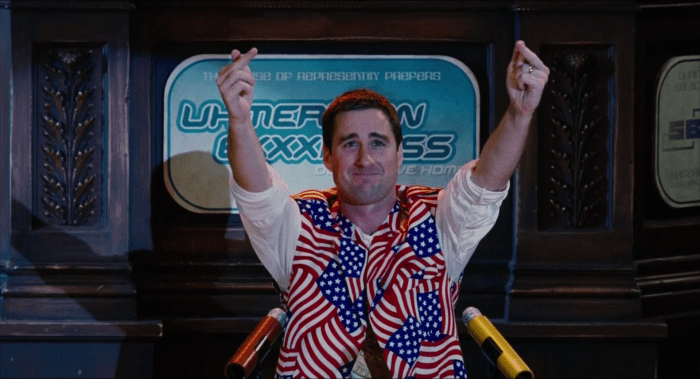
idiocracy3

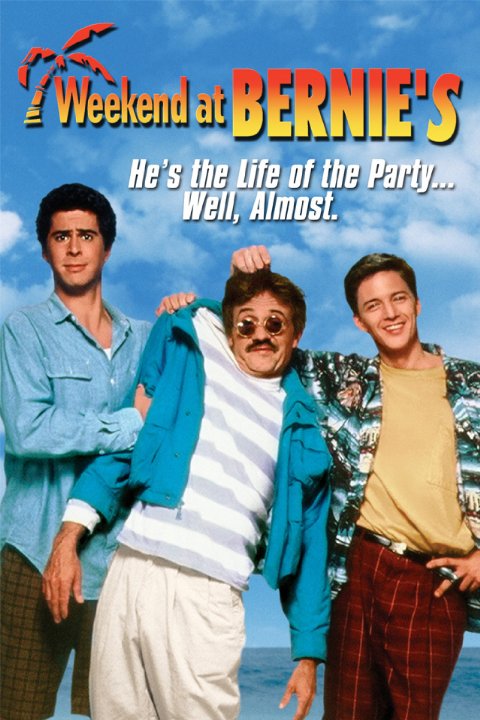
By 2018 the supreme will be hearing disputed disputes over MLB umpires’ decisions. By 2024 they will be the official referees of Wrestlemania. Incidentally, Wrestlemania 42 is where Bernie Sanders will peacefully shuffle of this mortal coil. Conspiracy theorists will insist that he was killed before the event by a Russian assassin and that his aides carried his dead corpse in so that they could attend the event. After that it will only be another 5 years before the last Facebook (by then a branch of the Social Security Administration) comment using the phrase “Feel the Bern” which by then will understood to be a reference yeast infections.

mv5bmjawmju1mta4n15bml5banbnxkftztcwnzaxntc3na-_v1_sx640_sy720_

In fact, lots of good, funny, and interesting things will happen in the future! CSPAN will final get watchable. Even better news: selling the broadcast rights to the State of the Union Address will finally put a dent in the debt. And as budgets shift away from bureaucracies towards more explosive, entertaining, and big-data-y ventures, red tape will whither away. With a good dose of good luck, the world going to hell in a hand basket might be the best thing that’s ever happened to us.

I wish I could just list every idea I’ve encountered then never cite anything…

Steve Horwitz has a great piece in the Freeman that I wish I’d written. The tl;dr: Voting isn’t all there is to political participation. This is an idea that’s been bouncing around in my head as I’m constantly remound that I’m now an American citizen (sorry everyone else in the world…) and that this November I’ll be eligible to vote for who I think should foster anti-American sentiments internationally (Republicans) or  domestically (Democrats).

The other day I said I’d consider voting but I couldn’t recall whose name I’d write in (turns out it’s Willie Nelson*). But my usual response to any question about whether I’ll vote is “No, it just encourages the bastards.” When that’s countered with “blah blah blah civic engagement blah blah” I retort with,essentially, Horwitz’s point: My vote is not going to change the outcome**, but I can contribute value by trying to convince my students that economics matters and that a vote for third party candidate (even a Green Party vote) does more good than a vote for the big two.

I don’t know where I picked up that idea, but if I’d remembered, I would have posted his piece here before he did. Even better would be if I could just list a repository of everything I’ve ever read (or heard) in some public place and just write and write without worrying about citing anything.

Continue reading

Good Health Will End Civilization

Good health and decisive minds. With maybe about 5% probability. We’re far more likely to destroy ourselves with war or stupidity, but knowledge could do us in too.

The basic problem is that as our knowledge of health and aging increases, we’re going to end with a lot of old people around. We’re going to be those old people, which is great for us, but it could be deadly in the long run.

Institutions are made up of formal rules, and informal interpretations of those rules by members of society. We learn how to interpret our environment by observing how our predecessors did so, copying them, ideally refining their approach, occasionally rebelling against the old ways and finally pushing our ways on the next generation.

This sets up an evolutionary process where variation and generational turnover occur together. The basic problem is that few people change their minds once they’re about 25. You might be able to teach an old dog new tricks, but odds are good you can’t teach him a new way of looking at the world.

Yeah, some people can change with the times, but on the whole Bill Burr’s pretty much spot on: [as far as other people are concerned] you can live too long. The older the median voter, the further removed their view of the world is from the actual reality of the time.

Now, there’s certainly some optimal degree of conservatism. We don’t want to upend society every five years in the name of progress. But if generational turnover grinds down to a glacial pace, so may institutional adaptation.

But of course we don’t know what the future holds. Perhaps an older, wiser median voter is a good thing. Perhaps the key to longer lifespans includes therapy to stimulate neural plasticity.

In any case, I hope that coming generations will hear a message that mirrors advice given to my generation. We were told “don’t expect to have the same job forever.” Now we need to be told “don’t expect to have the same opinion forever.”

The selfish meme

There are two senses in which to consider the phrase.

  1. The sense in which memes enter or exit our minds.
  2. The sorts of behavior encouraged by our memes.

For those who don’t know what I’m talking about:

A meme (/ˈmm/ meem)[1] is “an idea, behavior, or style that spreads from person to person within a culture”.

Richard Dawkins introduced the idea in his famous book: The Selfish Gene. The bulk of his book discusses examining the gene as the basic unit of analysis in evolutionary studies. He introduces the idea of the meme as a different form of replicator. Both genes and memes will only be reflected in the outcome of biological and cultural evolution if they exhibit fitness–if they are able to survive.

So the cultural traditions that helped hunter-gatherer societies survive droughts or harsh winters tended to survive and spread. Over time a culture accumulates this sort of practical, tacit knowledge. (Side note: this week’s Econtalk has Cesar Hidalgo who does really interesting work trying to indirectly measure the presence of such tacit knowledge in market economies.) And if culture is made up of memes, the same way organisms are made up of genes.

Looking at genes as the unit of analysis (as opposed to the organism) explains some otherwise mysterious behavior. It provides a plausible explanation of altruism: we care for our children more than anyone because 50% of their genes are our genes. A nephew is still precious, but not as important to us because the expected ratio of shared genes between the two of you is 25%. A gene that prompts you to protect your children is likely to survive longer than a gene that doesn’t prompt you. (And genes that hang around with such kin-protects genes are also more fit than their competition.) A gene that prompted you to be kind to neighbors makes sense when you live in small groups. But a gene that prompted you to be kind to total strangers might be a liability in a world where strangers were dangerous.

Cultural evolution certainly makes sense as a gradual mutation of different cultural practices merging together to make what is called (and perceived) as a unique body of culture. It’s a complex of knowledge, ideas and basic assumptions, social interface protocols, and it’s deeply embedded in how we engage in the world. (Perhaps we can’t remember our infancy because we didn’t have a cultural lens through which to reference anything to anything else…) One thing that I’m sure we’ve all noticed is that it can be almost painful to have to reject a cherished belief. It’s even difficult to see one of these memes challenged.

Now genes don’t have to be small bits of genetic code. They can be something simple like “make this enzyme when you get a chance.” But as a unit of replication, you should consider the smallest discrete chunk of genetic coding that replicates itself. If a particular pattern isn’t fit, it will leave the gene pool, while the fit collections of genetic instruction spread. So you might end up with long complex strings of genetic material akin to a computer program. Initially simple scripts might gather as successful collections of genes that work well together. The “produce stomach acid” gene works well with the “produce a stomach” gene and soon the two are virtually inseparable. They’ve become a simple script: “Do this, then that, then maybe this other thing.” Scripts gather into multi-cellular organisms with different functions that can respond differently to different stimuli. Soon you’ve got a complex set of code as your replicating unit.

More complex genes are necessary to prompt more complex behavior. It’s worth noting that Dawkin’s theoretical framework sometimes looks like a hyper-rational economics model. Evolutionary Stable Strategies are a Nash Equilibria that are robust to invaders. They occupy a niche and survive. But this evolution is happening in the context of increasing complexity. The system is learning*. This isn’t an instantaneous process**, but it is gradually becoming more sophisticated.

A complex gene will get bugs due to random mutation, but as long as it’s still generally fit, it will survive. And over time, more subtle and sophisticated programs identify new niches. And we get plant genes surviving by filling the “eat sunlight” niche and animals in the “eat plants” niche, and bacteria co-evolving with animals’ digestive systems.

Slowly working through this long, blind, random process genes surviving this hostile environment develop behaviors that help them flourish (the “four F’s of evolution: Fighting, fleeing, feeding, and reproduction”). Gradually they stumble into opportunities, and an important one was social behavior.

More and more complexity, round and round, until we start to get our first little bits of sentience. I’ve been watching a chinchilla hop around my apartment for a couple weeks now and I’m astonished by how much effort she puts into genuinely exploring her world. She tests objects for structural integrity and learns what she can and can’t jump on. She tests boxes with her teeth, I don’t know what for. She’s distinctly learning and not merely existing or surviving. She’s comfortable and does not know fear (I’ve seen her scare one particularly wussy cat). That sort of behavior requires a great deal of complexity which requires a great deal of genetic material.

I’m noticing as I write this that the biggest gene (i.e. discrete, replicated set of genetic code) must be that very large collection of genetic patterns that must come together in order for a one’s offspring to simply be the same species.*** I’ve heard that humans and chimps share 94 percent of our genetic material. That overlap tells me that some larger percentage than that is what makes us actually a human. The difference between any two individuals, then, must be among a very small portion of their total genetic makeup. This small portion is where genetic competition occurs in the arena of sexual reproduction.

In any case, our first memes (behaviors) seem to be transmitted biologically. Later, with more complex genes, we are able to replicate more complex behaviors. Eventually, we get complex enough to build up a sense of consciousness****.

A complex enough gene might have a subroutine that sets off an error; something like the pain our consciousness experiences when things are going poorly*. And likewise for a meme. Though more likely is that the error is being returned by our psychology. (If our genes are assembly language, our psychology is the operating system, and culture is the mess of basic programs that makeup our desktop environment.)

When we think of memes as self-replicating units, interesting questions arise: what sort of patterns will be robust to competition? Which will occupy what niches? What happens when incompatible memes come together in one mind? What sort of eusocial behaviors are possible? How much do our memes govern our behavior? (This is where nature and nurture overlap.)

Obviously one possibility is a “selfishness meme,” or a culture that hits an equilibrium of distrust. But there are many others, and how they combine matters. At this level we’re essentially asking questions about psychology, culture, and institutions. The fodder of all the social sciences comes together here. Different memes will be transmitted in different ways (which is perhaps what defines the disciplines), but any of these memes may be complex enough to have a defense mechanism that involves activating various processes (including other memes, perhaps) and perhaps making people feel anger and related emotions when someone questions our beliefs and may even push people to fight with their life for their memes.


*We’re computers, markets are computers, societies are computers, the ecosystem is a computer, Earth is just a big giant computer. It processes data and creates new data.

** The next Hayek rap should include the phrase “it’s spontaneous order, not instantaneous…”

*** I could imagine it as made up of some set of smaller genes in some complex, rather than one monolithic gene but I don’t have the language to communicate that idea concisely.

**** And it must be noted that this consciousness is built out of parts designed for the poop-and-panic machines that were our evolutionary ancestors. It’s like building a super computer* out of a truck load of Pez dispensers and a warehouse full of chainsaws. And yet, how else could it be done.
A response to a student

Each week I assign some reading or video. Recently I assigned a series of videos where Bryan Caplan discusses common biases, including the anti-foreign bias

One student questioned the benefits of expanded immigration, wondering if the costs to American workers might be too great. Below is my response:

My understanding of the evidence is that immigrants to the US are almost always complementary to US labor (e.g. Indian doctors that keep American designers healthy, or Salvadorian cooks who feed American engineers). The area where your suspicion is true (again, based on my limited understanding of the data) is with high school dropouts.

High school dropouts face competition from immigrants (who are often unable to apply their skills due to regulations or attempts to avoid being caught by immigration authorities) because relatively low-skilled immigrants face similar disadvantages in labor markets (i.e. they have a similar comparative advantage but their alternative options are even worse).

What makes it science?

When I hear the phrase “I experimented with drugs/diet/habit/whatever [on myself],” I tend to call bullshit. (A good exception is the author at Gwern.net who does blind, randomized trials on himself sometimes.) Without a control group you aren’t doing an experiment.

But I heard some interesting phrasing that is making me reconsider. Scott Adams was talking about experimenting with changes to his diet by isolating one thing and seeing if he can observe a change after a week. It’s clear that he understands the limitations of this approach. And that clarity makes me think that he’s really properly experimenting. He’s not going so far as running a double-blind study, he’s just taking a serious look at imperfect evidence and being epistemically honest.

Like any good scientific thinker of our time, Adams knows that the outcomes he observes can be affected by any number of variables he’s failed to account for. He knows that his estimates need an error term. He almost certainly knows that time isn’t on his side and ever so slightly affects his results. He almost certainly also knows that path-dependency plays a role. But he corrects for all that in his interpretation. It’s this considered approach to the evidence that makes me view him as operating on a scientific basis. So even if his trials do not provide powerful evidence, his interpretation and application of the evidence is what makes it science.

I suppose this would mean that an experiment can’t be considered scientific until the data is interpreted.

And of course all of this is to say that he’s definitely right about Donald Trump.

Information doesn’t matter

The classical economists gave us three basic factors of production: Land (i.e. nature-given resources), Labor (i.e. human effort), and Capital (i.e. tools). Naturally this involves lumping together a lot of heterogeneous things. Capital includes a rock you might use to smash an assailant over the head as well as a particle accelerator. But prices do a brilliant thing: they provide information about the relative scarcity of goods and compress that information into a single dimension

This allows us to aggregate! It means that we can talk about how much capital per capita is available in a region (or better yet, provide a distribution of workers’ access to capital… a project I’m not sure if anyone’s done) and the like.

This whole intellectual project is necessary if we want to talk about the nature and causes of a particular economy’s well being. But the original factors have become less useful as the nature of economic activity has changed over time.

It gradually became clear that the concept of labor was too fuzzy: how do we compare the labor of a doctor with that of a stevedore with that of a professional wrestler? We could try to use prices, but for a variety of reasons that just won’t work very well. Household production and leisure don’t have market prices, market frictions are particularly pronounced, information asymmetries abound and are entangled with principal-agent problems (you don’t have to watch a wrench to ensure that it doesn’t slack off, but your administrator may very well cease to administrate while browsing Facebook).

Economists have dealt with the issue with the idea of human capital. In addition to physical tools, people also have mental tools (skills). This idea leads into the notion of social capital (people invest in relationships), and can be extended in any number of directions. It’s a wonderful lens through which to view the world because it lets us see the nature of what we do.

But it’s not the right way to think about the factors of production. Not because it’s difficult to measure human capital (I’m not convinced it’s really possible to measure much of anything of importance in economics… even though I keep trying to). The problem is that it doesn’t get us down to the core, atomic thing that we’re really interested in.

Boulding tells us [emphasis mine]:

It is much more accurate to identify the factors of production as know-how (that is genetic information structure), energy, and materials, for, as we have seen, all processes of production involve the direction of energy by some know-how structure toward the selection, transportation, and transformation of materials into the product.

And I think he’s on to something here. The basic stuff of our economy is information applied to objects (even information has to be physically embodied in writing, magnetic manipulation of hard drives, or the shape of our neural connections), which requires energy.

But we’ve got the information necessary to do far more than we actually do. What is it that stands between the vast amounts of knowledge at our command being applied to our enormous stocks of physical resources using our still plentiful and cheap energy? Why is there so much slack in our economic systems?

It could simply be transaction costs, but I think we can go deeper. Boulding’s factors give a more refined view of both labor and capital, but he’s still missing the fundamental kernel of labor. It’s not our know-how that matters–we all know we’re supposed to save for retirement and yet we don’t. It’s not that we don’t have enough energy. What’s missing is an appreciation of attention.

Attention is at the root of alertness which Kirzner tells us is the prime mover that sets in motion economizing behavior. Attention is what is necessary to learn. Most importantly, it is what is necessary to remember and apply what we learn. And it’s universal. Laborers have it and so will our future robot overlords. It’s easily as basic as energy and materials. The question then is how to tie it into the notion of know-how (the psychology of learning) and social sciences more generally.

E. O. Wilson and Spontaneous order

Jump right to the 17:28 mark if you don’t care to spend some quality time with a delightful old man.

http://video.pbs.org/viralplayer/2365572374?chapter=1

“We share with insects the mysterious instinct to build complex societies… [talks about an ant colony filled with concrete then dug out of the earth…] Here was a labyrinthine web of underground highways, mini-colonies, gardens, and garbage dumps. But it was the scale of it that was breathtaking. This was an ant metropolis, a Manhattan of the insect world.

“Now, how could an animal with a brain smaller than a pinhead possibly construct and maintain a city of this size and complexity?”

Because spontaneous order! This view is why Don Lavoie cites E.O. Wilson so much. Both are fascinated (as we all should be) with systems where the interaction of its constituent parts yields outcomes more complex than any subset of those constituent parts could come up with. These complex outcomes result from relatively simple information transmission mechanisms so that behaviors of each part influence and are influenced by the rest of the system.

“Just Leave Me Alone Goddammit!”*

The basic argument I want to make is that we’ve been thinking about labor and human capital imprecisely,** and we would do better to think of labor as the selective application of attention, and habit (which economizes on attention) as the basic essence of human capital.

Attention

The kernel of this idea was planted when I read Pragmatic Thinking and Learning a few years ago. An important point it makes is that whenever our work is interrupted it takes something like 15 minutes to get back to work. Mental work is like barbecuing (or what the uninitiated erroneously call “smoking”). After 8 hours of cooking your guests are impatient (and drunk) and want you to check the meat. So you open up the barbecue and a plume of smoke billows out. You put in a meat thermometer and sure enough, the meat isn’t done. But now it’s going to take another 15 minutes for enough to smoke to build up to get the process moving again. 20 minutes later people want you to check again. (And that’s why our parties back in San Jose so often dragged on so long.) Showing up to work for 8 hours a day isn’t sufficient for getting your work done; sometimes you just need your boss to leave you alone long enough for you to focus deeply enough to solve the problem you’re facing.

Or we could think of work like juggling. Working on some difficult problem, you’ve got a few pieces of mental material in the air. When someone knocks on your door (or you take notice of an email notification on your phone) you drop the balls. Getting them going again takes some effort, so even a one second interruption sets you back a few minutes. Those of us who work at desks are familiar with how difficult thinking can be. Managing our attention takes effort. But with practice we can get better at coping with distractions and skipping the easy, but unproductive paths offered to us.

And what about grunt work? There’s less attention necessary (perhaps rhythm serves a role in maintaining that minimal bit of attention), but nobody gets paid for not doing what they’re told. Your job is to keep applying effort in the appropriate way. The only human capital you really need is what is necessary to get out of bed and get to work every day.

Habit Capital

People who smoke cigarettes, they say “You don’t know how hard it is to quit smoking.” Yes I do. It’s as hard as it is to start flossing.

Mitch Hedberg

Habit offers a means of economizing on attention. Instead of using up our mental capacity to decide to brush my teeth every day, I just do it automatically. Flossing is not so easy… except that I was able to make it a habit by piggybacking it on an existing habit.

Many of the skills we have are built on a collection of complex little habits, whether it’s muscle memory (you must watch the video above), understanding how to read graphs, or bearing in mind that everything has an opportunity cost.

(Obviously) getting a college degree is not the same as accumulating human capital. What college does (we hope) is inculcate students with critical thinking habits and some basic knowledge deemed necessary or particularly helpful for navigating the world. Learning on the job is similarly about providing workers with habits, and both positive and normative knowledge (i.e. factual knowledge and norms/beliefs/corporate culture). Growing up is about building up human capital largely in the form of internalized norms (moral habits). Habits are everywhere and they’re at the core of what we mean when we use the term human capital.

Habit capital allow us to direct our attention to critical areas in the same way physical capital allows us to leverage (and ultimately replace) our physical effort. By establishing habits we can get certain things done (teeth brushed, books read, etc.) while conserving attention. This takes more attention upfront just as physical capital requires upfront investment.

Anticapital

Economists generally don’t think much about bombs as an investment. Bombs require foregoing current consumption, but once they’re made, they’re intended to get a negative return by destroying something of value. Physical anticapital, as a social scientific idea, falls primarily in the domain of International Relations. Which isn’t to say economists haven’t thought about investments that destroy value. The idea of rent seeking is an important one, but it’s one that has been rationalized.

There’s probably not much to gain by thinking about rent seeking as investment in anticapital.*** But we can bring bad habits out of the purview of irrationality and bring it into the warm, rational glow of economics with the concept of human anticapital.

Just like in biological evolution, we’re satisficing, not optimizing. Habits may initially be adaptive and turn bad as circumstances change. We should expect a tendency towards “good” habits–and how those habits propagate is certainly an interesting question–but we should also expect the odd bizarre byproduct, misfire, and obsolete habits to emerge.

“We are still very close to our ancestors who roamed the savannah. The formation of our beliefs is fraught with superstitions–even today (I might say, especially today). Just as one day some primitive tribeman scratched his nose, saw rain falling, and developed an elaborate method of scratching his nose to bring on the much-needed rain, we link economic prosperity to some rate cut by the Federal Reserve Board, or the success of a company with the appointment of the new president “at the helm.”

Nassim Taleb

tl;dr:

Attention matters more than time. Habit economizes on attention. Mental work involves applying mental tools to particular problems and habit allows us to do so more or less automatically. In other words, habit is human capital.****

*That’s one possible title for the next paper I want to write. A more boring but descriptive possibility is “Habit Capital.” Another with more regional flavor is “Hey! I’m Working Here!” Maybe I’m not very good at titles…

**This follows in a similar vein as my entrepreneurship research which basically boils down to: entrepreneurship theory is good, but our empirical measures suck.

***Although I should mention that thinking about rates of depreciation will surely shed light on rent seeking questions.

****I’ll leave it for the comments to sort out whether it’s the only sort of human capital. Maybe you can also help me sort out how to wrap belief, understanding, and learning into this view.

Something I’m sure we can all relate to

A vision for environmentalists

The sun is setting and people start settling in for bed instead of staying up late and watching TV. As fast as battery technology advances, it’s imperfect so we deal with it by using less electricity at night. Similarly, on windy days, people stay inside, but leave once the wind calms down and it’s nicer to be outside. This is a world where people are in tune with the weather and adjust their behavior accordingly.

How can we get such a world? Education won’t be enough (though it will be necessary) because, let’s face it, people are creatures of habit, and lazy people (i.e. 80%+ of the population) would rather leave any given habit alone. We could try to mandate behavior, but that will be costly and the Law of Unintended Consequences promises ironic blow-back.*

Luckily there’s a fairly simple way to effectively nudge people in the direction we (environmentalist-types) would like to see: flexible prices! In a world where a lot of electricity is generated by solar and wind** market determined prices would automatically encourage people to conserve resources and set the pace of their lives to match natural rhythms. Will it be enough? Probably not, but it will certainly be an essential step in the right direction.


* I recently came across the following in The Complete Walker:

I’m tempted to suggest they [trowels] be made obligatory equipment for everyone who backpacks into a national park or forest. I resist the temptation, though–not only because (human nature being what it is, thank God) any such ordinance would drive many worthy people in precisely the undesired direction but also because blanket decrees are foreign to whatever it is a man goes out into wilderness to seek, and bureaucratic decrees are worst of all because they tend to accumulate and perpetuate and harden when they’re administered, as they so often are, by people who revel in enforcing petty ukases. Anyways, a rule that’s impossible to enforce is a bad rule. (p. 698)

** Obviously the likelihood of such a world is a whole ‘nuther can of worms. Let’s leave that for another post.

Attention and Motivation

Since reading Pragmatic Thinking and Learning a few years ago, I’ve changed a small but important aspect of my life. I no longer worry about having enough time; I worry about having enough attention. Time devoted to working on a task early in the morning is far more productive than time that would otherwise be spent sleeping devoted to the same task.

In a similar vein, I’ve been coming across tidbits of information related to drugs and attention that have shed some light on this issue for me. For example, what Adderall (basically) does is that it excites your nervous system so that your focus is laser sharp. Suddenly boring tasks like cleaning the house are very easy. Besides ADD drugs, marijuana and LSD are both supposed to do something similar (in the case of LSD, for it to be a useful pharmaceutical would require doses in the sub-Grateful-Dead-concert range… just as you wouldn’t want to eat a handful of Ritalin). [Sorry I don’t have decent citations here… Commenters?]

The point of that last paragraph is to shed some light on the question plaguing those working on improving their own productivity: “How do I increase my motivation?” Anyone who has tried Adderall can tell you that motivation has nothing to do with why they’re cleaning the inside of the oven. They’re just doing it because they can.

What’s my point? Motivation and raw focus are both important, they’re different from one another, but they’re closely tied. Neither is easy to observe from the outside. Recognizing this is obviously important for our own lives. But it is also for how we look at the world as economists.

What would I ask the president in an interview?

My favorite podcast really hit the Big Time this week. Marc Maron interviewed President Obama last week and released the episode today. Marc Maron does a great job interviewing his guests but this episode is (naturally) pretty different. Obama mostly gives a lot of fluff, but he did make some interesting points on the role of political institutions in polarizing politics, as well as the role of [implicit] property rights in shaping political outcomes.

While I was waiting for this episode to be released I wondered what I would have done in Maron’s position. It’s tempting to say “just scream non-stop for an hour until the president agrees to be better.” But of course, that wouldn’t do anyone any good (although I think it would sell advertising on cable news). The question is then “how do I avoid throwing softballs, maintain a good conversation, and still nudge in the direction of change I’d like to see?”

One thing I think would be important were I in that position is to restrict the number of issues I bring up. The limits of human attention mean that we simply can’t handle more than a handful of things at once. Piling on all the issues and complexities of the world would only serve to reduce anyone’s ability to do anything positive. Another thing I think would be important is focusing on areas where we already mostly agree. Nobody over the age of 25 is likely to change their opinion on just about anything, so why waste your energy. That’s sunk ideology. And besides, even if you’re talking to a real piece of work, you have some obligation to do a good job of being a conversationalist, and focusing on differences is less likely to lead to a good conversation.

So what would I ask Obama in an interview?

  • What do you see as the path forward to immigration liberalization?
  • Will you please push for a bill that allows any law-abiding person to work in the United States without giving them access to the Welfare state? (I would word that differently if I were actually interviewing the president, but you get my drift…)
  • Would you please let Nassim Taleb explain his risk-management argument for climate change interventions? And can he please also be required to comment on his argument’s relationship to the Law of Unintended Consequences?
  • What is your favorite episode of South Park?

That third point should be at least a little bit controversial. I’m agnostic on whether there’s anything to be done about climate change (although I’m all for using it as an excuse to liberalize immigration for the world’s poor). I’m seriously skeptical of governments’ ability to do any good in that arena. I’d really rather not add fuel to the fire, but I think it’s important to raise the standards of debate, and I think Taleb’s argument* is the most sensible one. Not only that, it has wide applications that should push (benevolent/benign) politicians to support simpler rules and fewer interventions.

Oh yeah, and I’d ask him if he’s a secret gay muslim. (“Does your mom know you’re a secret gay muslim?” Anyone else remember playing that game?)


* Taleb’s argument goes roughly as follows: We face uncertainty, but there is a non-zero probability of a catastrophically bad outcome. Maximizing expected utility is not the appropriate risk-management strategy in this case. Our most urgent need (our highest marginal benefit course of action) is to eliminate the possibility of the catastrophic outcomes–and perhaps after that start thinking about maximizing expected utility. Essentially the argument is “don’t play Russian Roulette!” But an essential underpinning is that a probability distribution describing outcomes in complex systems often exhibits “wild randomness”. In contrast to the “mild randomness” of the normal distribution, in wildly random situations it’s difficult or impossible to even have an expected utility. The conclusion I would hope they would draw is that intervening in complex systems (and particularly creating new complexity through increased regulation and more tax loopholes) is best avoided, and particularly at the national level.

A quick thought on justice

I thirst for justice. Sometimes it nearly gets me killed.

Driving in Long Island traffic gives me many opportunities to exercise my justice muscle which just reduces my life expectancy by that much more. This whole “turn the other cheek” thing is health advice, not an ethical rule. Don’t get me wrong, I wouldn’t want to live in a world without justice. But as an individual I need to work on tempering my own craving. I need to quiet that voice deep in head that shouts “THEY MUST PAY!”

This desire for justice seems to be part of human nature. I’d bet that it’s an essential part of hunter-gatherer society. But in the society where I can perceive all sorts of injustices, it can lead me astray. I’m glad I’m not allowed to be a vigilante because I’d almost certainly kill myself in the process.

A question on adverse selection for the economists

I can’t think of an example of adverse selection occurring without asymmetric information. Does anyone else know of one?


But as long as I’m here waiting for answers, let me think through an aspect of this…

The classic example of adverse selection in my mind is the Death Spiral. (My dad sells group benefits, so growing up I would hear about some of the weird outcomes of different states’ insurance regulations on things like pre-existing conditions.) Trying to pull apart adverse selection (AS) and asymmetric information (AI) has led me to an interesting thought: The adverse selection problem created by preventing insurance companies from using the (very sensible) policy of not covering pre-existing conditions (i.e. of only insuring insurable things) may unravel some epistemic aspect of this situation.

The private costs of sharing information about pre-existing conditions falls and this might have modest benefits to offset the significant costs of AS. I’m sure health economists would be happy to have this sort of information, and maybe it would give insurance companies’ actuarial division some new insights that could apply to other markets.